
Stonehenge of Manipur

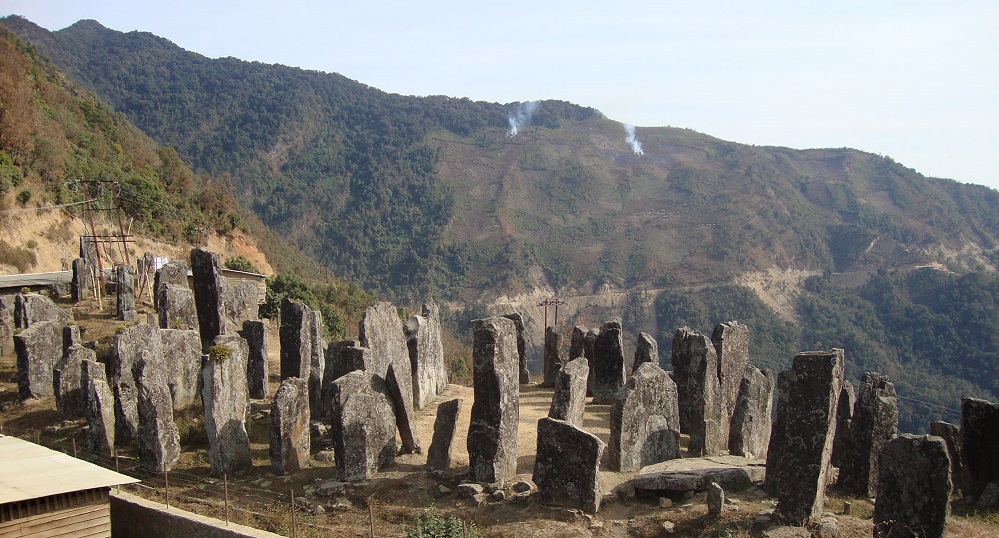
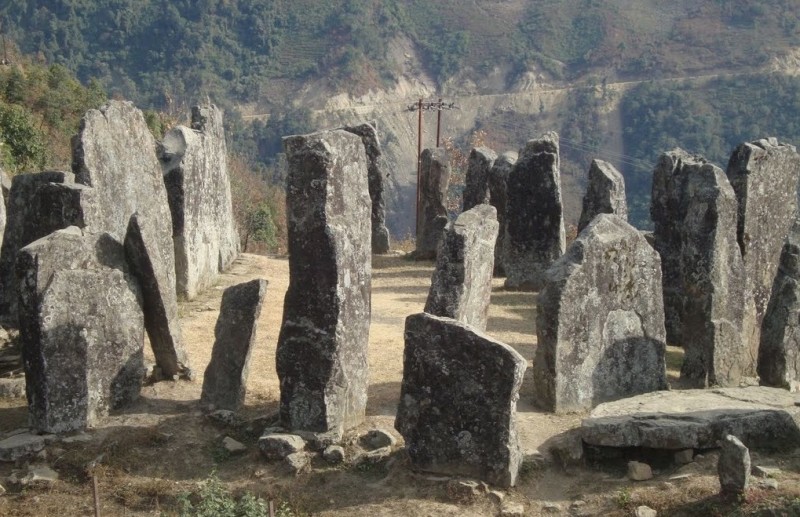
Located at a distance of 39 kilometers from the Maram Village in Manipur, Willong Khullen is characterized by its numerous stone erections which are similar to the Stonehenge. The tallest of the stones are as high as 7 meters and are about a meter in thickness. The place is located on the slopes of the valley and offers a serene picnic and resting spot for the travelers. It is said that the stones are uncountable as there is a spirit that would confuse you midway while counting.

According to local villager, these giant stone structures were ercted by their forefathers and this megalithic structures has a close connection with the mythology of the area. Each Stones has a unique story. They also believe that all the stones have their own name and they ‘really talk’ to each other at night. In male’s voice, each stone called one another with their names such as ‘Kala’, ‘Kanga’, ‘Hila’, etc.

Villagers explained that only a man of exceptional strength and power can think of erecting a stone at the site. He would have to go and find a suitable stone from a far off place and the villagers would assist him in bringing the stone to the village. Before bringing the stone to the village, the man have to fast for one whole night and perform a ritual by offering wine before the stone. Only after getting a favourable nod from the stone, he would be allowed to lift it from the original place. If the man found any difficult in lifting the stone then the villagers would sing a special folk song to bring it to Katak Tukhum area.

Stone erection of willong village in Manipur India.
Megalithic structures at Willong village’s Katak Tukhum area in Mao-Maram

According to villagers, none could count the exact number of stones that have been erected at Katak Tukhum area. There is also a folk tale about a Japanese, who challenged to count the number of stones but had to retreat after a white wild boar chased him away from the place.

Even today, there is still a giant stone at the outskirt of the village which the villagers regarded it as sent by God to mark the demarcation of Willong village.

But with the advent of Christianity such tradition and culture of the Marams seem to be moving away. Fortunately there is still a microscopic minority among the Marams who have been bonding with their ancestral practices and beliefs. Because of this group of people we are indeed grateful in capturing a glimpse of the bygone remnants.

As only a few elders who know about the history of these stones are surviving today, villagers feared that all the folk songs, riddles, tales that are connected with these giant stones might be forgotten soon, never to be heard by the new generations to come. Most youngsters are in no mood to listen to all these stories to understand the importance of this historical legacy.Stone_Erections_of_Willong_Khullen
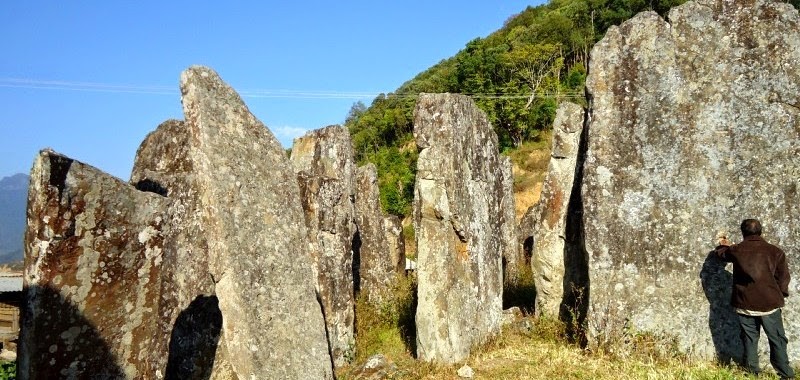
Expressing desire for declaring the area as a historical site, the villagers have also urged the state government and its department concerned to construct a building where all these stones, their associated folklores could be preserved. In fact, with an eye on keeping alive the historical legacy of Katak Tukhum, the process of collecting some folk tales and songs have already been started by the villagers themselves. However, the state government never bothers to preserve the age-old stones for future generations.Stonehenge of manipur
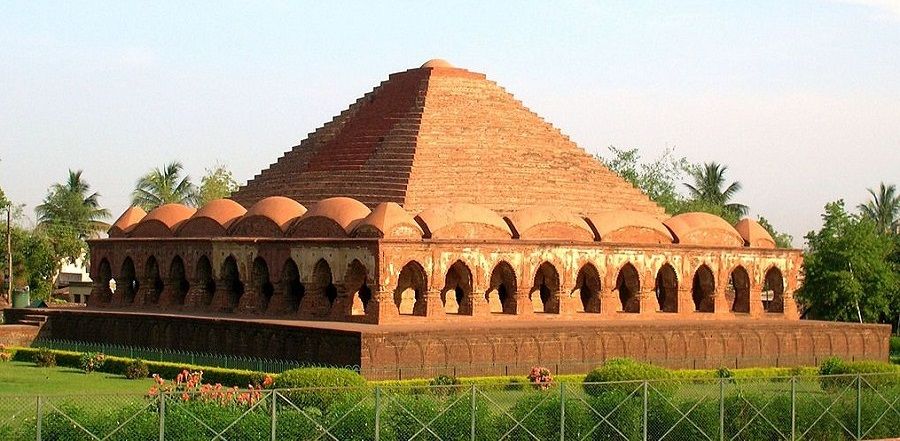
The pyramidal Ras Mancha Temple

RasMancha is a pyramid like building located at Bishnupur, West Bengal, India.The name Rasmancha implies ‘a stage for dances’. The massive building was built in between the years of 1557 – 1600 A.D. by Malla King, Vir Hambir to celebrate the Vaishnava Ras festival.

During the Malla Regime, all the portraits from the neighbouring shrines were brought during the Ras Festival and exhibited in the open doorways for common public. The monument was also used to stage dances every evening to celebrate scenes from the Krishna Leela. However, it is no longer a temple today; it is an ancient monument now. The festival was last celebrated in 1932 after which the temple was declared a protected monument by the Archaeological Survey of India.  Nowadays the annual festival has been shifted to the nearby grounds near the temple of Goddess Durga

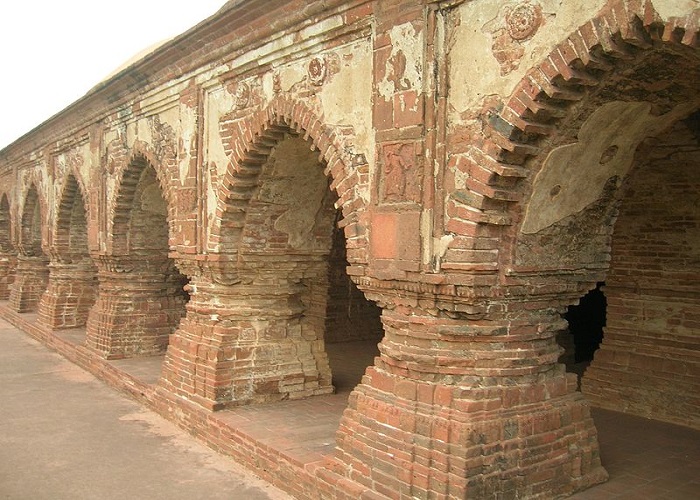
Eastern veranda of Rasmancha
Eastern veranda of Rasmancha – Image Source
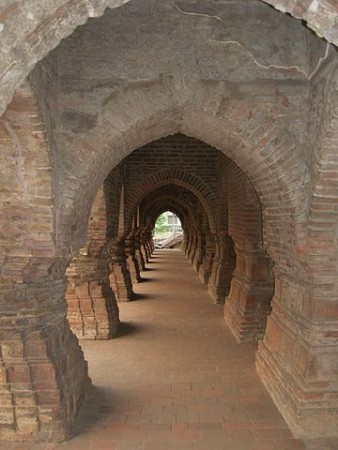
The inner terrece of the Rasmancha
The inner terrece of the Rasmancha – Image Source

The temple is absolutely unique in style and architecture, not only in Bengal, but in India. It is the oldest brick temple in the town.  The red brick structure of the building is in the form of a pyramid summit which is built upon a roomy platform. The foundation of the structure is 1.5 meters high with each side measuring 24.5 meters and rising to a height of 11 meters. It consists of a single chamber with an elongated tower which is surrounded by hut-shaped turrets. The masterpiece has 108 doorways and houses some large ancient cannons which date back to the Malla dynasty. The temple has three consecutive circumblatory galleries. The archways of these galleries are highlighted with terracotta lotus motifs, enclosing the sanctum of the holy place.

The masterpiece is maintained by Archaeological Survey of India (ASI) which provides special illumination facilities to conserve the fragile terracotta crafts. The entrance to this monument would cost Rs. 5 per head. This building is located near the Archaeological Museum, which is also an interesting place to visit.

Makara – A Dinosaur in Bhagwad Purana

You wouldn’t find any information on dinosaurs or other similar species in any of the ancient western texts but if you go through the ancient Indian literary texts, you might be able to extract some information on dinosaurs and other species similar to dinosaurs.

Mystery of Red Rain in India

The Kerala red rain phenomenon was a blood rain (red rain) event that occurred from 25 July to 23 September 2001, when heavy downpours of red-coloured rain fell sporadically on the southern Indian state of Kerala, staining clothes pink. Yellow, green, and black rain was also reported. Coloured rain was also reported in Kerala in 1896 and several times since,most recently in June 2012.

After intense analysis at two labs in the UK, Astronomer Chandra Wickramasinghe who studied the cells with microbiologists at Cardiff University says that “As the days pass, I’m getting more and more convinced that these are exceedingly unusual biological cells. The Red Rain cells of 2001 multiply under extreme heat and were found not to contain DNA.

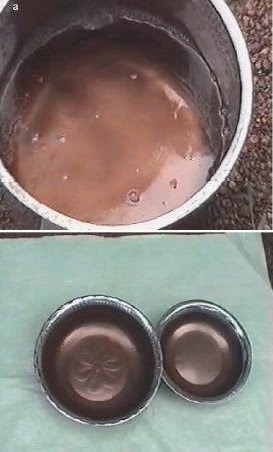
In 2001, numerous people observed red rain falling over Kerala in the southern tip of India during a two month period. One of them was Godfrey Louis, a physicist at nearby Cochin University of Science and Technology. Intrigued by this phenomena, Louis collected numerous samples of red rain, determined to find out what was causing the contamination, perhaps sand or dust from some distant desert.

Sample of Red Rain In kerala – Image Source

Under a microscope, however, he found no evidence of sand or dust. Instead, the rain water was filled with red cells that look remarkably like conventional bugs on Earth. What was strange was that Louis found no evidence of DNA in these cells which would rule out most kinds of known biological cells (red blood cells are one possibility but ought to be destroyed quickly by rain water).

Louis published his results in the peer-reviewed journal Astrophysics and Space in 2006, along with the tentative suggestion that the cells could be extraterrestrial, perhaps from a comet that had disintegrated in the upper atmosphere and then seeded clouds as the cells floated down to Earth. In fact, Louis says there were reports in the region of a sonic boom-type noise at the time, which could have been caused by the disintegration of an object in the upper atmosphere.

Red rain of keralaSince then, Louis has continued to study the cells with an international team including Chandra Wickramasinghe from the University of Cardiff in the UK and one of the leading proponents of the panspermia theory, which he developed in the latter half of the 20th century with the remarkable physicist Fred Hoyle.
Panspermia is the idea championed by physicist Fred Hoyle that life exists throughout the universe in comets, asteroids and interstellar dust clouds and that life of Earth was seeded from one or more of these sources.

This is an extraordinary claim that will need to be independently verified before it will be more broadly accepted. It would be fair to say that more evidence will be required before Kerala’s red rain can be satisfactorily explained. In the meantime, it looks a fascinating mystery. 

30,000 years old Rock Shelters of Bhimbetka

The Bhimbetka rock shelters are the collection of 750 rock shelters from which 500 are inwrought by the paintings. Situated in the Raisen District of Madhya Pradesh of India, these Stone Age rock paintings are around 30,000 years old. It is one of the largest repositories of prehistoric art in India.

The shelters were designated a UNESCO World Heritage site in 2003. In addition to the cave paintings, archaeologists have unearthed large numbers of artifacts in the caves and in the dense teak forests and cultivated fields around Bhimbetka, the oldest of which are Acheulean stone tool assemblages.

The Bhimbetka shelters exhibit the earliest traces of human life in India. A number of analyses suggest that some of these shelters were inhabited by hominids like Homo erectus more than 100,000 years ago. Some of the Stone Age rock paintings found among the Bhimbetka rock shelters are approximately 30,000 years old ( Paleolithic Age).

The name Bhimbetka is associated with Bhima, a hero-deity of the epic Mahabharata. The word Bhimbetka is said to derive from Bhimbaithka, meaning “sitting place of Bhima“. It is believed that when the five brothers, called Pandavas, were banished from their kingdom, they came here and stayed in these caves, the massive rocks seating the gigantic frame of Bhima, the second Pandava. However, these claim still remains to be corroborated with concrete evidence.

Exterior of Rock Shelters of Bhimbetka

The caves were eventually discovered in 1957-58 by accident. An archaeologist from Ujjain, Dr. Vishnu Wakankar, strayed too far from the beaten path and found himself amidst this prehistoric treasure trove. Since then more than 700 such shelters have been identified, of which 243 are in the Bhimbetka group and 178 in the Lakha Juar group. Between 1972 and 1977 excavation undertaken by Wakanakar, Misra and Hass revealed a continuous sequence of Stone Age cultures from the late Acheulian to the late Mesolithic and also some of the world’s oldest stone walls and floors. 

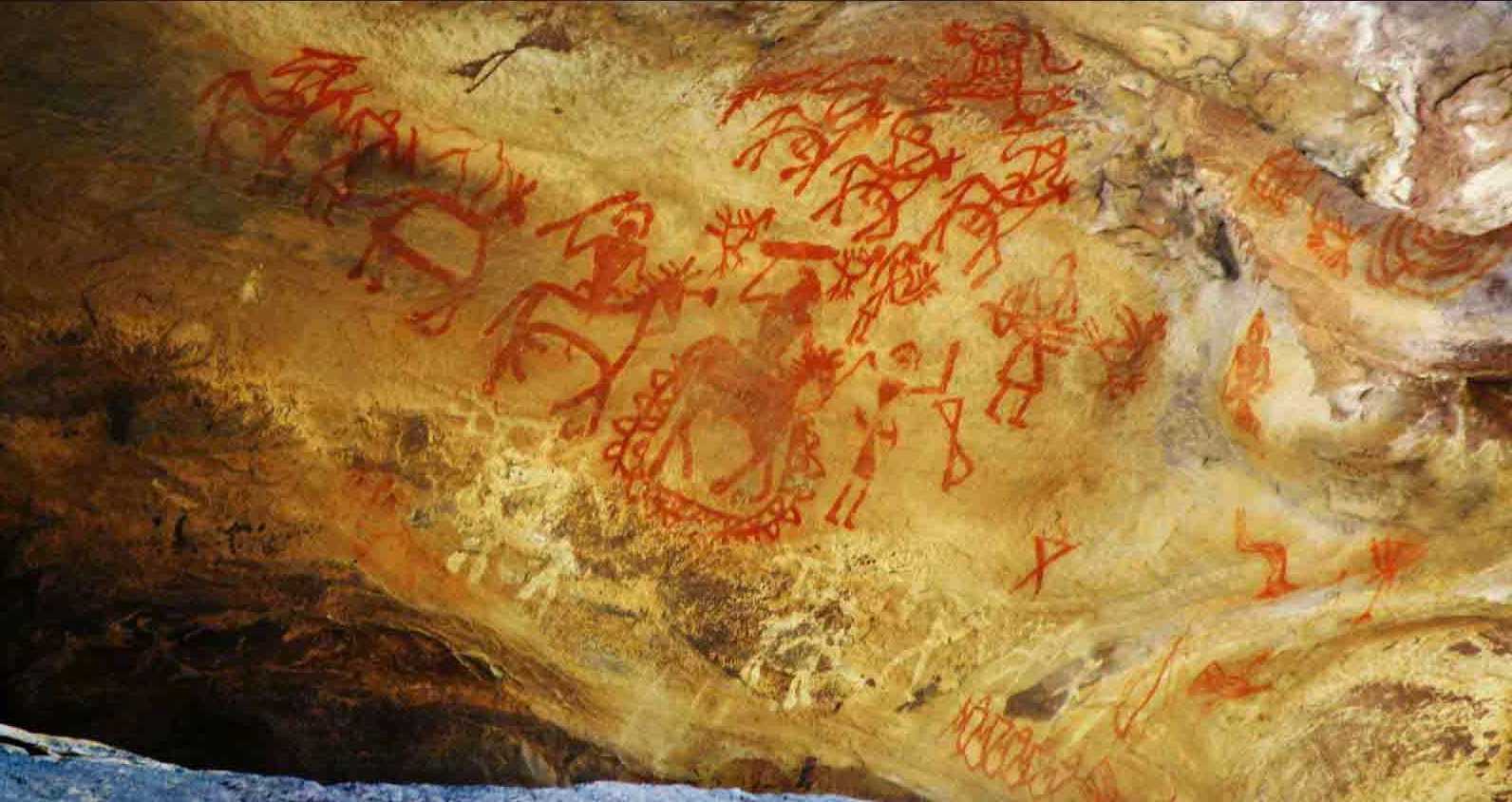
Rock Shelters of Bhimbetka depicting a War Scene
A War Scene

The caves have evolved over time into excellent rock-shelters, ideal sites for aboriginal settlements. The smooth shape of the rocks has led some scientists to believe that the area was once under water. The rocks have taken on incredible shapes in several stunning hues and textures. Apart from the central place the aboriginal drawings have in human history, the caves themselves offer interesting material for a study of the Earth’s history.

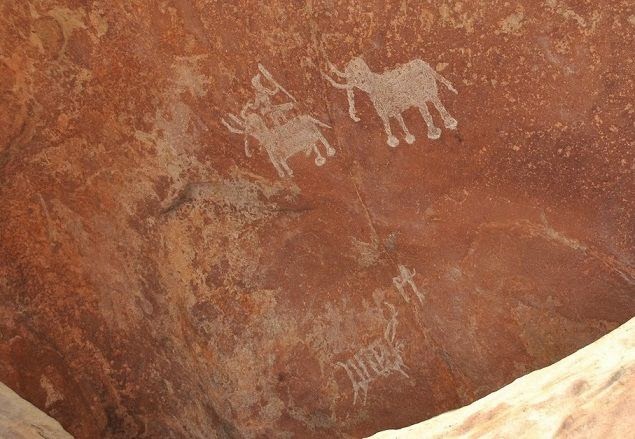
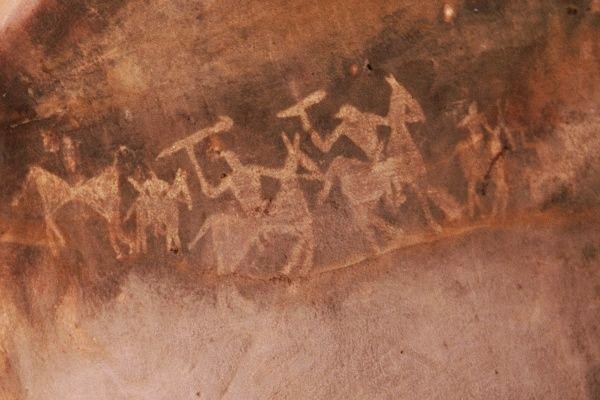
Executed mainly in red and white, with the occasional use of green and yellow with themes taken from the everyday events, the scenes usually depict hunting, childbirth, communal dancing, drinking, religious rites, burials, horse and elephant riders, animal fights, honey collection, decoration of bodies, disguises, masks and different type of animals etc. It depicts the detail of social life during the long period of time, when man used to frequent these rock shelters. The entire area is covered by thick vegetation, has abundant natural resources in its perennial water supplies, natural shelters, rich forest flora and fauna, and bears a significant resemblance to similar rock art sites such as Kakadu National Park in Australia, the cave paintings of the Bushmen in Kalahari Desert, and the Upper Paleolithic Lascaux cave paintings in France

two elephants with tusks
two elephants with tusks at Bhimbetka rock shelters

One rock, popularly referred to as “Zoo Rock”, depicts elephants, sambar, bison and deer. Paintings on another rock show a peacock, a snake, a deer and the sun. On another rock, two elephants with tusks are painted. Hunting scenes with hunters carrying bows, arrows, swords and shields also find their place in the community of these pre-historic paintings.

Bhimbetka rock painting showing man riding on horse.
Bhimbetka rock painting showing man riding on horse. – Image Source

It is a marvel that the paintings have not faded even after thousands of years. The colors used by the cave dwellers were prepared by combining manganese, hematite, soft red stone and wooden charcoal. Perhaps, animal fat and extracts of leaves, vegetables, and roots were also used in the mixture. Brushes were made of pieces of fibrous plants. The natural pigments have endured through time because the drawings are generally made deep inside a niche or on inner walls. Some of the geometric figures date to as recently as the medieval period.

The rock art of Bhimbetka has been classified into various groups on the basis of the style and subject. The superimposition of paintings shows that different people used the same canvas at different times. The paintings, which display great vitality and narrative skill, are categorized into different prehistoric periods. The oldest are dated to the Late Paleolithic Period (Old Stone Age) and consist of large linear representations of rhinoceroses and bears. Paintings from Mesolithic (Middle Stone Age) times are smaller and portray, in addition to animals, human activities. Drawings from the Chalcolithic Period (early Bronze Age) showcase the early humans’ conceptions of agriculture. Paintings from Early Historic perioddepict religious motifs, including tree gods and magical sky chariots. Medieval paintings are geometric, linear and more schematic but show degeneration and crudeness in their artistic style. 

The Mysterious Ajanta Caves

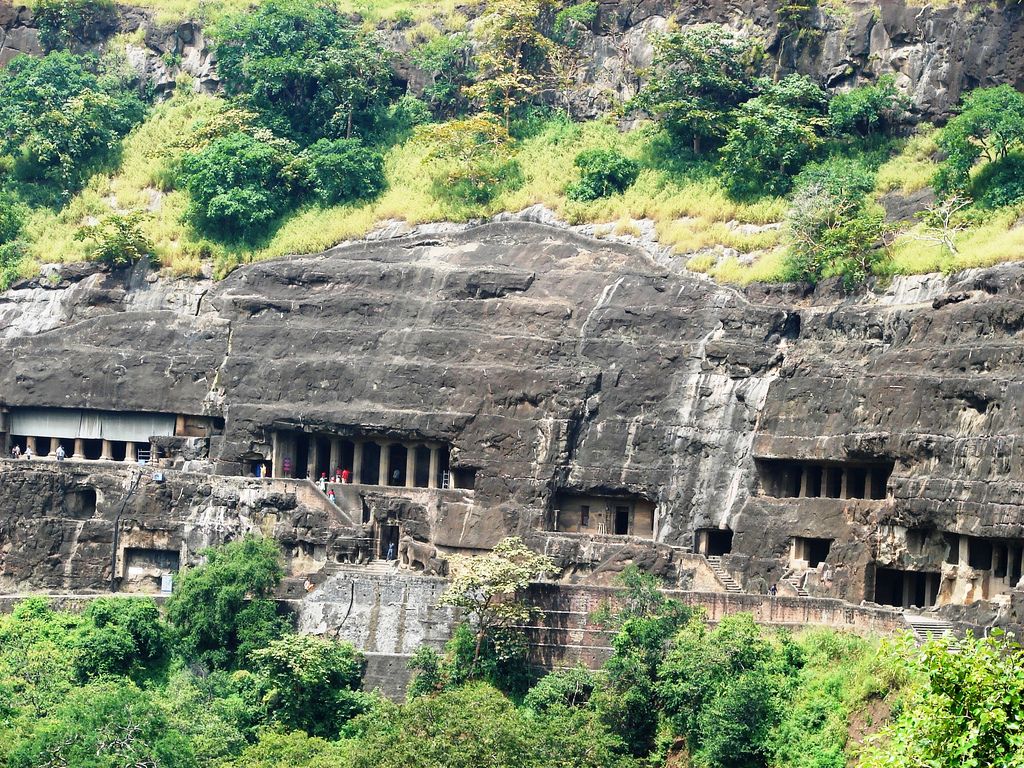
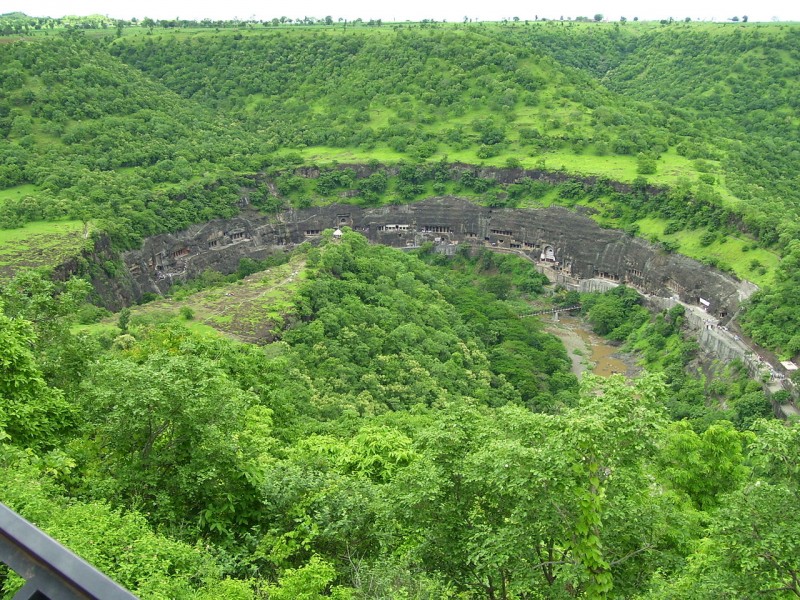
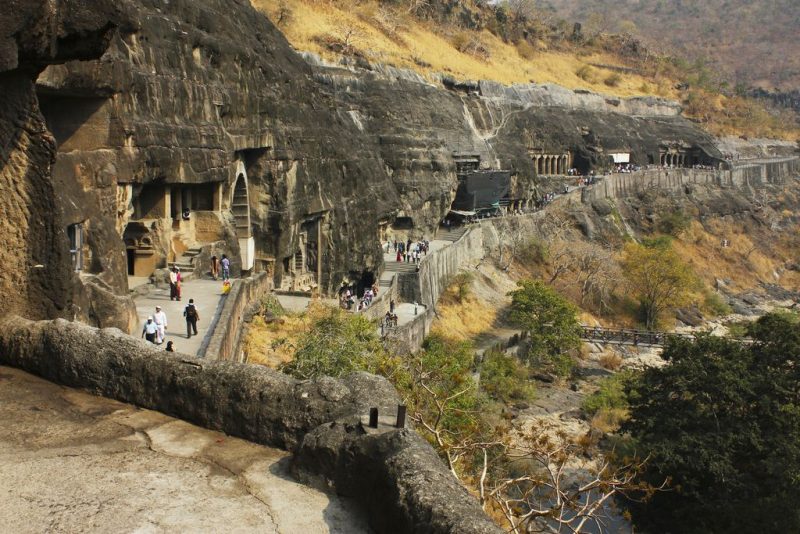
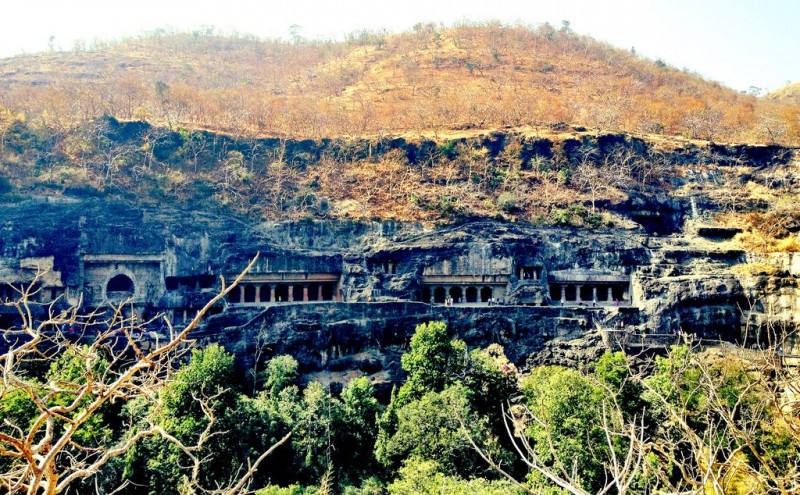
The Ajanta Caves are a series Buddhist cave temples in Maharashtra, India. Dating back to 2nd century BC the Ajanta caves preserve some of the best masterpieces of Buddhist art in India. Many visitors explore the Ajanta Caves in conjunction with the nearby Ellora Caves.

The Ajanta Caves were carved out of a solid rock along the Waghora River. The first Buddhist cave monuments at Ajanta date from the 2nd and 1st centuries B.C. During the Gupta period (5th and 6th centuries A.D.), many more richly decorated caves were added to the original group. They were used by Buddhist monks as prayer halls and monasteries. Ajanta Caves were abandoned in AD 650 in favour of Ellora Caves. Five of the caves were temples and 24 were monasteries, thought to have been occupied by some 200 monks and artisans. The Ajanta Caves were gradually forgotten until their ‘rediscovery’ by a British officer in 1819.

 Ajanta Caves in Maharashtra
Image Source

It is a protected monument under the Archaeological Survey of India and has been listed in the World Heritage list of monuments.

In their range of time and treatments they provide a panorama of life in ancient India and are a source of all kinds of information… hair styles, ornaments, textiles, musical instruments, details of architecture, customs etc. It was from this collection of classical Indian art that a particular style was formed that traveled with Buddhism to many parts of the world. Similar paintings can be seen in Sigiriya in Sri Lanka, Bamiyan in Afghanistan, temples and shrines in Tibet, Nepal, China and Japan.

Today the paintings and sculptures on Buddha’s life, belonging to the more mellow and ritualistic Mahayana Buddhism period, are world famous. Copies of them were shown in the Crystal Palace exhibition in London in 1866.

Rock Cut Ajanta Caves, India
img Source

The first caves were hewn from the bare rock at the time of The Sātavāhana Empire which started around 230BC.  The Sātavāhanas brought peace to India after several foreign invasions and the decline of the previous, Mauryan Empire.  It is not without irony, then, that they were rediscovered by a contemporary invader and representative of a foreign empire.

Although there is widespread debate about the time at which the second period of building took place most now agree that it was probably during the reign of Harishena, from 460AD and over a period of around twenty years.  This architectural flowering saw the creation of twenty temples which were used as monasteries.

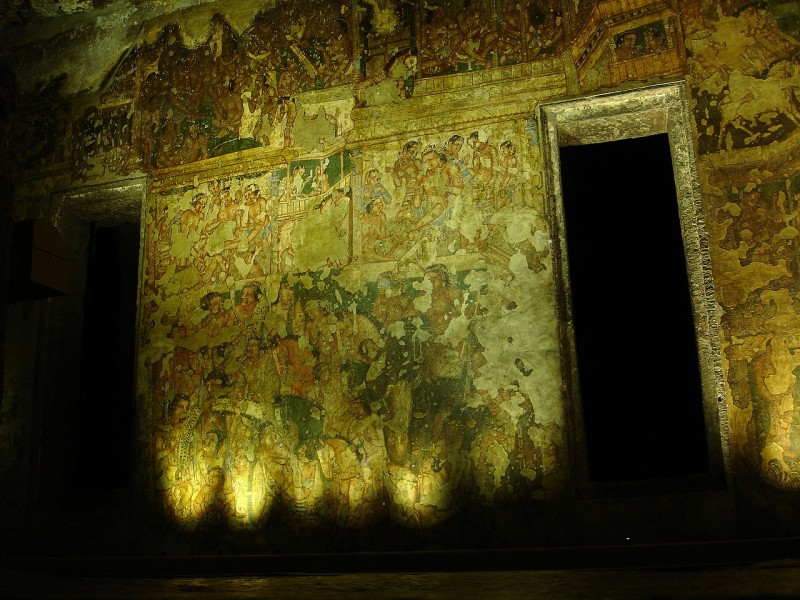
There are paintings everywhere – literally.  Every surface apart from the floor is festooned with narrative paintings.  Time has taken a serious toll on these marvelous works with many parts simply just fragments of what they were when first created.  The stories are almost wholly devoted to Jātakas – tales of the Buddha’s previous lives.  These 547 poems were painstakingly and lovingly painted on to the walls by devotees.

Ajanta cave
Img: Flickr

It has been noticed that the caves are illuminated by natural light for part of the day and it is presumed that metal mirrors or sheets of white cloth were used to reflect sunlight into the inner recesses.

No one knows for sure when and why the caves were abandoned – whether it was a gradual desertion of some event of political and social magnitude took place which precipitated the neglect and final vacation of the site.  Regardless of the reason, for hundreds of years the place remained forsaken, to be rediscovered that fateful day in 1819 by John Smith.

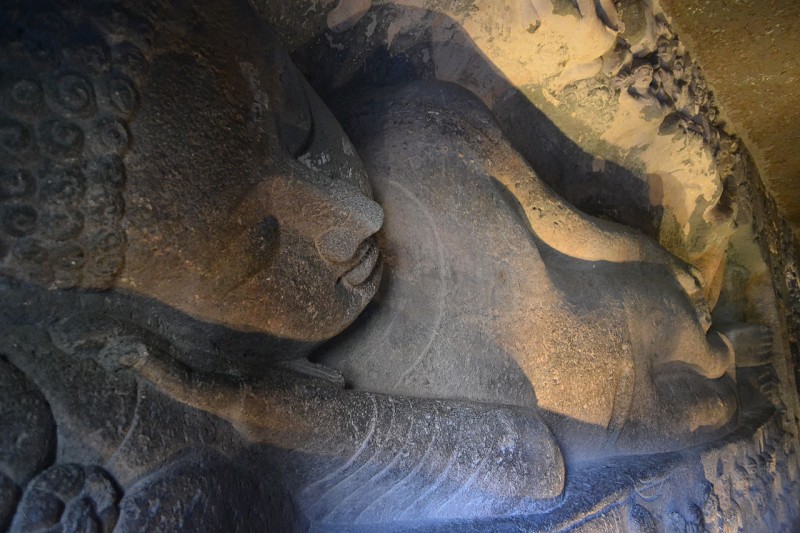
 The picture shows a beautiful image of reclining Buddha at cave no. 26 at Ajanta caves
The picture shows a beautiful image of reclining Buddha at cave no. 26 at Ajanta caves Img: Wikipedia
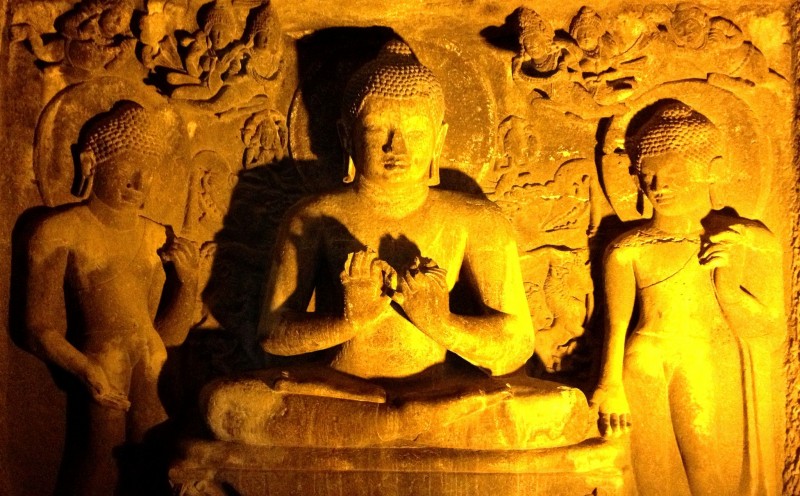
Ajanta Caves
Img: Flickr
Ajanta Caves
Img: Flickr
Ajanta Caves - Cave 2, showing the extensive paint loss of many areas
Cave 2, showing the extensive paint loss of many areas. Img: Wikipedia
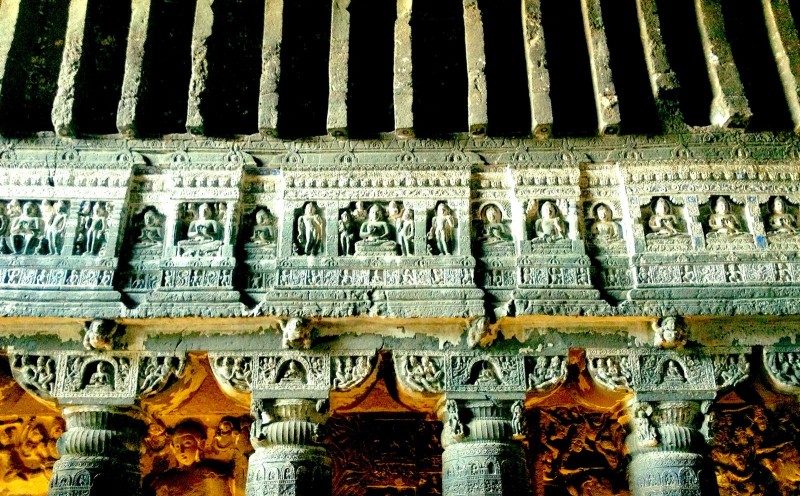
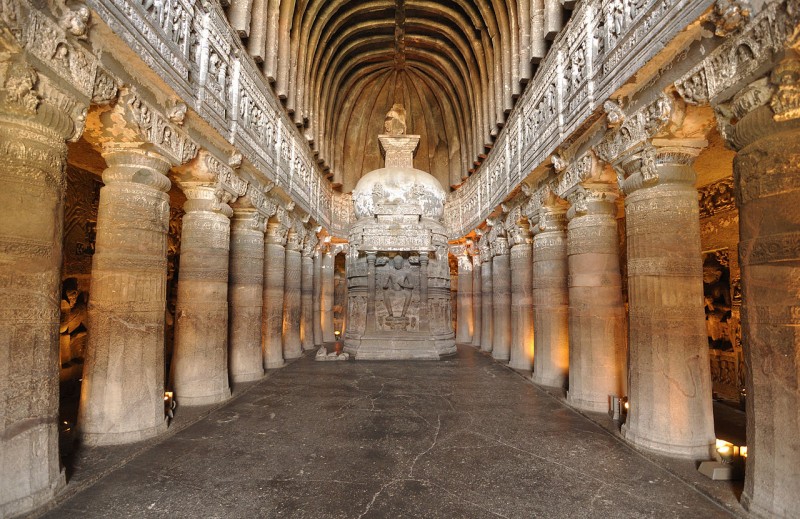
 This is a view of Cave 26, which is a Buddhist "Chaitya Griha" or prayer hall.
This is a view of Cave 26, which is a Buddhist “Chaitya Griha” or prayer hall. Img: Wikipedia