

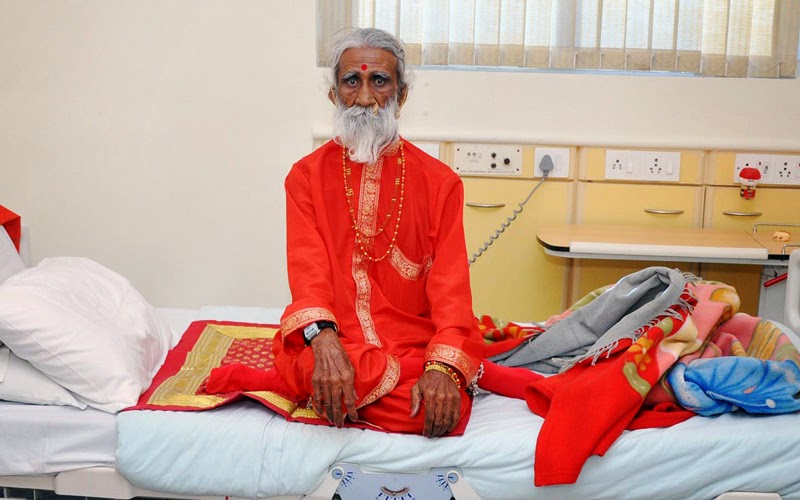
Prahlad Jani, a holy man in India claims that he didn’t eat or drink for 70 years and lives without any kind of food or water. He cleaim that he was blessed by holy goddess, which has enabled him to survive without sustenance. But who is going to believe that right? Medical science tells us that human beings rarely survive more than a week without water, and a couple of months at most without food. How this person could survive all these years without essential minerals and water?
Dwarka Mythical City Found Under Water
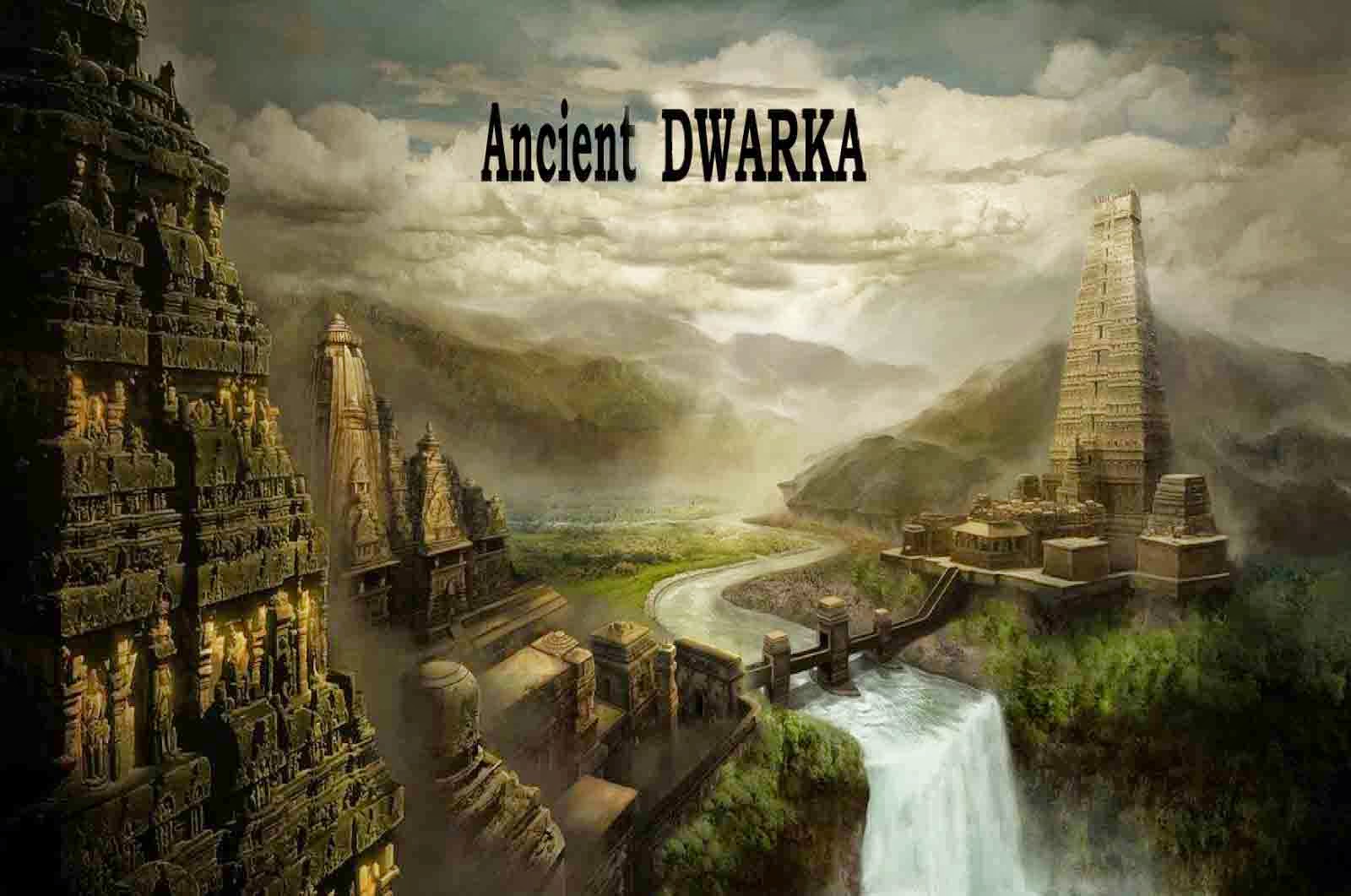
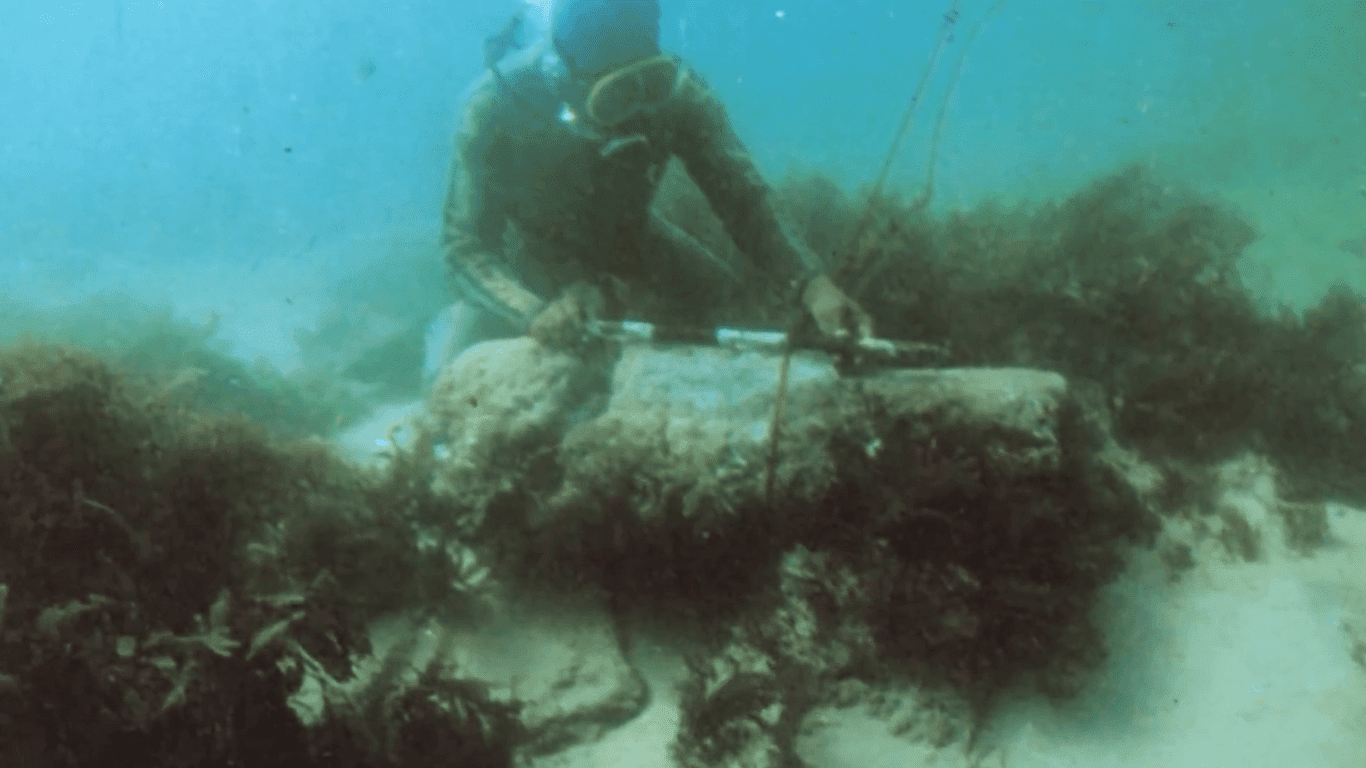
Dwarka, one of the best-studied underwater sites in India, has commanded much attraction, also because the site is considered as one of the four Dhamas (sacred place for pilgrimage) of the Hindu religion. According to ancient Sanskrit literature, the Lord Krishna founded the holy city of Dwarka, which subsequently got submerged under sea.
Marine archaeological explorations off Dwarka have brought to light a large number of stone structures, which are semicircular, rectangular and square in shape in water depth ranging from inter tidal zone to 36 metres (120 feet). They are randomly scattered over a vast area. Besides these structures, a large number of varieties of stone anchors have been noticed along the structures as well as beyond 36 m water depth.
These findings suggest that Dwarka was one of the most busy port centers during the past on the west coast of India. The comparative study of surrounding sites indicates that the date of the structures of Dwarka may be between Historical period and late medieval period.
Mainstream scientists maintain that ancient Indian culture/civilization goes back some 4-5 thousand years. Yet the ruins below the Gulf of Cambay go back at least 9 thousand years, i.e. to the time when the area submerged under water.
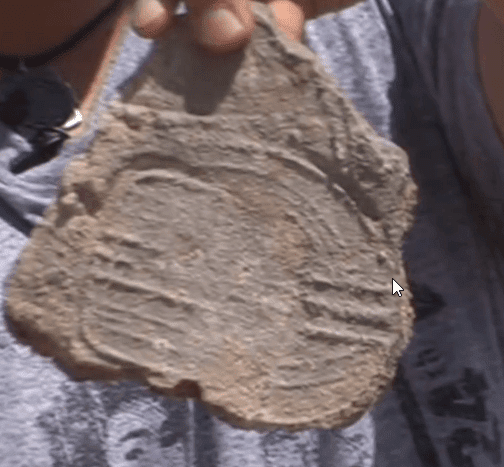
This means that the city must have existed before the flooding, i.e. at least 9 thousand years ago.
The explorations conducted in the Gulf of Cambay waters revealed sandstone walls, a grid of streets and some evidence of a sea port 70 feet under water. The ruins have been proclaimed the remains of the legendary lost city of Dwarka which, according to ancient Hindu texts, was the dwelling place of the deity known as Krishna.
The story of Krishna as told in the sacred scripture Srimad Bhagavatam, describes the scenario that led to the construction of Dwarka. Once, when Krishna was ruling the city of Mathura, the kingdom was repeatedly attacked by Jarasandha, the tyrant King of Magadha (the present day Bihar, India), around 17 times. The Monarch lost to Krishna in all 17 battles, and he attacked Mathura the 18th time. At this stage, Krishna decided to build a separate city on an island in the Western coast of India, to save his citizens, his Yadava clan from the trouble of repeated wars. The city was built by the divine architect, Vishwakarma himself. The city soon grew in fame and became the invincible pivot of Lord Krishna’s mission, housing thousands, in around 900 palaces. The city was well fortified and could be reached only by ship. Dwarka soon became a talking point everywhere, and commanded awe and wonder all over the world.
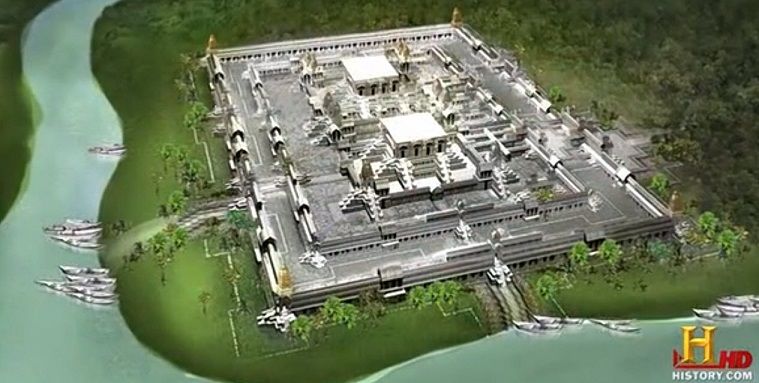
According to ancient Hindu texts Dwarka was attacked with a flying machine Vimana. It is the description of the battle that draws the attention of the ancient aliens theorists, as it seems to suggest it was fought with sophisticated technology and advanced weapons, potentially even with a craft attacking from the orbit. The space craft commenced an attack on the city with the use of energy weapons, which to the on-lookers resembled a discharge of a lightning, and it was so devastating that after the attack most of the city lay in ruins.
Lord Krishna counterattacked and fired his weapons on the ship. They looked like arrows yet they roared like a thunder and shone like rays of the Sun when released.

Until recently the very existence of the city of Dwarka was a matter of legends. Now, that the remains have been discovered under water, and with many clues seeming to suggest that this, indeed, is the legendary Dwarka, dwelling place of lord Krishna, could it be that lord Krishna and his aerial battle with king Salva were more than just a legend?
The implications of accepting the archeologists’ finds as proof that the sunken city is indeed the legendary Dwarka would be very significant for the understanding of what the Mahabharata is. It would no longer be merely a book of myths and legends, but in fact, at least to some extent, a genuine account of past events.
According to the BBC’s Tom Housden, reporting on the Cambay find:
The vast city — which is five miles long and two miles wide — is believed to predate the oldest known remains in the subcontinent by more than 5,000 years. The site was discovered by chance last year by oceanographers from India’s National Institute of Ocean Technology, who were conducting a survey of pollution. Debris recovered from the site — including construction material, pottery, sections of walls, beads, sculpture, and human bones and teeth — has been carbon dated and found to be nearly 9,500 years old (BBC article).
Even if we don’t know what the cultural background of the people is, if it does happen to be a city that is 9500 years old, that is older than the Sumerian civilization by several thousand years. It is older than the Egyptian, older than the Chinese. So it would radically affect our whole picture of the development of urban civilization on this planet.
Watch Documentary movie Dwarka: Atlantis of East
Vimana – Ancient Flying Machine
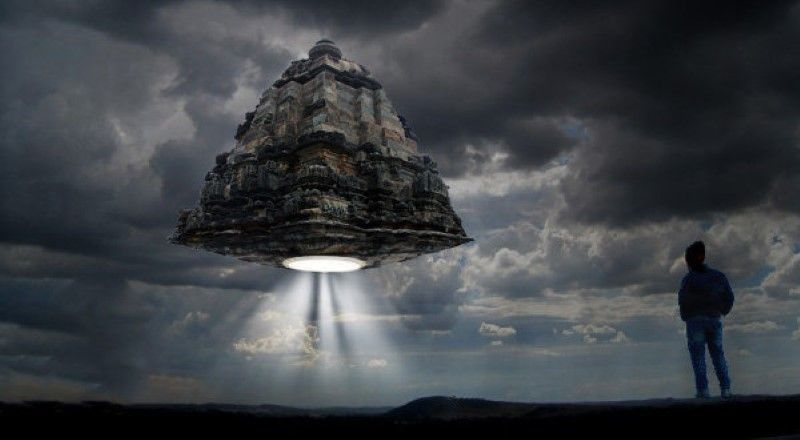
A Vimana is a word with several meanings ranging from temple or palace to mythological flying machines described in Sanskrit texts like Yajurveda, Mahabharata, Samarangana Sutradhara, Rigveda, Ramayana and even older ones. As well as being able to fly within Earth’s atmosphere, Vimanas were also said to be able to travel into space and travel under water.
Vimanas, of various shapes and sizes and with two or more engines, were sophisticated flying machines equipped with deadly weapons, and though they were used for ordinary travel and transports, their main purpose was warfare. Vimanas can fly at great heights with the aid of quicksilver and a great propulsive wind. These Vimanas could apparently travel vast distances and manoeuvre upwards, downwards and forwards.
Some Vimanas were saucer-shaped while others were cigar-shaped. The Vimanas – often described as shining flying cars, or celestial cars – were kept in a Vimana Griha, a type of hanger.
The Vedas, ancient Hindu poems, thought to be the oldest of all the Indian texts, describe Vimanas of various shapes and sizes: the Ahnihotra Vimana with two engines, the Elephant Vimana with more engines, and other types named after the kingfisher, ibis and other animals. According to Veda the Surya dev (God of Sun) and Indra (God of thunder) and several other Vedic deities are transported by flying wheeled chariots depicted to be pulled by animals, usually horses.
In 1975, Swami Dayananda Saraswati concluded, after having studied the Rig-Veda that flying machines did exist in ancient India. In his work entitled “Rigaveda Bhashya Bhumika”, he mentions aircraft in the Vedic mantras that:
“is going from one island to another with these crafts in three days and nights… and just an intelligent people constructed ships to cross oceans… jumping into space speedily with a craft using fire and water… containing 12 stamghas (pillars), one wheel, three machines, 300 pivots, and 60 instruments…”
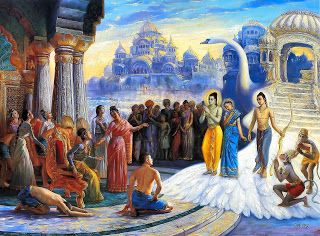
In the Ramayana we have descriptions of a special airplane called Pushpak Vimana. The plane originally belonged to Kubera, who was half brother of Ravana, the demon king and arch villain in the story of Ramayana. Pushpak Vimana was built by Vishwakarma (a celestial architect) under the orders of Brahma (God of Creation). The Pushpaka Vimana was a gigantic plane, of the size a large city entirely, capable of holding unlimited number of people.
Unfortunately, sometime later Ravana stole the ship from him and began using it for his own wicked ends. He used it to even kidnap and carry away Sita (Wife of King Rama) to his capital Lanka. He also used it in his war against Rama. After he was killed in the final battle, his brother Vibhishana, who succeeded him as king, suggested Rama to use the plane to go back home (Ayodhya) without losing further time.
The author of the epic gave a graphic description of the aerial view of the earth as the plane traveled over the subcontinent on its way to Ayodhya. The description was so accurate that according to some it correspond with the aerial view of the subcontinent form the outer space.
In the Mahavira of Bhavabhuti, a Jain text of the eighth century culled from older texts and traditions, we read:
“An aerial chariot, the Pushpaka, conveys many people to the capital of Ayodhya. The sky is full of stupendous flying-machines, dark as night, but picked out by lights with a yellowish glare”
It is evident that ancient Indians flew around in these Vimana, all over Asia, to Atlantis presumably; and even, apparently, to South America. Writings found at Mohenjo-daro in Pakistan is uncannily similar to the Writing found on Easter Island, called Rongo-Rongo writing.
-
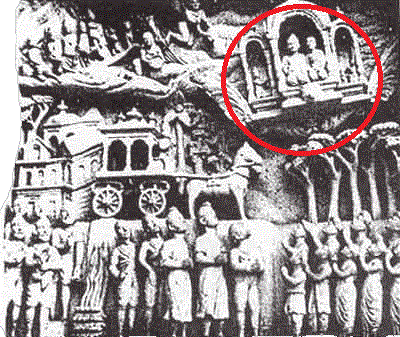
A Vimana depicted in Ellora Caves
In the Mahabharatra, an individual named Asura Maya had a Vimana measuring twelve cubits in circumference, with four strong wheels.
The Mahabharata also mentions the use of flying chariots powered by lightening, capable of flying long distances into the solar system and beyond. There are descriptions of a king Salva using a flying machine to attack Dwaraka and how Lord Krishna fought with him and destroyed the flying machine.
Interestingly in the Mahabharata we also find information about the terrible weapons belonging to the ancient Indian Gods that, in the light of our present day knowledge, do sound uncannily like nuclear weapons. (See also: Nuclear war in Ancient India)
In the epic Srimad Bhagavatham (sixth Canto, Part 3) we come across the following reference:
“One time while King Citaketu was traveling in outer space on a brilliantly effulgent airplane given to him by Lord Vishnu, he saw Lord Shiva… The arrows released by Lord Shiva appeared like fiery beams emanating from the sun globe and covered the three residential airplanes, which could then no longer be seen.”
Another work called the Samarangana Sutradhara contains 230 stanzas that are devoted to flight. It describes in detail, every possible aspect of flying. The International Academy off Sanskrit Research in Mysore, India, conducted a study of this ancient texts and published its findings in a book called ‘Aeronautics, a manuscript From the Prehistoric Past’. The following are a few translated excerpts from the text:
‘The aircraft which can go by its own force like a bird – on the earth or water or through the air – is called a Vimana. That which can travel in the sky from place to place is called a Vimana by the sage of old.’
‘The body must be strong and durable and built of a light wood [Lagha-daru], shaped like a bird in flight with wings outstretched [mahavinhanga]. Within it must be placed the mercury engine, with its heating apparatus made of iron underneath’.
‘In the larger craft [Daru-vimana], because it is built heavier, [alaghu], four strong containers of mercury must be built into the interior. When these are heated by controlled fire from the iron containers, the Vimana possesses thunder power through the mercury. The iron engine must have properly welded joints to be filled with mercury, and when the fire is conducted to the upper parts, it develops power with the roar of a lion. By means of the energy latent in mercury, the driving whirlwind is set in motion, and the traveller sitting inside the Vimana may travel in the air, to such a distance as to look like a pearl in the sky’.
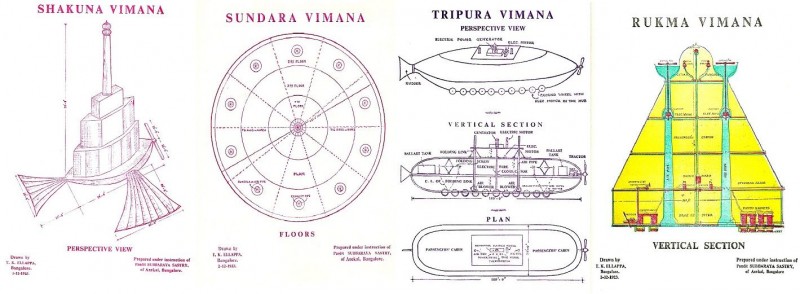
In 1875, the Vaimanika Shastra, an ancient Indian text written by Sage Bharadvaja, using even older texts as his source, was rediscovered in a temple in India. It dealt with the operation of Vimanas and included information on the steering, precautions for long flights, protection of the airships from storms and lightening and how to switch the drive to “solar energy” from a free energy source which sounds like “anti-gravity.”
Watch Documentary: Vimana – The Flying Chariots Of The Gods
Later in 1895 Shivkur Bapuji Talpade, a Hindu scientist attempted to construct a flying machine – called Marutshakha – based on an ancient text’s instructions, which traveled 1800 feet before crashing to earth.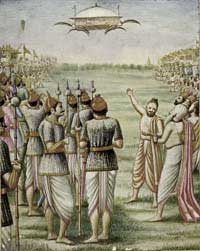
Vaimanika Shastra was rewritten by Pandit Subbaraya Shastry (1866–1940), who dictated it during the years 1918–1923. It contains 3000 shlokas in 8 chapters which Shastry claimed was psychically delivered to him by the ancient Hindu sage Bharadvaja. According to the Vaimānika Shāstra, the Vimanas of the ancient texts were actually true aerodynamic flying machines. Text contain details of the construction of these unbreakable machines, as well as a number of secrets, such as turning the machines invisible, making them motionless, and performing supernatural abilities like causing your enemies to lose consciousness or photographing the insides of their planes. Text also describes in detail, the construction of what is called, the mercury vortex engine the forerunner of the ion engines being made today. The text was translated to Hindi in 1959, and later to English in 1973.
Sixth book written by Nine Unknow men, a secret society founded by Emperor Ashoka, contain secret of Gravitaion. This book, known to historians, but not actually seen by them dealt chiefly with “gravity control.” It is presumably still around somewhere, kept in a secret library in India, Tibet or elsewhere (perhaps even in North America somewhere). Ashoka kept work secret because he was afraid that the advanced science catalogued by these men, would be used for the evil purpose of war. The “Nine Unknown Men” wrote a total of nine books, presumably one each.
It is claimed that a few years ago, the Chinese discovered some Sanskrit documents in Lhasa, Tibet and sent them to the University of Chandrigarh to be translated. Dr. Ruth Reyna of the University said recently that the documents contain directions for building interstellar spaceships!
A few years ago, reports surfaced on the Internet of a Vimana discovered by the United States military in a cave somewhere in Afghanistan. As incredible as that, itself, sounds, the Vimana was also allegedly encased in a “time well,” leading to the disappearance of at least eight soldiers who attempted to retrieve it.
Many think they were talking about ancient UFOs, others say is pure myth. Still, not only these are precise descriptions, of machines, but one can also find an astonishing resemblance in the new NASA vehicle , Dragon, launched by SpaceX.
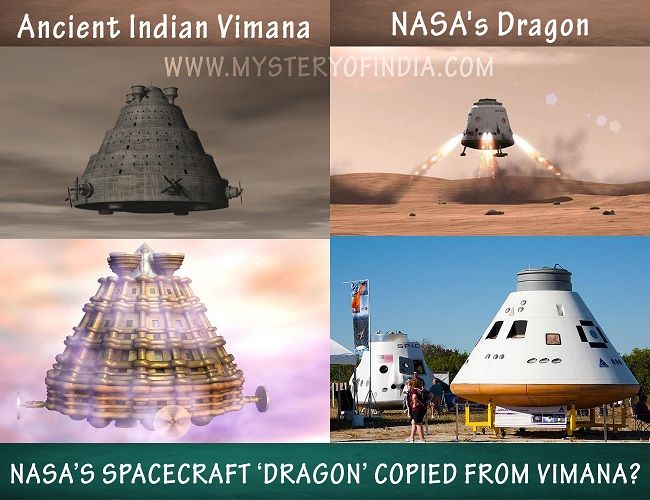
Source:
Secret alien Base on Himalaya
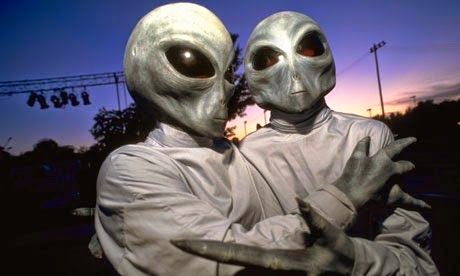
Kongka La is the low ridge pass in the Himalayas. It is in the disputed India-China border area in Ladakh. The Chinese held northeastern part is known as Aksai Chin and Indian South West is known as Ladakh. This is the area where Indian and Chinese armies fought major war in 1962.
La Storia di Bhagat Singh
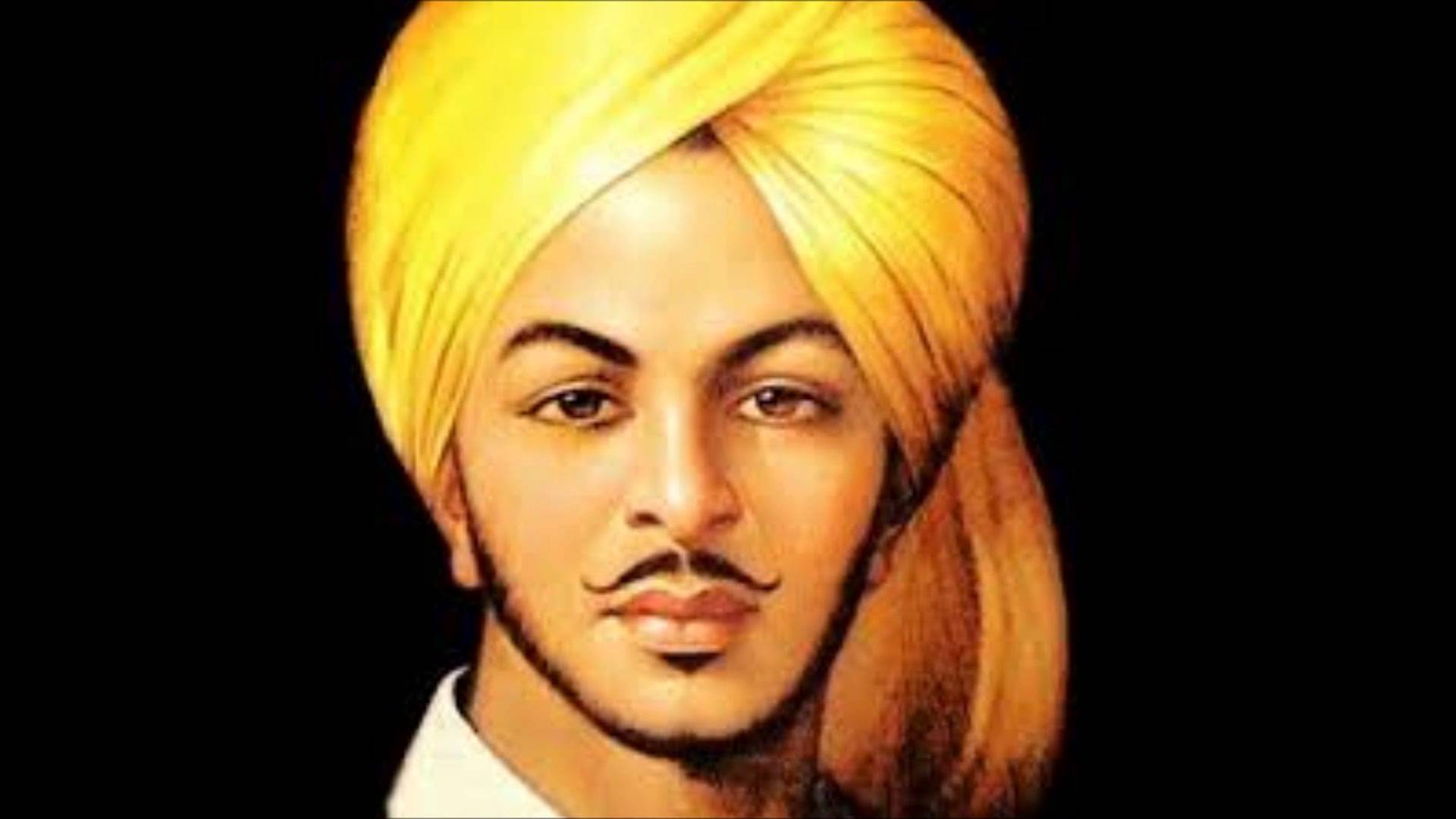
 Bhagat Singh (28-9-1907– 23 -3-1931) è stato un rivoluzionario Indiano. È nato in una famiglia Sikh nel distretto di Lyallpur in Punjab (oggi in Pakistan) e cresciuto a Nawanshahr, in Punjab (oggi in India) dove la sua famiglia si era spostata. Alcuni membri della sua famiglia avevano partecipato al movimento d’indipendenza Indiano. In gioventù Bhagat Singh studia i movimenti rivoluzionari Europei ed è attratto dalle idee di anarchismo e Marxismo.
Il Massacro di Amritsar
Singh è stato influenzato da una serie di avvenimenti tragici durante la sua infanzia. Il 13 aprile 1919, migliaia di Indiani si radunarono nel cuore della città di Amritsar (in Punjab) nel giorno della festa Baisakhi.
Il raduno sfidava l’articolo della legge marziale che proibiva le riunioni di cinque o più persone in città. Il luogo del ritrovo, il Jalianwalla Bagh, era un parco circondato su tutti i lati da mura di mattoni e con una sola stretta apertura per l’accesso e l’uscita.
Le truppe inglesi erano guidati dal generale Dyer, che ordinò ai soldati di aprire il fuoco senza alcun preavviso, causando almeno 379 morti e oltre 1200 feriti (secondo altre stime morirono più di 1000 persone).
Bhagat Singh visita subito il luogo del massacro, che instilla in lui un profondo patriottismo e un forte odio verso gli inglesi. Nel 1920 partecipa al movimento di non cooperazione di Gandhi. Disilluso dalla filosofia di Gandhi della non-violenza, nel 1922 si uni al movimento rivoluzionario dei giovani (Young Revolutionary Movement). L’anno successivo, per evitare il matrimonio scappa di casa lasciando una lettera:
“La mia vita è stata dedicata alla nobile causa, quella della libertà del Paese. Pertanto, non c’è riposo o desiderio del mondo che mi può attirare ora …”
Lala Lajpat Rai e l’omicidio di Saunders
Nel 1928 il governo Britannico istituisce una commissione per riferire sulla situazione politica in India. La commissione viene accolta con proteste a livello nazionale perché tutti i suoi membri sono gli inglesi. Il 30 ottobre 1928, quando la commissione visita Lahore, il politico Lala Lajpat Rai organizza una protesta non violenta contro la commissione, ma la polizia risponde con la violenza. Rai viene gravemente ferito e muore il 17 novembre 1928. Bhagat Singh decide di vendicarlo e si unisce all’Hindustan Socialist Republican Association (HSRA), pianificano insieme ad altri rivoluzionari l’assassinio del Sovrintendente della polizia Scott. Per errore Bhagat Singh e Rajguru sparano a Saunder, che è assistente di Scott. Si nascondono per due giorni e poi prendono il treno da Lahore a Bathinda. Per evitare il riconoscimento si taglia capelli e barba, vestono abiti occidentali e riescono a sfuggire con successo.
La bomba nella Central Legislative Assembly

Per combattere i rivoluzionari come Singh, il governo Britannico decide di fare una legge con la quale i poliziotti siano liberi di sparare. L’8 aprile 1929 Bhagat Singh e il suo amico Dutt decidono di lanciare bombe fumogene nella Central Legislative Assembly. Il loro obiettivo è di ottenere pubblicità e far svegliare gli Indiani contro gli Inglesi. Tutta la sala si riempie di fumo e del grido di Inquilab Zindabad (viva la rivoluzione); i due si fanno arrestare dicendo ci vuole un forte rumore per fare udire i sordi. Le bombe vengono gettate lontano dalle persone e non sono abbastanza potenti per causare danni.
Il 15 aprile 1929 la polizia scopre la fabbrica di esplosivi che ha prodotto le bombe ed arresta alcuni membri dello HSRA, sette dei quali diventano informatori aiutando la polizia a collegare Singh, Rajguru e Suklhdev con l’omicidio di Saunder. Singh decide di usare la corte come strumento per rendere pubblica la causa per cui lotta: l’indipendenza dell’India.
Lo sciopero della fame in carcere
Bhagat Singh viene rinchiuso nel carcere di Delhi, dove nota la discriminazione tra prigionieri Indiani ed Europe; insieme ad alcuni prigionieri fa uno sciopero della fame per protestare contro questa illegalità. Egli chiede l’uguaglianza di cibo, dei vestiti, la disponibilità di libri e di giornali e che i prigionieri indiani non siano costretti a fare un lavoro manuale e poco dignitoso e salutare.
Il governo cerca di interrompere lo sciopero fornendo cibo di qualità e riempiendo le brocche d’acqua con latte, in modo che i prigionieri rimangano assetati, ma nessun prigioniero interrompe lo sciopero. Poi l’autorità utilizza i tubi l’alimentazione forzata, ma anche questo tentativo fallisce.
Poiché lo sciopero della fame ha guadagnato la popolarità e ha attirato l’attenzione della gente a livello nazionale, il governo decide di anticipare il processo per omicidio di Saunders. Il 13 settembre 1929, lo scioperante Das muore con la fame, mentre altri cinque interrompono lo sciopero. Bhagat Singh e Dutt continuano lo sciopero e lo terminano con successo dopo sessantacinque giorni.
Tribunale speciale ed esecuzione
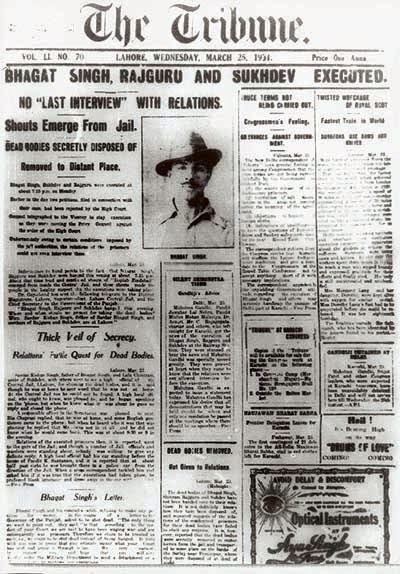 |
| La prima pagina di The Tribune, che riporta l’esecuzione di Singh –Image Sourc |
Per accelerare il processo per l’omicidio di Saunders, viene creato un tribunale speciale composto da tre giudici. Il processo inizia il 5 maggio 1930 contro diciotto accusati, tre dei quali diventano testimoni. Il 7 ottobre 1930, il tribunale conclude il suo lavoro sulla base di tutte le prove. Bhagat Singh, Rajguru e Sukhdev sono condannati a morte per impiccagione, mentre altri 12 sono stati condannati al carcere a vita.
Bhagat Singh non teme di morire, infatti rifiuta di fare ricorso e di chiedere la grazia: desidera morire in modo da ispirare i giovani. Nella sua ultima lettera ha scritto: sono stato arrestato durante una guerra. Per me non ci può essere forca. Mettetemi nella bocca del canone e sparatemi.
Il 17 marzo 1931, il ministero dell’interno del Punjab anticipa l’impiccagione dal 24 al 23 marzo. Bhagat Singh, Rajguru e Sukhdev vengono informati poche ore prima dell’esecuzione, e vengono impiccati al 23 marzo 1931 alle 19:30 nel carcere di Lahore.
L’autorità del carcere ha cremato in segreto i tre martiri e poi ha gettato le ceneri nel fiume Sutlej.
Per la prima volta le esecuzioni sono state eseguite di sera, con un anticipo di 11 ore e senza informare le famiglie degli accusati.
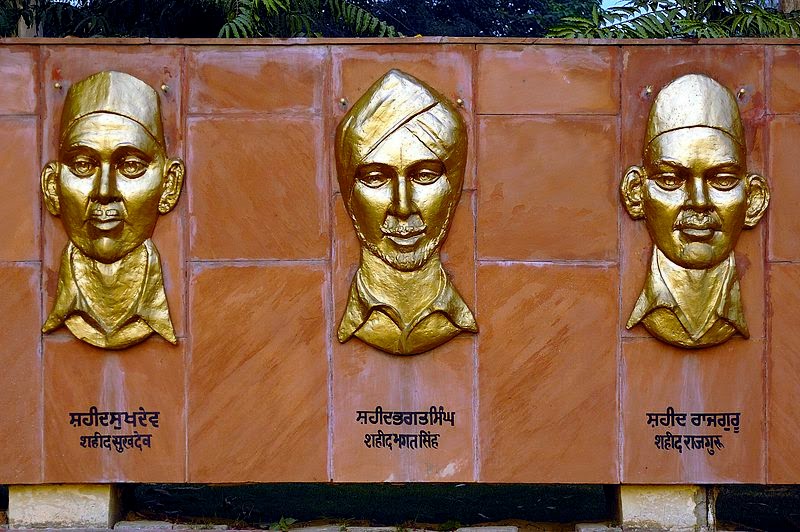 |
| Il monumento in memoria di Sukdev, Bhagat Singh e Rajguru a Hussainwala sulla riva del fiume Sutlej, ad 1 km dal confine India-Pakistan – Foto di Giridhar Appaji Nag |
La reazione all’esecuzione e la popolarità
L’esecuzione di Singh, Rajguru e Sukhdev è stata riportata ampiamente dalla stampa. I giovani hanno organizzato proteste contro il governo inglese.
Quattro giorni dopo l’esecuzione, la fotografia di Bhagat Singh è venduta in quasi tutte le città Indiane e la sua popolarità supera anche a quella di Gandhi.
Bhagat Singh è stato cremato sulla riva del fiume Sutlej, a solo 1 km dal confine India-Pakistan.
Nel parlamento Indiano è stata installata una statua di Singh che è alta cinque metri. Sono stati inoltre costruiti vari musei in suo onore.
Nel 1968 è stato emesso un francobollo in memoria di Bhagat Singh.
Nel 2008 è stato nominato “greatest Indian” dalla famosa rivista India today.
Nel 2012 The reserve bank of India ha deciso di introdurre una moneta di 5 Rupia con il foto di Bhagat Singh.
Fonte: Bhagat Singh – The Eternal Rebel di Malwinder Jit Singh Waraich,, Publications Division, Ministry of Information & Broadcasting, Government of India, 2006