
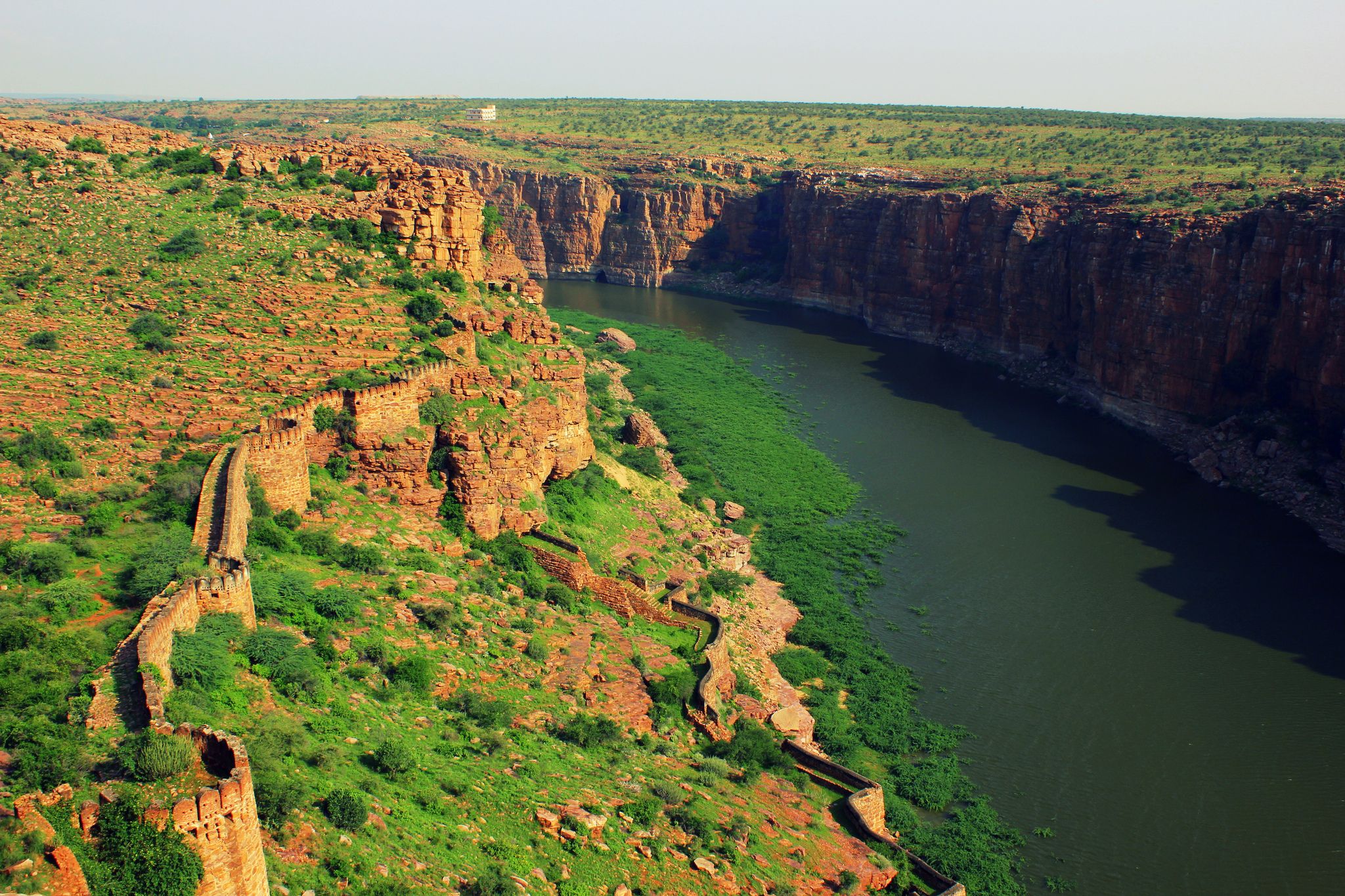
Gandikota: The Hidden Grand Canyon of India

Gandikota is a small village located in Kadapa district in Andhra Pradesh, India. The region of Gandikota was established in 1123 under the Western Chalukyan king of Kalyana named Ahavamalla Someswara I. The Gandikota fort was constructed by the Kappa king during 13th century.

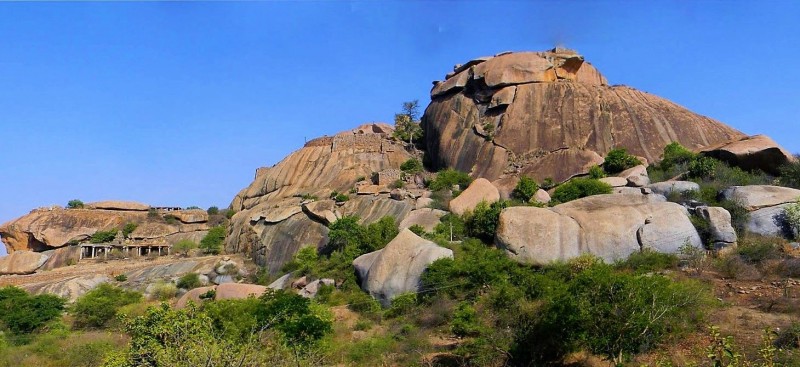
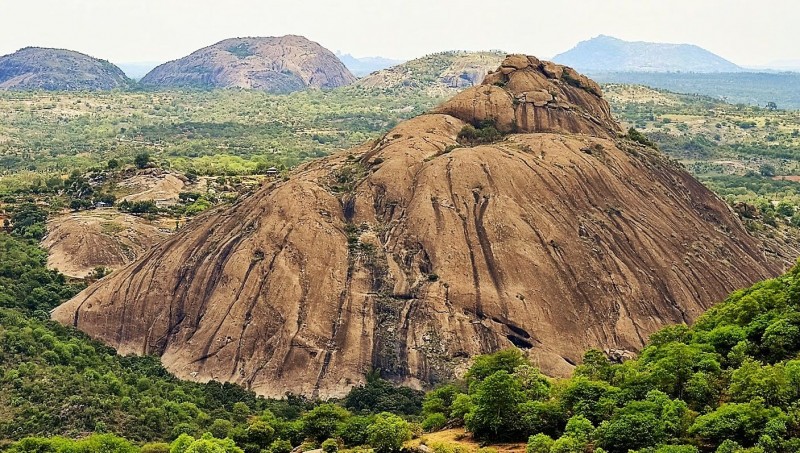
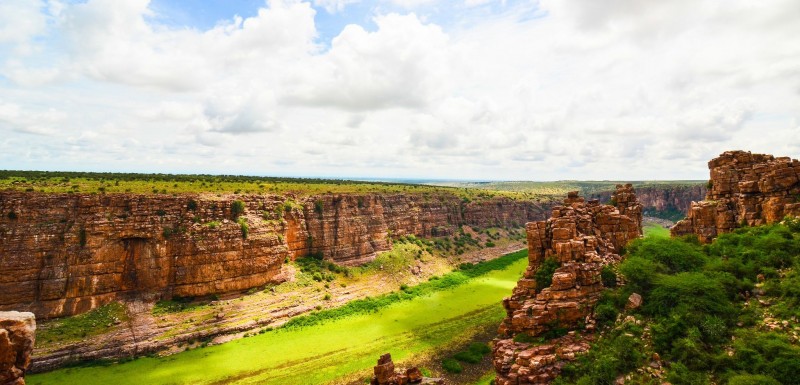
Situated on the banks of river Pennar, Gandikota derives its name from two Telugu words ‘Gandi’ meaning gorge and, ‘kota’ meaning fort.  Also known as George fort,  it is guarded by a huge entrance gate that’s 20 feet high and 101 bastions each over 40 feet high. The fort is surrounded by the deep gorge, impenetrable hills and dense forest. The landscape also includes monolithic boulders of red granite. All these provide a natural line of defence to the residents of the fort.

The area is full of rocky plains and dry plateau landforms with the Penner river flowing in the background. At present, Gandikota Fort lies in ruins and it is now only a tourist attraction.

Gandikota have been under the rule of numerous empires- The Chalukya, Viyanagara, Nayaka, Mughal, Quli Qutub and also the British. Hence, the region has a mixed reminiscence of all these reigns, with a higher significance of Nayaka dynasty who took over the control of this fort and approximately used its for 300 years.
Gandikota
Img: Flickr

Gandikota was one of the greatest forts of south India in its heydays and so were the kings who ruled the region. Various kings of this fort become the hero for local population due to their bravery and their songs are in custom.

The people here have a distinctive culture; their way of dressing, festivals and food etc. are inspired by their ancestors who ruled the Gandikota. The Pemmasani Nayaks who seem to have ruled this place for three centuries is belived to have descended from the Kakatiya Dynasty of Warangal. Perhaps, the culture may be a result of evolution from the Kakatiyan Culture.
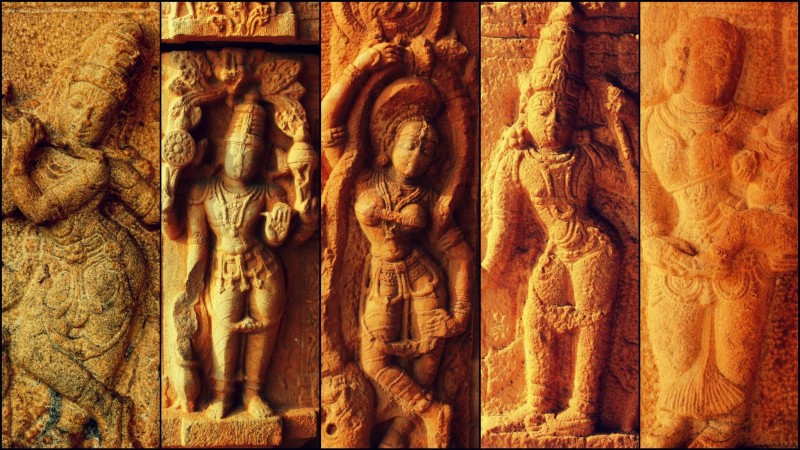
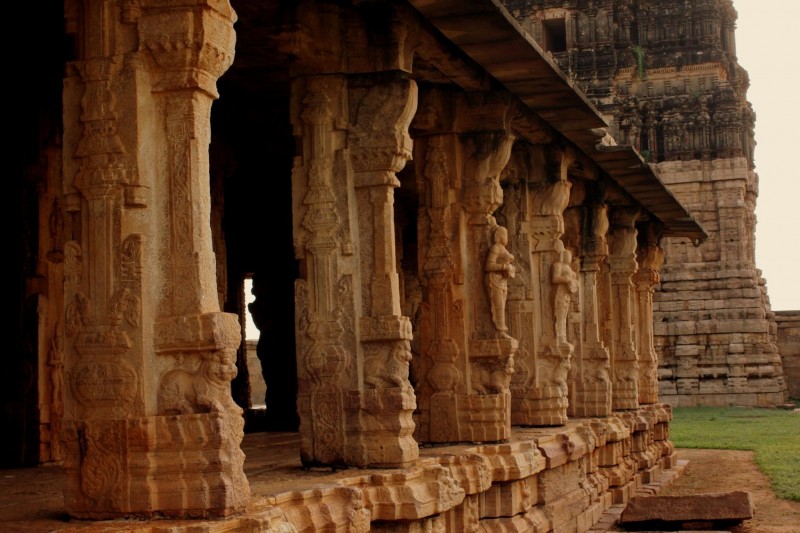
Sculptor Gandikota
Img: Flickr

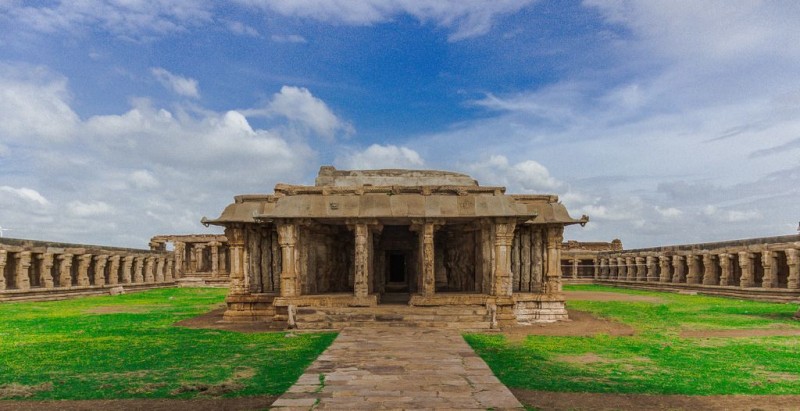
This quaint little village situated on the banks of the Pennar River, is home to some major historical structures. The fort premises include small fortresses, a granary, two beautiful temples and a splendid mosque. All of these ruins speak of their prime even as the structures seem to be on the verge of crumbling.

Gandikota Fort comprises of several other structures, such as, a palace, a magazine, another granary and a pigeon tower which included fretted windows. The palace was mostly constructed with bricks and included plastered decorations. There were also a few wells in the palace. There is also a cannon which is still present in the premise of the fort. There were also many gardens and springs in and around Gandikota Fort. A garden named Parebagh was also present at the foot of the hills. It included a waterfall on the bank of the river Penneru.

Ranganath Swami Temple

This temple has its importance due to very ancient. This temple is an example of fine architecture and design. It is believed that this temple is constructed before 500 years ago. The building is very attractive and put a dashing impact on devotee because of its surroundings.
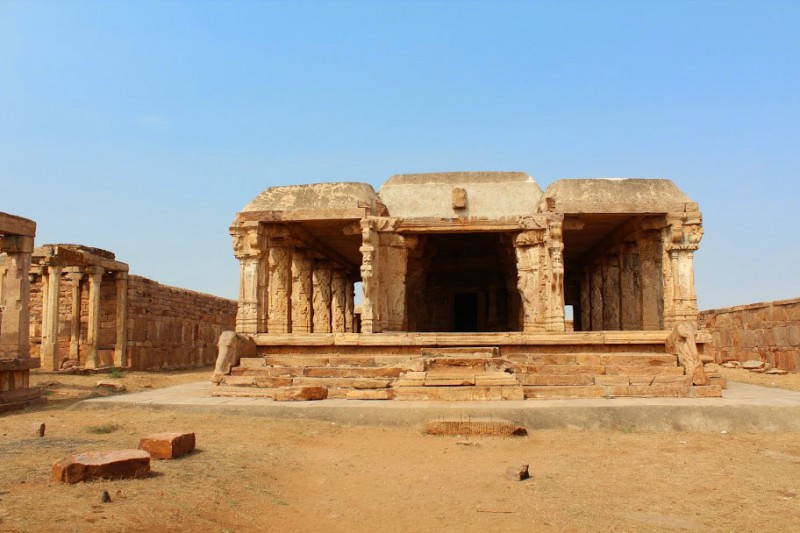
Ranganatha Swamy Temple ruins, Gandikota
Ranganatha Swamy Temple ruins Image Source

Madhava Swami Temple

The Madhavaraya Temple is the grandest structure in Gandikota or perhaps, in the entire region and its grandeur is on par with the temples of Hampi. Architecture of this temple is a little more difficult than of Ranganath Swami temple. Interiors are more attractive than exterior. There are small statues and sculptures of Hindu Gods carved over the Gopuram and walls of the temple.
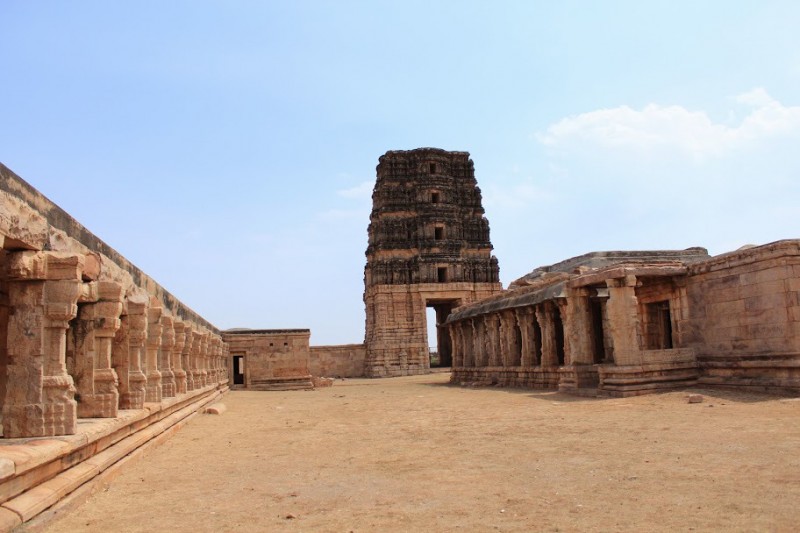
Madhavaperumal temple, Gandikota
Madhavaperumal temple Image Source

Jamia Masjid

This masjid inside the fort has covered a lot of area as the expansion of this mosque is vast to accommodate the people for offering Namaz.

Rayalacheruvu Lake

This Lake is adjacent to the fort and origins from Pennar River. It is said that a fountain inside the mosque is connected with this lake but direct sources of the pipes are not seen.

The granary, Gandikota

The granary is said to be used for storing grains. It is adjacent to the Jamia masjid and to the west of Raghunathaswamy temple.

There are yet many unexplored places and things in the region. Recent architectural research has revealed the presence of underground passages that connect the fort with the valley. The traps set to capture leopards and other animals are still in their place.
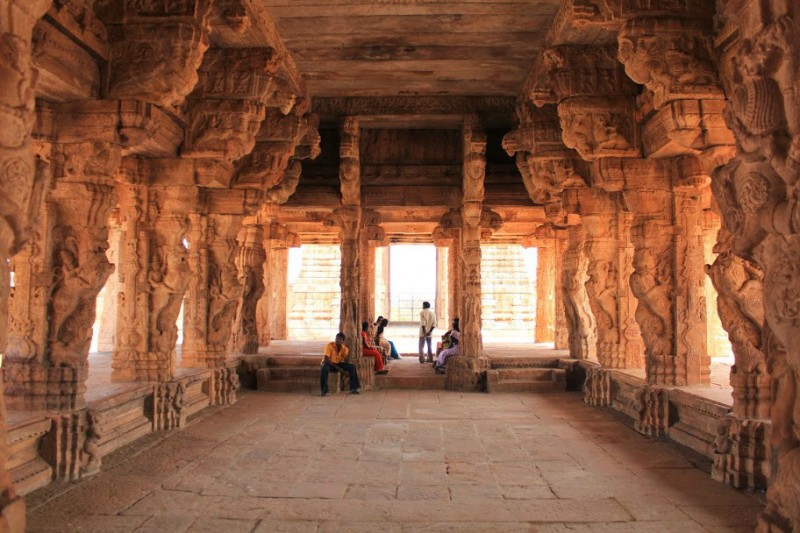
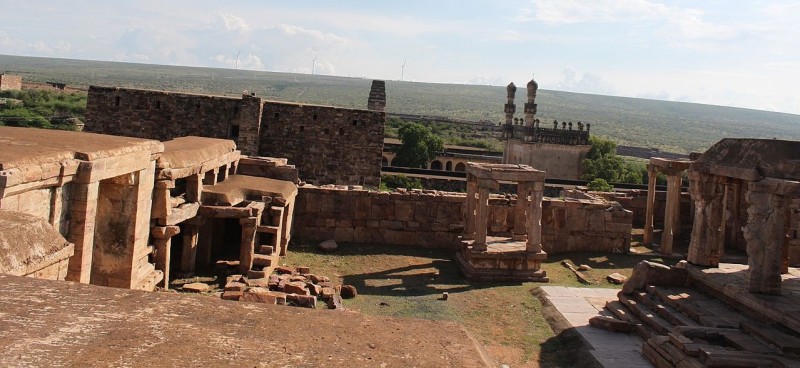
Ornately decorated mandapa of Madhavaraya temple at Gandikota
Image Source
The Panorama, Gandikota
Image Source
Gandikota
Img: Flickr
Gandikota
Img: Flickr

Shravanabelagola, Belur and Halebeedu Temples: Hidden gems of Karnataka

1

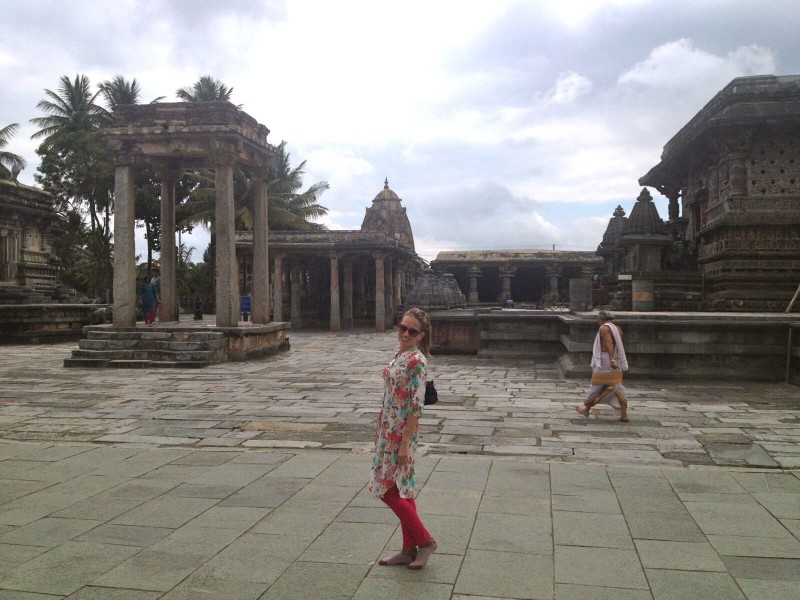
During my last visit to Bangalore in 2015, I took a one day trip to Shravanabelagola, Belur and Halebeedu Temples in the state of Karnataka. This region in South India is full of temples and lush vegetation. The three temples are quite far from each other and are well worth a trip if you can spare a day while in Bangalore. The tour is ideal for anyone who is a fanatic of temples and heritage, like I am. I booked the tour at the Karnataka Holidays website for about 800 rupees in an AC bus. Quite cheap considering it lasted sixteen hours! I was truly amazed since none of the countries I’ve been to offer such long day trips. I really liked it though since I got to see so much in a day and without the tour, it would have been impossible for me to see the three temples.

The tour left from Badami House in Bangalore at 6am. Throughout the day, the bus stopped at roadside restaurants for breakfast, lunch and dinner. Food wasn’t that good due to restaurants being the typical stop over for tourists but it was eatable. Other than that, there’s people and stalls selling fresh fruits, cold drinks and snacks at each stop, where you can recharge your energy.

Shravanabelagola & Darshan of Lord Bahubali (Gomateshwara)

This is a Jain temple, a religion that does not follow any supreme being and concentrates on bringing the soul to divine consciousness for liberation. I had never thought about the possibility of an atheistic religion. Some of the main elements of this religion are non-violence, truth, non-stealing, non-attachment to material goods.Shravanabelagola & Darshan of Lord Bahubali (Gomateshwara)

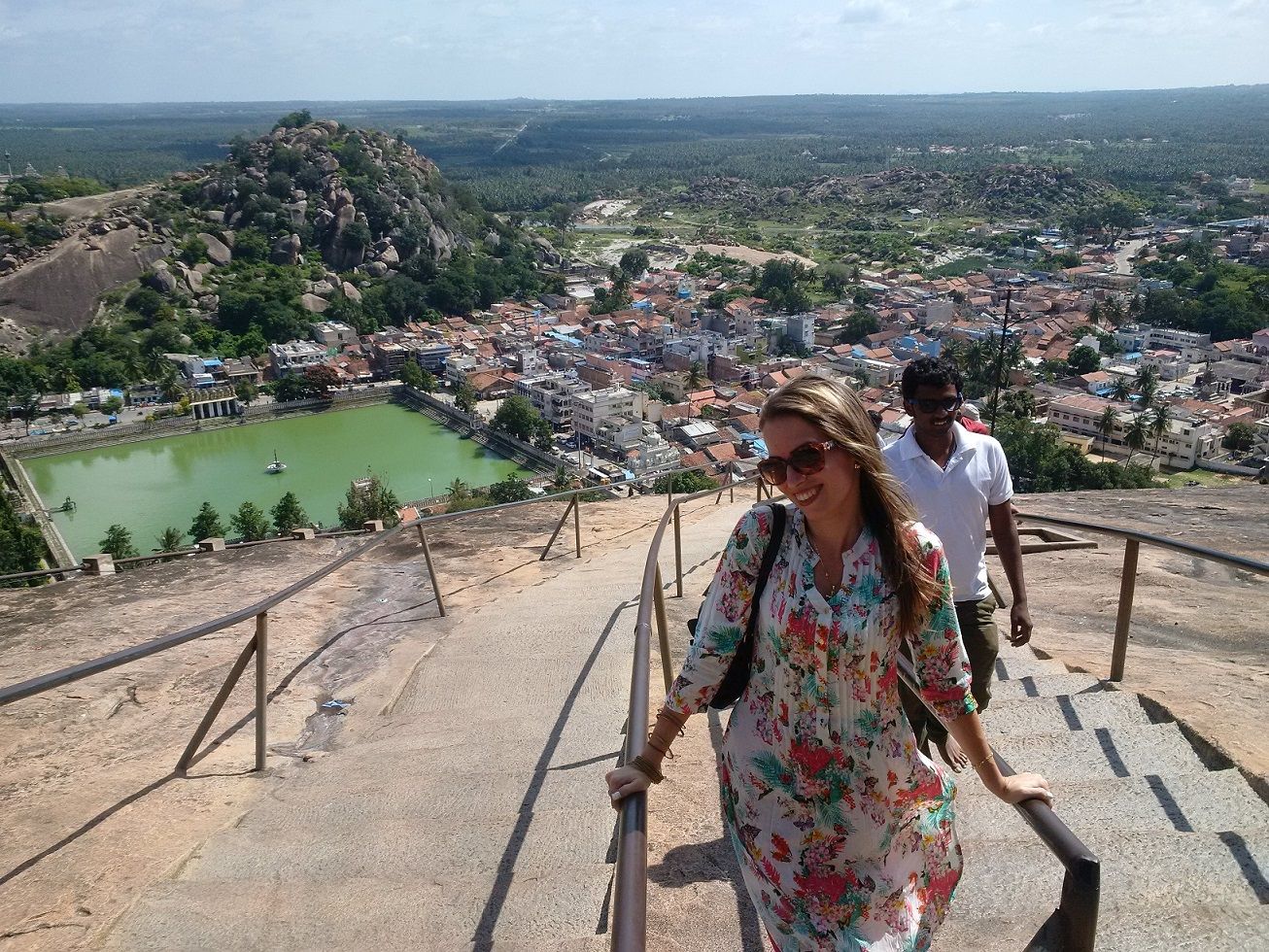
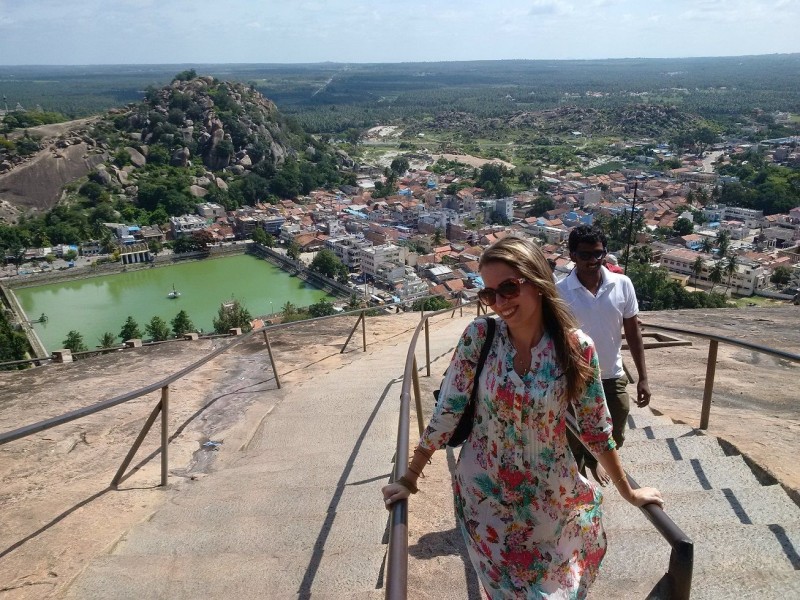
The temple is located at the peak of a mountain. You have to go up some steps. At the top, you will be rewarded with breathtaking views of the temple surroundings. The temple houses the highest monolithic of the world, measuring about 18 meters. It is the figure of Gommateshvara Bahubali. It is believed that this was the first human being to attain liberation of his soul in the middle of its life cycle. It dates from the tenth century. This is one of the most important places of Jain pilgrimage. Regardless of religion in India, it is traditional to make pilgrimages to holy places. Every twelve years, this monolithic is bathed in milk and other foods, including gold coins as a sign of devotion.

It’s worth going around the temple to get even more views but one needs to hurry up a bit because the bus doesn’t stop for long.bahubali (Gommatesh)

Hoysala style Chennakeshava temple, Belur

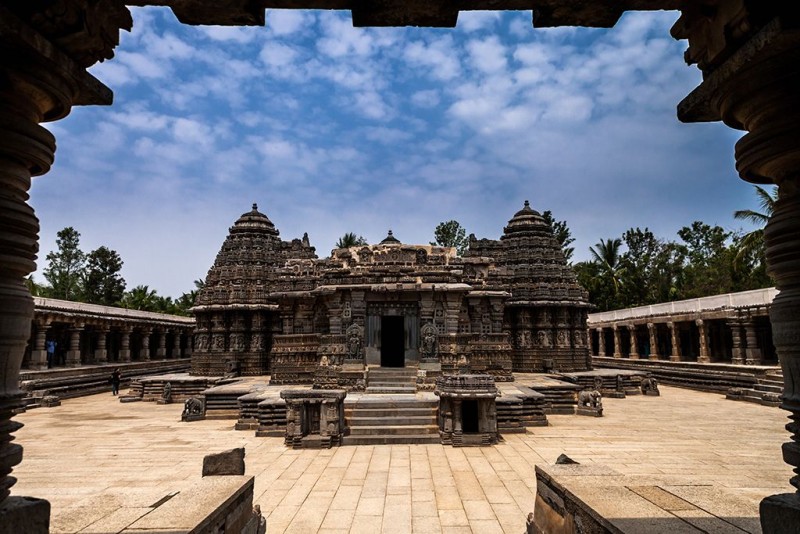
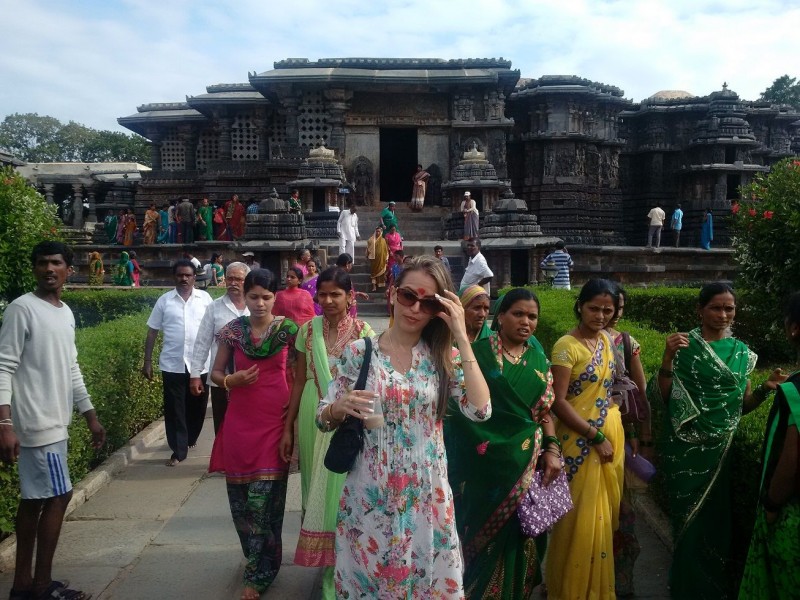
The Chennakeshava Temple dates from the twelve century and was built by the Hoysala Empire King Vishnuvardhana or Bittideva (Bittideva was the name of the king when he was Jain, he converted to Hinduism during his reign) probably to commemorate military successes. This is the first temple in this style to have been built by the kings of the Hoysala dynasty. A large temple, highlighting its luxurious décor which was completed by the founder’s grandson. Within the complex there are several temples in various sizes.Chennakesava Temple, Belur, Karnataka-

The Chennakeshava Temple was built on a star-shaped platform, typical feature of Hoysala style. Its walls are richly decorated with very refined carvings, decorated with panels and reliefs depicting deities. The Sikhara (rising tower) above the sanctuary has disappeared but the sculptures at are still numerous and intricate. The temple is famous for its finely carved little figures that consist of dancers, musicians, young women in a vegetal setting and in daily life poses, called madanikas (or mandanakai, Salabhanjika, Shalabhajika or yakshi).Chennakesava temple, Belur Karnataka

Hoysala style Hoysaleswara Temple, Halebeedu

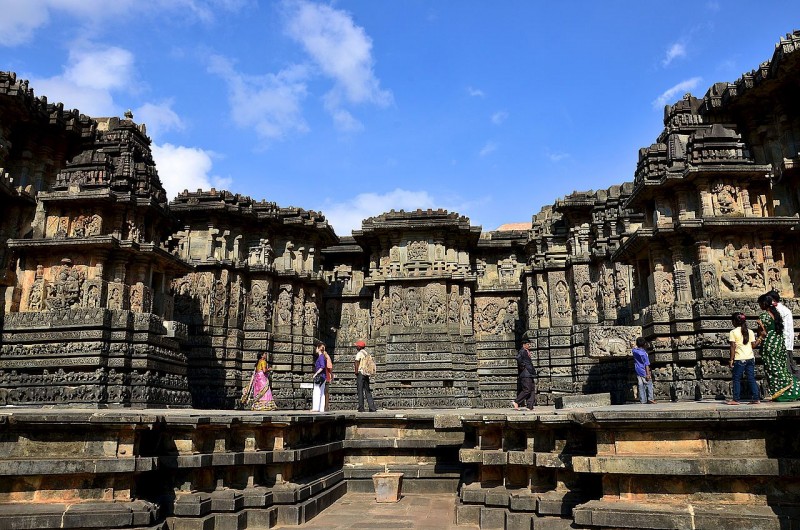
The Hoysaleswara Temple, dedicated to Shiva, is one of the most sublime examples of Indian architecture. Dating to the twelve century, it is located in a platform that is about two meters high and covered with stone blocks. This platform is laterally covered by eleven parallel friezes of elephants, lions, scrolls, horsemen, celestial beasts and birds.Hoysaleswara Temple

Each frieze has a length of about 215 meters and is completely covered by sculpture. To give an example, the baseboards include at least two thousand elephants carved with great skill and most of them richly caparisoned and with a man on top of them. Similar decoration can be seen in the ten remaining friezes.  The temple is surrounded by lush gardens that, to my surprise, are well kept and they represent a good spot to practice yoga if you go there for a few hours. Undoubtedly , Hoysaleshwara temple is one of the most impressive samples of human artistic skill that can be found.

Profile of extensive relief sculpture at Hoysaleshwara temple in Halebidu

After this, it was time to return home after such a long day. I got back to Bangalore at 10.30pm. Obviously, I was exhausted and had a good night sleep. I will not hesitate to take these sort of tours again during my next visit to Karnataka.

Written by Carmen from Carmen Everywhere.

13 Incredible Rock Formations in India

Incredible Rocks of India includes the balancing rocks, pillar rocks and the most beautiful and amazing Marble Rocks of Bhedaghat. The amazing shape and size of these natural rocks are ranked in world’s amazing rock formations list.

An overview of the most incredible natural rock formations in India:

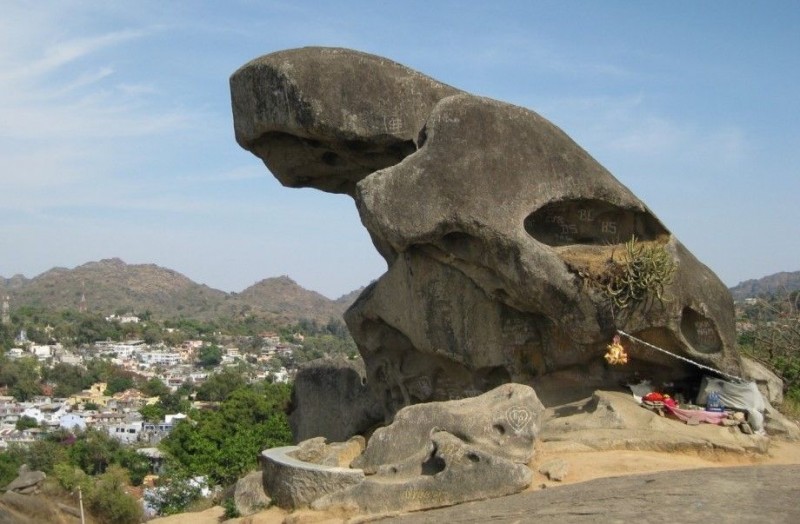
Toad Rock

Turtle shaped rock near the Nakki Lake
Turtle shaped rock near the Nakki Lake. Img Source

Toad Rock is a huge rock formation, resembling a toad and thus the name. Located in Aravalli range, it is known for pleasant atmosphere and offers beautiful views of the lake and hills. Toad rock along with Nandi rock, Camel rock and Nun rock are suitable for trekking and rock climbing.

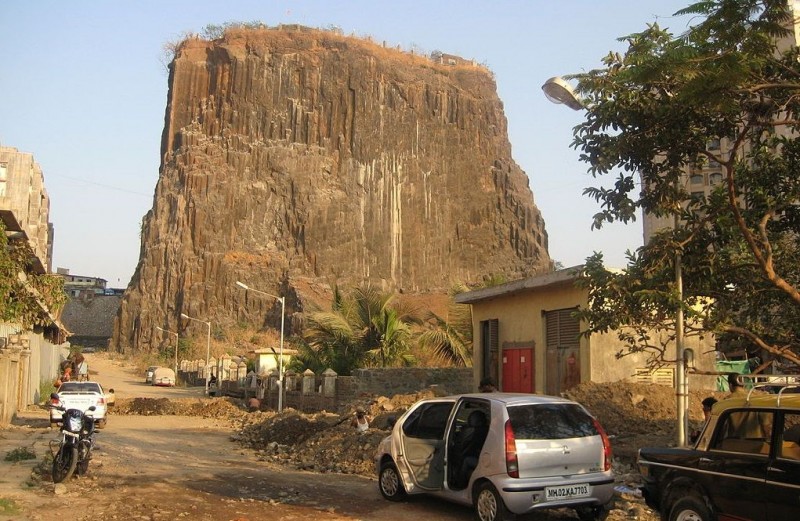
Gilbert Hill

Gilbert Hill, Andheri
Gilbert Hill, Andheri Img Source

This 200 ft tall monolith structure of predominantly basalt rock is 65 million years old. It was formed during the Mesozoic era. Interestingly, during this era there was a huge volcanic explosion in which ‘Gilbert Hill’ was squeezed out of the surface of the earth. Gilbert Hill is one of the two such structures found in the entire world. The another such structure is found in Wyoming, USA and is called ‘Devil’s Tower’.

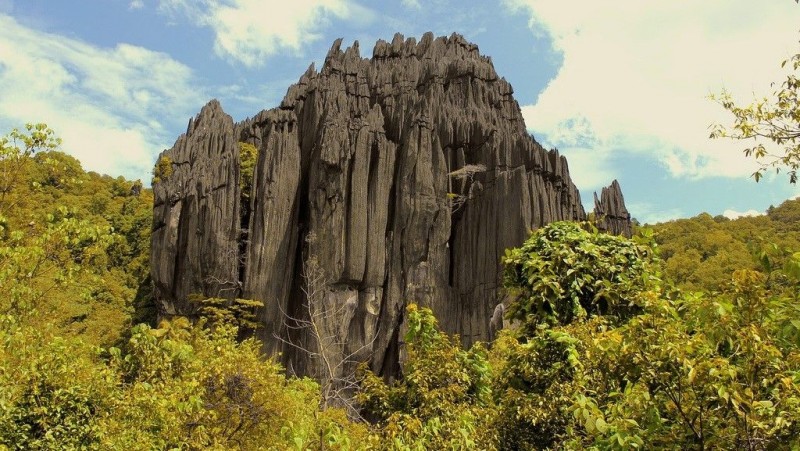
Yana Rocks

Yana rock
Yana Rock Img Source

Yana village of Karnataka is famous for its unusual rock formations known as Yana Rocks, located in the Sahyadri mountain range of the Western Ghats. These two massive rock are known as Bhairaveshwara Shikhara (120 metres in height) and the Mohini Shikhara (90 metres in height). The huge rocks are composed of solid black, crystalline limestone.

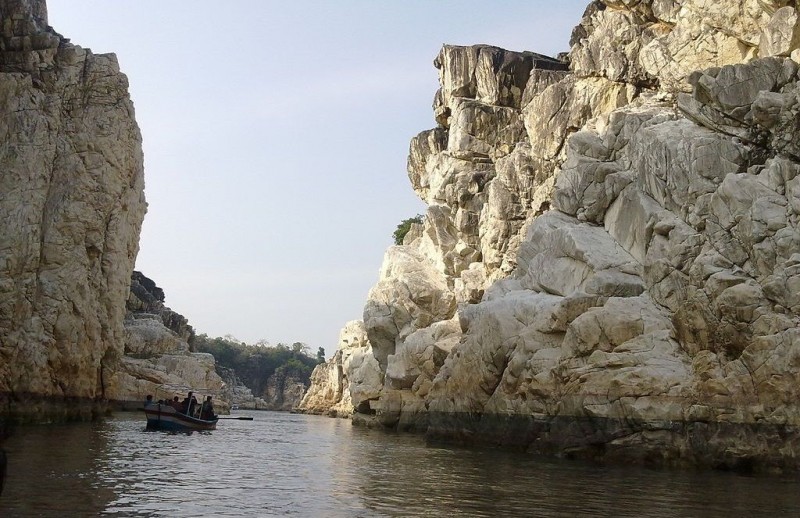
Marble Rocks

Marble Rock Narmada River
Marble Rock Img Source

The Marble Rocks are 3 km long beautiful gorge along of the Narmada River in the city of Jabalpur. Its very popular tourist destination in the state of Madhya Pradesh known as bhedaghat.  Marble rocks in Bhedaghat are the only of its kind in India.

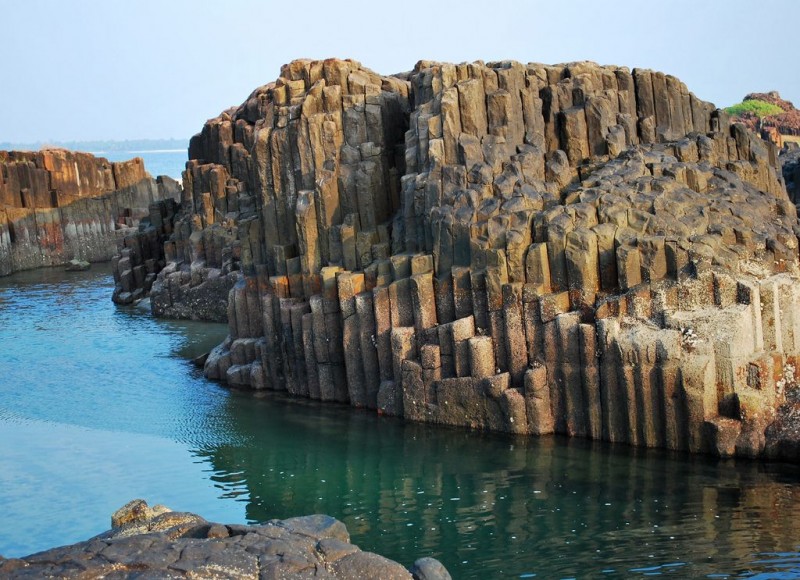
Basalt Rocks at St. Mary’s Islands

Basalt Rocks - St Mary's Islands of Malpe
Basalt Rocks img: Flickr

St. Mary’s Isles are a group of small islands located 7 km from Udupi. The island is known for its famous basalt rocks which have crystallized into columns and split into hexagonal mosaic. Perhaps, this is the only spot in India where basaltic rocks show up such peculiar formation.

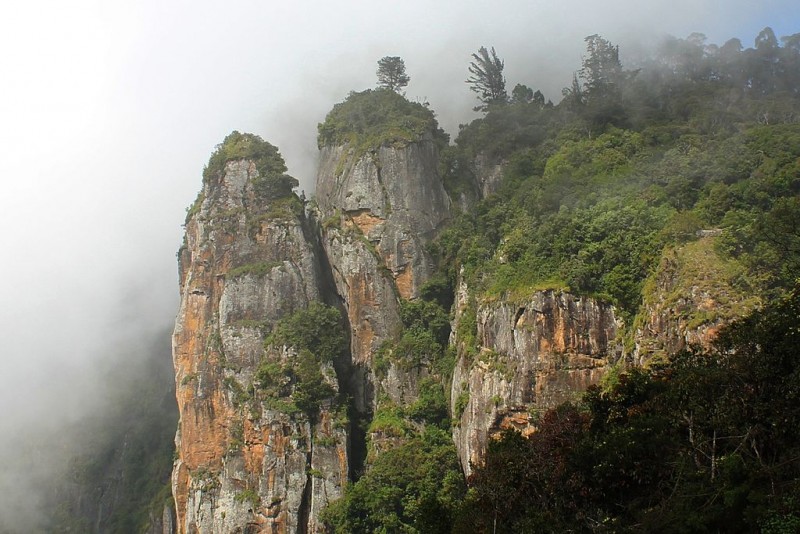
Pillar Rocks

The Kodaikanal Pillar Rocks
The Kodaikanal Pillar Rocks Img Source

The Kodaikanal Pillar Rocks are made up of three massive granite rocks whose heights extend up to 400 feet. Sited 8 km from the lake tower, tourists can obtain a spectacular bird’s eye view of the surrounding panoramic vistas. There is an excellent public garden adjacent to the viewpoint.

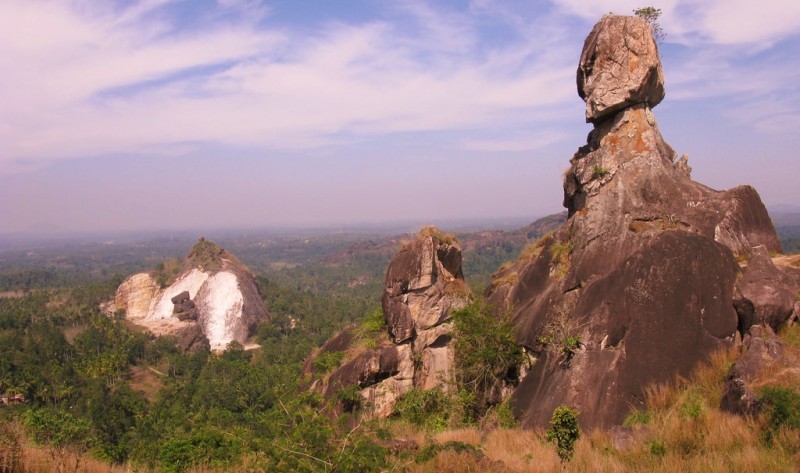
Phantom Rock

Phantom Rock
Phantom Rock img: Flickr

The Phantom Rock is a beautiful archeological site located in Wayanad district, Kerala. This piece of natural art which has a skull shaped rock over a small boulder is formed out of huge metamorphic rocks and is locally known as “Cheengeri Mala” or “Thalappara”.

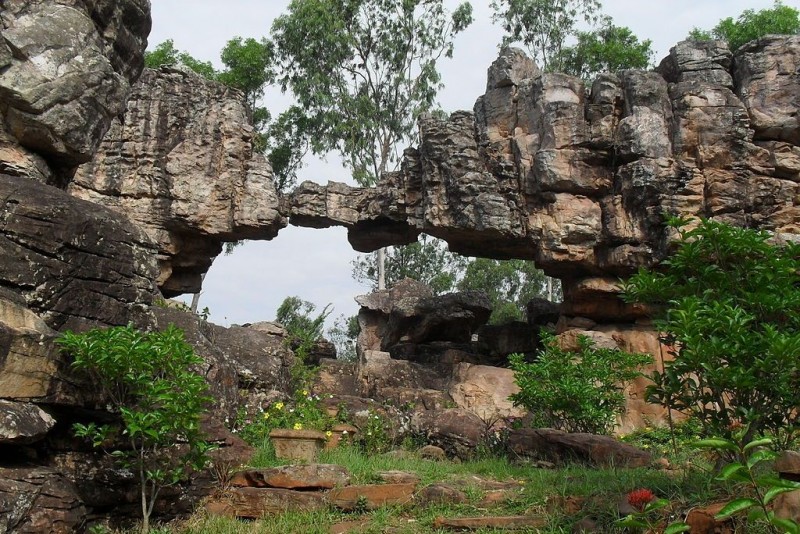
Natural Arch

Natural stone arch in tirumala
Natural stone arch in tirumala Img Source

Natural Arch on Tirumala hills is a geological wonder of India, located in Andhra Pradesh. The arch is one of the few natural arches or bridges in Asia and the only natural rock arch in India. The arch measures 8 m (26.2 ft) in width and 3 m (9.8 ft) in height, and it is believed to be several million years old.

Himalayan Rocks

Himalayan Rock img: Flickr

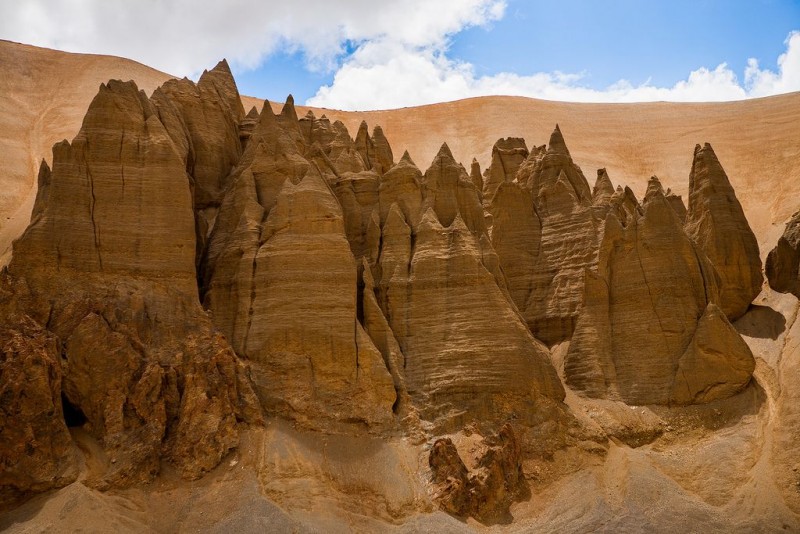
The Himalayan rock formation is situated on the highway to Leh in northern India, the Leh Manali rock formations is one of the must see thing on highway.

Balancing Rock, Mahabalipurum

Mahabalipuram Krishnas Butterball
Krishna’s Butterball img: Flickr

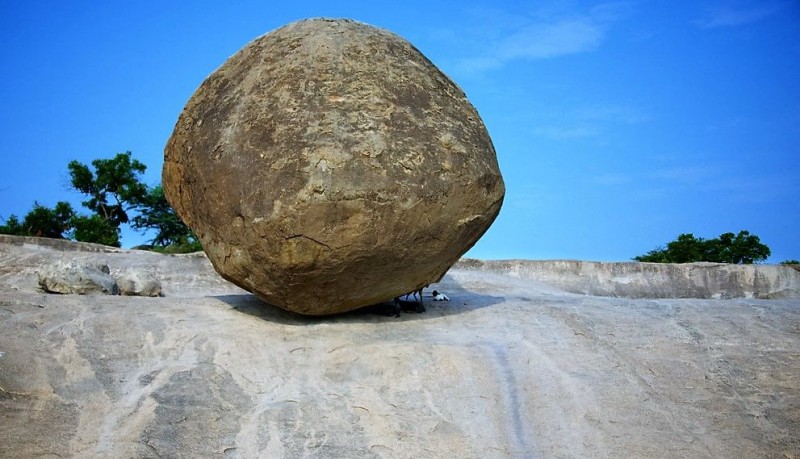
The Krishna’s butterball is a giant balancing rock, 5 meters in diameter, perched on a smooth slope, seemingly defying all laws of physics. It weighs over 250 tons and miraculously stands on an extremely small, slippery area of a hill.

Balancing Rock, Jabalpur

Balancing Rock, Jabalpur
Balancing Rock, Jabalpur – img: Flickr

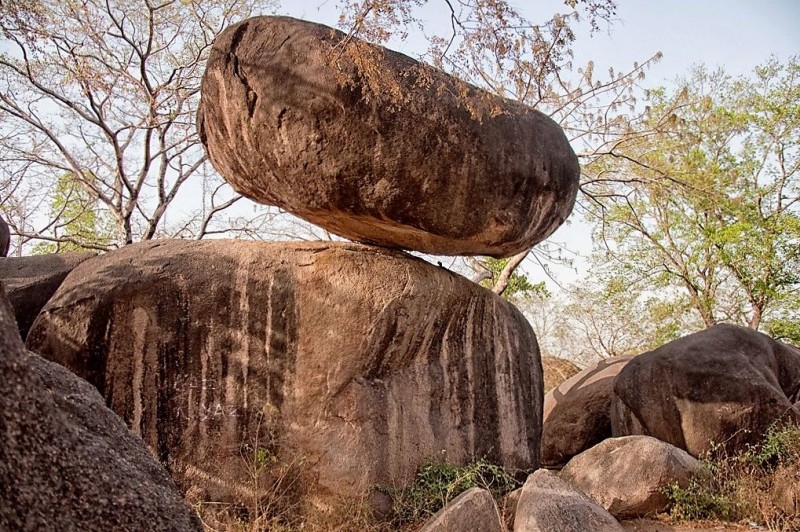
Balancing Rocks is situated at the base of Madan Mahal Fort, 6 km from Jabalpur, near Shailparna. The rock balances on the huge base rock by just touching it slightly. Yet it is amazingly that the Balancing Rock survived even in earthquake of magnitude 6.5. It is said that it’s impossible to disturb the balance of this rock.

Nijagal Betta

Nijagal Betta
Nijagal Betta Img Source

Nijagal Betta is a hill rock located at few hundred metres from the Bangalore, The hill is mixture of ruined forts, temples and some amazing rock formations. Here in Nijagallu Betta, its believed that a war was fought between Hyder Ali and Peshwa Madhav Rao.

Ramanagar Rocks

Ramanagara Rocks
Ramanagara Rocks img: Source

Rocks of Ramanagar and boulders are very famous for adventurous activities like rock climbing, rappelling, trekking. The rocky hills of Ramanagaram are knwon for natural rock formations in India.

The Meenakshi Temple of Madurai

The Meenakshi Temple is one of the most famous Hindu temples located in the holy city of Madurai, Tamil Nadu, India. The temple is dedicated to Parvati, known as Meenakshi, and her consort, Shiva, here named Sundareswarar. The temple has 14 towers, 4,500 pillars and 33,000 sculptures  — it’s massive!

The temple is as vital to the aesthetic heritage of South India as the Taj Mahal is to North India

History

Madurai Meenakshi temple’s history is as old as the history of the city itself. The temple forms the heart and lifeline of the 2500-year-old city of Madurai. This ancient city is built around the Meenakshi Temple which has been the geographical and ritualistic centre of the region since the times of the Pandyans. The temple is said to have been constructed by Kulashekara Pandyan.

The Meenakshi temple was almost completely destroyed in the year 1310 following the invasion of the Islamic conqueror Malikkapur. The present structure was built between 1623 and 1655 CE by Nayakas, who ruled Madurai from 16th to 18th century.

Madurai Meenakshi Temple
img: Gkamesh

Legends

Legend tells the tale that the second Pandyan king Malayadwaja Pandya and his wife Kanchananalaj were unable to conceive any children. In attempts to beget a child, Malaydwaja conducted many Vedic homas (rituals involving a fire pit). Finally, in the middle of one such ritual, an infant version of Goddess Parvati appeared. This infant was born with three breasts, but a voice from the heavens told her new parents not to worry because one of her breasts would disappear when she met her true love.

The infant was named Tadaatagai and succeeded her father to the throne. She led armies on successful campaigns of conquest. In her last campaign in North India, she challenged Lord Shiva himself at Mount Kailash, but when She saw the great Lord, She fell in love with him. The bridegroom followed her home, married her, took the name Sundara Pandya and together they ruled Madurai.

This scene is seen depicted in the temple.

According to mythology, the marriage of Meenakshi and Shiva actually took place in Madurai. It is still celebrated every year with great pomp and show.

Meekashi temple
img: Flickr

Temple

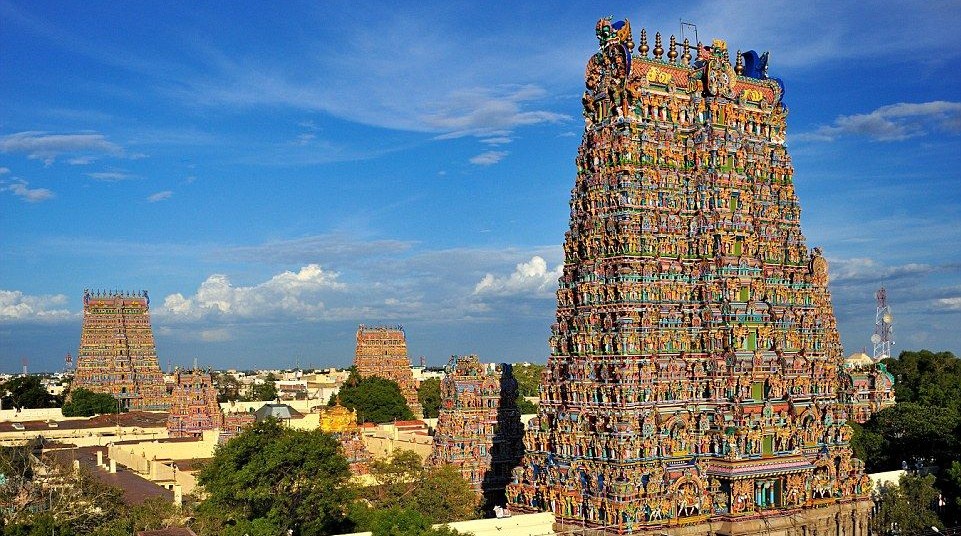
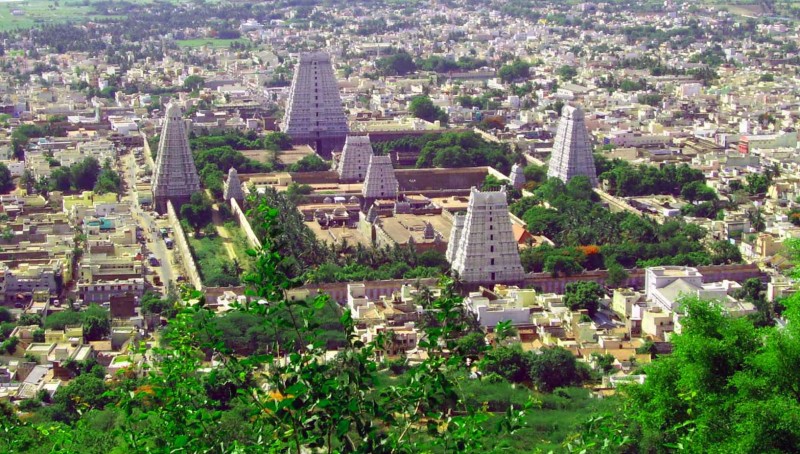
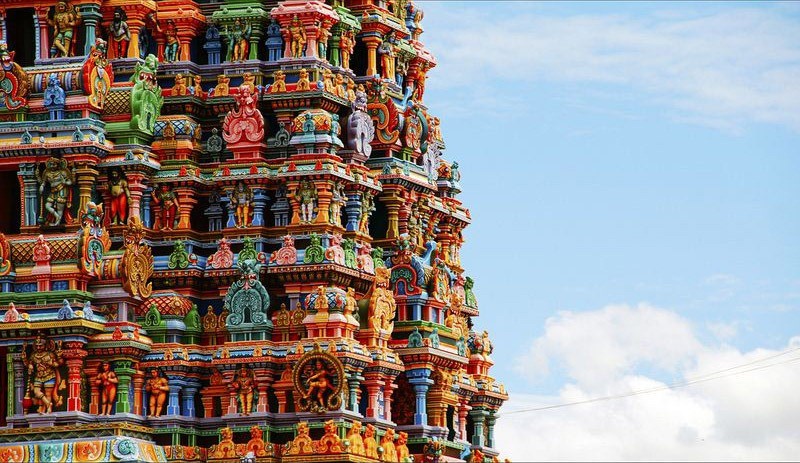
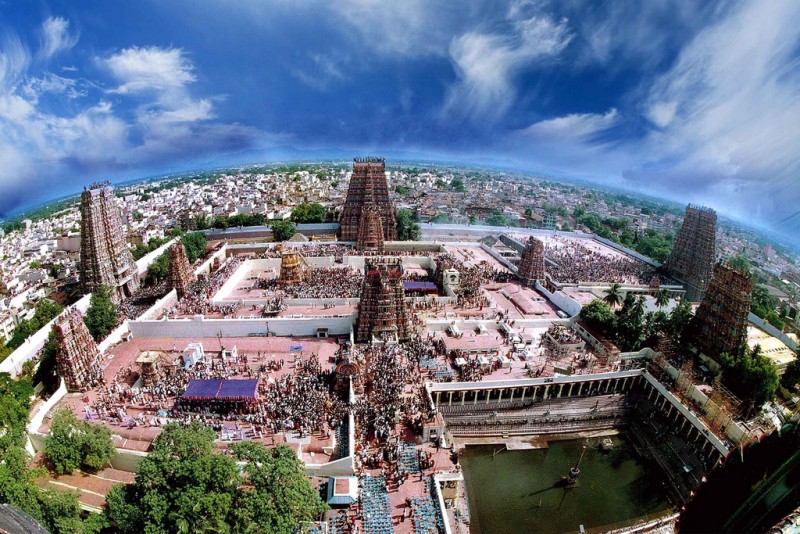
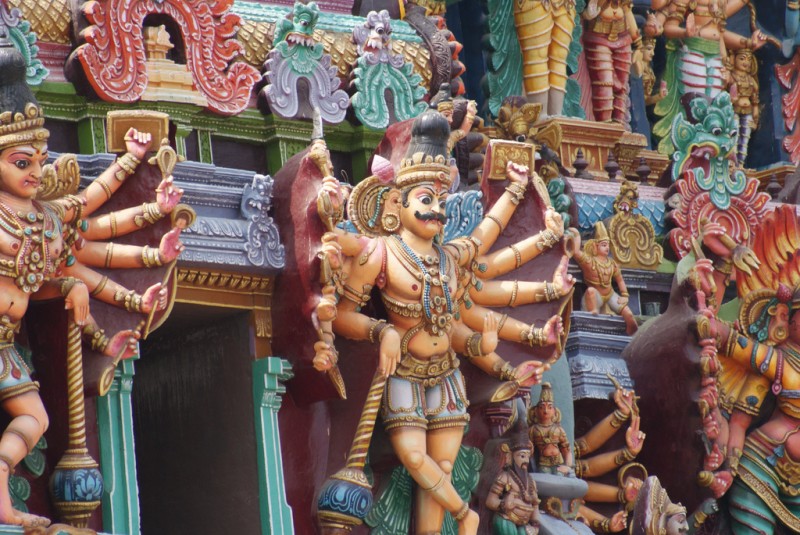
The Meenakshi temple has huge Gopurams (Towers) which can be seen from a far off distance. There are total 14 gopurams, but the tallest four stand on the outer walls, each facing one of the four directions (north, east, south, and west).

Amongst the four gateways, the south one is the tallest. It is about 50 m high and can be climbed to have a view of the entire city. Inside, there are two main shrines — one dedicated to Goddess Meenakshi (Parvati) and the other to her husband Sundareswarar (Lord Shiva). Both the Meenakshi and Sundareswarar shrines have gold plated towers whose tops can be seen from a great distance.

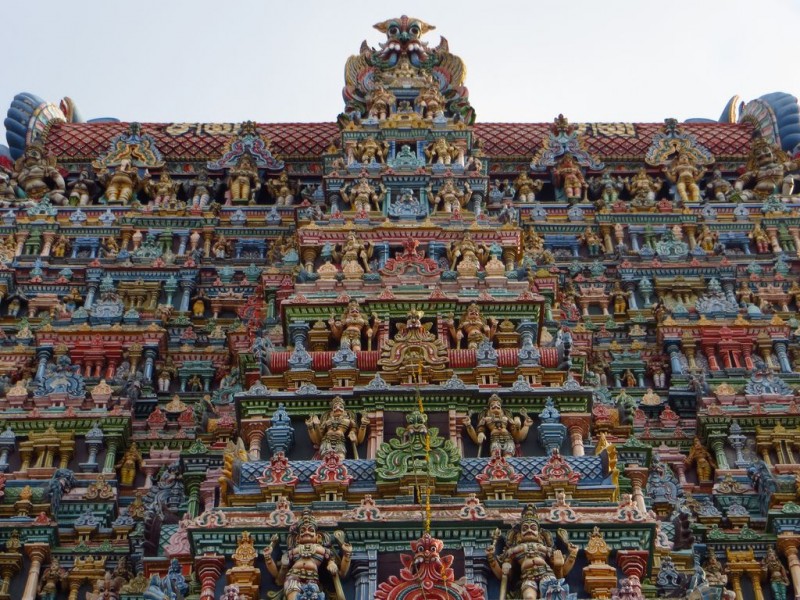
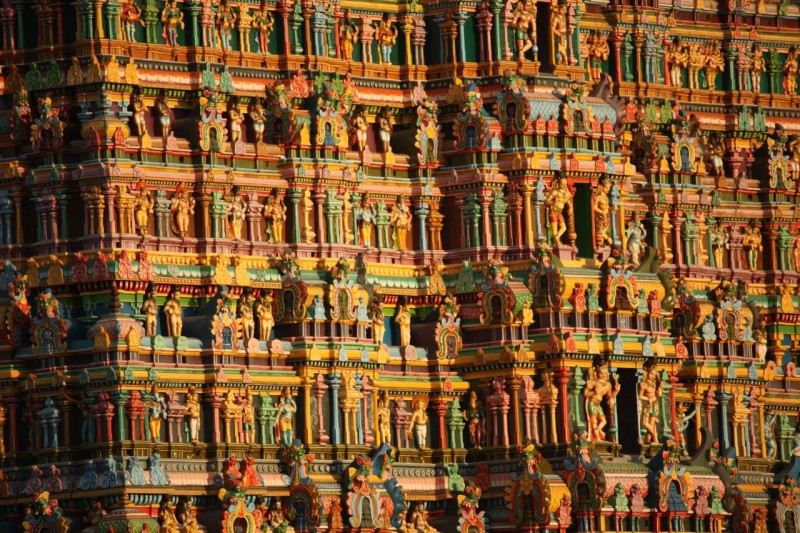
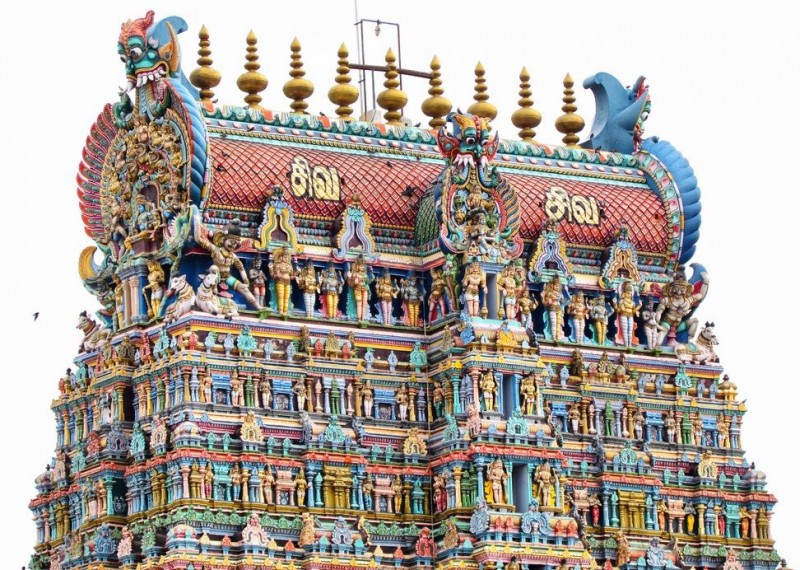
The bottom part of the temple is made from granite, while its gopuram are made from limestone. Each gopuram is a multi-storied structure in the shape of a steep pyramid, covered with thousands of stone figures of animals, gods, goddesses and demons painted in all colors of the rainbow.

There are an estimated 33,000 sculptures all over the temple.

The temple wasn’t always so vividly painted. The original structure was probably unpainted granite. Then people started painting the sculptures because they wanted the temple to look colorful during big events and festivals.

Madurai Meenakshi Temple
img: Flickr

There is also a sacred water tank, several halls and innumerable Mandapas. The ‘Mandapam’ of the temple consists of 985 pillars. Each pillar is unique. Some of the pillars are music pillars, which produce music when tapped. The special feature of these pillars is that they are carved out of a single granite stone block.

There are a number of other halls and towers in the temple which are worth watching for their sculptures, carvings and designs. Each one is different from the other, in one aspect or the other.

The temple also has an art museum. It contains icons, drawings and photographs which date back to the 1200 – year – old history of Indian temple architecture in the south. A lot of information can be extracted on the Hindu pantheon and related legends from this splendid museum.

It was on the list of top 30 nominees for the “New Seven Wonders of the World”.

The sheer size of the temple means that it’s easy to get lost inside, and there’s so much to see and marvel over that you could easily spend days there.

Various kings renovated the temple, leaving a distinct impression of their artistic taste. A number of complex corridors, magnificent sculptures and a heavenly abode suitable for Goddess Meenakshi, include the additions to the temple that were done by different kings.

Madurai Meenakshi Temple
img: Sudo.ch
Madurai Meenakshi Temple top
img: Flickr
Madurai Meenakshi Temple
img: Flickr
Madurai Meenakshi Temple
img: Flickr

Source: New Indian Expressmaduraimeenakshi.org

Ancient Buddhist relics found under temple in Andhra Pradesh

The discovery was made when temple authorities were renovating the buttressed compound wall.

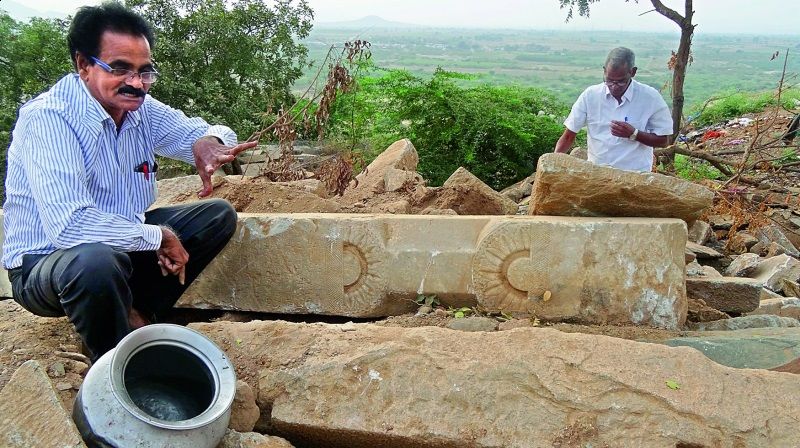
Archaeologists have discovered two stone pillars engraved with Buddhist inscriptions dated first century AD at the Goddess Bala Tirupura Sundari Temple at Tripuranthakam in Adhra Pradesh.

The pillars were found while the temple authorities were digging adascent to the temple complex. This led to the discovery of the bare foundations of a gopura structure and some Buddhist relics as well.

Experts opined that the existing temple was raised over a Buddhist site of Satavahana period.

Buddhist scholar and archeologist Dr E Siva Nagi Reddy said, “It is surprising to note that Buddhist remains are recovered from the premises of Goddess Bala Tirupura Sundari Temple. Temple authorities were renovating the buttressed compound wall which laid bare foundations of a gopura structure. A number of Buddhist remains were recovered,

Nagi Reddy has also told the Deccan Chronicle that the pillars, which are carved on Planadu lime stone, had on them half lotus medallions which are a Buddhist symbol. The pillars also carry a two line Brahmi inscription which goes back to the first Century AD. There is another inscription in Devanagari script which goes back to the 10th century AD. He added that the pillars were used to raise the temple structure.

There are two Buddhist stupas located at Chandavaram and Dupadu  in close proximity to Tripuranthakam.

Experts asked the temple authorities and endowments department to preserve the valuable Buddhist pillars which bear historical significance and to display in the temple premises.

Seven Ancient Buddhist Caves Discovered In Mumbai

The caves are older than the Kanheri ones and were possibly built for sheltering monks in the monsoon.

Seven new caves have been discovered in Mumbai’s Sanjay Gandhi National Park that are possibly dated between 1st century BC and 5th-6th century AD. The caves are Buddhist ‘viharas’ (residences for monks) that served as shelters from monsoons for Buddhist monks more than 2,000 years ago. One of the caves has the ruins of a harmika or the top part of a stupa.

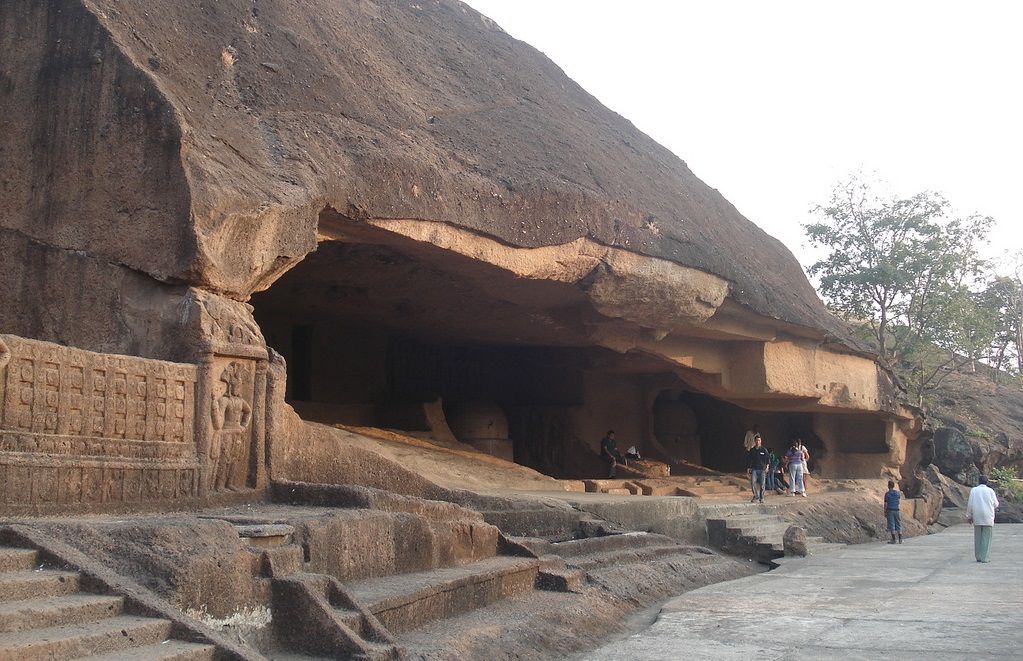
These are not the only Buddhist caves in the park, which is the biggest park inside any city in the world. About 160 other caves, named the Kanheri Caves, are nearby and were dug about 2,000 years ago. The Kanheri Caves are famous for their water management and rain water harvesting systems.

The newly discovered caves may have been older than the Kanheri Caves as they were simpler in form and they lacked water cisterns, which are found in the more evolved architecture of Kanheri.

While a formal approval from the Archaeological Survey of India (ASI) is awaited for detailed exploration and documentation of the new caves, the team that has discovered the caves date them between 1st century BCE (or BC) and 5th-6th century CE (or AD).

The discovery was made in February 2015, and is said to be the result of a systematic survey of the area. The credits of this discovery goes to a three-member team that carried out this job under an excavation programme, which was jointly conducted by the Centre for Archaeology, Mumbai University, and the department of ancient Indian culture, Sathaye College, Vile Parle.

Before beginning actual field work, the team studied documentary topography and water resources. Ancient people constructed most of viharas near sources of water. Aside from that, they also studied Pali texts, which described similar ‘viharas’ of Buddhist monks around Rajgir in Bihar. The researchers studied areas and texts for three months.

They began their exploration as soon as the forest department gave their permission. After a day, another team of a magazine editor and a student of Buddhism at Sathaye College, found two more caves.

The newly discovered caves may have been older than the Kanheri Caves as they were simpler in form and they lacked water cisterns, which are found in the more evolved architecture of Kanheri. Moreover, we found monolithic tools which were prevalent in the 1st century BC. The absence of water cisterns also indicate that monks lived there in the monsoon,”said team leader Suraj Pandit in a quote given to The Times of India.

One of the caves was actually inhabited till recently and was even surfaced with modern bathroom tiles. It had been used by one of the sadhus living in the park till the Bombay high court, in the late ’90s, ordered the eviction of all sadhus from the park.

There were caves on either side of the waterfall – three on one side and two on the other. It was very clear these were excavated from the natural rock. The smooth curve, the plastering, the door beams, the benches to sleep on, were all indications that these were man-made caves,” said Pandit.

Seven Ancient Buddhist Caves Discovered In Mumbai
Kanheri Caves, Mumbai Img Source

Maharashtra is home to the largest number of caves in India. Some of these caves, like Elephanta Caves, Karla Caves and Bhaja Caves, boast of stunning rock cut architecture. On the other hand, those at Ajanta and Ellora have been adorned with beautiful paintings. Whatever be the mode of presentation, these caves majorly illustrate the history of Buddhism in India.

Most of the ancient caves in Maharashtra have been accorded the status of World Heritage Sites by UNESCO and continue to enchant visitors from the remote corners of the country as well as the world.