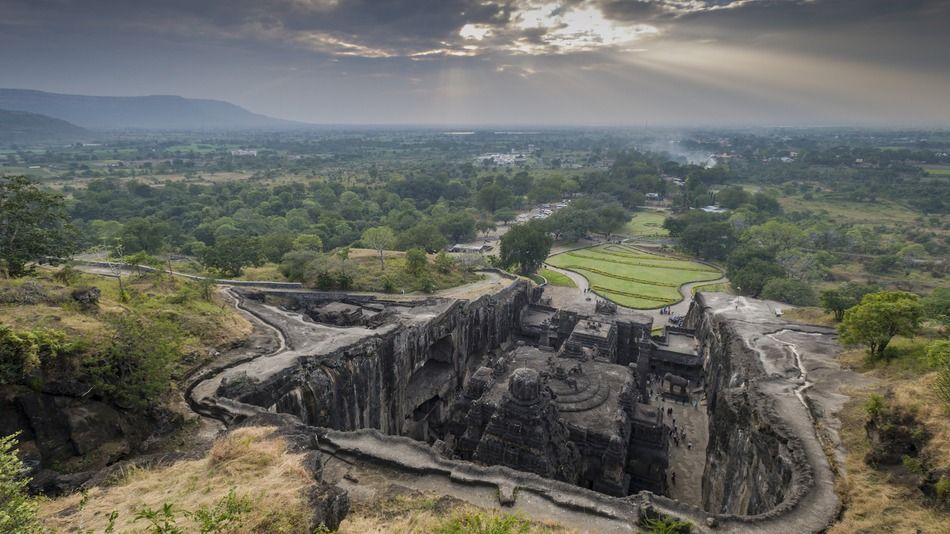
For years, the famous Ellora caves in the city of Aurangabad of Maharashtra have evoked curiosity as to just how in the world they have been immune to decay. For 1,500 years!
Scientists seem to have an answer, and it’s the most unlikely one.
They say it’s cannabis. Or Ganja.
Indian archaeologists have discovered that hemp played a key role in preserving the ancient Ellora caves in the western state of Maharashtra. New findings have revealed that a mixture of hemp, clay and lime plaster prevented the UNESCO World Heritage site from decaying.
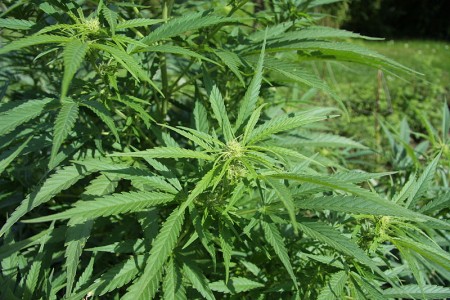
Hemp, locally known as ganja or bhang, played a key role in keeping the paintings at the sixth-century archaeological site intact, according to a new study by archaeologist Rajdeo Singh and botanist MM Desai.
The duo collected a sample of plaster from Cave 12 of the complex and isolated cannabis sativa, or ganja, before examining it under a scanning electron microscope, according to the study, published in the journal Current Science.
Other techniques, such as Fouriter transform infrared spectroscopy, confirmed the presence of cannabis sativa in the building material.
“In the sample collected from the Ellora cave, we found 10 per cent share of cannabis sativa in the mix of mud or clay plaster. This is the reason why no insect activity is found at Ellora.”
“Ellora has proved that only 10% of cannabis mixed with clay or lime in the plaster could last for over 1,500 years,” he added.
‘The remains of Cannabis from the sample of clay plaster of Ellora suggest that it was used with clay/lime binder as insulating agent as well as to provide a degree of strength to the plaster,‘ the researchers wrote.
The study also hints at how Indians knew many valuable properties of hemp even in the 6th century.
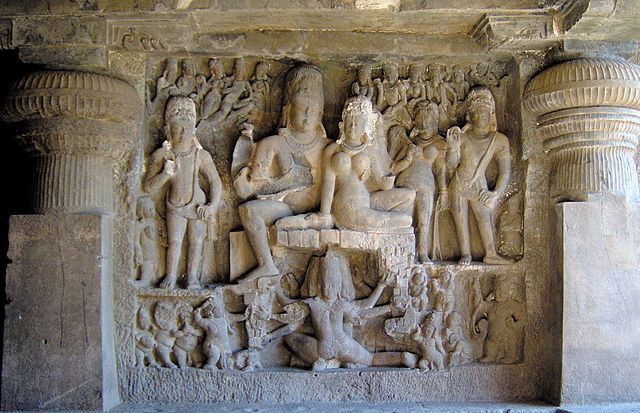
Built between the fifth and the tenth centuries, Ellora has a series of 34 Hindu, Buddhist and Jain caves, which represent the epitome of Indian rock-cut architecture. These include temples, monasteries as well as residential viharas and mathas, which have been carved out of solid rock from the region’s Charanandri Hills. Many of the caves have rich paintings which are still protected.
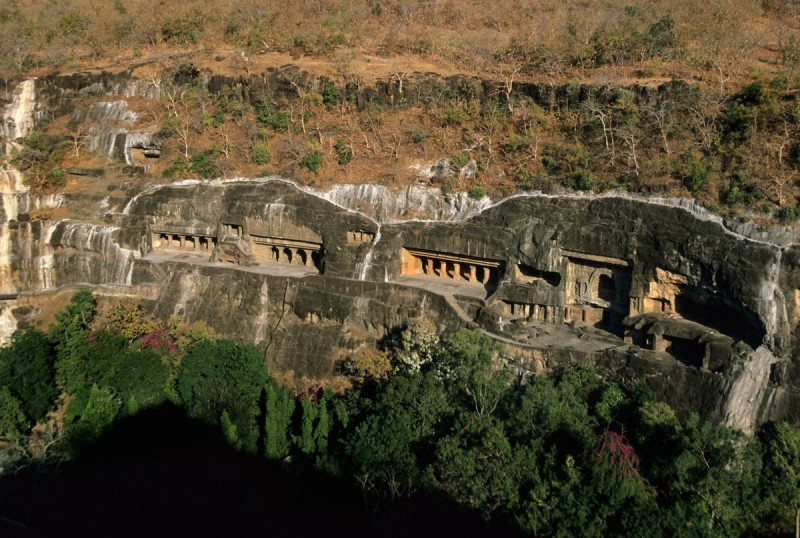
Studies also show that Hemp was not used in the neighboring Ajanta caves, which are about 30 rock-cut Buddhist structures dating back to the 2nd century BC. Rampant insect activity has damaged at least 25% of the paintings at Ajanta.
Studies in Europe have estimated 600 to 800 years of life span to the hempcrete wall system, but hemp in the clay plaster of Ellora has survived more than 1,500 years.
In India, hemp domestication dates back to 5,000 BC, when the plant’s stem was used for fibre, its achene or fruit for food and oil, and its resin for medicine.
Medicinal use of cannabis was first recorded in India in the medical work ‘Sushrita’ compiled in around 1,000 BC as well as in the texts Tajnighuntu and Rajbulubha, where it s described as being used to clear phlegm, treat flatulence, sharpening memory, increasing eloquence and stimulating appetite.
The Hindus consider Cannabis as a holy plant and it is used in Hindu festivals like Shivratri even today.
Despite the interesting discovery, the use of cannabis in construction in India may still be a long way off as cultivation, transport, possession and consumption of marijuana is banned under Indian law.
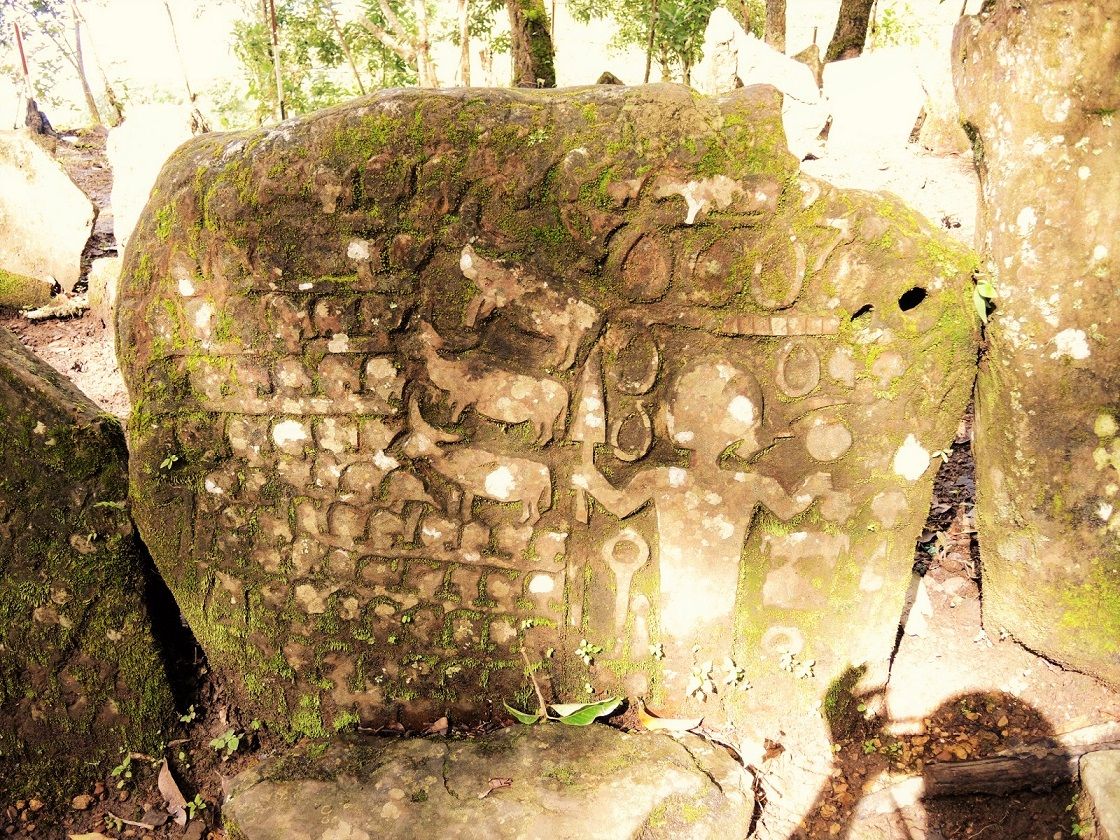
In an incredible discovery, archaeologists from India have come across ruins of a ‘Great Forgotten Civilization’ in Mizoram.
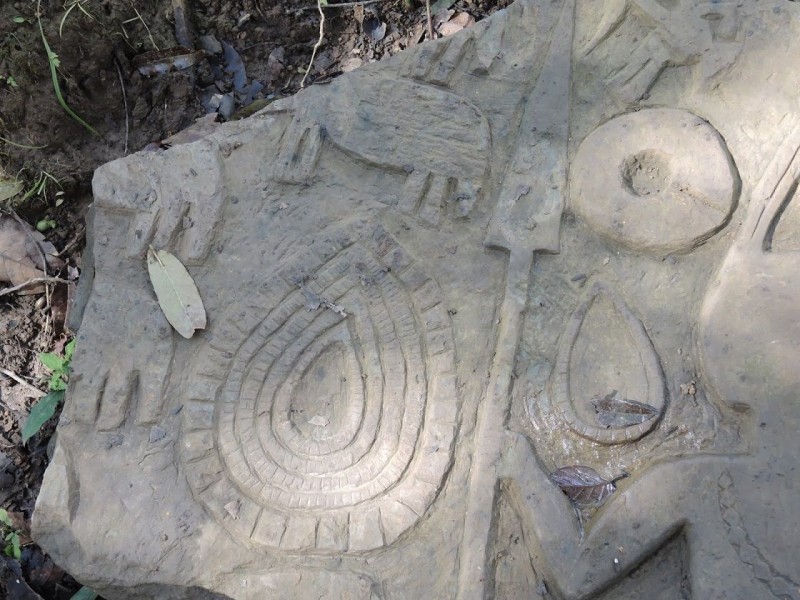
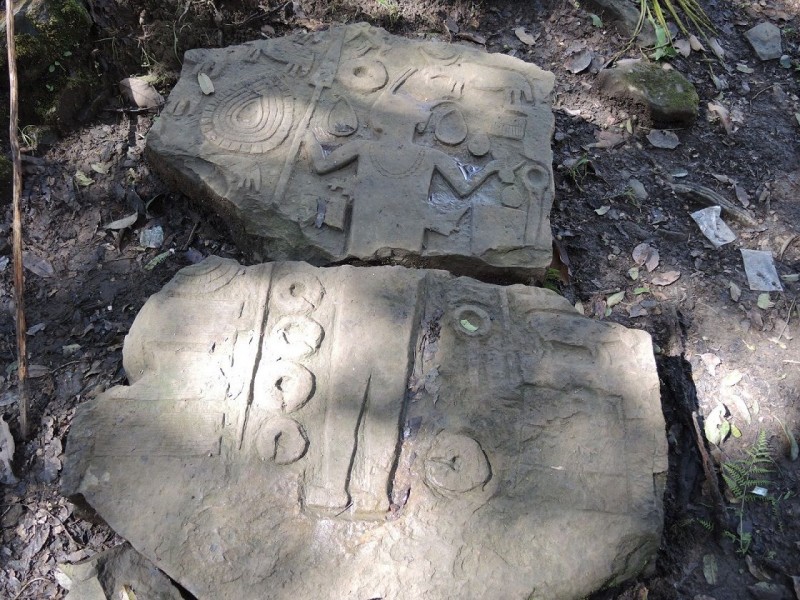
A team of archaeologists from Archaeological Survey Of India has excavated structures at Vangchhia, in the Champai district of Mizoram that they believe are from an older civilization which might have once existed there, The North East Today reported.
Vangchhia is the only ASI protected location in Mizoram.
The site held the key to hitherto-unknown facts about Mizoram and the northeast, Sujeet Nayan, the assistant superintending archaeologist at ASI Delhi and director of the excavation at Vangchhia, told Northeast Live. He also told the newspaper that it might be one of the most significant finds in recent times.
The team documented more than 50 structures at Vangchhai and will return soon for further research and study. Fragments of charcoal and pottery have been collected which will be sent to specialized laboratories for carbon dating and other scientific analysis.
“We were exploring what lay beneath the bushes and thick foliage. The entire site could hold traces of a lost city or a greater lost civilization. It is amazing to stumble upon so many things. We need more time and research to reach a final conclusion,” said Nayan.
The team came across burial sites that seemed like water pavilion and terraces that were reminiscent of palatial buildings. The retaining walls or terraces were made of big stones and the average height of each terrace ranged from 10 to 25 feet.
“The terraces might have served as burial sites, but this can’t be ascertained as of now,” Nayan said. “There are nine terraces. We explored around eight. We also found evidence of what seems to be a water pavilion. We presume people here liked their environment and the water pavilion is comparable to those found in Mughal structures,” he added.
Members of the Archaeological Survey of India agree that this ancient site once belonged to a great ‘Lost Civilization’ which ruled the region in the distant past.
The excavation was conducted after the director general of ASI visited the site in November 2015 with the objective to study the structures that have floral, animal and human depictions on them.
Further studies will be conducted on the site and researchers hope to have more information about the mysterious civilization after lab results provide an approximate age of the structures.
Mizoram is located in northeastern India, and is bordered by Myanmar to the east and south, Bangladesh to the west, and the states Tripura, Assam, and Manipur to the north.
Mizoram is also known as “Land of the Mizos.” It is a hilly area with many forests and a great deal of foliage. Modern Mizoram is populated by Scheduled Tribes, although it is one of the more sparsely populated states in India. The discovery of the lost city in Mizoram may reveal significant information about the ancient civilizations that lived there and in surrounding areas, which would have been influenced by the topography of the area and the climate, as well as provide insight into the origins of the modern-day tribes in Mizoram. –
Often referred to as a paradise unexplored, northeast India is indeed a culturally and historically rich territory, a treasure trove for explorers, nature lovers, trekkers and wildlife enthusiasts alike.
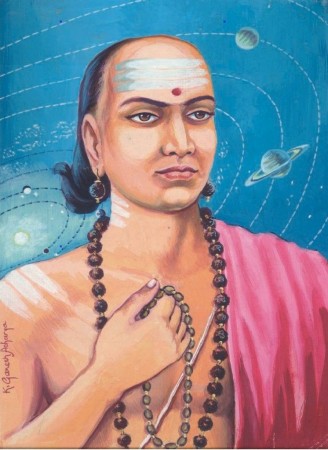
Indian astronomer, mathematician, and astrologer from Ujjain, Varahamihira in his book written 1500 years ago had mentioned so many insights about space and universe that has shocked the scientists of today.
Even thousands of years before, India had become famous and reached its pinnacle in astrological and astronomical sciences. Ancient Astrological works had been translated into many foreign languages. Ibn Batuta and Al Baruni were two prominent Arab travellers who had visited ancient India specially to pursue Astrology. By their translations they had induced German scholars to come to India to study Astrology and Vedic literature. Varahamihira was one of the only renowned Indian Astronomer, Mathematician and Astrologer whose name became a household word throughout India and it is said his near contemporaries Aryabhata and Brahmagupta even did not match with the popularity of Varahamihira.
Varahamihira was born in 505 A.D. into a family of Brahmins settled at Kapittha, a village near Ujjain. His father, Adityadasa was a worshipper of the Sun god and it was he who taught Varahamihira astrology. On a visit to Kusumapura (Patna) young Varahamihira met the great astronomer and mathematician, Aryabhata. The meeting inspired him so much the he decided to take up astrology and astronomy as a lifetime pursuit.
At that time, Ujjain was the centre of learning, where many schools of arts, science and culture were flourishing in the prosperity of the Gupta reign. Varahamihira, therefore, shifted to this city, where scholars from distant lands were gathering. In due course, his astrological skills came to the notice of King Yashodharman Vikramaditya of Malwa, who made him one of the Nine Gems of his court.
Varahamihira was learned in the Vedas, but he was not a blind believer in the supernatural. He was a scientist. Like Aryabhata before him, he declared that the earth was spherical.
In the history of science he was the first to claim that some “force” might be keeping bodies stuck to the round earth. The force is now called gravity. He proposed that the Moon and planets are lustrous not because of their own light but due to sunlight.
Varahamihira’s main work is the book Pancha Siddhantika (Treatise on the five Astronomical Canons gives us information about older Indian texts which are now lost). The work it seems is a treatise on mathematical astronomy and it summarises five earlier astronomical treatises, namely, the Surya Siddhanta, Romaka Siddhanta, Paulisa Siddhanta, Vasishtha Siddhanta and Paitama Siddhanta.
It is acclaimed that Pancha Siddhantika of Varahamihira is one of the most important sources for the history of Hindu Astronomy from before the time of Aryabhata.
Another important contribution of Varahamihira is the encyclopaedic Brihat-Samhita. It covers wide ranging subjects of human interest, including astrology, planetary movements, eclipses, rainfall, rainfall, clouds even domestic relations, gems, pearls and rituals.
Varahamihira in 550 AD have described a large number of cometsin the Brhat Samhita. He wrote over sixty couplets about comets. He did not have the modern facilities like Telescope or other electronic equipment. He says that sages Garga, Parasara, Asita, Devala and others had already written about the comets.
Varahamihira in 550 AD have described a large number of comets. He wrote over sixty couplets about comets.
He was also an astrologer and has written on all the three branches of astrology. His son Prithuyasas has also contributed in the Hindu astrology through his work, Hora Sara.
Varahamihira’s mathematical work included the discovery of the trigonometric formulas. He improved the accuracy of the sine tables of Aryabhata l. He defined the algebraic properties of zero as well as of negative numbers. Furthermore, He was among the first mathematicians to discover a version of what is now known as the Pascal’s triangle. He used it to calculate the binomial coefficients.
Varahamihira made some significant observations in the field of ecology, hydrology and geology too. He was the first person who predicted underground water. His claim that plants and termites serve as indicators of underground water is now receiving attention in the scientific world.
Varahamihira, without any scientific equipment, derived the true value of equinox. This value is very important for the modern day Geostationary Satellites.
Surya Siddhanta & description on planet Mars:
Pancha siddhantika includes Surya Siddhanta, an astronomical treatise which explains or determines the true motions of the luminaries. Under this work, Varahamihira has also explained the estimated diameters of the planets, like Mercury, Venus, Mars, Saturn and Jupiter.
The book gave the locations of several stars other than the lunar nakshatras (constellations) and the calculation of solar eclipses. The book also had a significant coverage on kinds of time, the length of the year of gods and demons, day and night of god Brahma, the elapsed period since creation, how planets move eastwards and sidereal revolution.
Surya Siddhanta mentioned the Mars’s diameter (which was calculated to be 3,772 miles that has an error within 11% of the currently accepted diameter of 4,218 miles), circumference and also carries calculations on and about solar eclipses and lunar eclipses, its color and portion of the moon as well.
Apart from these, Varahamihira also predicted the presence of water on Mars. The book had a detailed description of planet Mars. He had said in his book that planet Mars has both water and iron present on its surface, which have now been revealed by NASA and ISRO.
He was the first to mention and explain how each planet in the solar system has been created by and centered on the sun.
It’s intriguing to know that during NASA’s Mars mission, Arun Upadhyay, a retired IPS, did a comparative study of Varāhamihira’s calculations about Mars and found certain similarities.
Though the original book of Surya Siddhanta till date remains untraced, but somehow a few scholars had taken their notes for their own research work. Many fear that the original version was stolen by the other astronomers from overseas. The present version of Surya Siddhanta, which is often used by Panchang experts to predict festive dates and nakshatras, was modified by Bhaskaracharya during the Middle Ages.
It is learnt, Varahamihira humbly said about his own treatises: “The science of Astrology is a vast ocean and is not easy for everyone to cross it. My treatises provide a safe boat.” Truly, even now they are acknowledged as masterpieces.
The history of Sikhism is closely associated with the history of Punjab and the socio-political situation in medieval India. Sikhs distinction was further enhanced by the establishment of the Khalsa, by Guru Gobind Singh in 1699. Sikhism was created by Guru Nanak, a religious leader and a social reformer during the fifteenth century in the Punjab region. The religious practice was formalized by Guru Gobind Singh on 13 April 1699. The latter baptized five persons from different social backgrounds to form Khalsa.
The Mughal Empire was founded by Babur, a Central Asian ruler who was descended from the Turko-Mongol conqueror Timur on his father’s side and from Chagatai, the second son of the Mongol ruler Genghis Khan, on his mother’s side. Ousted from his ancestral domains in Central Asia, Babur turned to India to satisfy his ambitions. He established himself in Kabul and then pushed steadily southward into India from Afghanistan through the Khyber Pass. Babur’s forces occupied much of northern India after his victory at Panipat in 1526. Generally Sikhism has had amicable relations with other religions. However, during the Mughal rule of India (1556–1707), the emerging religion had strained relation with the ruling Mughals. Prominent Sikh Gurus were martyred by Mughals for opposing some Mughal emperors’ persecution of Sikhs and Hindus. Subsequently, Sikhism militarized to oppose Mughal hegemony and ended their rule in India.
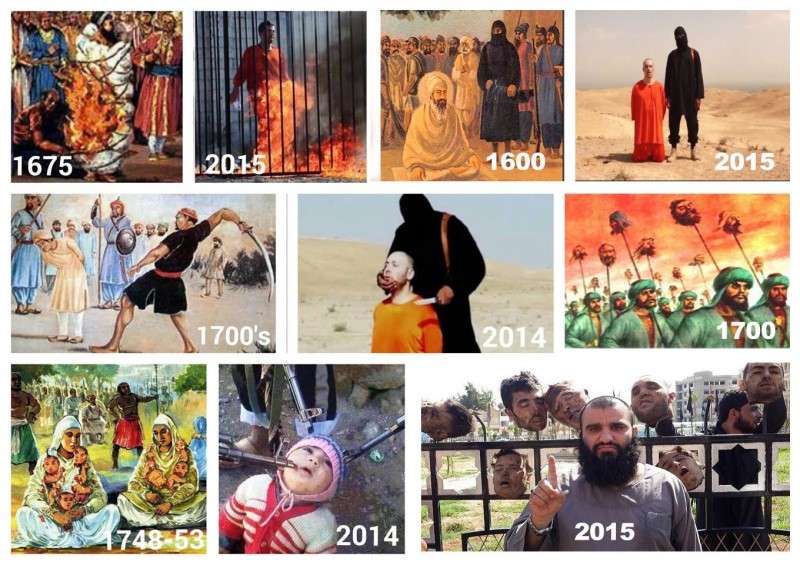
ISIS and Mughals
What ISIS is doing is the exact copy of what Mughals did against Sikhs and Hindus from 15th century to 18th century. Mughal Empire wanted whole India to be converted to Islam religion. Hindus started converting to Muslim because of fear. Watching hundreds of thousands conversion and the fear for their own life, Hindu religious leaders came and asked for help from Sikh Gurus and his followers. Sikh Gurus stepped up to protect freedom of religion (which was unheard on any corner of the world at that time) and Mughals started the same brutal war crime against Sikhs is exactly what Islamic State in Iraq and Syria (ISIS) is doing today in 21st century.
We know all about the cruel tactics Islam use’s to convert people to Islam. If you think groups like Islamic State are new… THINK AGAIN!
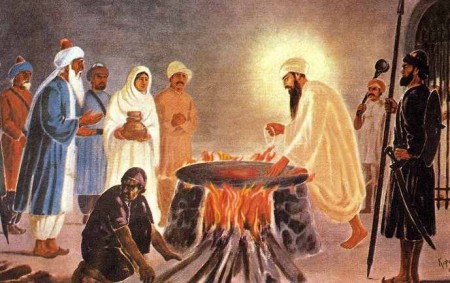
Guru Arjan Dev Ji
Guru Arjan Dev’s subjection to torture by the Mughals.
The Mughal emperor Jahangir wrote in his autobiography Tuzk-e-Jahangiri that too many people were becoming persuaded by Guru Arjan’s teachings and if he did not become a Muslim the Sikh Panth had to be extinguished. He ordered the Guru’s execution.
A contemporary Jesuit account, written in early 17th century by Spanish Jesuit missionary into the Mughal court Father Jerome Xavier (1542–1605), who was in Lahore at the time, records that the Sikhs managed to get Jahangir to commute the death sentence to a heavy fine, for which a rich individual, possibly a Sikh, stood as guarantor. The Guru however refused to let a fine be paid for him and even refused when a longtime friend of his, Sufi Sai Mian Mir, tried interceding on his behalf. Jahangir tortured Guru Arjan in the hopes of extracting the money, but the Guru refused to give the fine and was executed.
Guru Tegh Bahadur Sahib Ji
The Mughal Emperor Aurangzeb ordered Hindu temples to be destroyed and that idol worship was to be stopped. He had a temple converted into a Mosque and slaughtered a cow inside it. He also had Hindus sacked from their government jobs and employed Muslims instead. Aurangzeb also ordered Gurdwaras to be destroyed, and he expelled many missionaries from the main cities.
Despite some resistance after many years of persecution, people were being forced to take up Islam. Aurangzeb, being clever, decided if he could convert the revered Brahmin Pandits of Kashmir that millions of followers would then easily be converted. Threatened with conversion or death, the Pandits overcome by panic, came in a delegation to Chakk Nanaki, Pargana Kahlur and requested Guru Tegh Bahadur Ji’s help. Hearing the serious nature of the conversation, Guru Ji’s 9 year old son Gobind Rai Ji told his father what the problem was. The Guru told his son of the Pandits dilemma and said that it would take a holy man literally laying down his life to intercede. Gobind Rai responded “Who would be better than you to defend the poor Brahmins”. Guru Tegh Bahadur Ji decided to stand up for the right of freedom of worship and told the delegation to tell Aurangzeb that if he could convert Guru Tegh Bahadur they would gladly convert.
Four days later Guru Tegh Bahadur ji was arrested, along with some of his followers, Bhai Dayala, Bhai Mati Das and Bhai Sati Das by Nur Muhammad Khan.
After Mati Das, Dyal Das and Sati Das were tortured and executed on three consecutive days, Guru Tegh Bahadur was beheaded at Chandni Chowk in 1675. Guru Tegh Bahadur is popularly known as “Hind Di Chadar” i.e. “The Shield of India”, in reference to his popular image as sacrificing his life for the protection of religious freedom in India.
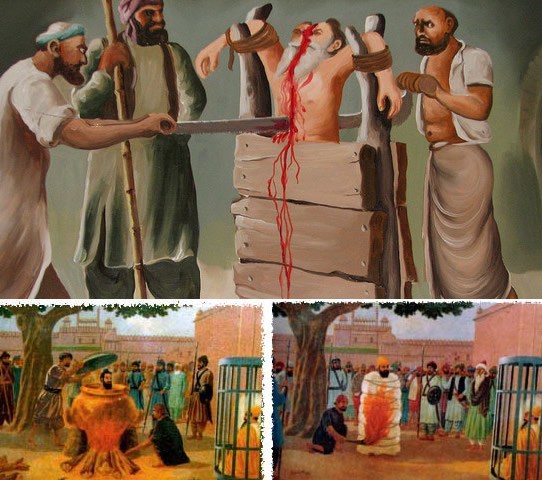
Bhai Sati Das, Bhai Mati Das & Bhai Dayala
Sawed, Boiled and Burned Alive – Bhai Dayala, Bhai Mati Das and Bhai Sati Das
Mati Das while standing erect was tied between two posts. He was asked if he had any parting words, to which Mati Das answered, “I request only that my head be turned toward my Guru as I am executed.” Two executioners placed a double-handed saw on his head. Mati Das serenely uttered “Ek Onkar” and started reciting the Japji Sahib, the great morning prayer of the Sikhs. He was sawn in half from head to loins. It is said that even as the body was being sawn into two, the Japji continued to reverberate from each part until it was all over.
Bhai Sati Das was wrapped up in cotton wool, set alight and was roasted alive. He remained calm and peaceful and kept uttering Waheguru, waheguru, waheguru (Sikh meditation). His martyrdom is remembered by the Sikhs in their daily prayers. This happened on 24 November 1675, on the same day as Bhai Mati Das was executed.
Qazi pronounced his religious order that Bhai Dayala must either accept Islam or be prepared to embrace death by being boiled in a Cauldron. Bhai Dayal was asked for a final time if he would leave his faith and embrace Islam. Bhai sahib defiantly and consistently answered, “No!” to the qazi’s repeated requests. This infuriated the qazi who pronunced his immediate torture and death. The executioners sat Bhai Sahib in the cauldron of water under which a large fire was lit. Slowly the water was let warm; then it was hot; soon it was too hot and then it was boiling. Bhai Dayala continued to his last breath to recite Sikh prayers.
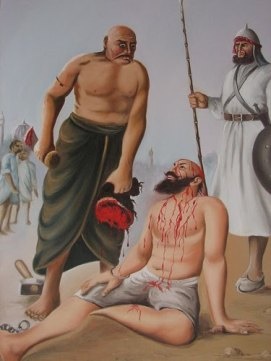
Bhai Taru Singh Ji
Shaheed Bhai Taru Singh
After a short period of imprisonment and torture, Bhai Taru Singh ji was brought by Mughals before Lahore Governor Zakariya Khan and given the choice of converting to Islam or being executed. Taru Singh calmly asked, “Why must I become a Mussalman (a Muslim person)? Do not the Mussalmans ever die?” Upon his refusal, and in a public display, Bhai Taru Singh’s scalp was cut away from his skull with a sharp knife to prevent his hair from ever growing back. Bhai Taru Singh ji was left to bleed to his death by Mughals.
Mass torture and persecution of Sikhs
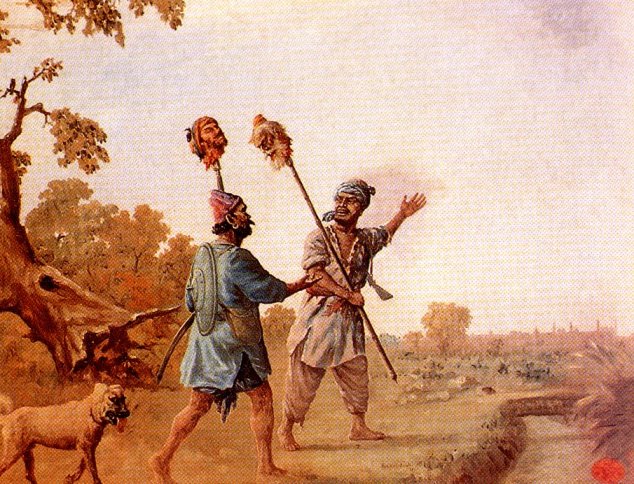
Zakariya Khan was the Mughal governor of Lahore, now in Pakistan. He had taken part in the Mughal Empire’s operations against the Sikh leader Banda Singh Bahadur. After the capture of Banda Singh and his companions in December 1715, he escorted the prisoners to Delhi, rounding up Sikhs that he could find in villages along the route. As he reached the Mughal capital, the caravan comprised seven hundred bullock carts full of severed heads and over seven hundred captives. He ordered village officials to capture Sikhs and hand them over for execution. A graded scale of rewards was laid down – a blanket for cutting off a Sikh’s hair; ten rupees for information about the whereabouts of a Sikh; fifty rupees for a Sikh scalp. Plunder of Sikh homes was made lawful; giving shelter to Sikhs or withholding information about their movements was made a capital offense.
Mughals carrying the heads of Sikhs to market to collect their price
Zakariya Khan’s police, consisting of nearly 20,000 men especially recruited for this purpose, scoured the countryside and brought back hundreds of Sikhs in chains. Prominent Sikhs including the revered Bhai Mani Singh and Bhai Tariff Singh were, after the severest of torments, publicly beheaded at the Nakhas, the horse-market of Lahore, renamed by Sikhs “Shahidganj” in honour of the martyrs. Yet Zakariya Khan remained unsuccessful in his object of vanquishing the Sikhs. He died at Lahore on 1 July 1745 a dispirited man, bequeathing to his sons and successors chaos and confusion.
Torture on Sikh Women & Kids
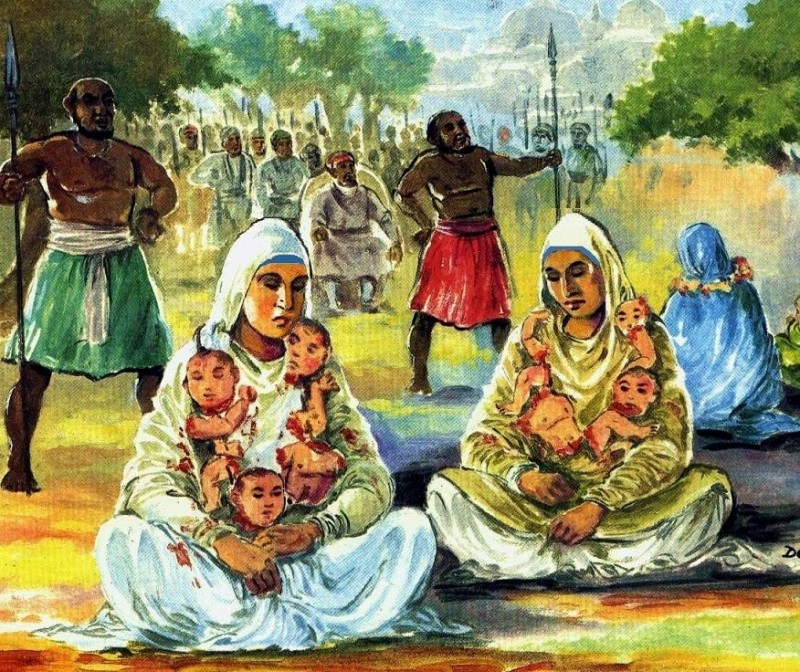
From 1748-53, Sikh women and children were kidnapped from their villages and imprisoned in the jails of Lahore by Mir Mannu. Every woman was given forty pounds of grain to grind each day and heavy stones were placed on the chest of those who were unable. The young children and babies of these women, were tortured, speared and cut into pieces before their very eyes. Their children were transfixed on javelins before their very eyes. Their children were cut into pieces and garlands of those pieces were put around their mother’s necks. They were given a quarter of bread to eat and a bowl of water in the whole day. Bowing to the will of God, those tolerated it all. On the 4th November, 1753 A.D., Mir Mannu died. After his death, Sikhs set the prisoners free and took them away.
When did caste become the dominant norm for ethnic communities of a region? 70 generations ago, or nearly 1,500 years ago.
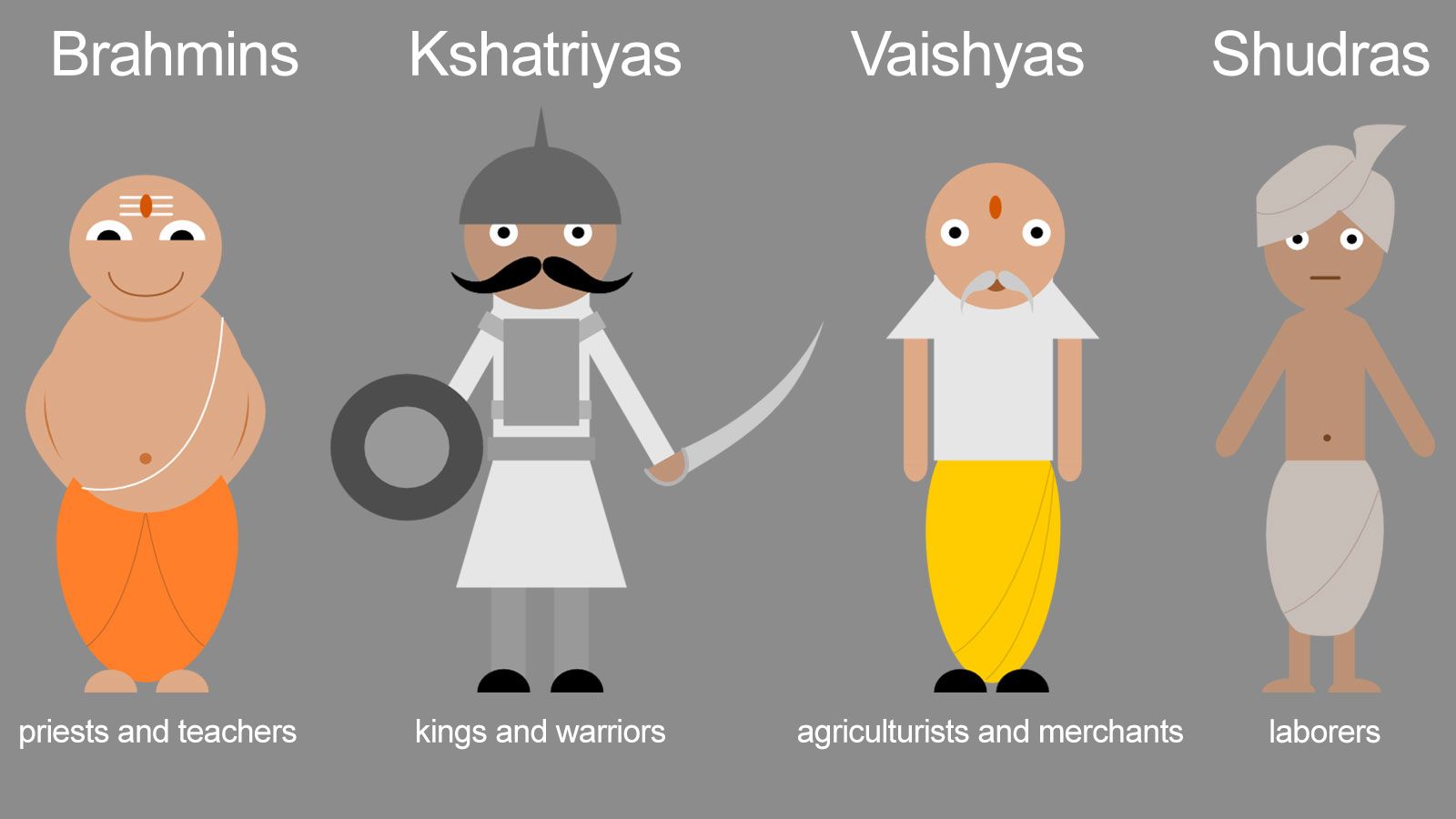
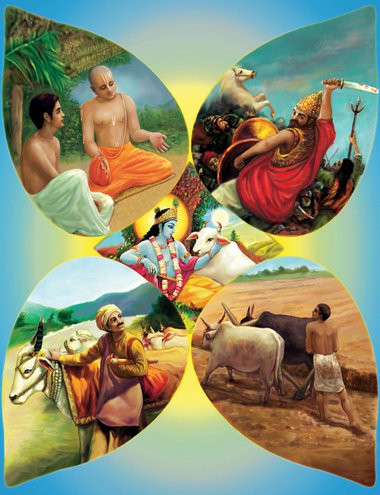
Over 1,500 years ago, the Gupta emperors ruled large parts of India. They helped consolidate the nation, but they also popularized India’s caste system, making it socially unacceptable for people to marry outside their castes. This ancient history hinted at in various linguistic, archaeological and genetic studies has been confirmed by a path-breaking genetic study recently published.
Researchers from the National Institute of Biomedical Genomics (NIBMG) at Kalyani, West Bengal, analysed DNA samples of 367 unrelated Indians belonging to 20 population groups. These covered castes from different parts of India, and most large tribal populations from central and Northeastern India. Also included were samples from two Andaman & Nicobar tribes.
India’s present diverse population arose from five types of ancient populations that freely mixed and interbred for thousands of years.
It was earlier believed based on similar studies that Indian ancestors were from only two populations – Indo-European (ANI), Dravidian (ASI). But this study has been able to provide evidence that four ancestral stocks contributed to the genetic diversity of present-day Indians – Indo-European (ANI), Dravidian (ASI), Tibeto-Burman (north-east India) and Austro-Asiatic (fragmented in east and central India; spoken exclusively by the tribals). A fifth ancestral lineage that is dominant among the Negrito tribals (Jarawa and Onge) of Andaman and Nicobar Islands was also identified by the scientists.
The study compared genetic sequences from Indian samples with those from Central Asia, West Asia, China and adjacent regions to trace how humans first arrived in India.
What the study also unearthed was the deep imprint of a significant social cultural process in Indian society. It found that interbreeding between communities `abruptly’ ended around 70 generations ago, which translates to about 1,575 years ago, sometime in the 6th century. It coincided with the period when the Gupta Empire ruled India. This period had seen the consolidation and supremacy of the caste system, entrenched through the sanction of scriptures as well as enforcing mechanisms of the rulers.
The reign of the ardent Gupta rulers, known as the age of Vedic Brahminism, was marked by strictures laid down in Dharmasastra—the ancient compendium of moral laws and principles for religious duty and righteous conduct to be followed by a Hindu—and enforced through the powerful state machinery of a developing political economy.
Genetic analysis also revealed that in many parts interbreeding across caste rigidities continued for some time, as in Bengal and Maharashtra. The establishment of endogamy among tribal populations was less uniform. In the case of West Bengal Brahmins, marriages with the northeastern communities continued until the arrival of the 8th century Pala dynasty which cut off these regions.
By identifying five ancestral populations among contemporary Indians, the researchers have revealed that Indians today are more genetically diverse than we’ve realized. But they have also shown that social shifts can dramatically affect a nation’s genomes. The caste system has consequences that affect people all the way down to their DNA.
The caste system originated in Vedic times, perhaps 1500 BCE or earlier. It must have slowly spread and got entrenched over centuries. Its impact on genetic material becomes evident around 1600 years ago.
Around 80 km from Ahmedabad, Lothal speaks volumes of history and tradition
From 2600 to 1900 BC, the Indus Valley or Harappan Civilisation was at the zenith of its maturity as a sophisticated and technologically advanced urban cultural centre. In India, the most substantial and well-preserved remains of this Bronze Age urban culture can be witnessed at Rakhigarhi in Haryana, Kalibangan in Rajasthan, Rupar in Punjab and Dholavira and Lothal in Gujarat which happened to be the southern outpost of Harappan Civilisation. Among these, Lothal has been a significant port city for the trade of beads, gems and ornaments.
Situated in Bhal region of modern-day Gujarat, Lothal was excavated between 1955 and 1960 by the Archaeological Survey of India (ASI). The ASI museum at Lothal offers an insight into the town planning of this urban port. It exhibits some fine pieces of ceramics, metalwork and beads that were once created here. These included objects made from bronze, copper, stone, chert, shells and bones. It also showcases the uniformity of weights and measures used during the Harappan civilisation — bricks in perfect ratio while weights were based on units of 0.05, 0.1, 1.2, 5, 10, 20, 50, 100, 200 and 500, with each unit weighing around 28 g, similar to the English ounce or Greek uncia. Smaller objects were weighed in similar ratios with units of 0.871.
Lothal, according to ASI, had another series of weights that conformed to the Heavy Assyrian standards for international trade. The museum displays seals and toys reflecting trade with Persian Gulf and African ports. Principal exports were beads, ivory and shells. Key exhibits include a gold necklace, a copper figure, micro-beads, steatite and terracotta seals with motifs and inscriptions, metal fish hooks, ornaments like bangles, a perforated jar, a terra cotta bull, a horse, the model of a boat, objects used for games and a shell used as a compass for navigation. Two styles of pottery were also discovered at Lothal.
The bathroom-toilet structure of houses in Lothal. –img source
The development of Lothal as a trade centre probably stemmed from its sheltered harbour by Bhugavo River and Gulf of Khambatt, the suitability of the soil of the region called Bhal for growing grain and cotton and the already thriving bead-making industry in the Khambatt coastal region.
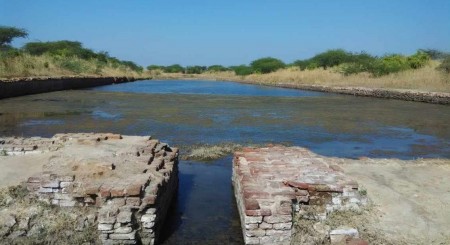
As one enters the excavated area, one can witness the tank which several archaeologists have opined as the world’s first dry dockyard. Plagued by floods in Sindh and realising the danger of high tides in the Gulf of Cambay, the Harappans are said to have built this dock inland, with a canal connecting to the estuary of River Sabarmati. The dock spans 37 m from east to west and 22 m from north to south. This showed a thorough study of tides, hydraulics and the effect of seawater on bricks.
The dock, with a canal opening to allow water to flow into the river, thereby maintaining a stable water level. img source
According to an impression at the museum, ships could sluice into the northern end of the dock by an inlet channel connected to the estuary of River Sabarmati during high tide and the lock gates were closed so the water level would rise sufficiently for them to float. After the ships had loaded or unloaded cargo, the gates were opened for them to return to the sea. The tank’s dimensions indicate the dock could handle 60 ships of 30 tonnes each.
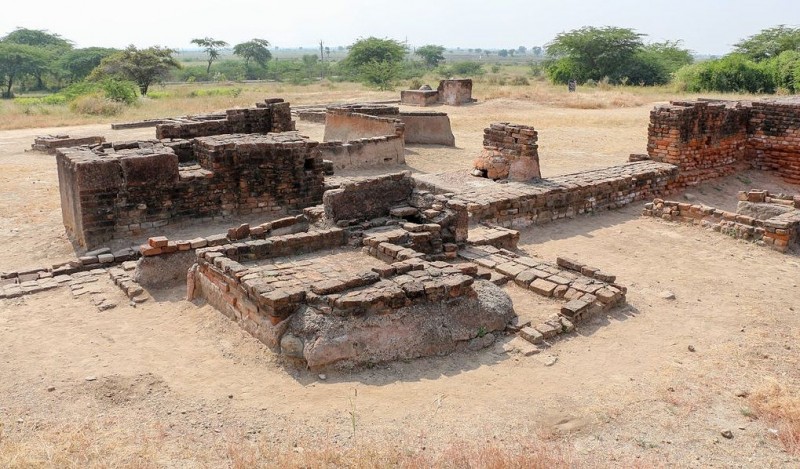
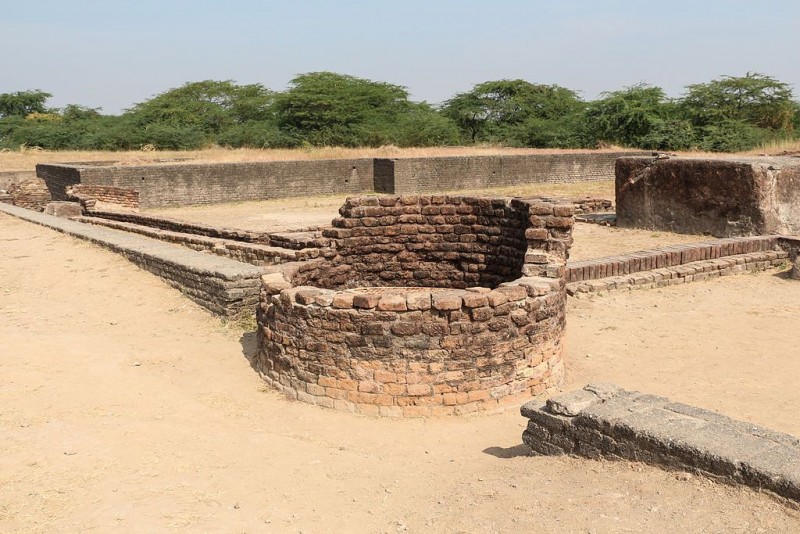
The warehouses near the dockyard were set on a 3.5 m high plinth. The cubical blocks used for warehousing were connected by passages built from kiln-fired bricks. Nearby is the acropolis where the powerful and wealthy inhabited since it featured paved baths, underground and surface drains and a drinking well. The foundations show a mansion that would have once existed on the acropolis. The proximity of the seat of power to the warehouse ensured a powerful person, perhaps a ruler, could inspect stocks easily from here.
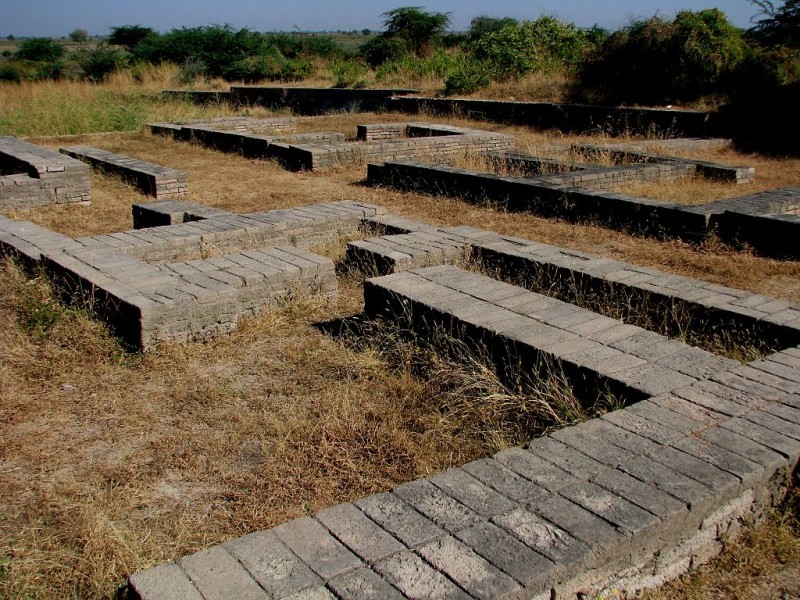
The lower town contained commercial and residential areas. The arterial streets that led from north to south were probably flanked by shops, merchant dwelling and artisan’s workshops while the streets running from east to west led to the residential areas with lanes allowing access to individual dwellings. The bead factories comprised the main industry of the Harappans where agate and other semi-precious stones abound.
Archaeological remains at the lower town of Lothal. –img source
Drainage System
A unique aspect of planning was underground sanitary drainage. The main sewer, 1.5 m deep and 91 cm across, connected north-south and east-west ones and was constructed from smoothened bricks. These were joined together so expertly that not even a strand of hair could pass through the connections. Expert masonry kept the sewer watertight and drops at regular intervals acted as an automatic cleaning device. A wooden screen at the end of the drains held back solid wastes and liquid entered a cess pool made from radial bricks.
An ancient well, and the city drainage canals. –img source
By continuing to use the site, you agree to the use of cookies. more information
The cookie settings on this website are set to "allow cookies" to give you the best browsing experience possible. If you continue to use this website without changing your cookie settings or you click "Accept" below then you are consenting to this.





 Genetic analysis also revealed that in many parts interbreeding across caste rigidities continued for some time, as in Bengal and Maharashtra. The establishment of endogamy among tribal populations was less uniform. In the case of West Bengal Brahmins, marriages with the northeastern communities continued until the arrival of the 8th century Pala dynasty which cut off these regions.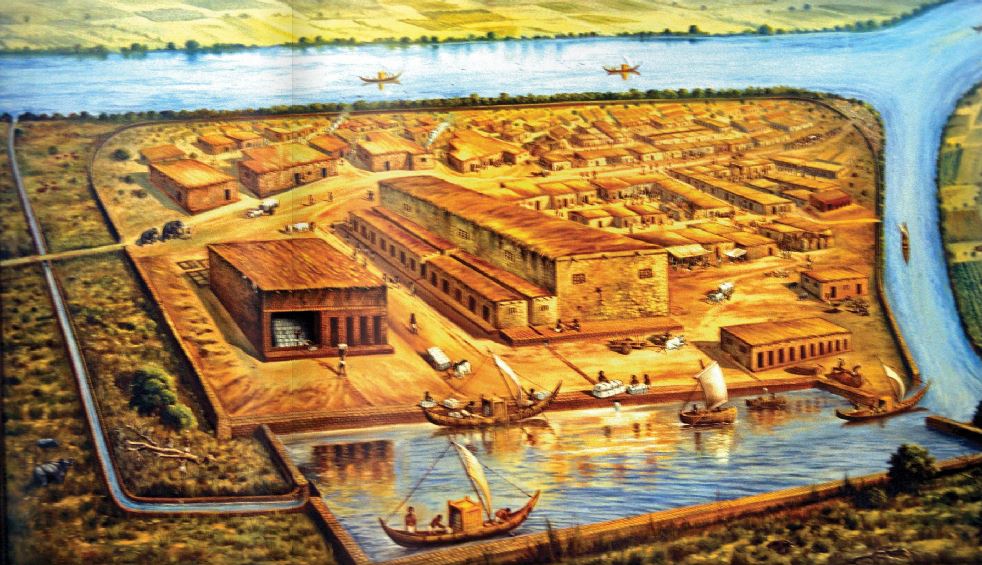

.JPG)