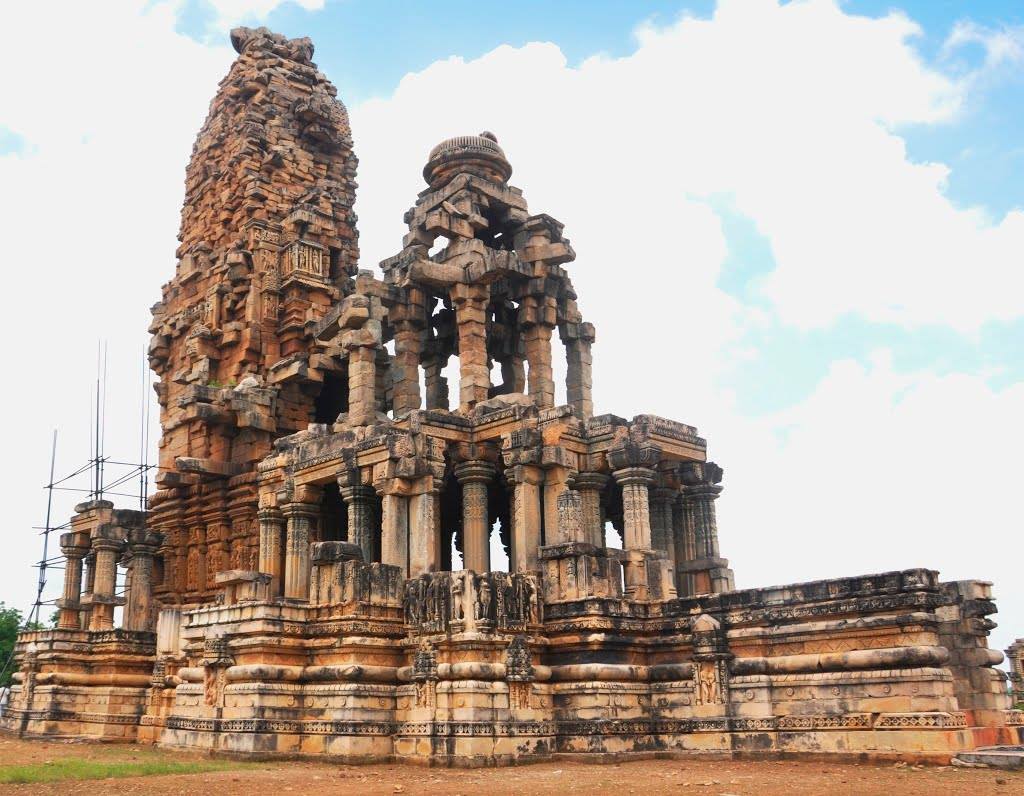
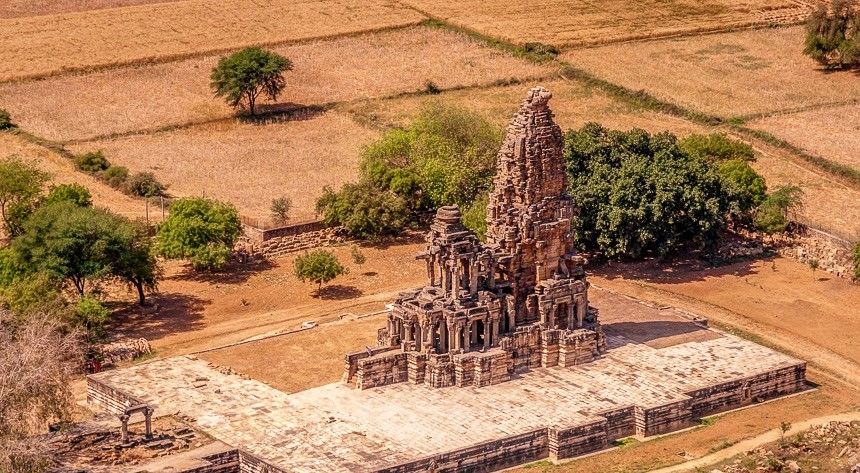
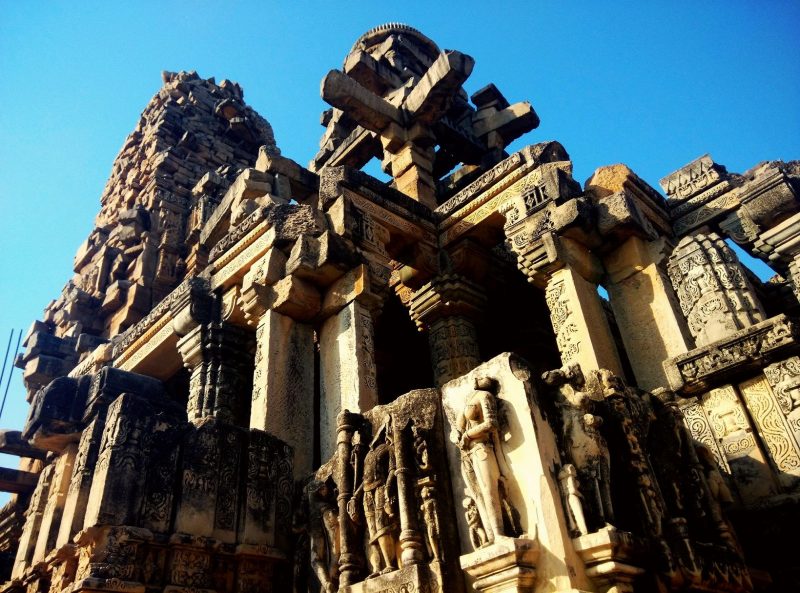
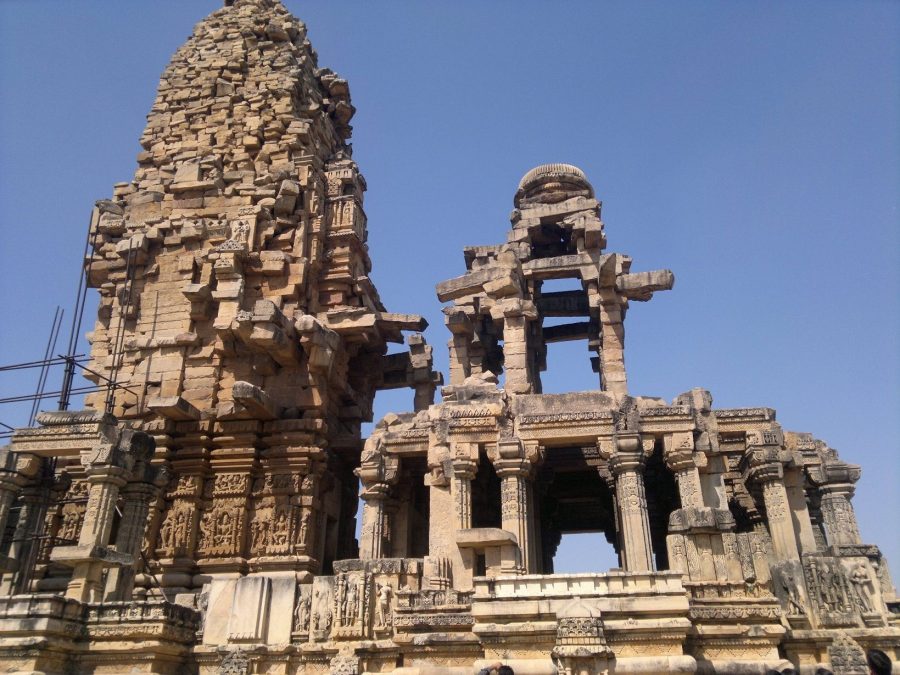
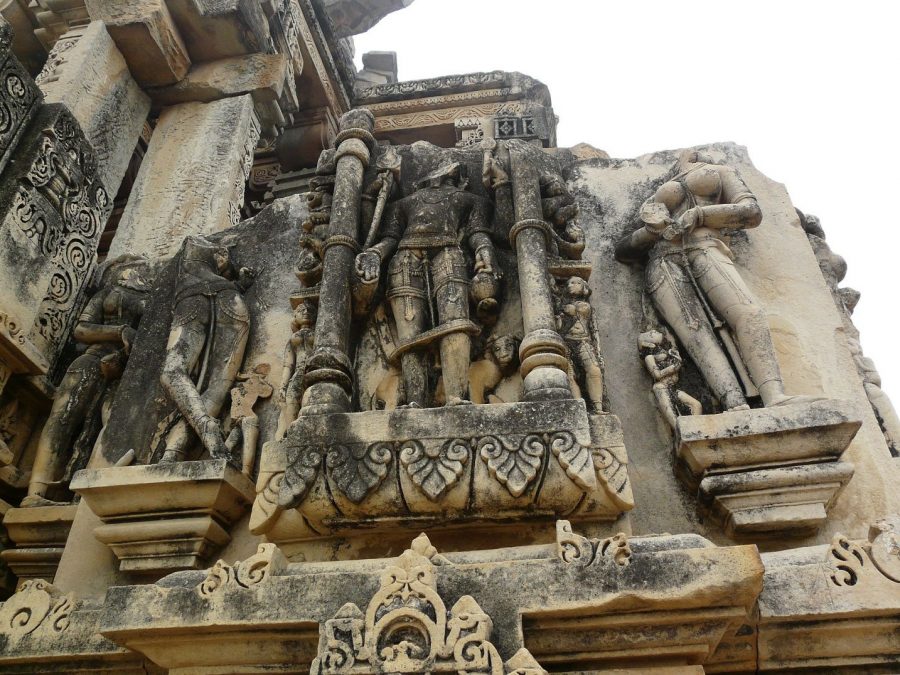
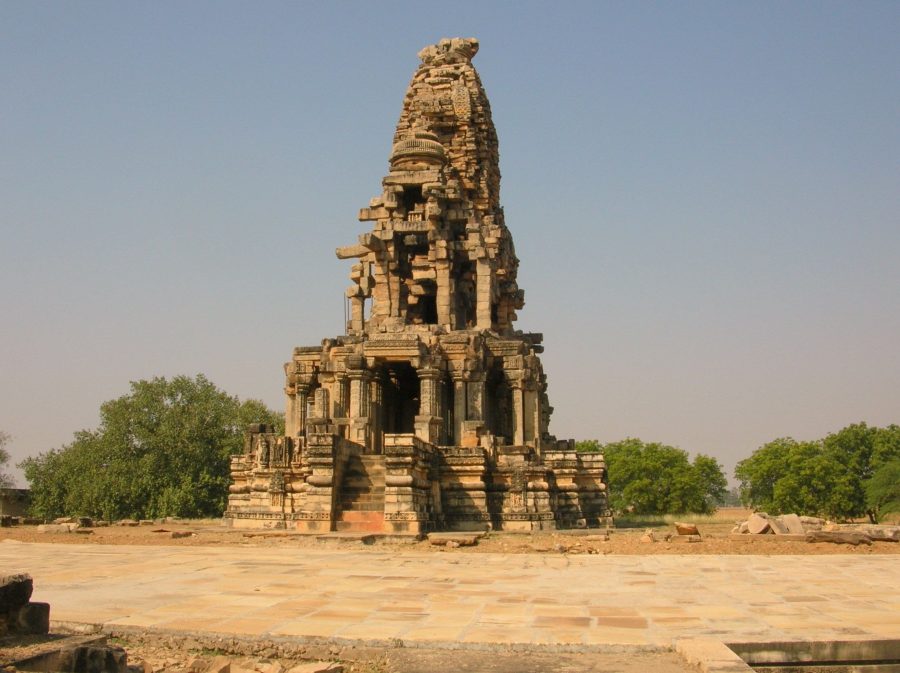
Kakanmath Temple is one of the prominent Shiva temples located near the village of Sihonia in Morena district of Madhya Pradesh. Although in ruins today, the temple is notable for its amazing sculptural wealth.
Sihoniya (also Suhoniya) was known to be the capital of the Kushwahas. The Kushwaha kingdom was established in 11th century within 1015 to 1035 AD. The general belief is that the temple was built by Kushwahas ruler Kirtiraj in 1015 AD to fulfill the wish of Queen Kakanwati. The local lore also goes that the historical Tomar rulers had built the Kakanmath temple.
Kakanmath, in terms of structure and design, is similar to the temples at Khajuraho.The overall structure of the temple is pyramid-like and it has a pillared corridor leading to a central shrine. The temple is originally encircled by subsidiary shrines.
To the right of the temple are the remains of other, smaller shrines including a Shiva linga standing by itself. The overall effect of the towering structure standing in the middle of fields is stunning and would never cease to startle a chance visitor to Sihoniya.
Even in its ruined condition, it reflects the majesty it must have exuded before it was destroyed by the Islamic invaders.
Kakanmath was destroyed by the armies of Aibak and Iltutmish in the 13th century and since than it fell to neglect and obscurity. It was only in the 20th century that it was reclaimed as Indian heritage.
The Kakanmath is under the supervision of the Archaeological Survey of India, Gwalior Region.
A somewhat melodramatic recreation of the discovery of Harappa and Mohenjo-daro. The work of archaeologists who discovered the remains of the ancient Indus civilisation, a sophisticated culture that existed 4,000 years ago.
As Indian independence approached in the first half of the 20th century, British archaeologists John Hubert Marshall and Sir Mortimer Wheeler worked at breakneck speed to understand the great ancient civilisations of the subcontinent, which the British Empire had ruled for a mere 200 years.
The British archaeologists and their Indian colleagues succeeded in identifying the Indus civilisation, a sophisticated culture up to 4000 years old whose towns and cities built of clay bricks extended over a vast area – apparently without the use of a written language. But as they worked on, in peace and then in war, the archaeologists found themselves faced with a familiar question. Was this advanced Indus civilisation peaceful, or was it forged and maintained through cruel wars?
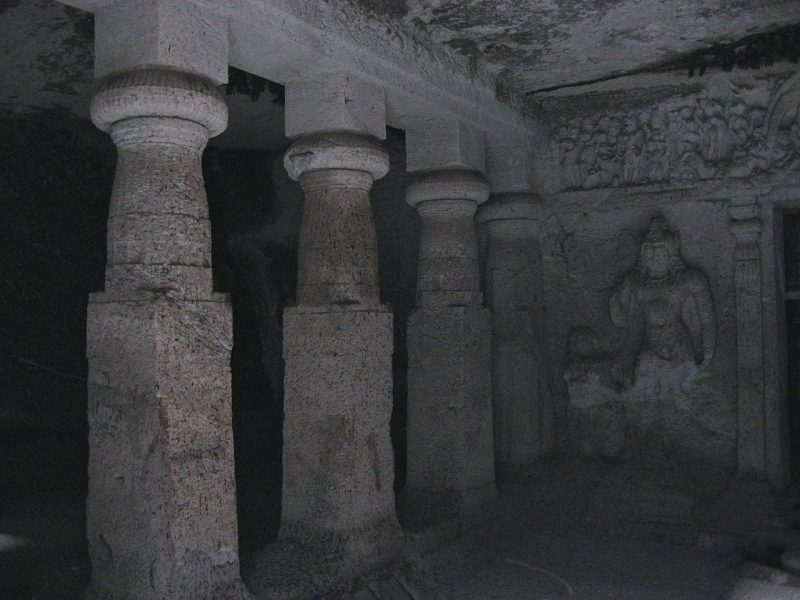
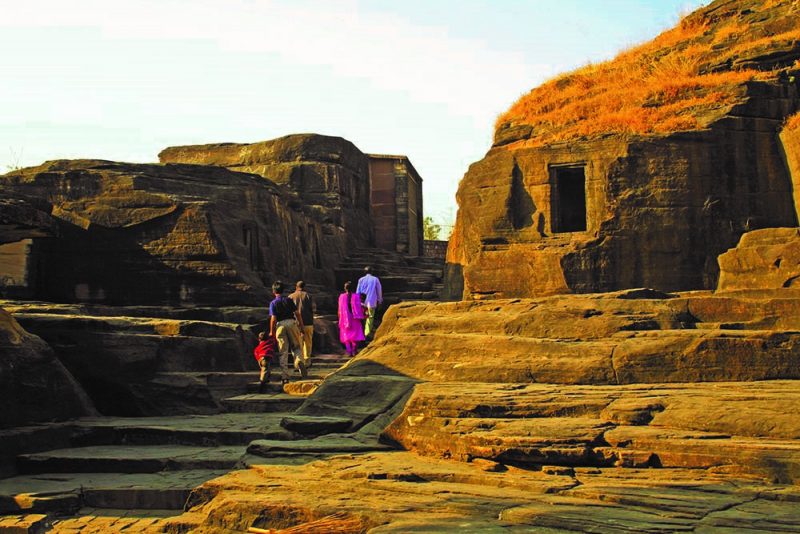
Rock-cut architecture is the practice of creating a structure by carving it out of solid natural rock. There are more than 1,500 rock-cut temples in India, most of which are religious in nature, adorned with decorative paintings and exquisite stone carvings reflecting a very high level of craftsmanship.
In India, caves have long been regarded as sacred spaces and were enlarged or entirely man-made for use as temples and monasteries by Buddhist monks and ascetics. Indian rock-cut architecture is more various and found in greater abundance than any other form of rock-cut architecture around the world .
Here is the list of 15 most amazing rock cut caves in India:
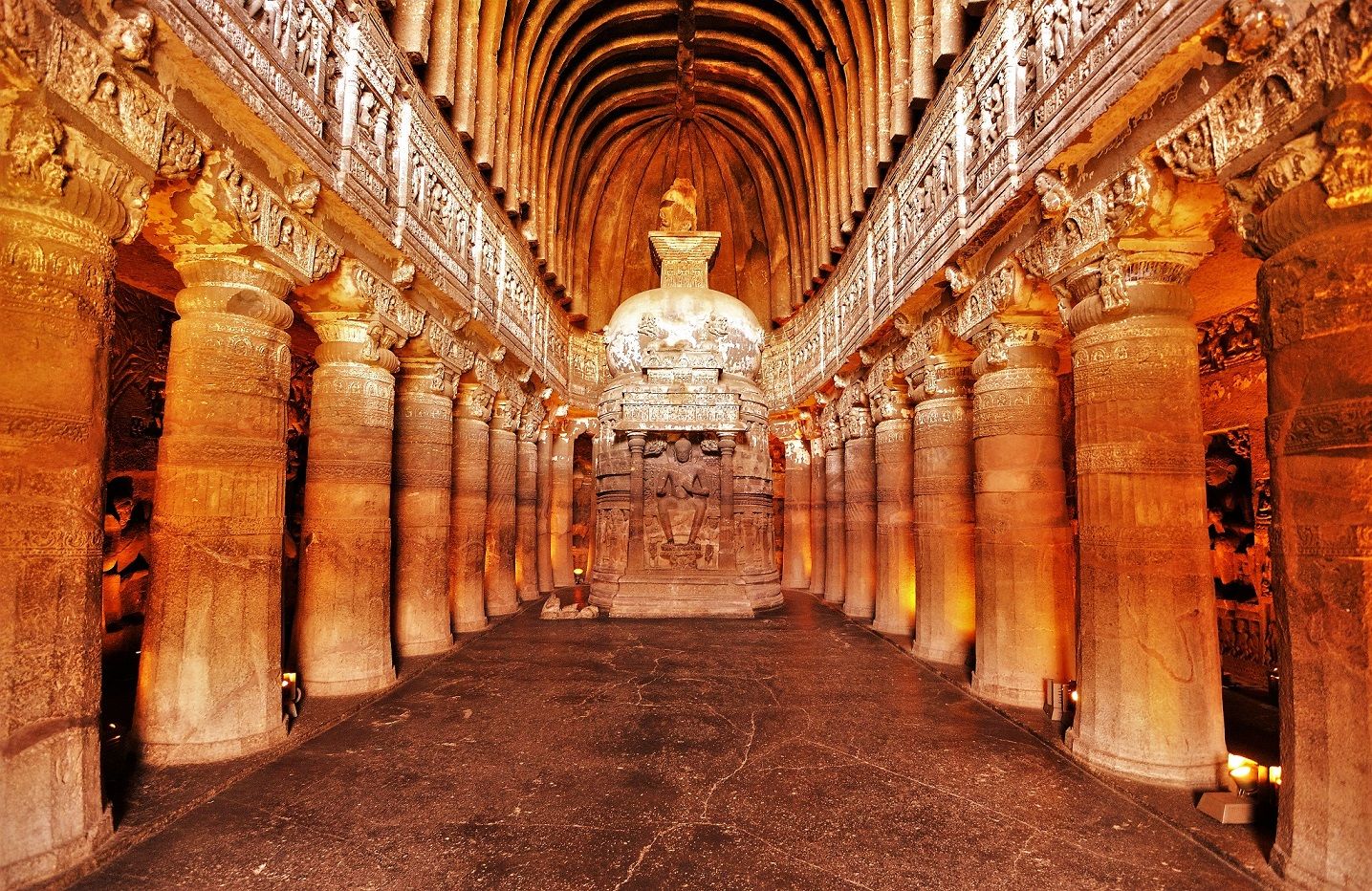
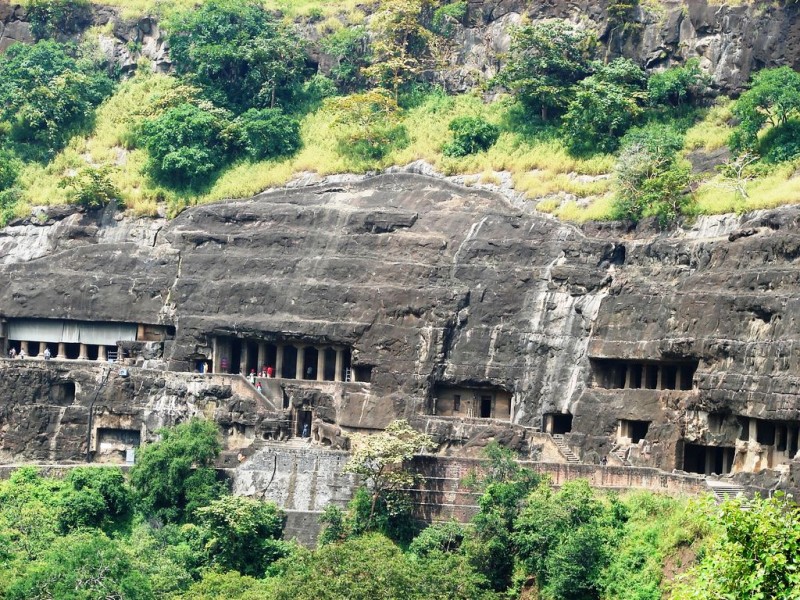
The Ajanta caves are a string of 30 caves, which were built in two phases between the 2nd century BC and 6th century AD. The Ajanta Caves were carved out of a solid rock along the Waghora River. They were used by Buddhist monks as prayer halls and monasteries.
Declared a World Heritage Site by UNESCO, it is also a protected monument under the Archeological Survey of India. The Ajanta caves preserve some of the best masterpieces of Buddhist art in India.
Ajanta Caves were abandoned in AD 650 and were gradually forgotten until their ‘rediscovery’ by a British officer in 1819.
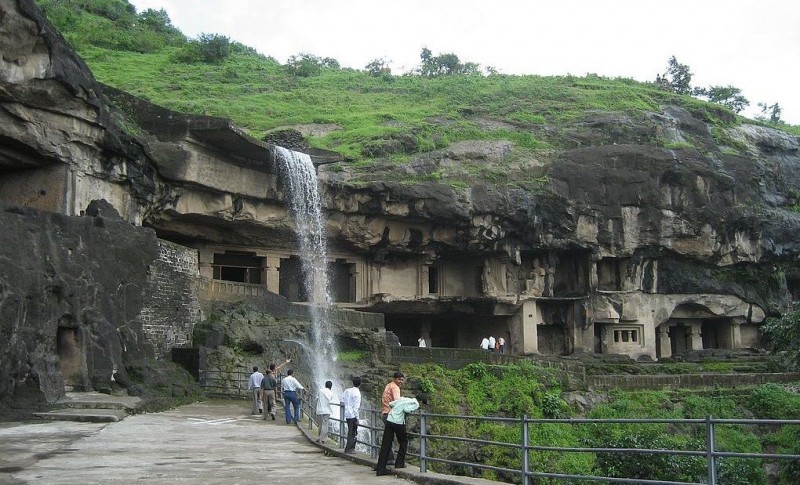
The Ellora caves include 34 monasteries and temples located in Aurangabad district of Maharashtra. There are 12 Buddhist caves, 17 Hindu Caves along with 5 caves dedicated to Jaina mendicants. The cave complex extends over 2 kilometers and they were carved out of volcanic basaltic formation. It is a world heritage site and one of most important ancient monuments in India.
Similar to the Ajanta caves, the Ellora caves contain many frescoes, reliefs, and shrines, including carvings of Buddha , bodhisattvas, and saints. In many cases the stone is intricately carved to look like wood.
Carved out between the 6th and 10th centuries AD, the Ellora caves are one of the largest rock-hewn monastic-temple complexes in the entire world. Ellora is also world famous for the largest single monolithic excavation in the world, the great Kailasa temple.
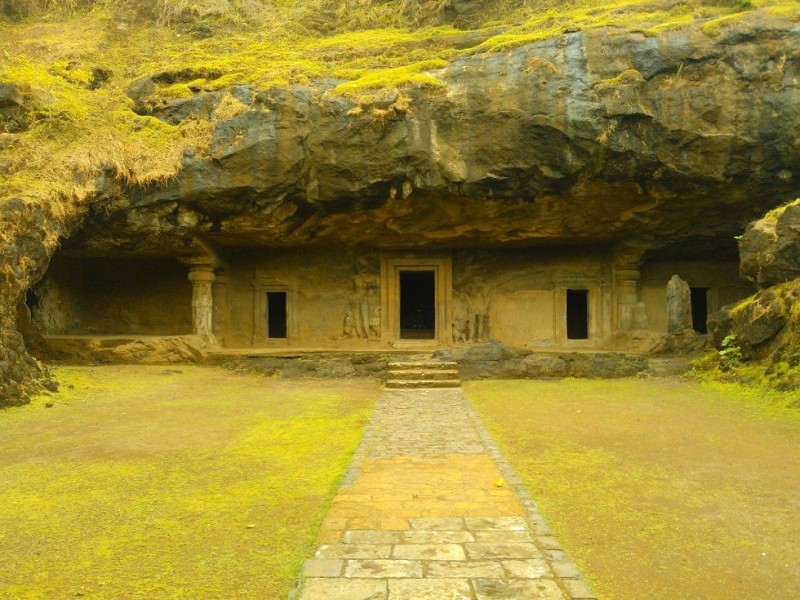
The Elephanta Caves are a complex of ancient cave temples on Elephanta Island, located 10 km away from the Gateway of India at Mumbai. Elephanta Caves consists of two groups of caves; one is the Hindu rock art and the other is the Buddhist rock art. The place is still worshipped by the locals, and is dedicated to Lord Shiva.
The origins of the temple caves, thought to date from about the 7th century, are obscure. It is known, however, that the island was originally called Gharapuri – the Portuguese renamed it Elephanta after they found a large stone elephant near their landing place.
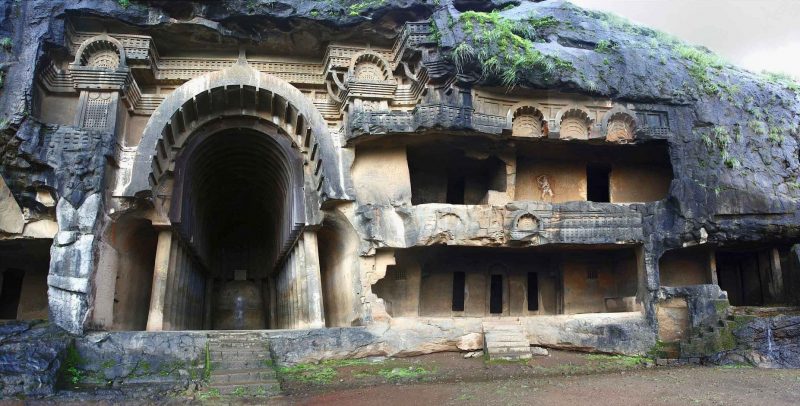
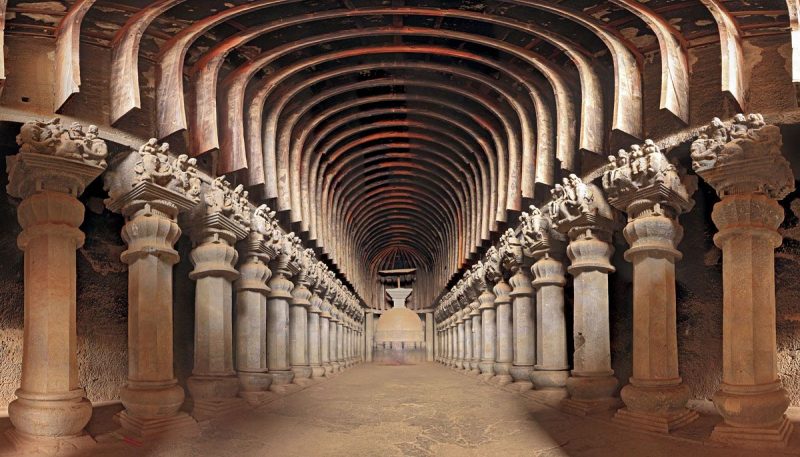
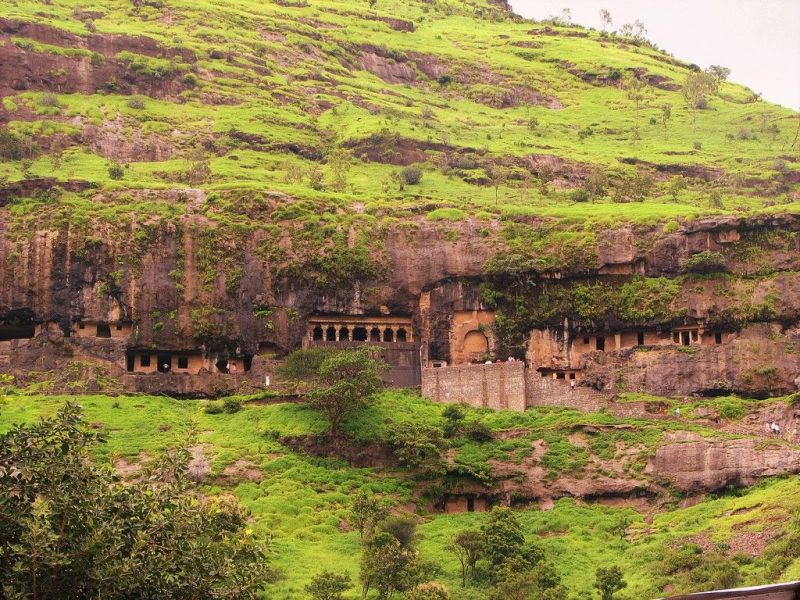
Bhaja Cave is a group of 22 rock-cut caves dating back to the 2nd century BC located in Pune, near Lonavala, Maharashtra. These caves are cut in steep cliff face 120 m above the surrounding plain, all looking to the west.
The most impressive monument is the large shrine chaityagriha, a prayer hall with a stupa at one end. The other awe-inspiring features of the Bhaja caves is a group of 14 stupas, five inside and nine outside an irregular excavation
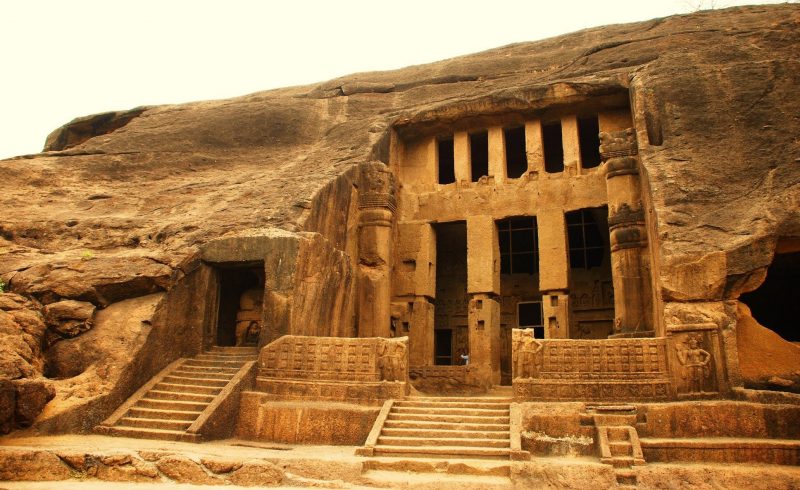
Kanheri Caves constitute a group 109 of rock-cut monuments located inside the Sanjay Gandhi National Park, north of Mumbai. Built between the 1st century BC and 9th century AD, the Kanheri Caves demonstrate the Buddhist influence on the art and culture of India and offer picnickers a getaway, especially during the rainy season.
Majority of the caves are monasteries, intended for living, study and meditation. All of them have elaborately carved sculptures, relief’s and pillars and encompass rock-cut stupas for worship.
Karla Caves are one of the ancient caves in Lonavala of Maharashtra that follows the mixed Hindu and Buddhists style of rock-carved caves architecture. The group at Karla consists of 16 rock cut excavations of which cave 8 is the chaityagriha which was carved during Satavahanas dynasty (271 BCE to 30 BCE).
These caves are some of the largest rock-cut Buddhist shrines in India. The monasteries at Karla could be datable between circa 60-40 B.C. and 4th century A.D.
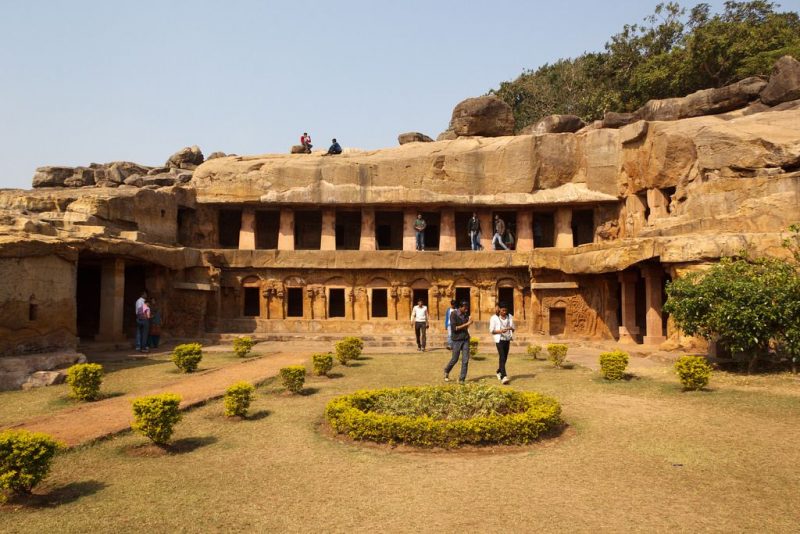
Udayagiri and Khandagiri Caves are partly natural and partly artificial caves of archaeological, historical and religious importance near the city of Bhubaneswar in Odisha, India. These two hills represent one of the earliest groups of Jaina rock-cut architecture in eastern India in the field of architecture, art and religion.
On the basis of inscriptional evidences, these caves were first excavated by king Kharavela of Chedi dynasty and his successors who were devout Jainas during the first century B.C.
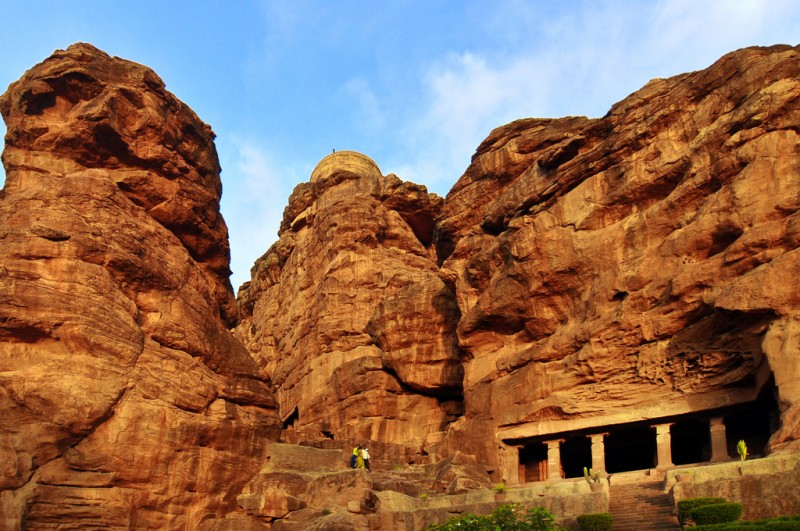
The town of Badami in India lies at the mouth of a ravine with rocky hills on either side. Carved out of the soft sandstone of these hill cliffs, the four cave temples of Badami were built by the son of Pulakesi I – Kirthivarman (ruled in 567 – 598 AD) and his brother Mangalesha I (ruled in 598 – 610 AD).
Badami Caves represent the secular nature of the rulers then, with tolerance and a religious following that inclines towards Hinduism, Buddhism and Jainism. Cave 1 is dedicated to Shiva, caves 2 and 3 to Vishnu, and cave 4 is a Jain temple.
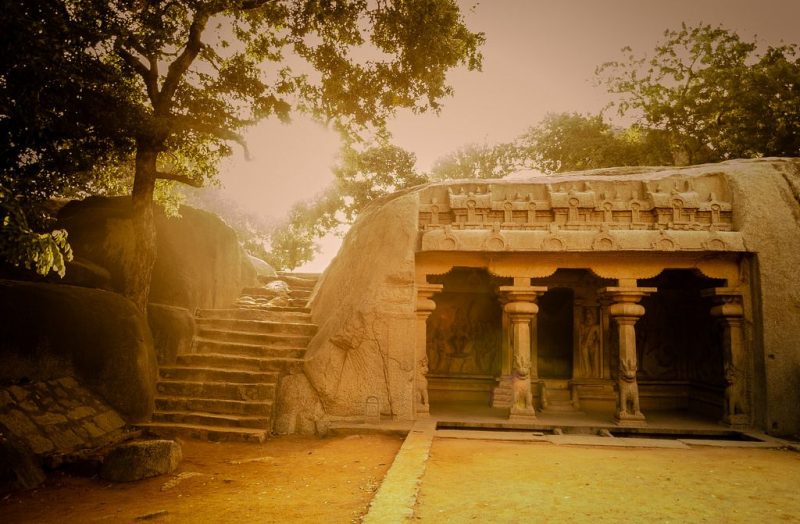
Built in the late 7th century, the Varaha Cave Temple dedicated to Lord Vishnu, is one of the finest examples of Indian rock-cut cave architecture. The Varaha Cave Temple has beautifully moulded lion pillars, while the relief sculptures of Lakshmi, Durga and Varaha, the boar incarnation of Vishnu, are among the masterpieces of Pallava art.
The structure is part of the Group of Monuments at Mahabalipuram, a UNESCO World Heritage Site inscribed in 1984
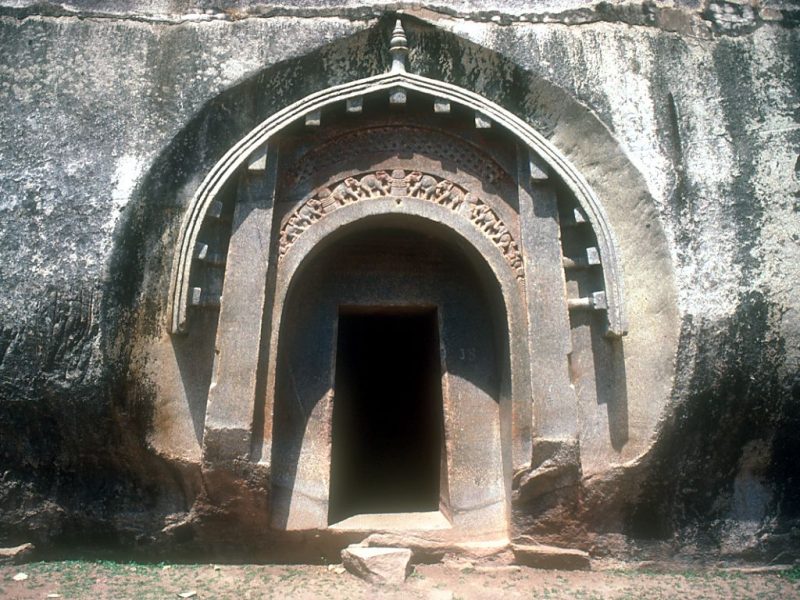
The Barabar Caves are the oldest surviving rock-cut caves in India, mostly dating from the Maurya Empire (322–185 BCE), some with Ashokan inscriptions, located at a distance of 20 KM from Gaya in Bihar.
Carved out of a huge granite rock, these caves look as if they are cut with a laser. The caves were designed in a way that they look like wood. Though Buddhists themselves, they allowed various Jain sects to flourish under a policy of religious tolerance.
Lenyadri contains nearly 40 rock-cut caves. The best known and most visited is a group of 30 caves located in a compact group and all facing towards the south.
These caves have been created in the 1st – 3rd century AD as a Buddhist monastery. Later one of the Buddhist dwellings was turned into a popular shrine of Hindu god Ganesh. Lenyadri caves have preserved traces of ancient cave paintings and inscriptions.
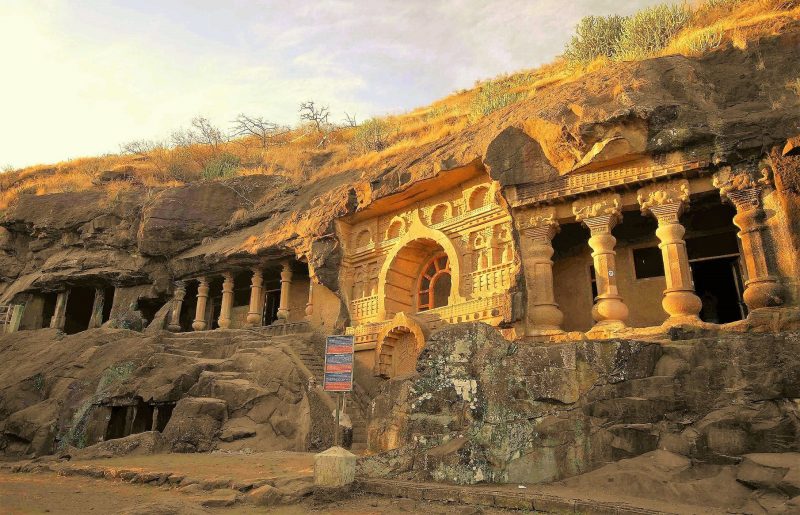
The Pandavleni caves are a group of 24 caves which were carved between the 3rd and 2nd Century AD. Although these caves are located near one of the holiest Hindu sites and have a name of Hindu deity, these rock-cut temples initially were started by Jains and later turned into rather significant centre of Buddhism.
The main cave or the ‘Chaitya’ (prayer hall) is the best of all the caves as it has a beautiful Stupa located within. The site has an excellent ancient water management system and skillfully chiseled out of solid rock are several attractive water tanks
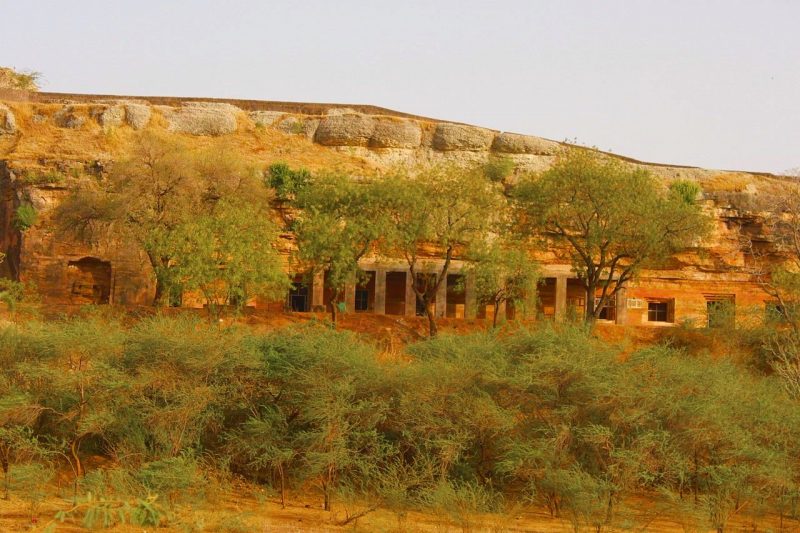
Located at a distance of around 97km from Dhar Town in Central India (Madhya Pradesh), Bagh Caves are assimilation of around nine rock-cut monuments. The caves were cut into a vertical sandstone rock face by master craftsmen. Meant to be Buddhist monasteries, the caves were made sometime in the 4th or 5th century AD. Though the paintings are disfigured due to age, it is said that the murals expressed lively, beautiful and vivid imagination.
The eventual decline of Buddhism in India and its remoteness resulted in Tigers living there, hence the name. Some believe the work was begun by the Buddhist monk Dataka.
Dedicated to the Hindu god Shiva, the caves are estimated to be 1,500 years old and are some of the oldest cave temples in Mumbai. They are thought to be the work of Buddhist monks and Hindu priests, and they contain ornate sculptures.
The size of the cave complex rivals several UNESCO World Heritage sites nearby, such as the cave temples of Ajanta, Elephanta, and Ellora. These caves belongs to the last stage of the Mahayana Buddhist architecture.
The Udayagiri Caves feature some of the oldest Hindu cave temples. They were carved and completed under the patronage of Chandragupta II, Emperor of the Gupta Empire, in the late 4th and 5th century CE. The complex consists of twenty caves, of which one is dedicated to Jainism and all others to Hinduism.
One of India’s most important archaeological sites from the Gupta period, it is currently a tourist site under the protection of the Archaeological Survey of India.
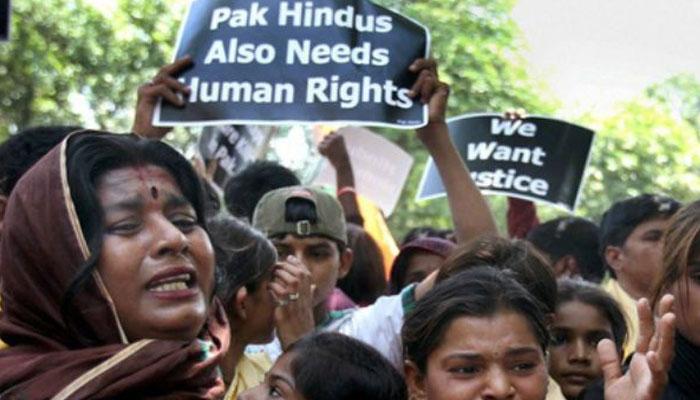
Which religious group has the least amount of human rights in South Asia? The probable answer, perhaps surprisingly, is a group that few think about or recognize as existing – Pakistani Hindus.
The plight of Pakistani Hindus is among the direst of any community in the world and has been so for decades. Yet not many in the world are aware of, much less have any concern for them, even in India.
Hindus in Pakistan are a targeted community and losing their numbers, unlike Muslims in India who are increasing. While there were similar percentages of Hindus in Pakistan and Muslims in India at the time of Partition, Pakistani Hindus have been continually oppressed, marginalised, converted or simply eliminated. The result is that only two per cent of Pakistan is Hindu today.
Pakistani Hindus are among the poorest of the poor and do only the most menial jobs. The most basic human rights are not given to them. Pakistani Hindus cannot register their marriages. Their women are commonly abducted and there is little they can do about it. Pakistani courts seldom hear their pleas, or if they do, seldom rule in their favor. Sometimes paying of high ransoms may work to bring their daughters back, but overall Pakistani Hindus are too poor to afford these. A Pakistan Hindu Marriage Act has been in the courts for years but has not yet been approved, though Pakistan has continued a Christian Marriage Act from the British era.
Pakistan Hospital says Toilet and Bathroom cleaners ONLY for Hindus Christians and Sikhs. Img source
Hinduism is denigrated in Pakistan textbooks as unholy and the Hindu past of Pakistan is almost eradicated from the record. Pakistanis are taught to distrust and look down upon Hindus, as kafirs, if not subhuman. The result is that Pakistani Hindus often face fierce religious hatred by people who do not even know them.
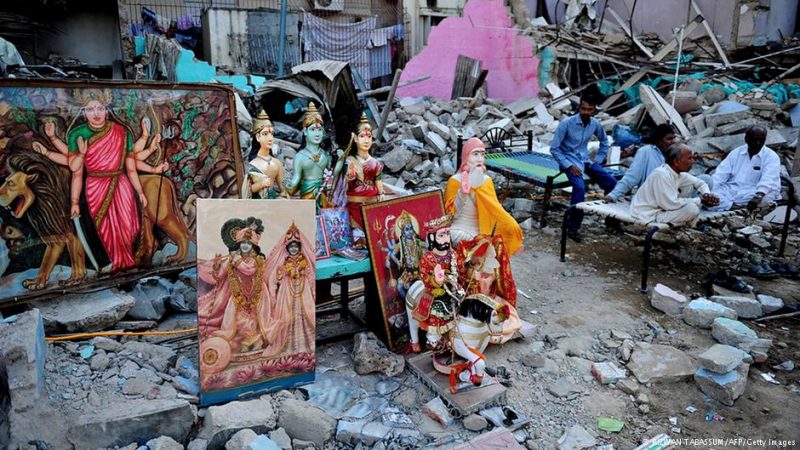
You will not see any thriving Hindu temples left in Pakistan comparable to the great mosques that have continued in India. Hindu temples are neglected, occupied or destroyed. There are no Hindu religious schools of any size or any group funding them like the Saudi-funded madrasas in India. There are no government honored Hindu holidays in Pakistan, such as Islamic holidays in India.
Pakistani Hindus sit next to a temple demolished by the Pakistani authorities in Karachi
There has never been any major Pakistan political leader who was a Hindu. Hindus have no real representation in government and are afraid to even try to vote. There are certainly no comparable Hindu actors lauded in Pakistan movies as there are Muslim actors like the Khans in India. In fact, Hindus have no presence in the media or any social influence. The Hindu organisations that do exist often come under vandalism or outright attack, and try to function in secrecy.
Where is the outrage from any corner?
Ignoring the plight of Pakistani Hindus began with the government of India after 1947, perhaps fearing that highlighting their plight might inflame anti-Muslim sentiments among Hindus in India. It has continued ever since, almost without any question as to its consequences.
The Indian media and academia followed suit after the government, and the foreign media and academia naturally followed their examples. Well-funded pro-Muslim lobbies have naturally not wanted to have the issue addressed, and the large pro-Pakistan lobby in America has invested heavily in trying to show that Pakistan is much more tolerant than it is.
The Left in India has been averse to addressing the cause of Pakistani Hindus, probably because it considers Hinduism to be Right wing and the enemy. Human rights and NGO groups afford them little attention as little funding is available to favor their cause. Even feminists have ignored the plight of Pakistani Hindu women, though Pakistani Hindu women are among the most ill-treated in the world.
Hindus in India do not give adequate attention to the plight of Pakistani Hindus, either. Yet should they raise the issue of mistreatment of Hindus in Pakistan, they are criticised as communal or disturbing social harmony. The negation of Pakistani Hindus has been so successful that if one raises the issue, many people think that one is exaggerating or making up their plight.
The need for action
Should not all groups in India insist that Pakistani Hindus be afforded the same rights as Indian Muslims? After all, they are both human beings.
Fortunately, the Narendra Modi government is beginning to address the plight of Pakistani Hindus and a few India media groups are making better efforts as well. Yet so far they are only scraping the tip of a massive iceberg of oppression and abuse that will require persistent and determined struggles to effectively correct.
In the Vedic literature of India, there are many descriptions of flying machines that are generally called Vimanas. There are no physical remains of ancient Indian aircraft technology but references to ancient flying machines are commonplace in the ancient Indian texts. Several popular ancient epics describe their use in warfare.
According to the Vaimanika shastra, the vimanas of the ancient texts were actually true aerodynamic flying machines, propelled by what some claim were “mercury vortex engines.”
During the past few years some scientists have studied the Vaimanika shastra to know whether it’s a figment of imagination or if concrete verification can be found.
Chumbak Mani
Maharshi Bhardwaj in his book Vaimanika shastra has given the recipes for making many instruments. In one chapter he describes an instrument called Chumbak Mani, which helps to detect any arsenal hidden underground.
In Mumbai professor Sharon, an expert in nanotechnology analyzing the Vaimanika shastra has discovered something incredible. The formula to make a material called Chumbak Mani. Rather than a chemical formula this looks like a magic potion. The components they used in these ingredients have been understood. Using these, they were able to realize two electrodes and the liquid that composed the Chumbak Mani, an ancestor of the modern solar panels.
As per the description, Chumbak Mani is component which emits some kind of electrical signals. Through that electrical power they can be able to detect any material which is hidden underground while the airplane is on its flight.
To melt together the ingredients that make the Chumbak Mani it is necessary to use a technique called flux technology that reaches the fusion point at 1250 degrees. So this is also interesting to know that the flux tech was known to us about 50 years ago. But this tech was known to maharishi Bharadwaj 1000 years ago.
Vakra Prasarana Yantra
Another validation comes from the research by Dr. Prabhu, an Indian scientist who was able to find out and study the original manuscripts of Shastri. Through the analysis of the text he could synthesize and patent five completely new alloys. He also realized the model of a mechanical element of a Machine called Vakra Prasarana Yantra. This machine is described as a mechanism to take sharp turns or reverse gear what is called in Sanskrit as the sarpa (snake like motion) or tiriyak (Reverse).
Vakra Prasarana Yantra or diversion enabling mechanism should be installed in the vimana and then as we are being chased by another enemy aircraft evasive tactics how to avoid it like what they call as sarpa gamana i.e flying like a serpent.
The manuscript on the vimanas is not only the one dictated by Rishi Subbaraya shastri. Professor Nene and Dr. Dongre discovered and translated another manuscript which are also linked to the mysterious sage Bharadwaj. Hence they date back to more than 2000 years ago. The very evolution in the universe started from the sun in the same way the creation of the galaxies took place from the primal atom these are the opening words of the Amshubodhi, a very ancient treatise of cosmology and physics of nuclear particles. The slokas describe elaborately the evolution of universe from the big bang till the creation of universe. It is strikingly surprising that all the description given in these three steps are same to the one by Hans Stephane given in his book of general relativity but the Amsubhodini is not just a theory book.
Dhvantapramapaka Yantra
In Varanasi a faculty of physics reconstructed the Dhvantapramapaka Yantra (a spectrometer) an instrument used to study the light of the stars. The source of light, point source is located at the focus of convex lens and when light goes into the lens it becomes a parallel beam and it falls on the prism which is located inside this.
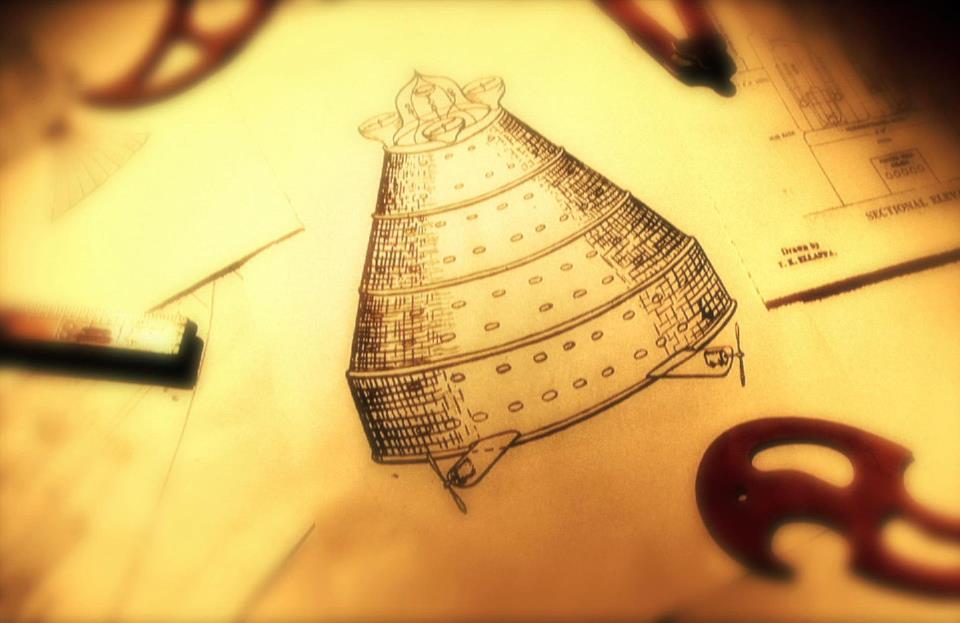
The special component of this spectrometer is a crystal prism, it is conical shaped very different from those that are used today and it forms spectrum which is focused on the screen by means of a convex lens and the spectrum comes in the form of a ring of different colors depending upon the source of light. When switched on the machine it starts to work just as we see the spectrum of the arc in the form of coloured circles. So thousand years ago our ancestors saw similar circles coming from the light of the sun and also from the stars and on the basis of that they characterized the spectrum of sun and stars into different categories much earlier than the modern classification of these stars.
Watch Documentary: Vimana – The Flying Chariots Of The Gods
In the Vaimanika shastra we find the description of a TV, radar, missile and even an AC along with many other devices that didn’t exist at that time. An airplane must have existed, they must’ve known how to make it, they must’ve known the ingredients which is all written there cannot be just fiction or imagination of Bharadwaj.
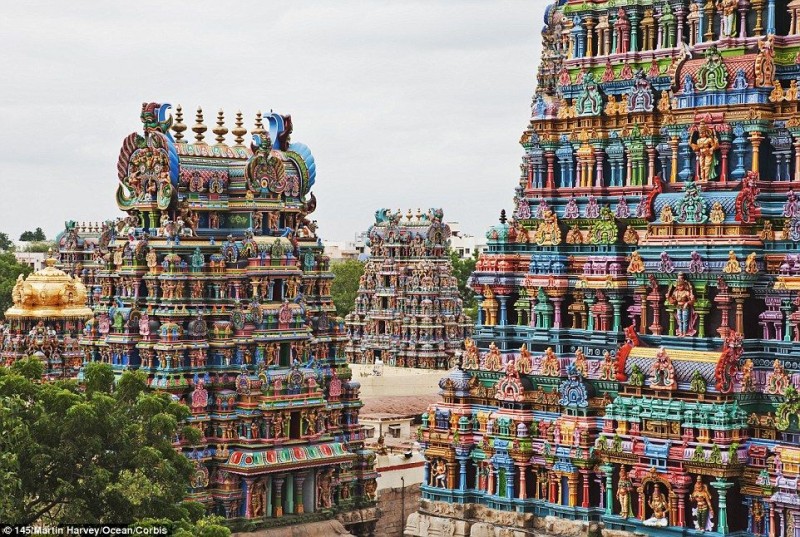
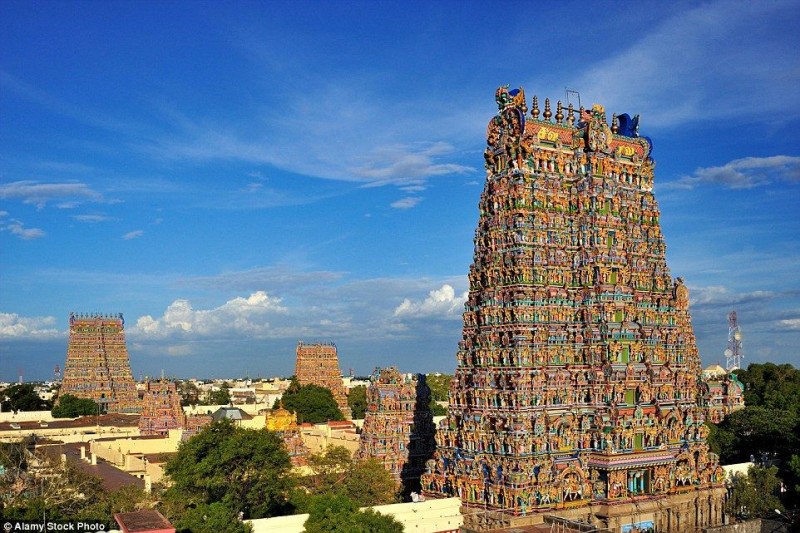
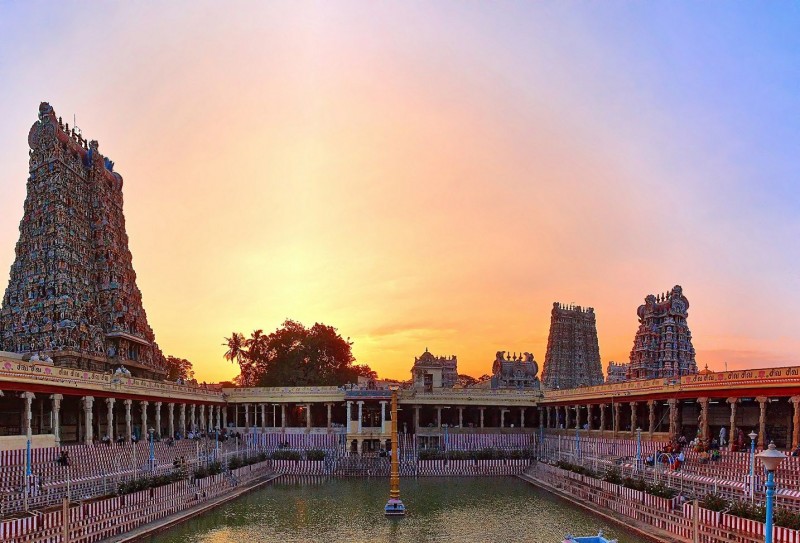
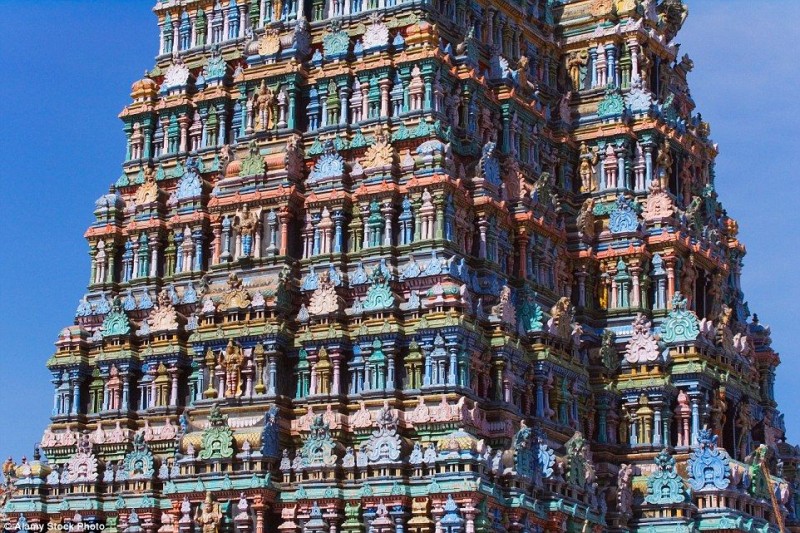
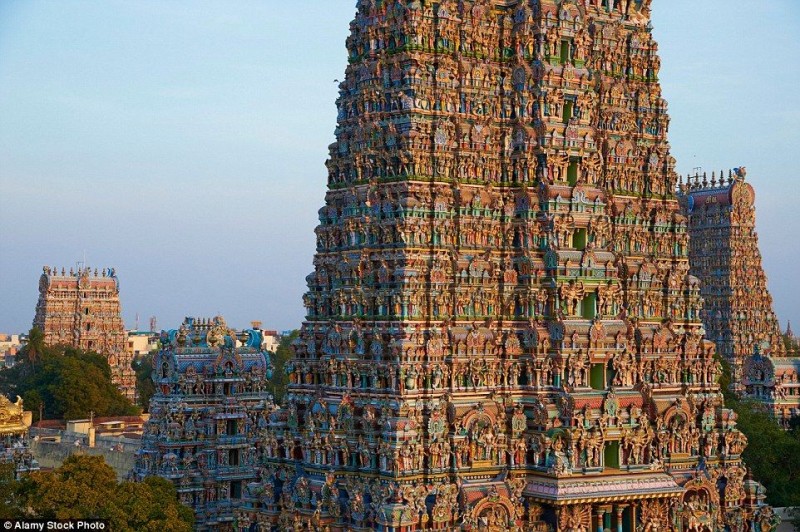
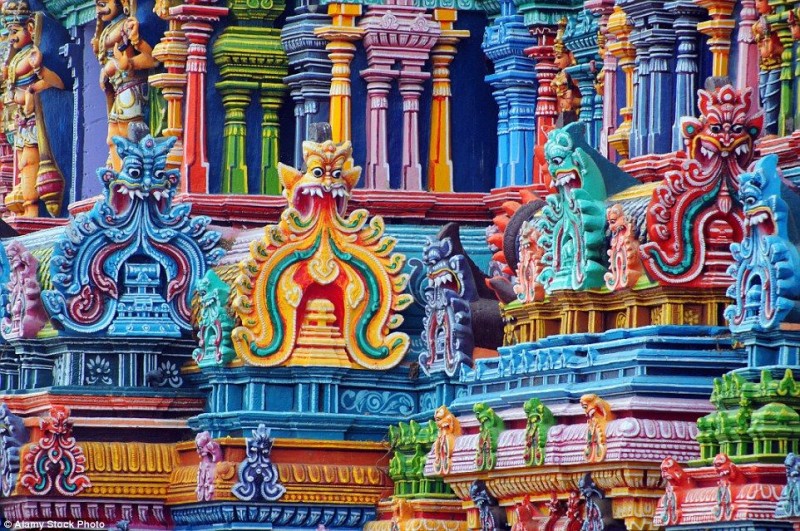
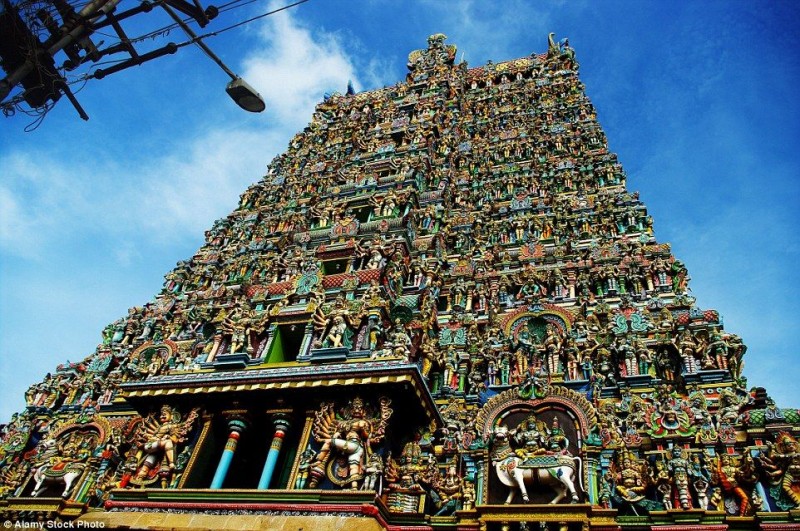
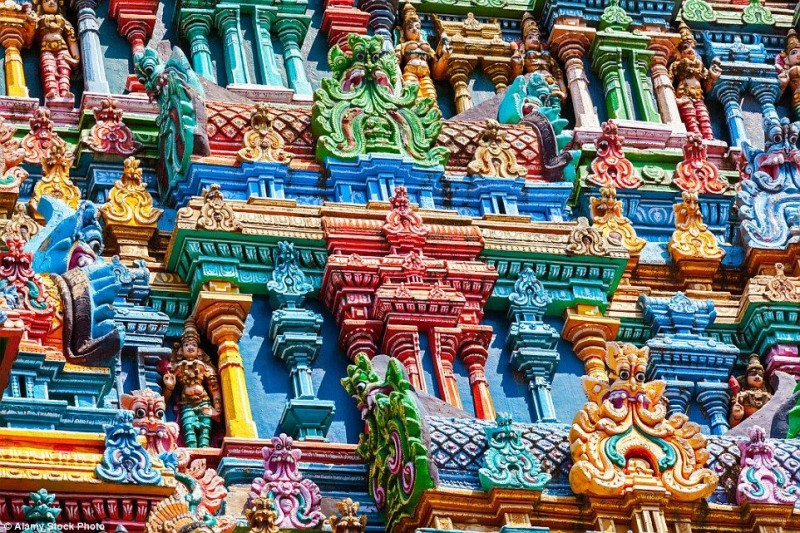
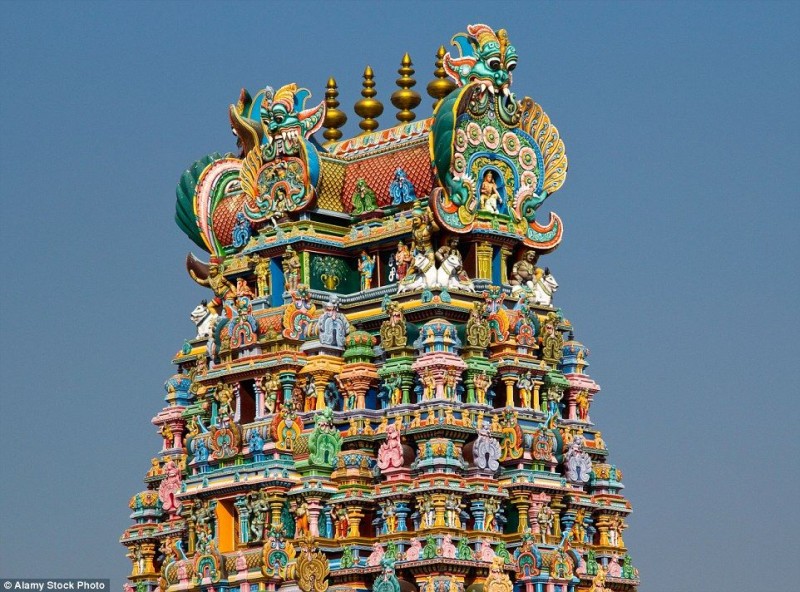
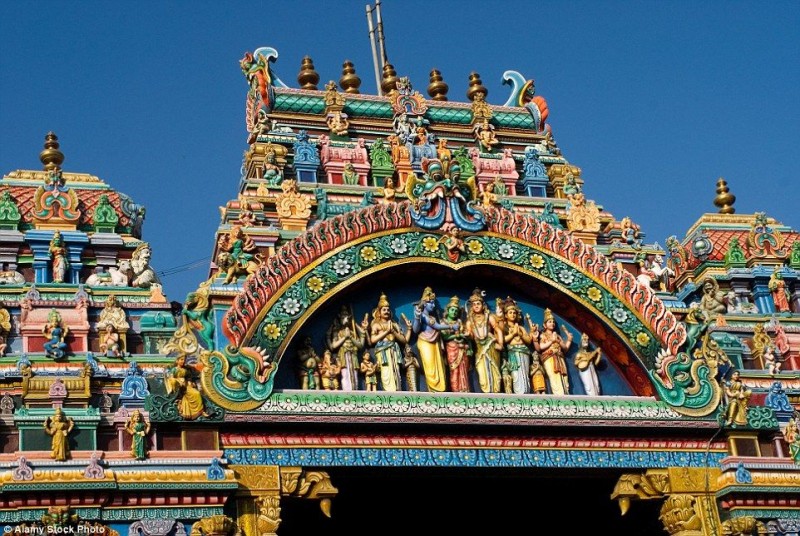
There is no chance of missing these colorful temples in India as they’re painted every shade of the rainbow.
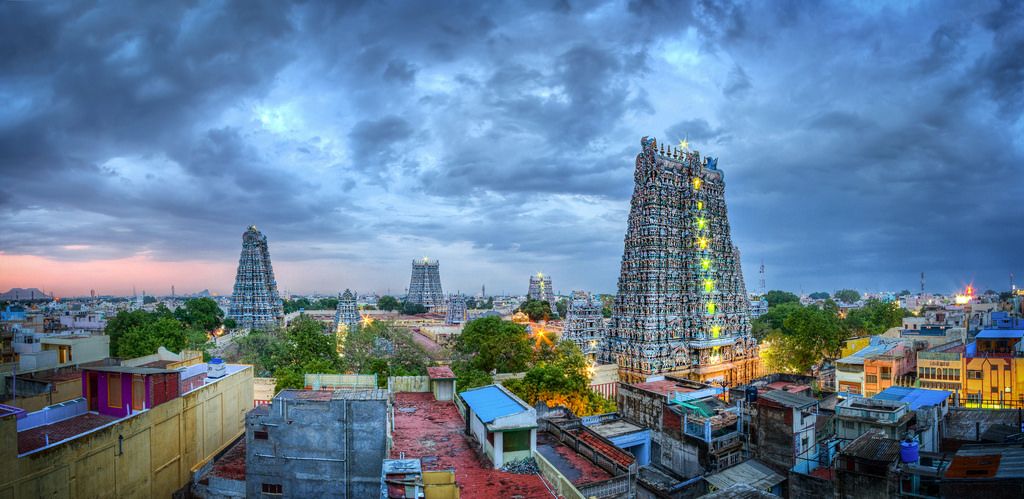
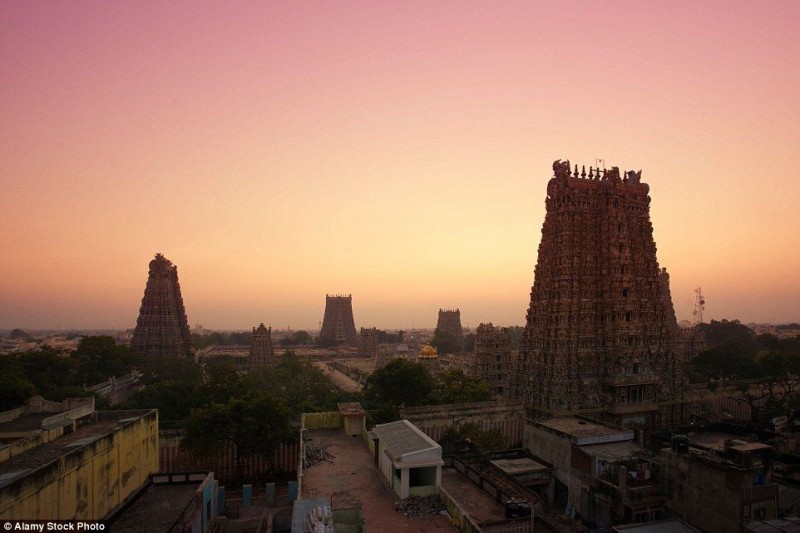
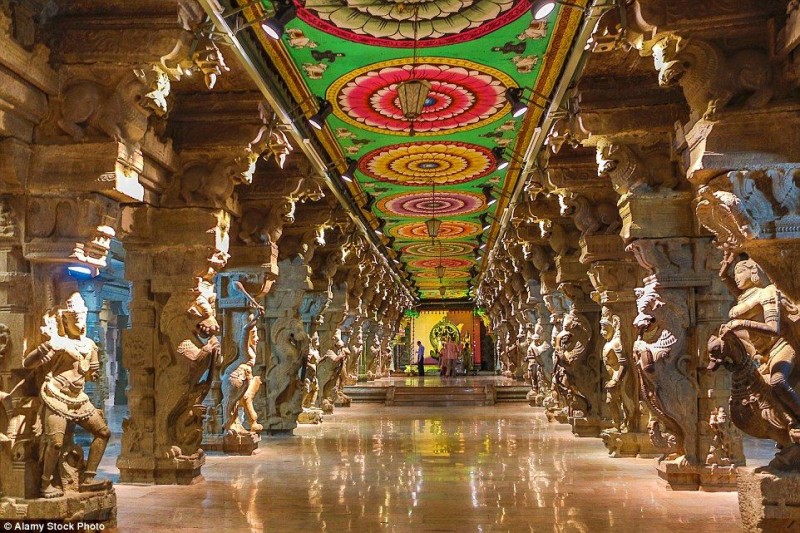
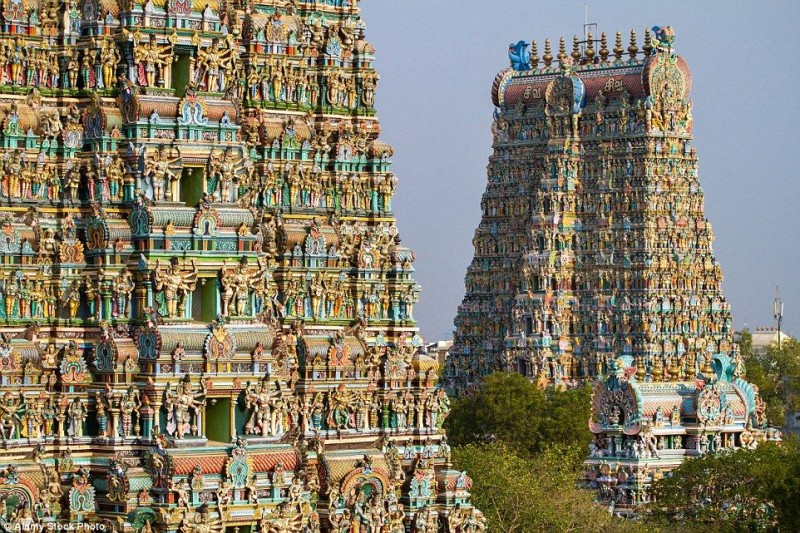
Meenakshi Temple is a master piece and was the center of activity for the promotion of art and culture in Madurai. The temple complex covers 15 acres, and has 4,500 pillars and 12 towers — it’s massive!
The tallest tower rises to 170ft and attracts around 15,000 visitors a day, who flock to the temple for blessings.
The temple forms the heart and lifeline of the 2500-year-old city of Madurai. The Meenakshi temple was almost completely destroyed in the year 1310 following the invasion of the Islamic conqueror Malikkapur.
The present structure was built between 1623 and 1655 CE by Nayakas, who ruled Madurai from 16th to 18th century.
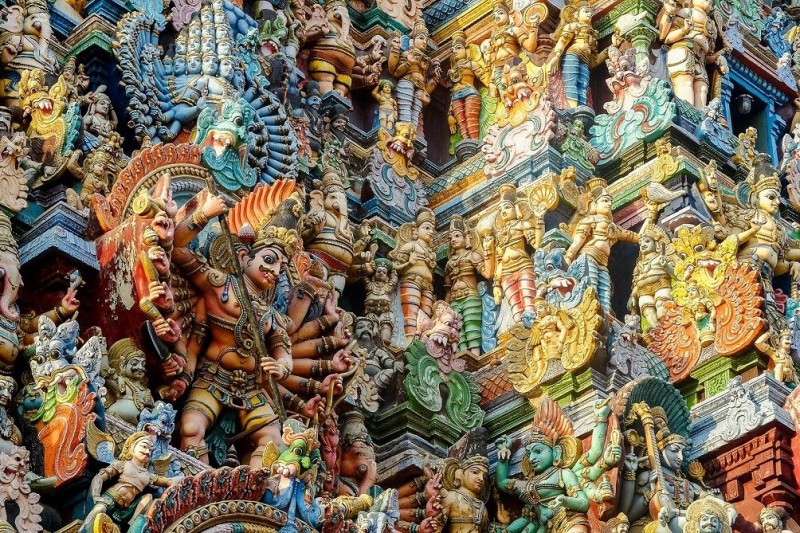
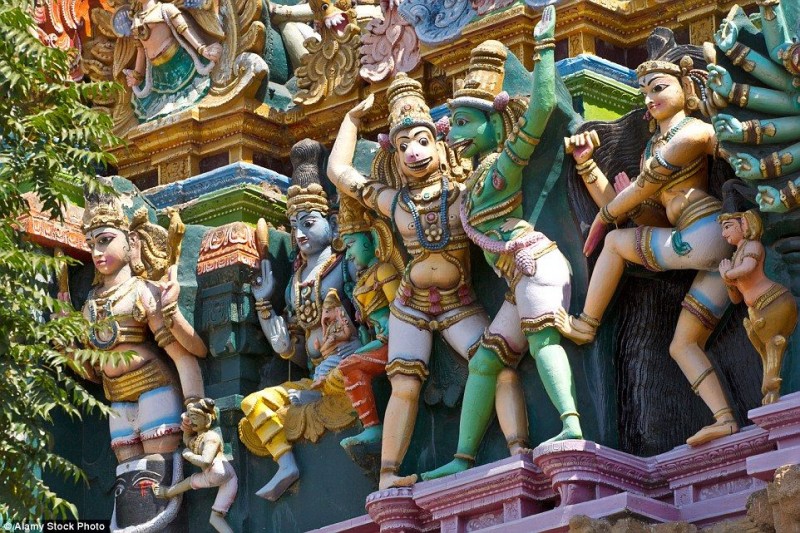
The thick layers of enamel paint that can be seen today have been applied to the gateway towers, or gopurams, in celebration of big events and festivals over recent years.
Each gopuram forms a pyramid shape, with the stone figures of gods, goddesses, demons and animals covering the multi-storied structures.
It was on the list of top 30 nominees for the “New Seven Wonders of the World”.
By continuing to use the site, you agree to the use of cookies. more information
The cookie settings on this website are set to "allow cookies" to give you the best browsing experience possible. If you continue to use this website without changing your cookie settings or you click "Accept" below then you are consenting to this.