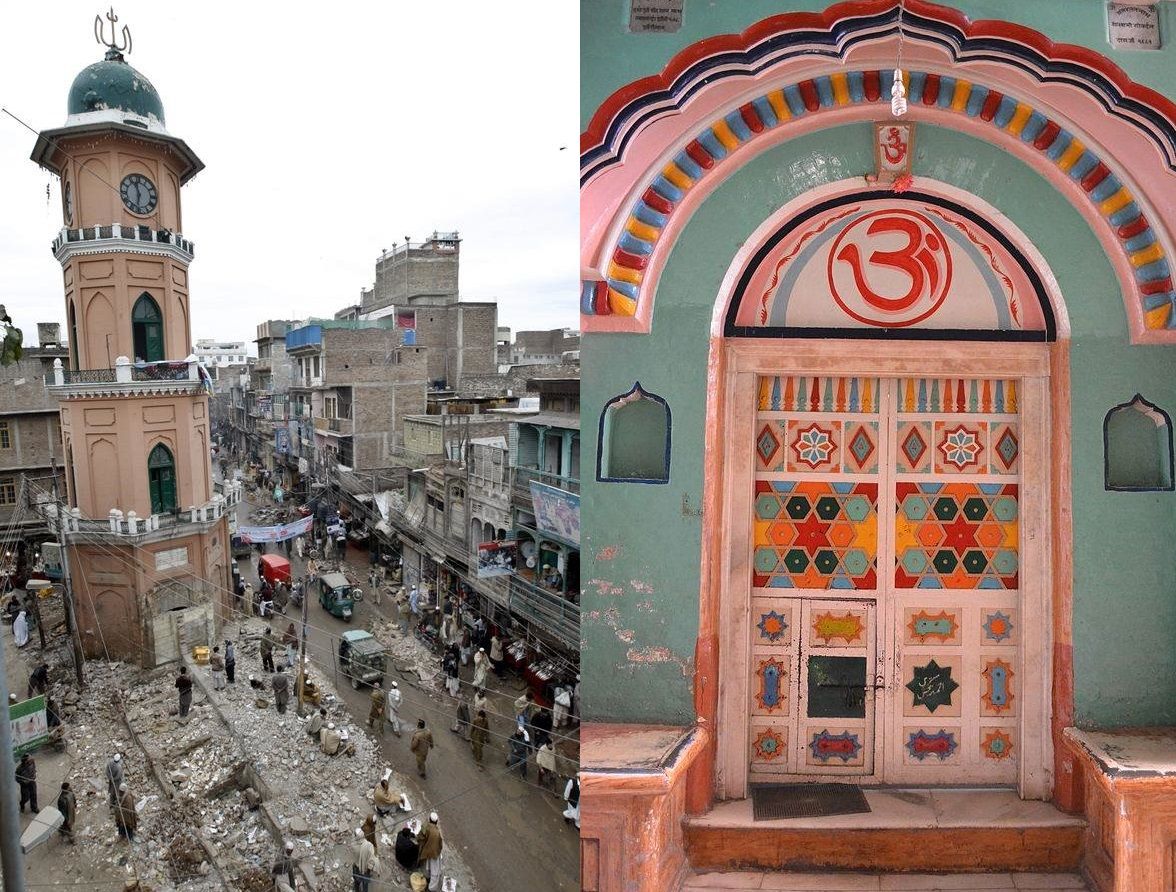
An ancient Hindu temple in this northwestern Pakistani city is being demolished secretly in the name of repair with a commercial plaza set to come up on its land. The process began 10 days ago and is going on without any hindrance.
It is a pity that a criminal act of pulling down a heritage structure has been launched. The building is being knocked down clandestinely to erect a commercial plaza on the site. There is no action from any of the government departments which are supposed to protect such buildings.
A local resident
Another resident said it was a double-criminal act. “On the one hand an ancient building is being demolished while on the other a commercial plaza is set to be constructed on its land in a purely residential area,” he told The News.
Residents questioned the silence of government departments on the episode. They also deplored the inaction of authorities. There has been no action by the Evacuee Trust Property Board and Auqaf Department, which deal with non-Muslim properties, and the Archaeology Department.
“Either these departments are a partner in the crime or they are negligent,” a resident said. Demanding an immediate halt to the demolition process, the residents asked ETPB Chairman Saddique-ul-Farooq to order a probe into the issue to bring to justice the government officials whose negligence or tacit approval had put in danger the ancient Hindu temple.
The Civil Society members, in a statement, said this is a painful story in all major cities of Pakistan where speculative land mafia in collusion with lower-tier government officials and police get away with destroying Pakistan’s precious heritage. The government is reduced to being a silent spectator in this demolition, they said.
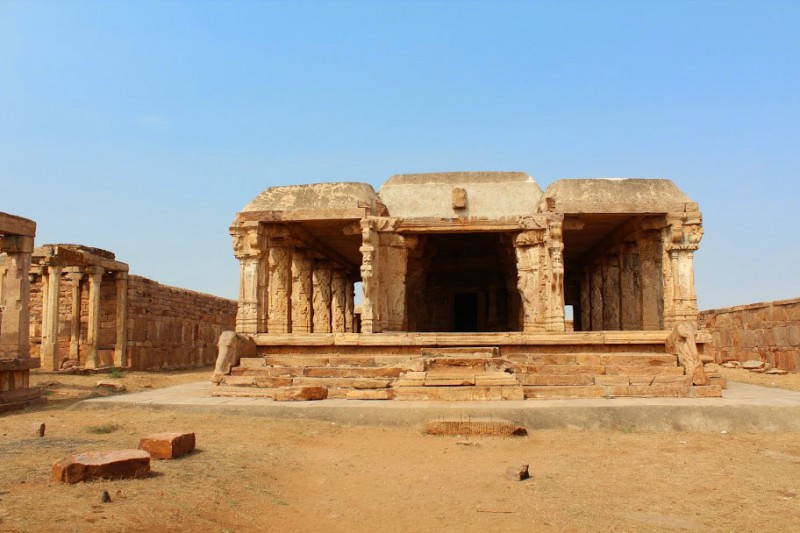
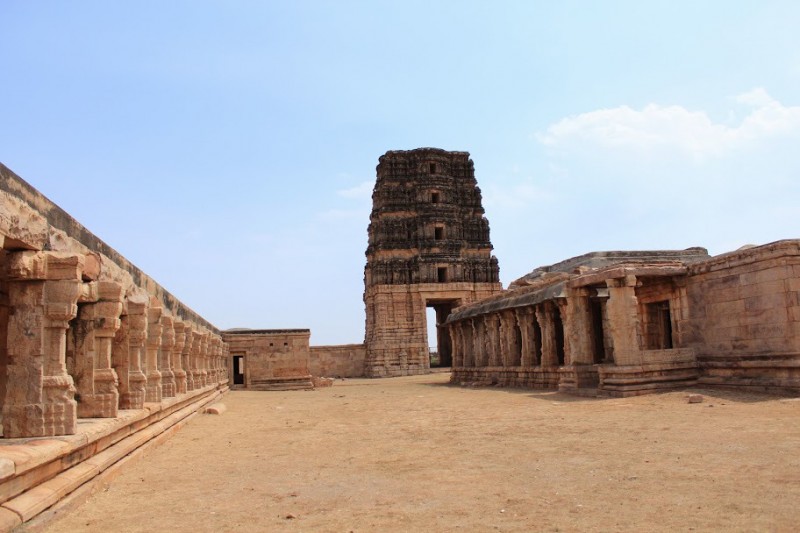
Gandikota is a small village located in Kadapa district in Andhra Pradesh, India. The region of Gandikota was established in 1123 under the Western Chalukyan king of Kalyana named Ahavamalla Someswara I. The Gandikota fort was constructed by the Kappa king during 13th century.
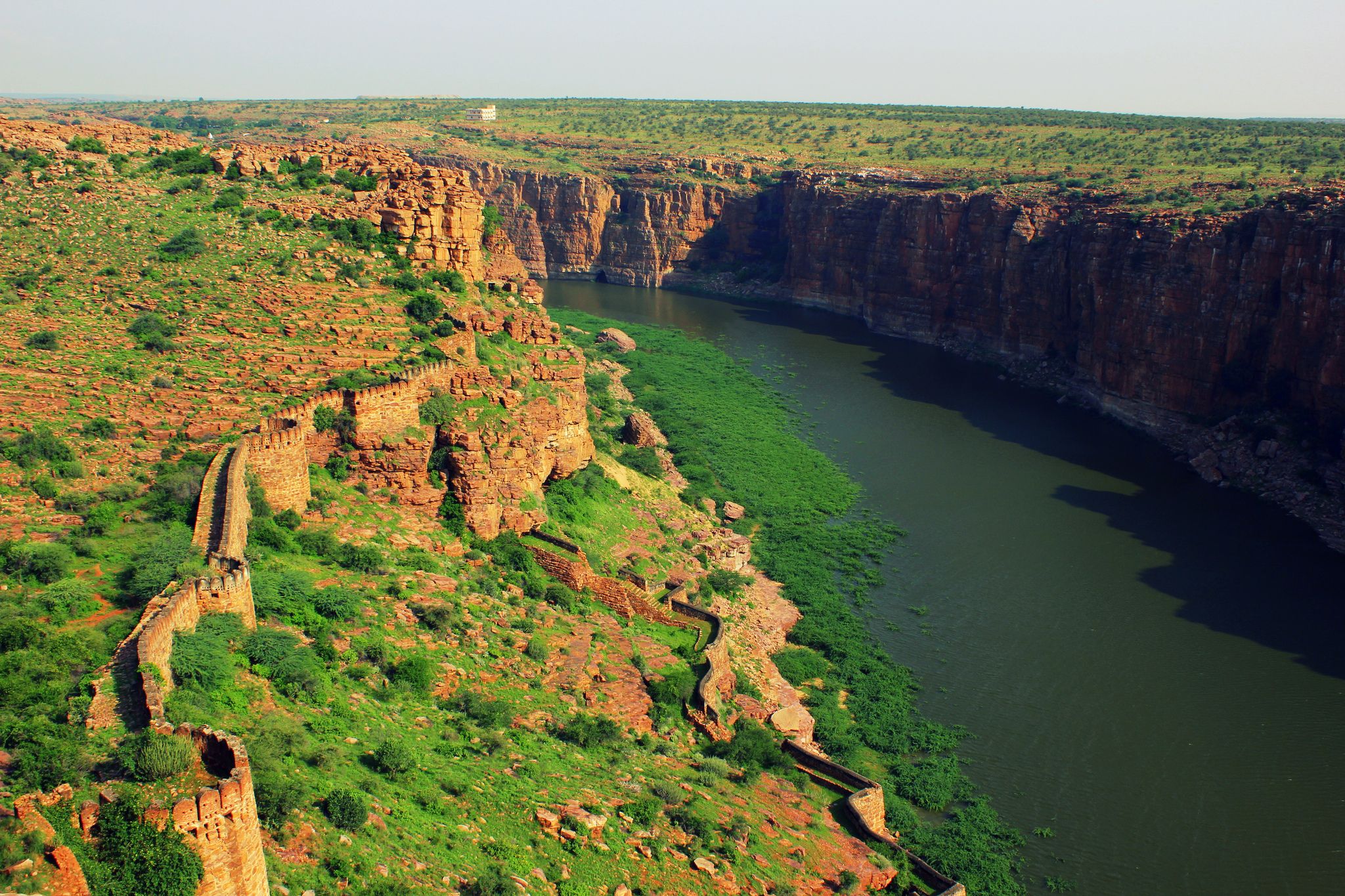
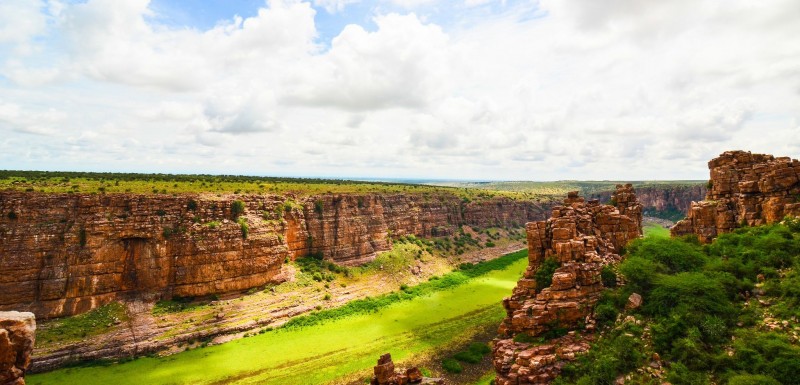
Situated on the banks of river Pennar, Gandikota derives its name from two Telugu words ‘Gandi’ meaning gorge and, ‘kota’ meaning fort. Also known as George fort, it is guarded by a huge entrance gate that’s 20 feet high and 101 bastions each over 40 feet high. The fort is surrounded by the deep gorge, impenetrable hills and dense forest. The landscape also includes monolithic boulders of red granite. All these provide a natural line of defence to the residents of the fort.
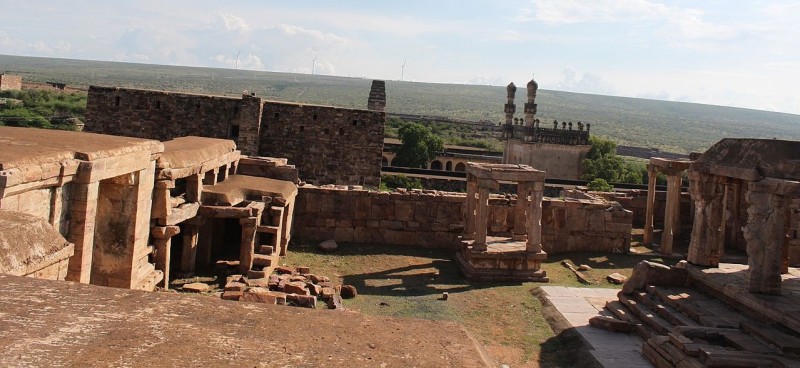
The area is full of rocky plains and dry plateau landforms with the Penner river flowing in the background. At present, Gandikota Fort lies in ruins and it is now only a tourist attraction.
Gandikota have been under the rule of numerous empires- The Chalukya, Viyanagara, Nayaka, Mughal, Quli Qutub and also the British. Hence, the region has a mixed reminiscence of all these reigns, with a higher significance of Nayaka dynasty who took over the control of this fort and approximately used its for 300 years.
Gandikota was one of the greatest forts of south India in its heydays and so were the kings who ruled the region. Various kings of this fort become the hero for local population due to their bravery and their songs are in custom.
The people here have a distinctive culture; their way of dressing, festivals and food etc. are inspired by their ancestors who ruled the Gandikota. The Pemmasani Nayaks who seem to have ruled this place for three centuries is belived to have descended from the Kakatiya Dynasty of Warangal. Perhaps, the culture may be a result of evolution from the Kakatiyan Culture.
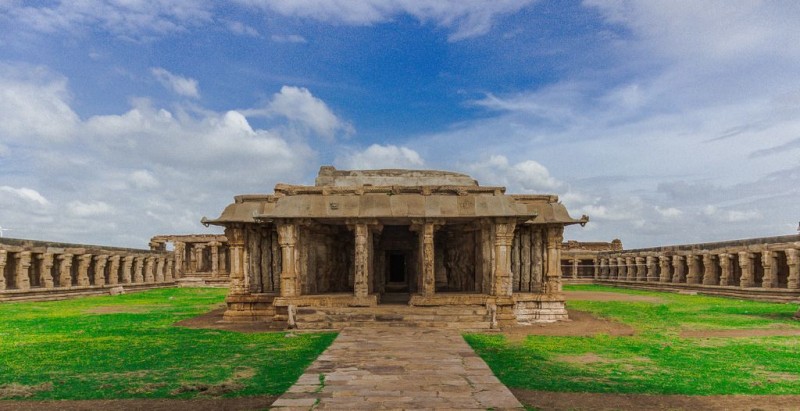
This quaint little village situated on the banks of the Pennar River, is home to some major historical structures. The fort premises include small fortresses, a granary, two beautiful temples and a splendid mosque. All of these ruins speak of their prime even as the structures seem to be on the verge of crumbling.
Gandikota Fort comprises of several other structures, such as, a palace, a magazine, another granary and a pigeon tower which included fretted windows. The palace was mostly constructed with bricks and included plastered decorations. There were also a few wells in the palace. There is also a cannon which is still present in the premise of the fort. There were also many gardens and springs in and around Gandikota Fort. A garden named Parebagh was also present at the foot of the hills. It included a waterfall on the bank of the river Penneru.
Ranganath Swami Temple
This temple has its importance due to very ancient. This temple is an example of fine architecture and design. It is believed that this temple is constructed before 500 years ago. The building is very attractive and put a dashing impact on devotee because of its surroundings.
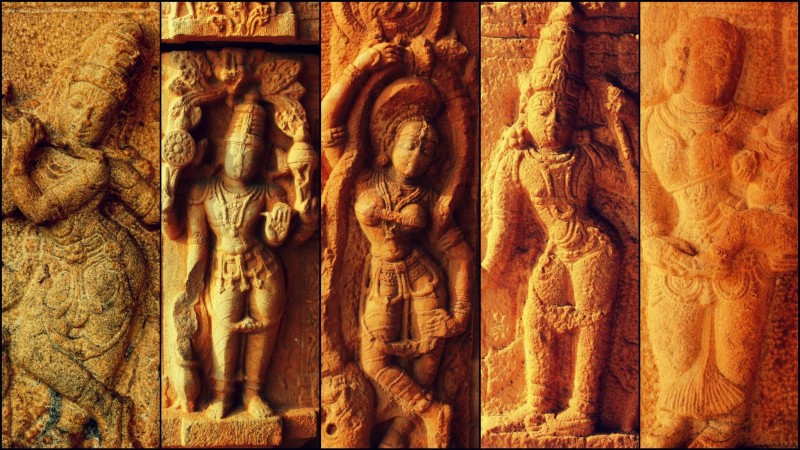
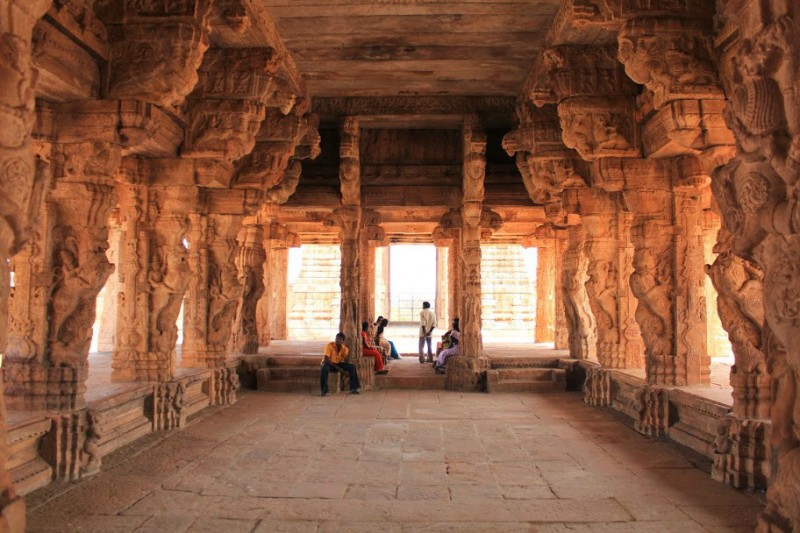
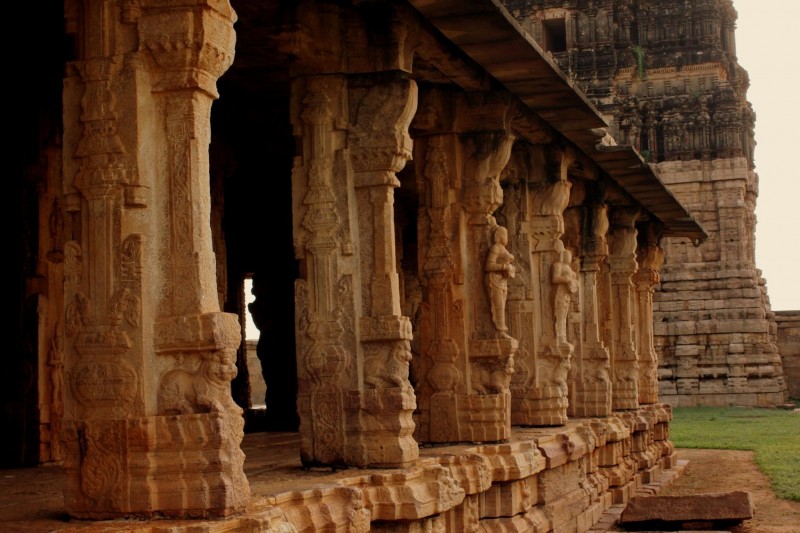
The Madhavaraya Temple is the grandest structure in Gandikota or perhaps, in the entire region and its grandeur is on par with the temples of Hampi. Architecture of this temple is a little more difficult than of Ranganath Swami temple. Interiors are more attractive than exterior. There are small statues and sculptures of Hindu Gods carved over the Gopuram and walls of the temple.
This masjid inside the fort has covered a lot of area as the expansion of this mosque is vast to accommodate the people for offering Namaz.
Rayalacheruvu Lake
This Lake is adjacent to the fort and origins from Pennar River. It is said that a fountain inside the mosque is connected with this lake but direct sources of the pipes are not seen.
The granary, Gandikota
The granary is said to be used for storing grains. It is adjacent to the Jamia masjid and to the west of Raghunathaswamy temple.
There are yet many unexplored places and things in the region. Recent architectural research has revealed the presence of underground passages that connect the fort with the valley. The traps set to capture leopards and other animals are still in their place.
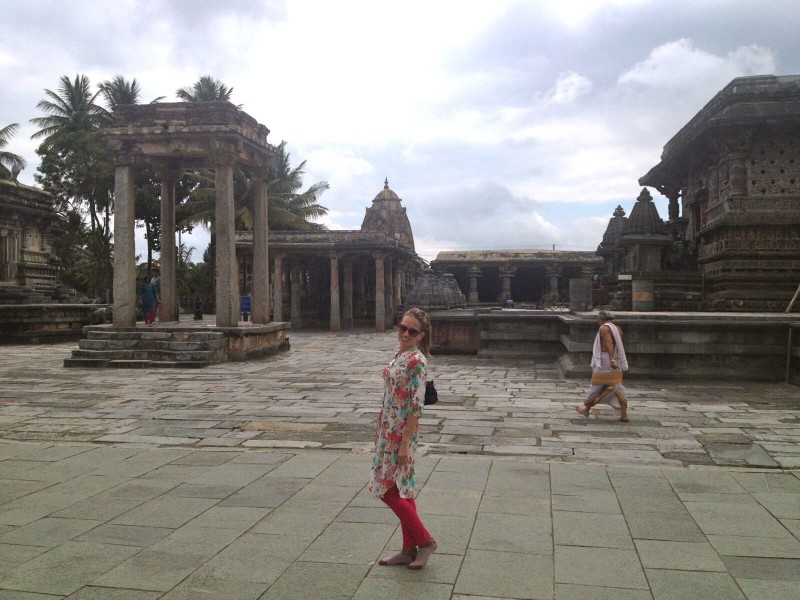
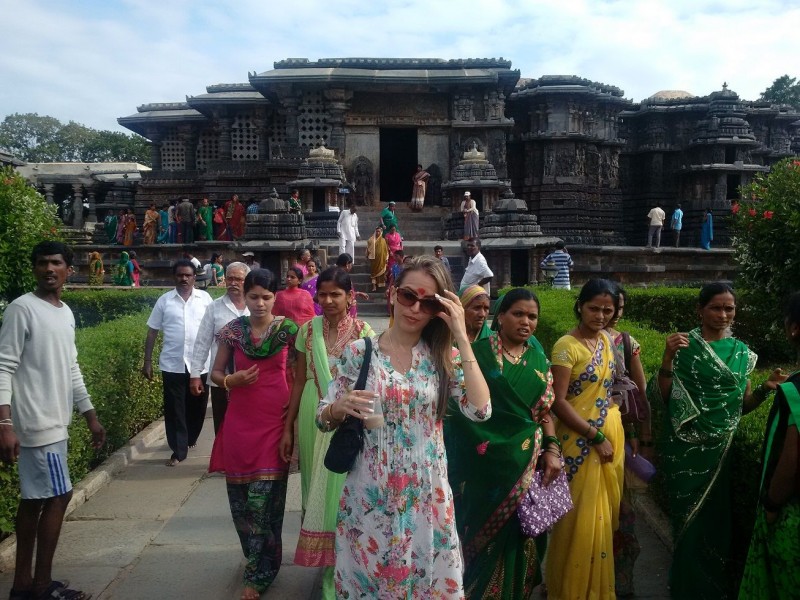
During my last visit to Bangalore in 2015, I took a one day trip to Shravanabelagola, Belur and Halebeedu Temples in the state of Karnataka. This region in South India is full of temples and lush vegetation. The three temples are quite far from each other and are well worth a trip if you can spare a day while in Bangalore. The tour is ideal for anyone who is a fanatic of temples and heritage, like I am. I booked the tour at the Karnataka Holidays website for about 800 rupees in an AC bus. Quite cheap considering it lasted sixteen hours! I was truly amazed since none of the countries I’ve been to offer such long day trips. I really liked it though since I got to see so much in a day and without the tour, it would have been impossible for me to see the three temples.
The tour left from Badami House in Bangalore at 6am. Throughout the day, the bus stopped at roadside restaurants for breakfast, lunch and dinner. Food wasn’t that good due to restaurants being the typical stop over for tourists but it was eatable. Other than that, there’s people and stalls selling fresh fruits, cold drinks and snacks at each stop, where you can recharge your energy.
Shravanabelagola & Darshan of Lord Bahubali (Gomateshwara)
This is a Jain temple, a religion that does not follow any supreme being and concentrates on bringing the soul to divine consciousness for liberation. I had never thought about the possibility of an atheistic religion. Some of the main elements of this religion are non-violence, truth, non-stealing, non-attachment to material goods.
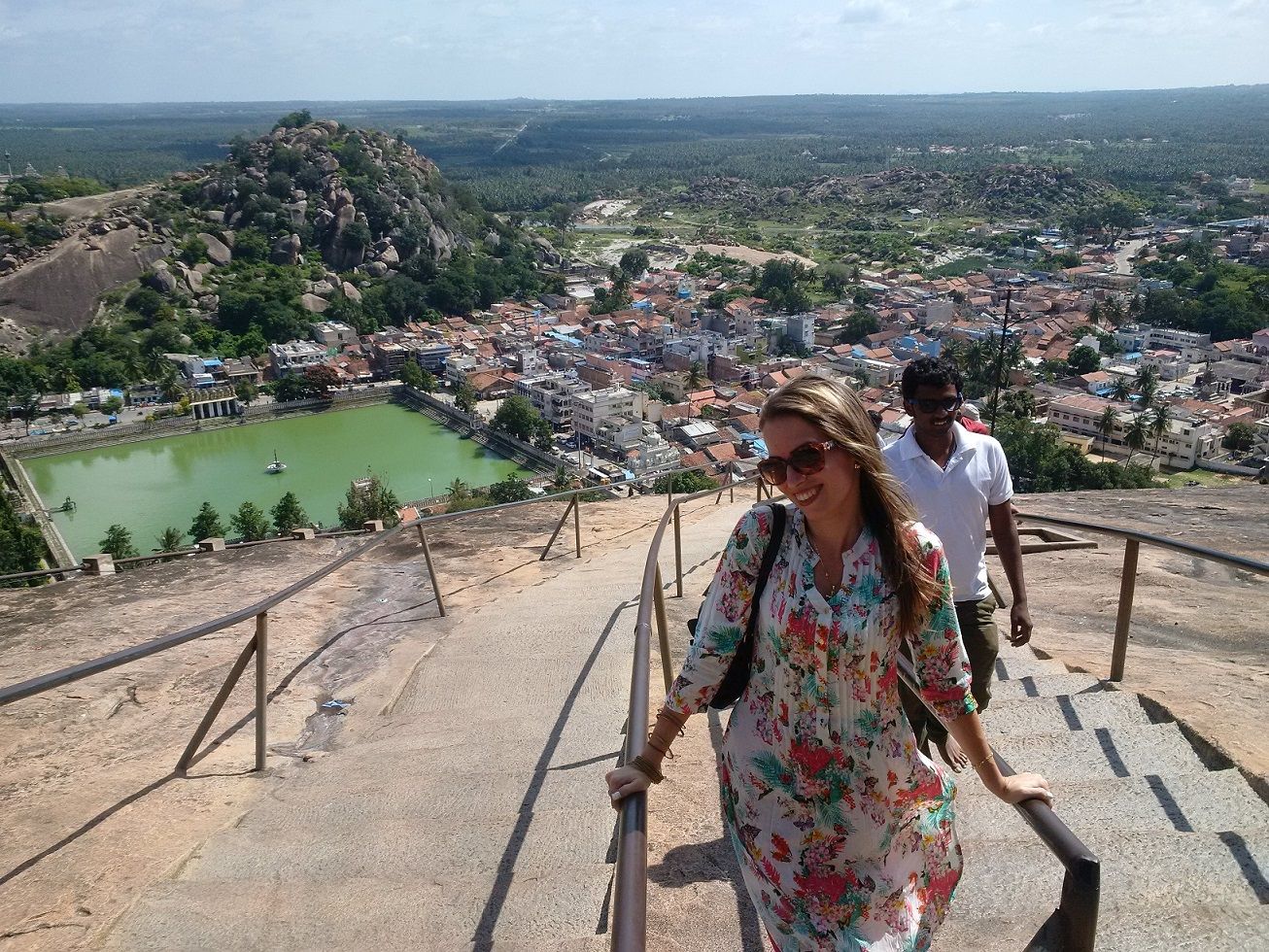
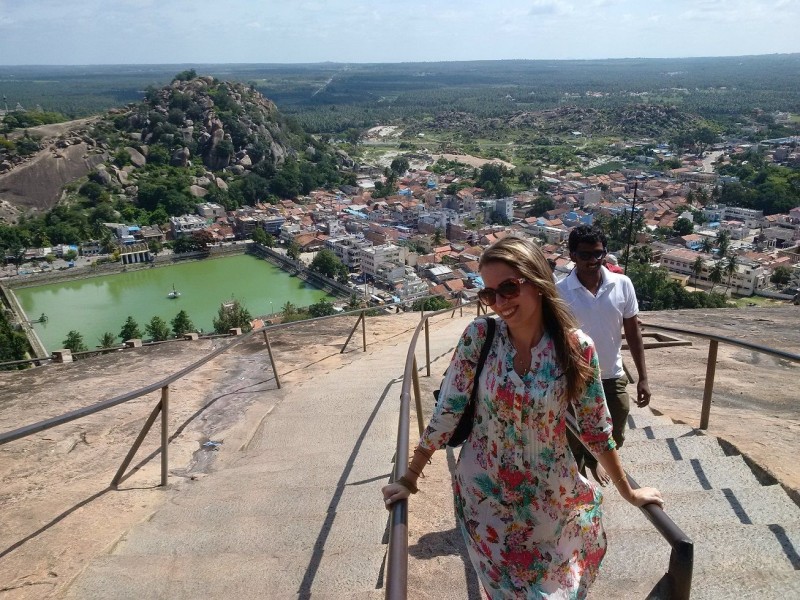
The temple is located at the peak of a mountain. You have to go up some steps. At the top, you will be rewarded with breathtaking views of the temple surroundings. The temple houses the highest monolithic of the world, measuring about 18 meters. It is the figure of Gommateshvara Bahubali. It is believed that this was the first human being to attain liberation of his soul in the middle of its life cycle. It dates from the tenth century. This is one of the most important places of Jain pilgrimage. Regardless of religion in India, it is traditional to make pilgrimages to holy places. Every twelve years, this monolithic is bathed in milk and other foods, including gold coins as a sign of devotion.
It’s worth going around the temple to get even more views but one needs to hurry up a bit because the bus doesn’t stop for long.
Hoysala style Chennakeshava temple, Belur
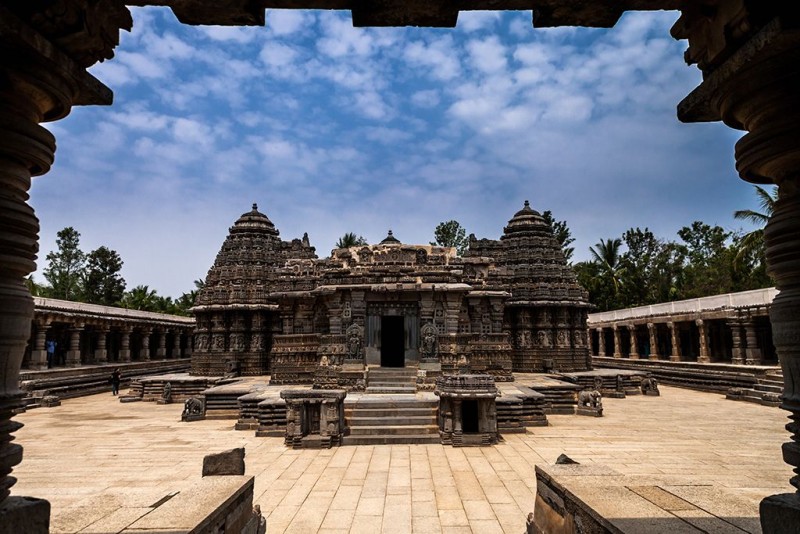
The Chennakeshava Temple dates from the twelve century and was built by the Hoysala Empire King Vishnuvardhana or Bittideva (Bittideva was the name of the king when he was Jain, he converted to Hinduism during his reign) probably to commemorate military successes. This is the first temple in this style to have been built by the kings of the Hoysala dynasty. A large temple, highlighting its luxurious décor which was completed by the founder’s grandson. Within the complex there are several temples in various sizes.
The Chennakeshava Temple was built on a star-shaped platform, typical feature of Hoysala style. Its walls are richly decorated with very refined carvings, decorated with panels and reliefs depicting deities. The Sikhara (rising tower) above the sanctuary has disappeared but the sculptures at are still numerous and intricate. The temple is famous for its finely carved little figures that consist of dancers, musicians, young women in a vegetal setting and in daily life poses, called madanikas (or mandanakai, Salabhanjika, Shalabhajika or yakshi).
Hoysala style Hoysaleswara Temple, Halebeedu
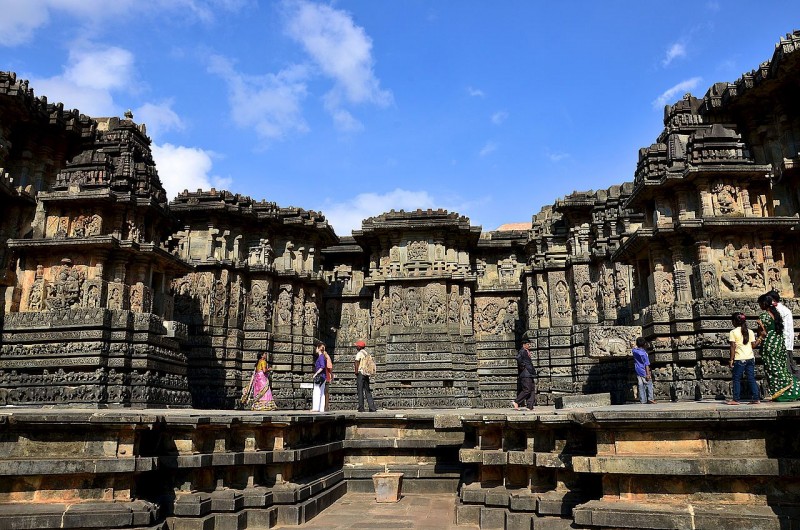
The Hoysaleswara Temple, dedicated to Shiva, is one of the most sublime examples of Indian architecture. Dating to the twelve century, it is located in a platform that is about two meters high and covered with stone blocks. This platform is laterally covered by eleven parallel friezes of elephants, lions, scrolls, horsemen, celestial beasts and birds.
Each frieze has a length of about 215 meters and is completely covered by sculpture. To give an example, the baseboards include at least two thousand elephants carved with great skill and most of them richly caparisoned and with a man on top of them. Similar decoration can be seen in the ten remaining friezes. The temple is surrounded by lush gardens that, to my surprise, are well kept and they represent a good spot to practice yoga if you go there for a few hours. Undoubtedly , Hoysaleshwara temple is one of the most impressive samples of human artistic skill that can be found.
Profile of extensive relief sculpture at Hoysaleshwara temple in Halebidu
After this, it was time to return home after such a long day. I got back to Bangalore at 10.30pm. Obviously, I was exhausted and had a good night sleep. I will not hesitate to take these sort of tours again during my next visit to Karnataka.
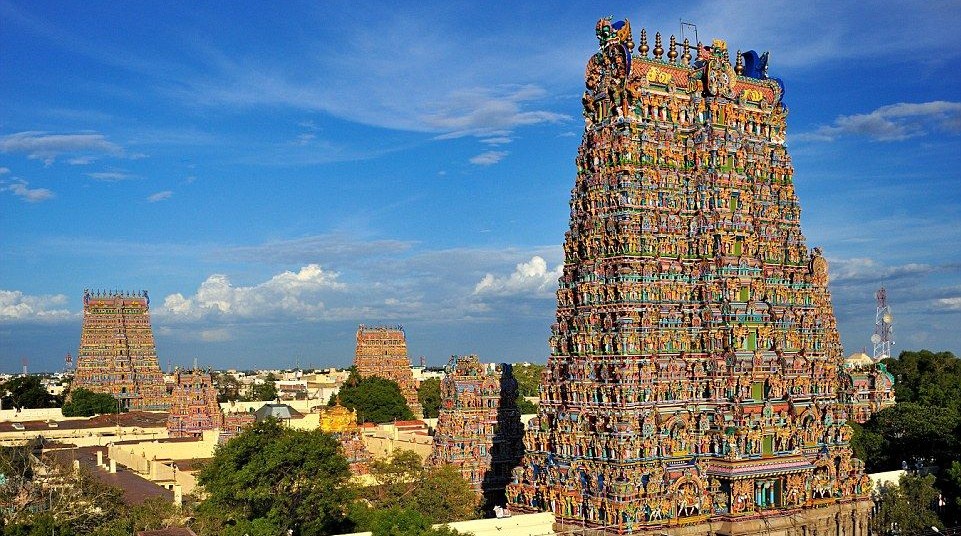
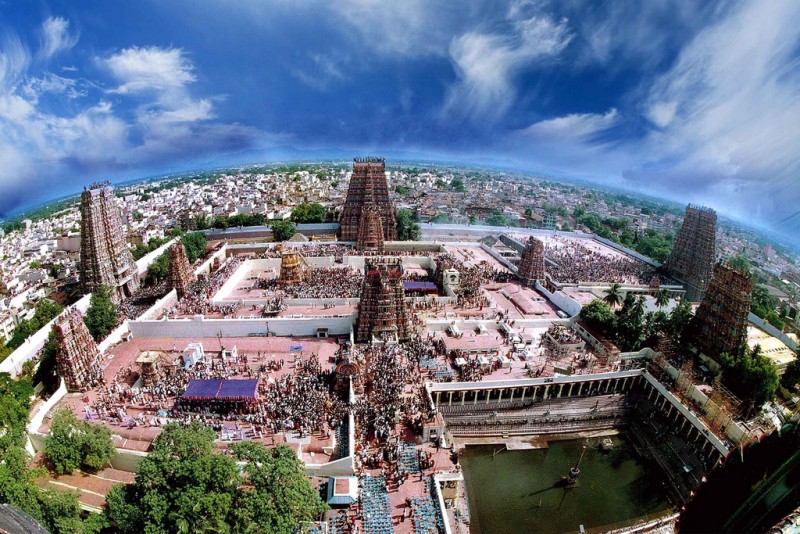
The Meenakshi Temple is one of the most famous Hindu temples located in the holy city of Madurai, Tamil Nadu, India. The temple is dedicated to Parvati, known as Meenakshi, and her consort, Shiva, here named Sundareswarar. The temple has 14 towers, 4,500 pillars and 33,000 sculptures — it’s massive!
The temple is as vital to the aesthetic heritage of South India as the Taj Mahal is to North India
History
Madurai Meenakshi temple’s history is as old as the history of the city itself. The temple forms the heart and lifeline of the 2500-year-old city of Madurai. This ancient city is built around the Meenakshi Temple which has been the geographical and ritualistic centre of the region since the times of the Pandyans. The temple is said to have been constructed by Kulashekara Pandyan.
The Meenakshi temple was almost completely destroyed in the year 1310 following the invasion of the Islamic conqueror Malikkapur. The present structure was built between 1623 and 1655 CE by Nayakas, who ruled Madurai from 16th to 18th century.
Legend tells the tale that the second Pandyan king Malayadwaja Pandya and his wife Kanchananalaj were unable to conceive any children. In attempts to beget a child, Malaydwaja conducted many Vedic homas (rituals involving a fire pit). Finally, in the middle of one such ritual, an infant version of Goddess Parvati appeared. This infant was born with three breasts, but a voice from the heavens told her new parents not to worry because one of her breasts would disappear when she met her true love.
The infant was named Tadaatagai and succeeded her father to the throne. She led armies on successful campaigns of conquest. In her last campaign in North India, she challenged Lord Shiva himself at Mount Kailash, but when She saw the great Lord, She fell in love with him. The bridegroom followed her home, married her, took the name Sundara Pandya and together they ruled Madurai.
This scene is seen depicted in the temple.
According to mythology, the marriage of Meenakshi and Shiva actually took place in Madurai. It is still celebrated every year with great pomp and show.
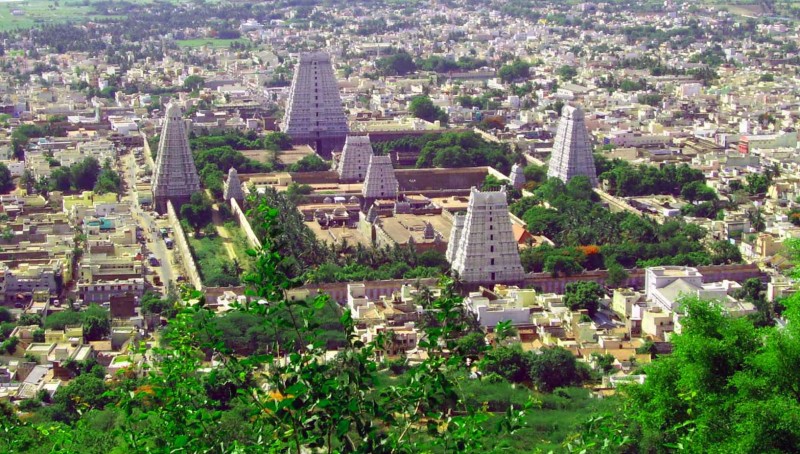
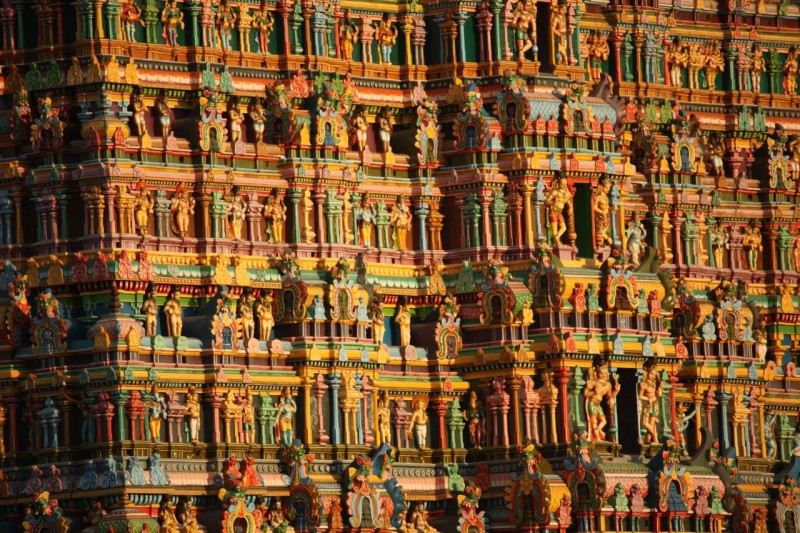
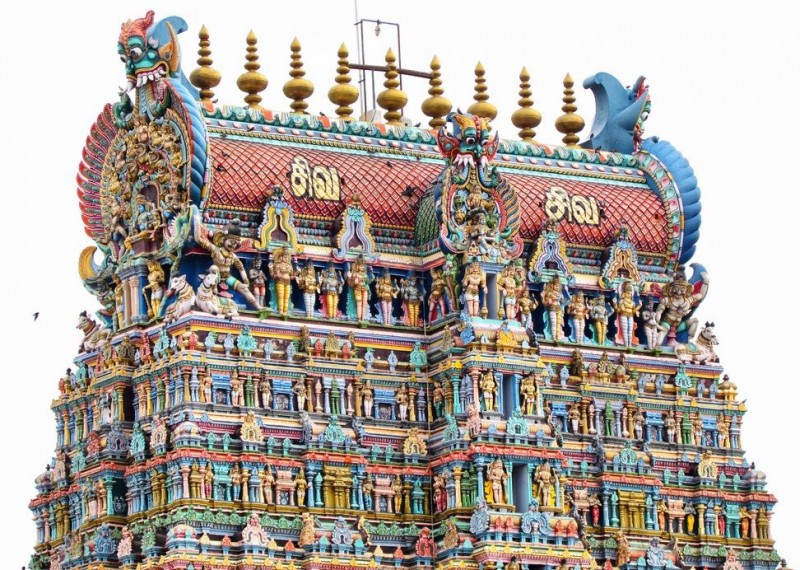
The Meenakshi temple has huge Gopurams (Towers) which can be seen from a far off distance. There are total 14 gopurams, but the tallest four stand on the outer walls, each facing one of the four directions (north, east, south, and west).
Amongst the four gateways, the south one is the tallest. It is about 50 m high and can be climbed to have a view of the entire city. Inside, there are two main shrines — one dedicated to Goddess Meenakshi (Parvati) and the other to her husband Sundareswarar (Lord Shiva). Both the Meenakshi and Sundareswarar shrines have gold plated towers whose tops can be seen from a great distance.
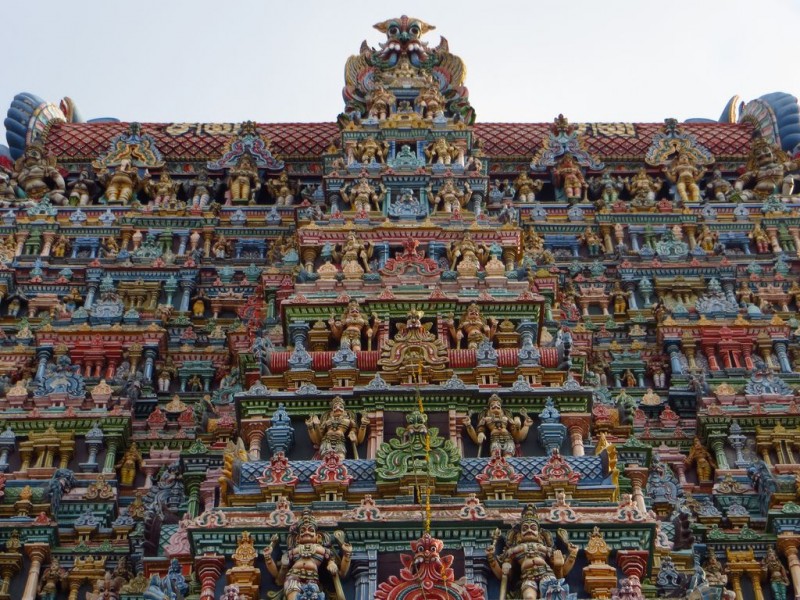
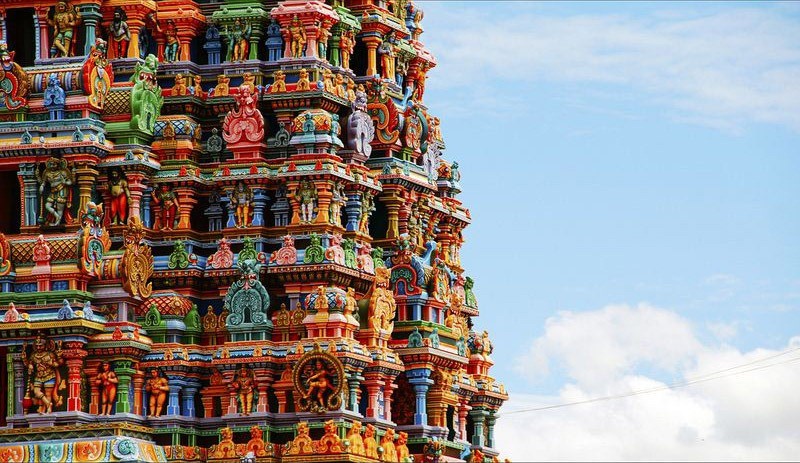
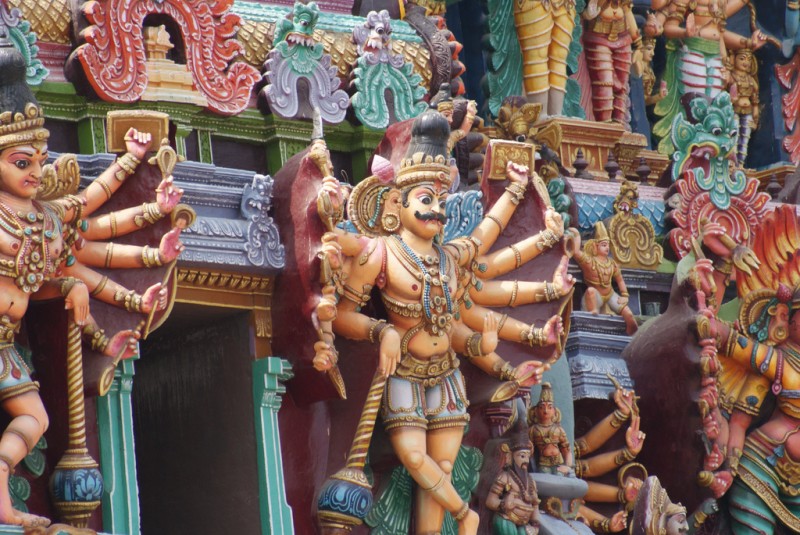
The bottom part of the temple is made from granite, while its gopuram are made from limestone. Each gopuram is a multi-storied structure in the shape of a steep pyramid, covered with thousands of stone figures of animals, gods, goddesses and demons painted in all colors of the rainbow.
There are an estimated 33,000 sculptures all over the temple.
The temple wasn’t always so vividly painted. The original structure was probably unpainted granite. Then people started painting the sculptures because they wanted the temple to look colorful during big events and festivals.
There is also a sacred water tank, several halls and innumerable Mandapas. The ‘Mandapam’ of the temple consists of 985 pillars. Each pillar is unique. Some of the pillars are music pillars, which produce music when tapped. The special feature of these pillars is that they are carved out of a single granite stone block.
There are a number of other halls and towers in the temple which are worth watching for their sculptures, carvings and designs. Each one is different from the other, in one aspect or the other.
The temple also has an art museum. It contains icons, drawings and photographs which date back to the 1200 – year – old history of Indian temple architecture in the south. A lot of information can be extracted on the Hindu pantheon and related legends from this splendid museum.
It was on the list of top 30 nominees for the “New Seven Wonders of the World”.
The sheer size of the temple means that it’s easy to get lost inside, and there’s so much to see and marvel over that you could easily spend days there.
Various kings renovated the temple, leaving a distinct impression of their artistic taste. A number of complex corridors, magnificent sculptures and a heavenly abode suitable for Goddess Meenakshi, include the additions to the temple that were done by different kings.
The discovery was made when temple authorities were renovating the buttressed compound wall.
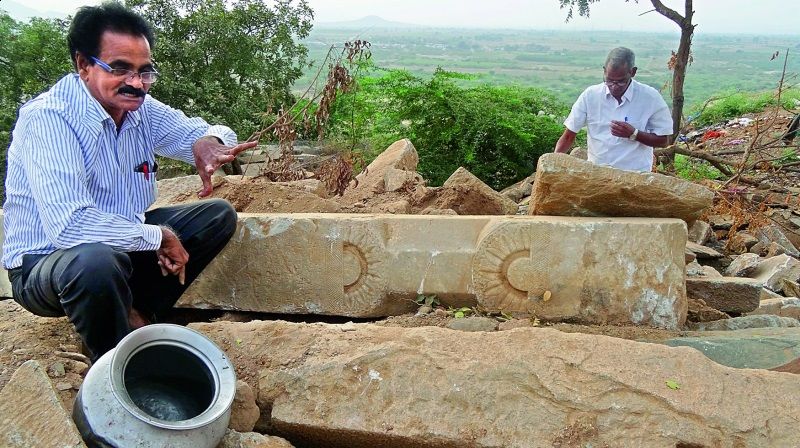
Archaeologists have discovered two stone pillars engraved with Buddhist inscriptions dated first century AD at the Goddess Bala Tirupura Sundari Temple at Tripuranthakam in Adhra Pradesh.
The pillars were found while the temple authorities were digging adascent to the temple complex. This led to the discovery of the bare foundations of a gopura structure and some Buddhist relics as well.
Experts opined that the existing temple was raised over a Buddhist site of Satavahana period.
Buddhist scholar and archeologist Dr E Siva Nagi Reddy said, “It is surprising to note that Buddhist remains are recovered from the premises of Goddess Bala Tirupura Sundari Temple. Temple authorities were renovating the buttressed compound wall which laid bare foundations of a gopura structure. A number of Buddhist remains were recovered,”
Nagi Reddy has also told the Deccan Chroniclethat the pillars, which are carved on Planadu lime stone, had on them half lotus medallions which are a Buddhist symbol. The pillars also carry a two line Brahmi inscription which goes back to the first Century AD. There is another inscription in Devanagari script which goes back to the 10th century AD. He added that the pillars were used to raise the temple structure.
There are two Buddhist stupas located at Chandavaram and Dupadu in close proximity to Tripuranthakam.
Experts asked the temple authorities and endowments department to preserve the valuable Buddhist pillars which bear historical significance and to display in the temple premises.
The caves are older than the Kanheri ones and were possibly built for sheltering monks in the monsoon.
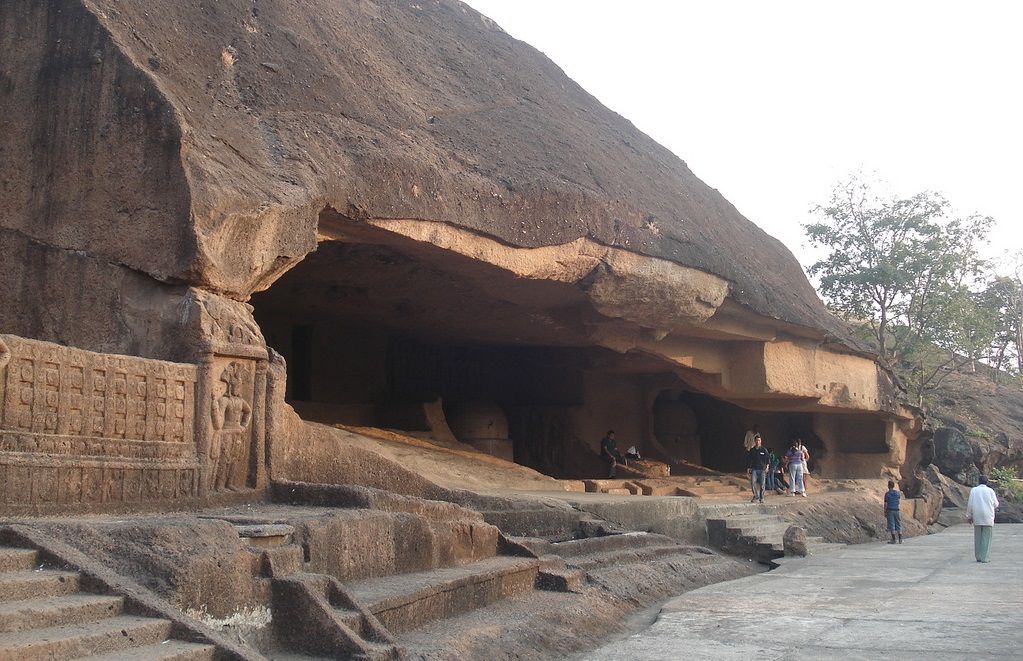
Seven new caves have been discovered in Mumbai’s Sanjay Gandhi National Park that are possibly dated between 1st century BC and 5th-6th century AD. The caves are Buddhist ‘viharas’ (residences for monks) that served as shelters from monsoons for Buddhist monks more than 2,000 years ago. One of the caves has the ruins of a harmika or the top part of a stupa.
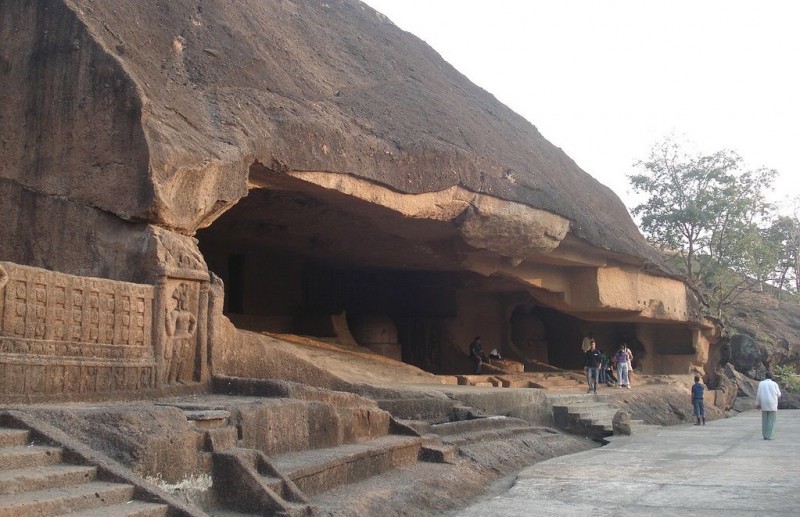
These are not the only Buddhist caves in the park, which is the biggest park inside any city in the world. About 160 other caves, named the Kanheri Caves, are nearby and were dug about 2,000 years ago. The Kanheri Caves are famous for their water management and rain water harvesting systems.
The newly discovered caves may have been older than the Kanheri Caves as they were simpler in form and they lacked water cisterns, which are found in the more evolved architecture of Kanheri.
While a formal approval from the Archaeological Survey of India (ASI) is awaited for detailed exploration and documentation of the new caves, the team that has discovered the caves date them between 1st century BCE (or BC) and 5th-6th century CE (or AD).
The discovery was made in February 2015, and is said to be the result of a systematic survey of the area. The credits of this discovery goes to a three-member team that carried out this job under an excavation programme, which was jointly conducted by the Centre for Archaeology, Mumbai University, and the department of ancient Indian culture, Sathaye College, Vile Parle.
Before beginning actual field work, the team studied documentary topography and water resources. Ancient people constructed most of viharas near sources of water. Aside from that, they also studied Pali texts, which described similar ‘viharas’ of Buddhist monks around Rajgir in Bihar. The researchers studied areas and texts for three months.
They began their exploration as soon as the forest department gave their permission. After a day, another team of a magazine editor and a student of Buddhism at Sathaye College, found two more caves.
“The newly discovered caves may have been older than the Kanheri Caves as they were simpler in form and they lacked water cisterns, which are found in the more evolved architecture of Kanheri. Moreover, we found monolithic tools which were prevalent in the 1st century BC. The absence of water cisterns also indicate that monks lived there in the monsoon,”said team leader Suraj Pandit in a quote given to The Times of India.
One of the caves was actually inhabited till recently and was even surfaced with modern bathroom tiles. It had been used by one of the sadhus living in the park till the Bombay high court, in the late ’90s, ordered the eviction of all sadhus from the park.
“There were caves on either side of the waterfall – three on one side and two on the other. It was very clear these were excavated from the natural rock. The smooth curve, the plastering, the door beams, the benches to sleep on, were all indications that these were man-made caves,” said Pandit.
Maharashtra is home to the largest number of caves in India. Some of these caves, like Elephanta Caves, Karla Caves and Bhaja Caves, boast of stunning rock cut architecture. On the other hand, those at Ajanta and Ellora have been adorned with beautiful paintings. Whatever be the mode of presentation, these caves majorly illustrate the history of Buddhism in India.
Most of the ancient caves in Maharashtra have been accorded the status of World Heritage Sites by UNESCO and continue to enchant visitors from the remote corners of the country as well as the world.
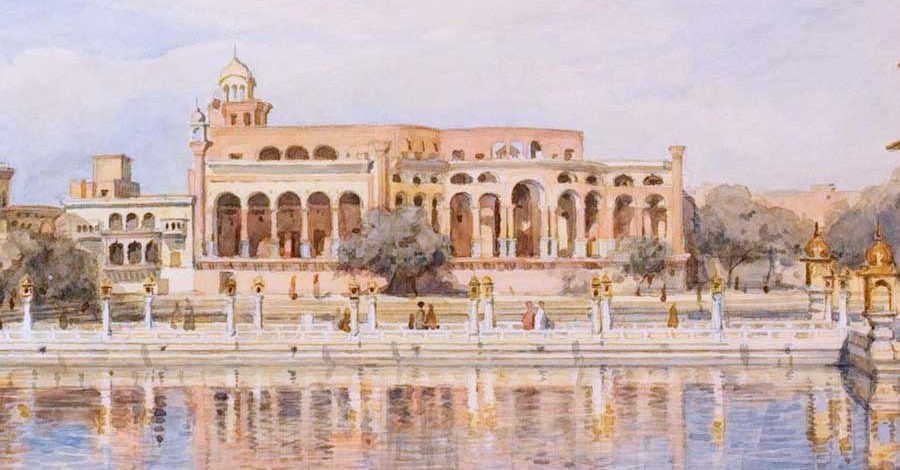
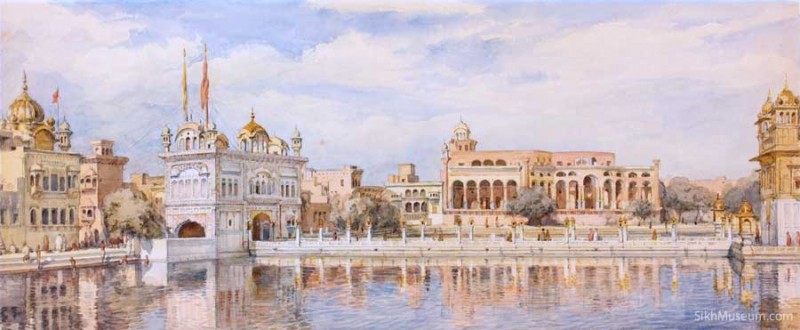
A palace so large that it dwarfed every other structure on the periphery of the holy tank at Golden temple had simply disappeared from the pages of history and memory.
With the end of the Sikh Empire and its annexation by the British in 1849, European artist and then photographers started appearing in Punjab and visiting Golden Temple at Amritsar. The 1850’s would see the very first photographs of Golden Temple by Felice Beato and the popular paintings by artist William Carpenter.
These early images of Golden Temple and early traveller’s accounts, all revealed the remarkable story of the a majestic palace which once glimmered in the waters of the holy tank at Amritsar.
When was the lost palace built and who did it belong too?
A number of historians and authors have attributed the lost palace to various figures in Sikh history, there does not seem to be any agreement among them or conclusive proof.
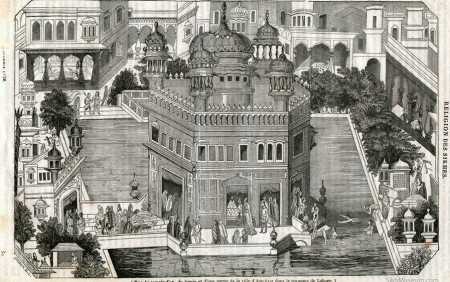
Woodcut engraving, One of the earliest European depictions of the Golden Temple complex. The image does not show the lost palace. –Img Source
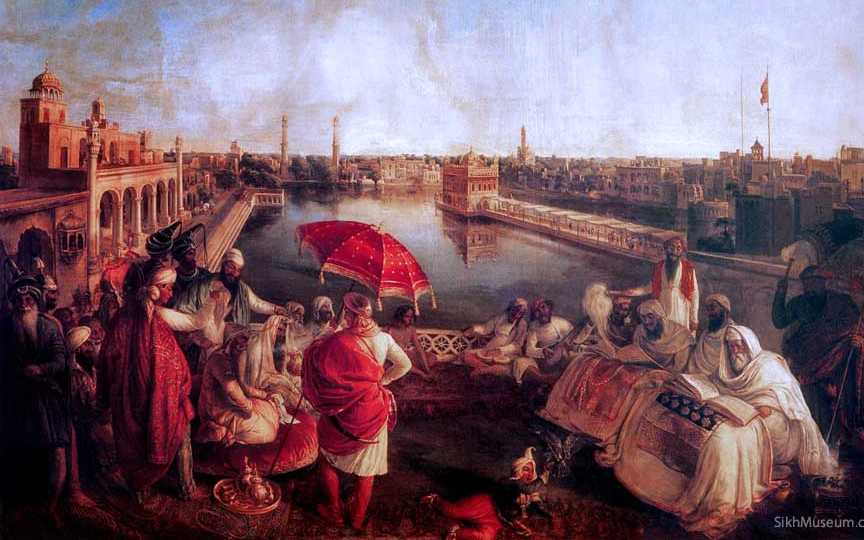
Evidence from the French engraving of the Darbar Sahib Complex printed in 1836 indicates that the palace did not yet exist in the early 1830’s. The palace would have had to have been constructed in the time frame between the late 1830’s and before the 1841 visit of artist August Schoefft who depicted it in his epic painting of Maharaja Ranjit Singh at Golden Temple.
Being the largest palace on the parkarma surrounding the holy tank, it would be logical to assume that it must have belonged to Maharaja Ranjit Singh. The Maharaja was known to move about from place to place in his vast empire and had numerous residences. Maharaja Sher Singh, the son of Maharaja Ranjit Singh was known to stay in the palace.
From its origins in the last years of Maharaja Ranjit Singh rule to the end of the Sikh Empire, the lost palace continued to serve its intended purpose as a palatial residence. Its occupants would have had a spectacular view of the Golden Temple and the holy tank.
Maharaja Ranjit Singh listening to the Granth being recited near the Golden Temple, Amritsar. The lost palace dominates the background appearing on the left side of the painting. Img Source
With the rise of Maharaja Ranjit Singhs empire and its prosperity, at their height there were over 84 palaces around the holy tank. Some of these palaces (bungas) were used as centers of religious teaching and education while most served as the residences of some of the powerful and influential families of Punjab.
Over time eventually almost all of the bungas have disappeared, being replaced by new structures; today the only two remaining bungas are the Akal Takht (Akal Bunga) and the twin towers of the Ramgharia Bunga.
Demolition of the palace by British authorities
The loss of influence over Amritsar with British rule also meant that Sikhs lost control over the use of the lost palace and it was occupied by the Christian missionaries of the Amritsar Mission School. The British then converted the building into a prison, a court room, and police station.
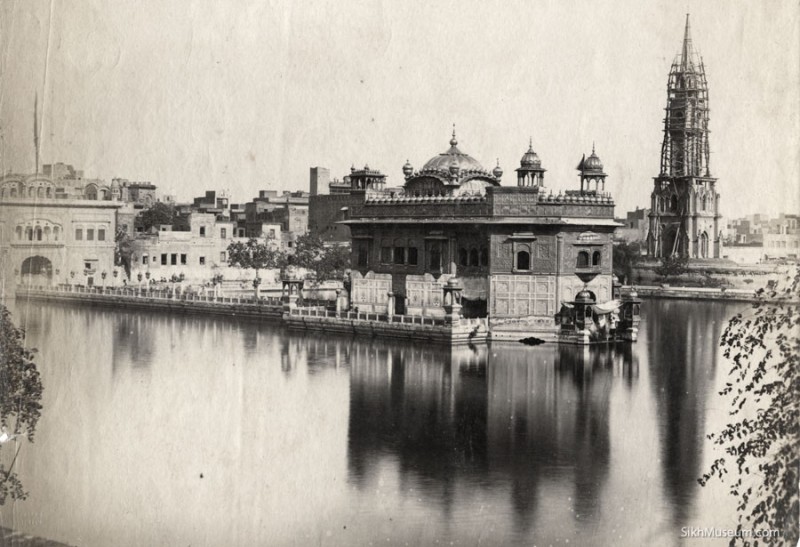
The prison remained for many years until the lost palace was demolished by British authorities to make way for gothic style clock tower in its place to dominate over Golden Temple and the Amritsar skyline.
Golden Temple with Clock Tower under construction. Img Source
Although a clock tower traditionally has a small base, it was decided that the lost palace and all other buildings in the area would be demolished during construction to create a large open courtyard around the new clock tower.
The new clock tower was designed entirely in the traditional European gothic style with red bricks and there have been some suggestions that the clock tower was built by the British as a church.
The British had no regard for the Sikh faith, their mission was to cut the roots of the faith and to convert Sikhs into Christianity.
In the final section of the Bhagavata Purana, there were several predictions made regarding the dark age of human life with refers to the present day Kali Yuga. In this post, we will look into the 5 predictions that we ourselves witness in our daily life. Written more than 5000 years ago, these predictions serve as tools that increase the credibility of all our spiritual texts penned down by ancient saints.
Srimad Bhagavatam 12.2.1
sri-suka uvaca
tatas canu-dinam dharmah
satyam saucam ksama daya
kalena balina rajan
nanksyaty ayur balam smrtih
Meaning: Religion, truthfulness, cleanliness, tolerance, mercy, duration of human life, physical strength and memory will all diminish substantially because of the powerful influence of the age of Kali.
Srimad Bhagavatam 12.2.6
dūre vāry-ayanaḿ tīrthaḿ
lāvaṇyaḿ keśa-dhāraṇam
udaraḿ-bharatā svārthaḥ
satyatve dhārṣṭyam eva hi
dākṣyaḿ kuṭumba-bharaṇaḿ
yaśo ‘rthe dharma-sevanam
Meaning: A holy place will be viewed to consist of no more than a reservoir of water located at a far off place, and beauty will be determined based on one’s hairstyle. Filling the belly will become the primary goal of life, and one who is audacious and rebellious will be accepted as truthful. He who can maintain a family will be regarded as an expert man, and the principles of religion will be observed only for the sake of reputation.
Srimad Bhagavatam 12.2.7
evaḿ prajābhir duṣṭābhir
ākīrṇe kṣiti-maṇḍale
brahma-viṭ-kṣatra-śūdrāṇāḿ
yo balī bhavitā nṛpaḥ
Meaning: The earth will become crowded with a corrupt population, and among their social classes he who is considered to be the strongest will gain political power.
Srimad Bhagavatam 12.2.5
anāḍhyataivāsādhutve sādhutve dambha eva tu svīkāra eva codvāhe snānam eva prasādhanam
Meaning: A person is considered unsuccessful and unholy if he does not have money, and the society will accept hypocrisy as a virtue. Marriage will be arranged simply by a verbal agreement, and a person will think he is fit to appear in public if he merely takes a bath.
Srimad Bhagavatam 12.3.42
na rakshishyanti manujah sthavirau pitarav api
Meaning: Men will stop taking care of their elderly parents
How would you solve the world’s oldest and most difficult crossword puzzle? Watch this video to learn how one man is approaching this challenge.
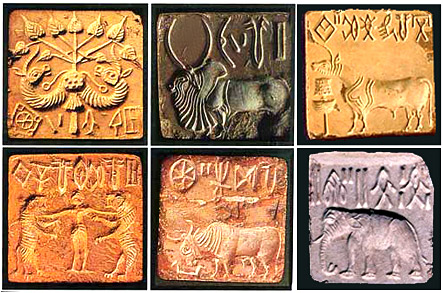
Do you love a good mystery and ancient texts? Rajesh Rao sure does. He has devoted much of his professional life to cracking “the mother of all crossword puzzles”: How to decipher the 4000 year old Indus script?
To do this, Dr Rao uses computational modeling to understand the human mind in two ways: first, he develops computer models to describe how human minds think, and then second, he applies these models to the task of deciphering the 4,000-year-old script of the Indus valley civilization. This interesting video provides a glimpse into his methods and logic.
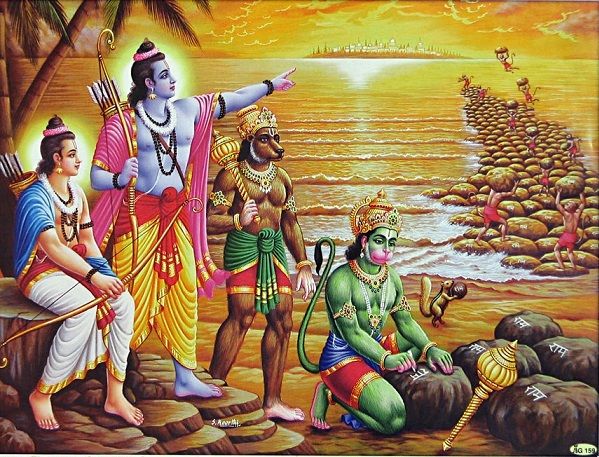
Scholars at the Asiatic Society Kolkata were elated when they stumbled upon a brand new manuscript of Ramayana hidden away in a little known Sanskrit Library in Kolkata. This manuscript, which is from the 6th century, will likely displace the 12th-century rendition by Tamil poet Kamba as the second-oldest version. The widely known 4 BC Ramayana by Valmiki is still the oldest known version.
This version of Ramayana shows both Ram and Sita more as humans and largely deals with their separation.
Scholars discovered the 6th-century Ramayana while they were working on the Vanhi Purana. They began searching for missing manuscript after realising that the Vanhi Purana at the Asiatic Society library was incomplete.
Upon further research, they realised two more manuscripts existed – one at the India Office Library in London and the other at the Samskrita Sahitya Parishad, a 100-year-old research institution.
The scholars scoured the archives and found the complete version of the Vanhi Purana manuscript. When they were analyzing it, they stumbled upon the Dasa Griba Rakshash Charitram Vadha, which did not have any bearing with the Vanhi Purana. Upon analysis, they found that it was a 6th-century version of Ramayana with many interpolations.
The Scholars while analysing the text in the new manuscript noticed some blaring twists in the story line, albiet the main character Rama, Sita and Ravana are the same. The manuscript portrays Rama and Sita more as humans and focuses more on the separation of the two, reports the Times of India.
This version does not start with curse that forced Dasarth to send his son to exile, instead, it begins with a curse that fell on Goddess Lakshmi. It excludes the Balkanda the portion focused on Rama’s childhood and Uttrakanda. The new manuscript ends with Rama’s return from exile and his ascension to the throne.
“Interestingly in this version, there are just five kandas (sections) instead of the accepted seven. There is no Balakanda – the part that deals with Rama’s childhood – or Uttarkanda. This Ramayana ends with the return of Rama and Sita from exile and his ascension to the Ayodhya throne,” said Anasuya Bhowmick, lead scholar of the Asiatic Society, who is working with the manuscript. This Ramayana does not begin with the curse that drove Dasarath to send his son to exile.
The scholars will take nearly a year to complete reading and interpreting this new version of the Ramayana and later the Asiatic Society plans to publish it as a book.
“Ram here is more human than God, with follies like anger and failure. Some interesting details – like the ages of Sita and Rama at the time of marriage and the date when Sita was abducted by Ravana -are in this version,” said scholar Manabendu Bandyopadhyay.
By continuing to use the site, you agree to the use of cookies. more information
The cookie settings on this website are set to "allow cookies" to give you the best browsing experience possible. If you continue to use this website without changing your cookie settings or you click "Accept" below then you are consenting to this.