Legal action has been taken against Queen Elizabeth by a group of Indians over the Kohinoor diamond alleging it was stolen from India.
The British queen is being sued by a team of prominent businessmen and celebrities from India, who are demanding the return of the Kohinoor diamond, which forms part of the British crown jewels.
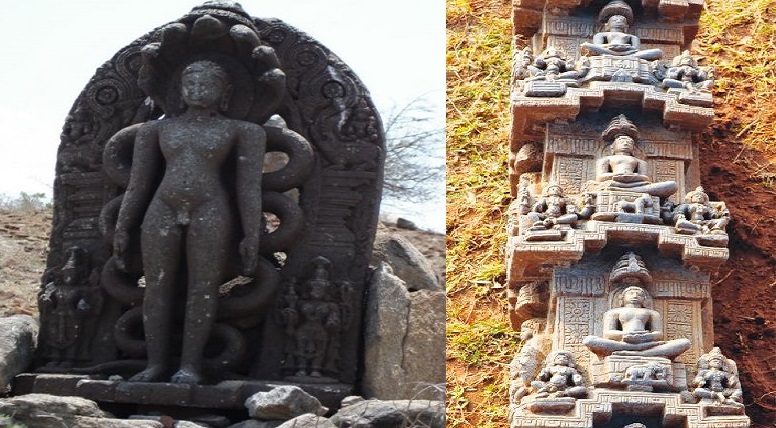
An 800-year-old inscription detailing a donation during the Hoysala Regime has been discovered in Arattipura, India. This find is thought to be a very important discovery for researchers interested in Jainism, as it may provide evidence for an older Jain site than the sacred location of Sharavanabelagola.
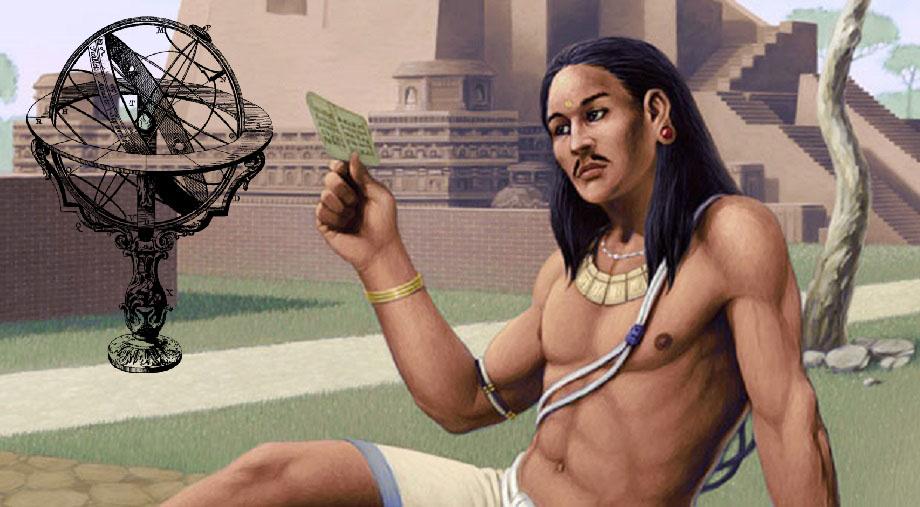
Lalla was an eighth-century Indian astronomer, astrologer, and mathematician who lived in central India, possibly in the Lāṭa region in modern south Gujarat. Despite the significance of Lalla’s work, very little is known about his life. Lalla did not record any dates relating to his life or work in his surviving treatises. He is generally placed in the middle of the eighth century on the basis of his borrowings from earlier authors and those of later authors from him.
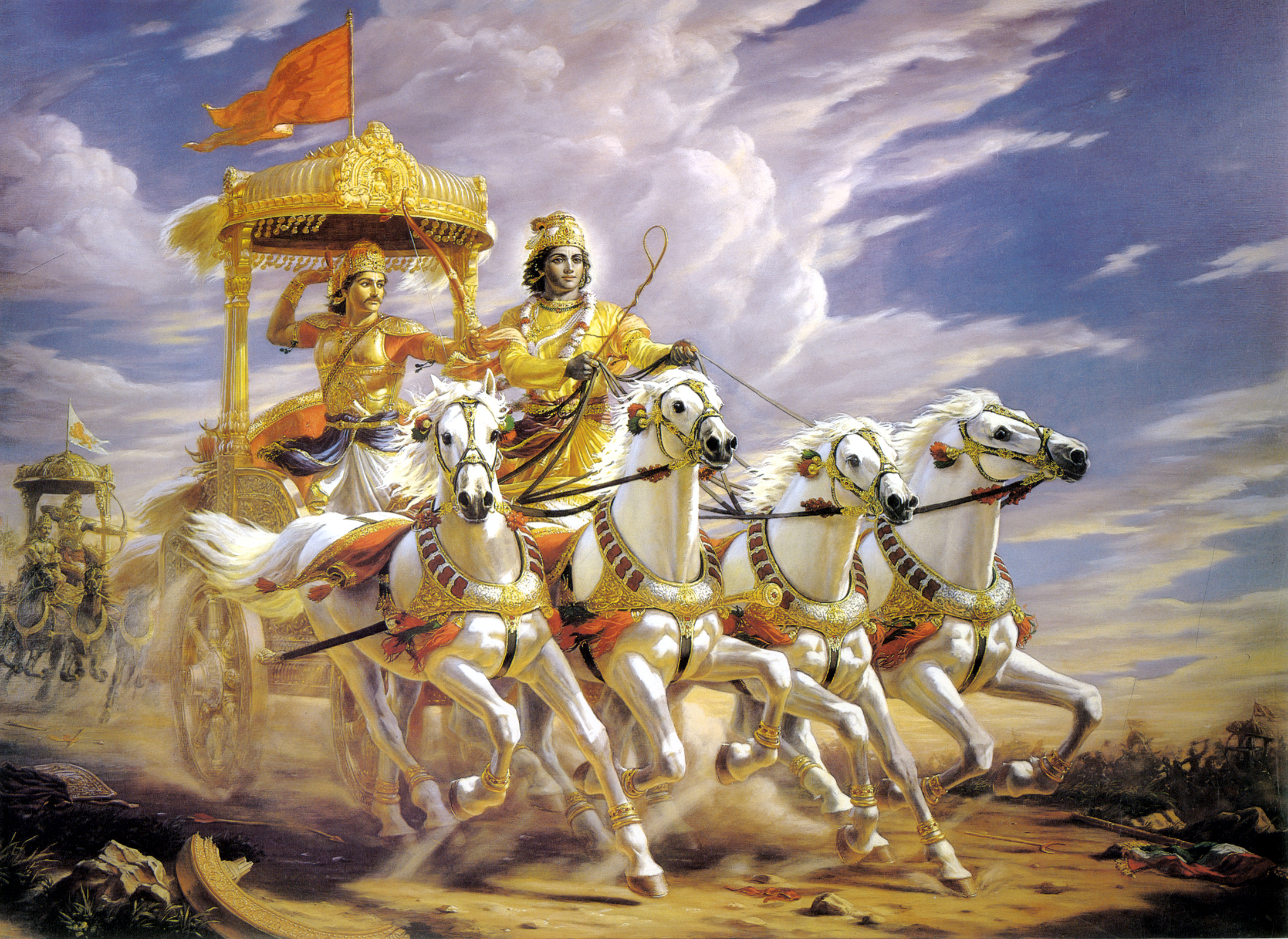
The Mahabharata is one of the two major Sanskrit epics of ancient India, the other being the Ramayana.
Not surprisingly, Mahabharata has not merited as much translation as the Ramayana. Most storytellers focus only on a few episodes, those that bring joy, like Bhima killing Bakasura, Drona teaching Arjuna, or Krishna rescuing Draupadi. Modern sanitized versions of the tale edit out the controversial characters like Shikhandi and disturbing stories related to sex. Not good for the children, is the standard excuse. So many generations of Indians have grown up with little knowledge of the true extent of this grand cultural inheritance.
The traditional Indian architecture is extremely simple and straightforward. The simple techniques of construction were utilized to build some of the glorious and magnificent buildings that have withstood the test of time. Structural elements like columns and beams were carefully integrated within the buildings to meet the needs of religious and cultural traditions. The vast freedom available to the sthapaka and sthapathi in the design of temples and other spiritual buildings resulted in the development of overwhelming wealth of architectural elements, variety of sculptural forms and decorative exuberances that has become the everlasting symbol of Indian Temple Architecture.
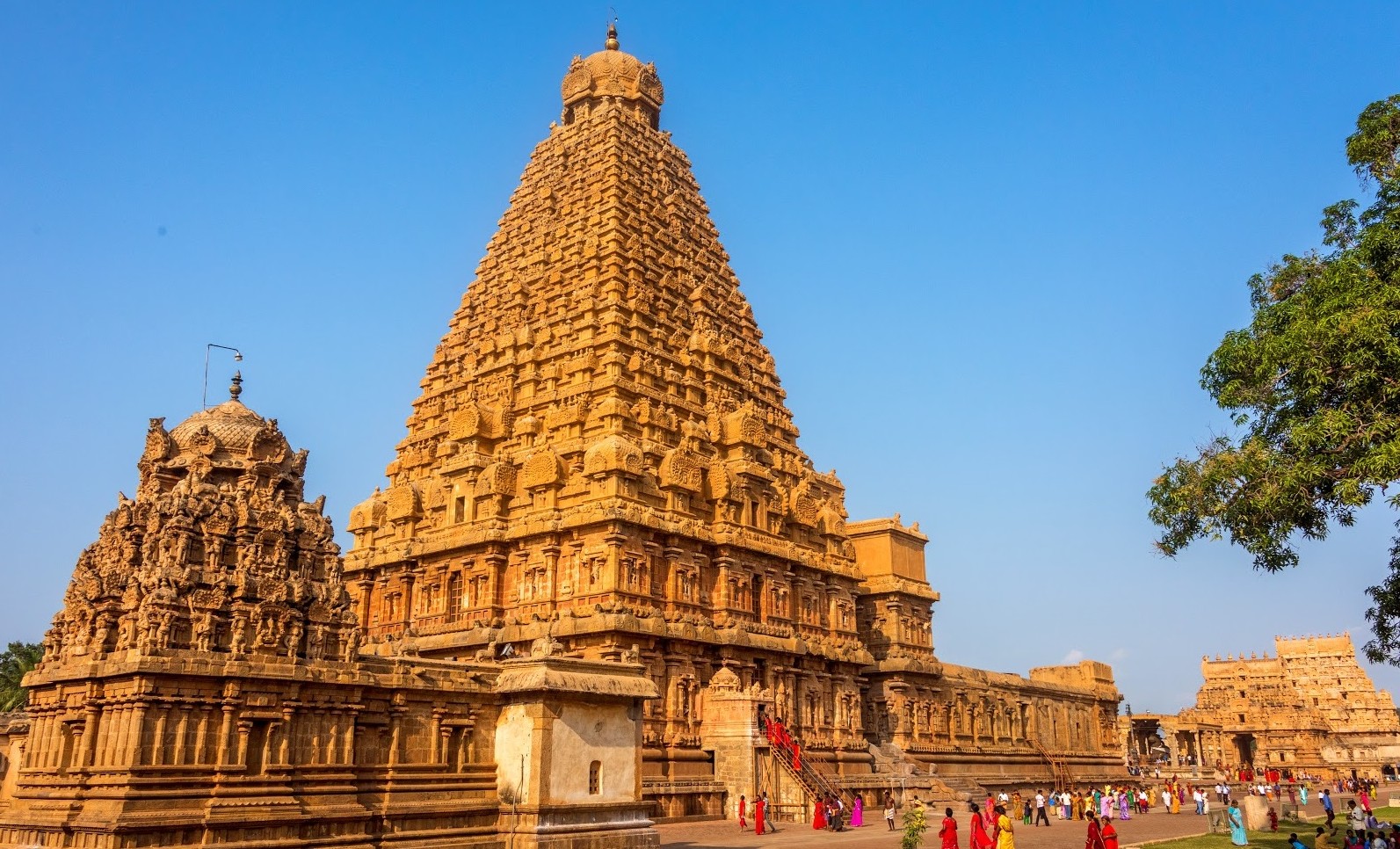
The shikhararemains the most outstanding element of the temple and the gateway is usually modest. The prakaras or the walls surrounding the garbhagriha or sanctum sanctorumwere built around the whole complex and were oriented to the cardinal directions. These enclosures had elaborate and magnificent gateways (gopurams) that led the devotees into the sacred courtyard.
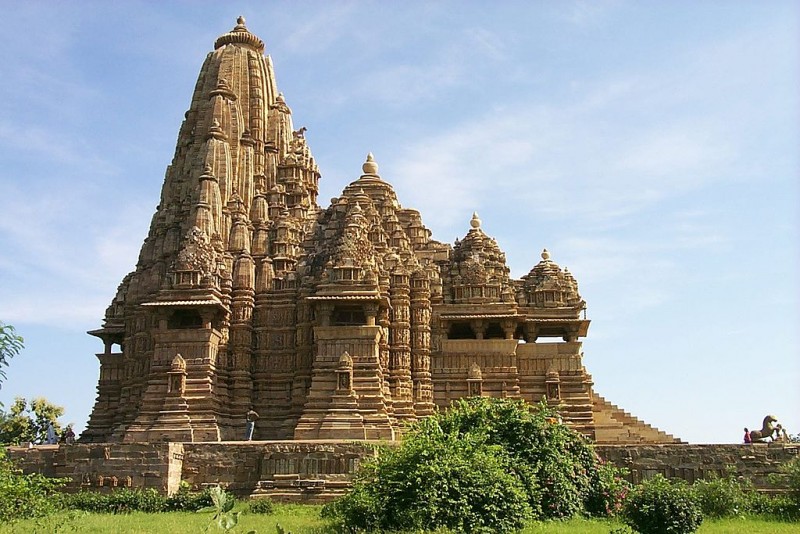
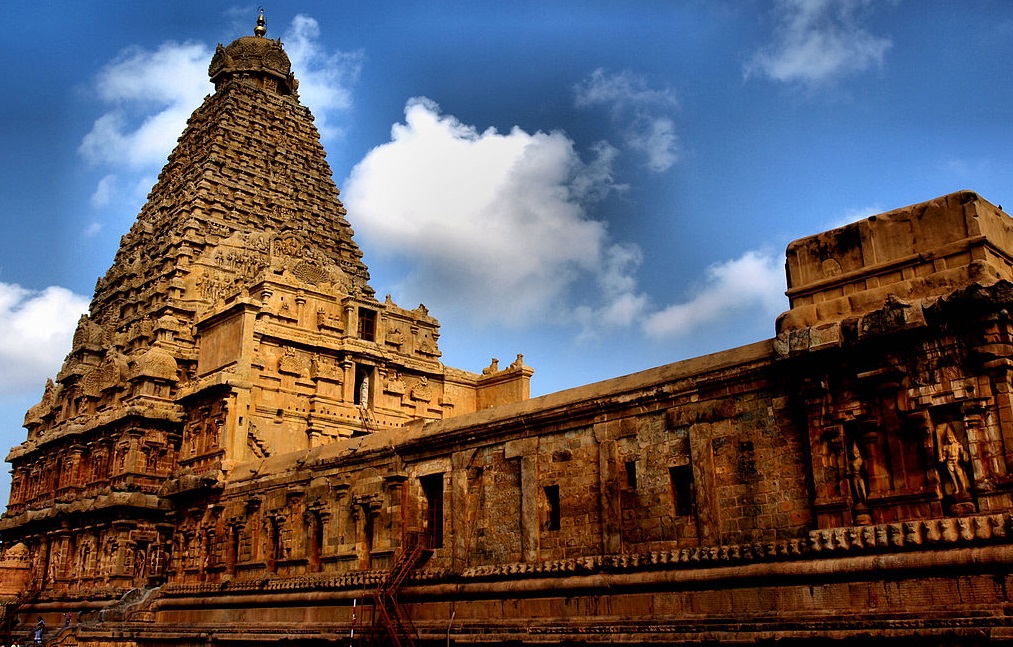
A temple is the seat of divinity and is also a sacred institution that aims at giving mental and physical solace to the devotee. The Garbhagriha or sanctum sanctorum encompasses the center or the nabhi of the superstructure. From the square shape of the Garbhagriha to the finial (which is a point) is the shikhara. This curved form is identified in modern times as the pyramid. The shikhara normally refers to the superstructure of the sanctum sanctorum and is the most important part of the temple. The pyramidal superstructure has a number of storeys. The shikhara can be a square, circular, hexagonal (6 sides) or octagonal (8 sides). The vertical growth of shikhara is also sometimes used to designate the whole superstructure of the temple.
The term shikhara is frequently mentioned at several places in the great epics Ramayana and Mahabharata when referring to the prasad or temple. While the shikhara generally refers to the curvilinear vertical growth of the sanctum sanctorum, the gopurams or gate towers refer to the gateways to the various enclosures and a temple. These are also pyramid shaped and the cross-section is reduced as they go up.
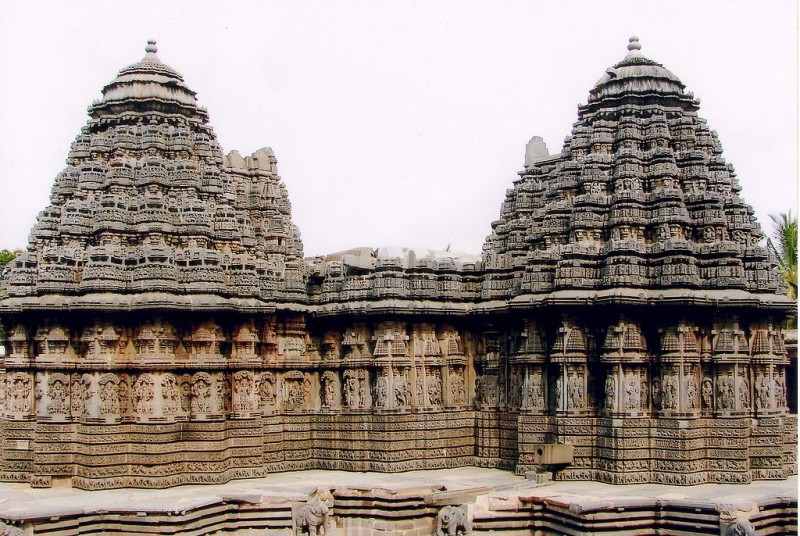
Vesara style of Keshava Temple, Somanathapura. Towers are in 16 pointed star plan.
Generally the pyramidal superstructure has four or eight triangles joined if the garbhagriha was square (or rectangular) and round shaped if the sanctum sanctorum was circular. The superstructure was solid or hollow. The shikhara generally comprises of three parts:
The recessed storeys
Enclosure surrounding each storey.
The dome (stupi or kalasa) rising above the last storey (also called
the Vimana or Harmya)
In certain temples the shikhara is formed by placing a flat roof on four pillars. Another slab is placed over the shikhara. Slab upon slab diminishing in size as they go up are placed one above the other, topped by a perforated ring stone, known as the amalaka, forming a step pyramid. The added weight of the slabs keeps the roof in position. Many a time an upper chamber for the shrine was introduced for greatly reducing mass and weight.
The surrounding walls around the sanctum sanctorum, which have gateways or gopurams, also have pyramid shaped roofs with diminishing tiers as they go up, with the outermost enclosure referred as mahamayada. The immediate enclosure around the garbhagriha, known as the Prasada towers above it like a pyramid with diminishing tiers and is also known as the shikhara.
The celestial power drawn through the shikharas gives the deity effulgence and metaphysical power. The shikhara apart from being a roof for the sanctum sanctorum is also a symbol of divine sanctity giving significant emphasis to the garbhagriha and the principal deity of the central divinity. The top of the shikharatapers to a finial and is known as the kalasa or stupika. One of the learned writers on Temple architecture says that the height of each storey of the pyramidal superstructure diminishes in arithmetical progression, being one-fourth or one-third less than the lower storey, the ground floor not being included.
On the left, the heterogenous Shikhara of the Kandariya Mahadeva Temple in Khajuraho
Pyramids
The term pyramid is derived from the Greek words pyra meaning fire, light, or visible, and the word midos meaning measures. It is also translated to mean fire at the center. This word perhaps denotes the great hidden power of these structures with a square base and four triangular sides that rise upwards to a finial.
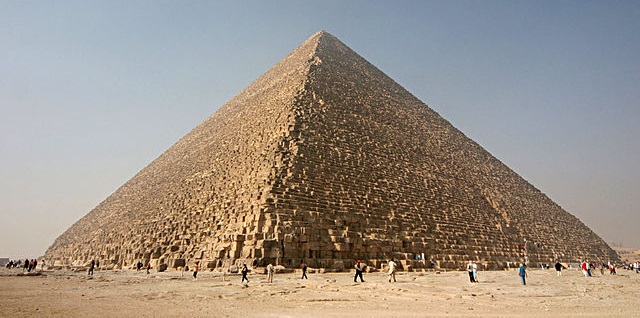
Great Pyramid of Giza
Egypt is a land of pyramids and we have Egyptologists and pyramidologists doing research and throwing light on the antiquity and mystery surrounding them. Even though Egypt is synonymous with pyramids, we find them in other parts of the world such as China, Mexico, Spain, France, Siberia, Central America, Greece, Cambodia and other countries.
The pyramids of Egypt are traced to at least 4000 years back. The Giza pyramids of Egypt date back to about 2500 B.C. A remarkable feature of the Giza pyramids is that they are aligned with great precision to the cardinal directions.
In recent times these structures with four triangular sides standing over a square base have entered the domain of Vastu and are being prescribed for many of the imbalances of a building – residential or business.
Vastu texts consider the proper orientation to the cardinal directions as of great significance while referring to the Yoni aspect of the Ayadi Shadvargas (building formulae). Ayadi is a group of six formulae Aya, Vyaya, Yoni, Rksha, Vara and Tithi that are used to determine the dimensional conformance of a building.
There are many similarities between the Hindu shikharas and the Egyptian pyramids. We have referred to Step pyramids. In fact, they are similar to the shikharaswith the diminishing storeys that is considered in Vastu Shastra. While the shikharas drew the cosmic energies into the garbagriha to flood the sanctum sanctorum with divinity, the pyramids drew the cosmic energies to preserve the bodies of the Pharoah Kings who were considered divine. In the villages of India, we even find huts that have tops in the shape of pyramids. It is interesting to note that while pyramids are said to keep foodstuff fresh, the prasadams and other offerings in the garbhagriha or sanctum sanctorum of a temple also remain fresh for a long time.
Whether you call it a shikhara or pyramid, it is a fact that the shape of these structures influences the flow of energy from the universe and this energy helps in enhancing the overall quality of our life. The most important thing to recognize is that many of their architectural and construction features are similar to that used in Indian temples built thousands of years ago.
The Mysteries of Asia three-part video series was originally produced for The Learning Channel. During this segment, historians and others examine temples built in India more than 1,000 years ago. They remain quite intriguing, though today’s tourists rarely visit them. Records reveal that trained elephants had to drag millions of stone blocks to help erect these structures.
The program notes that due to the temples’ size, the U.S. Senate, Versailles, the Houses of Parliament, and St. Paul’s Basilica in Rome could all fit within a single one of them.
Michael Bell narrates as footage and animated maps are used to help viewers learn more about what these ancient structures look like and why they were built.
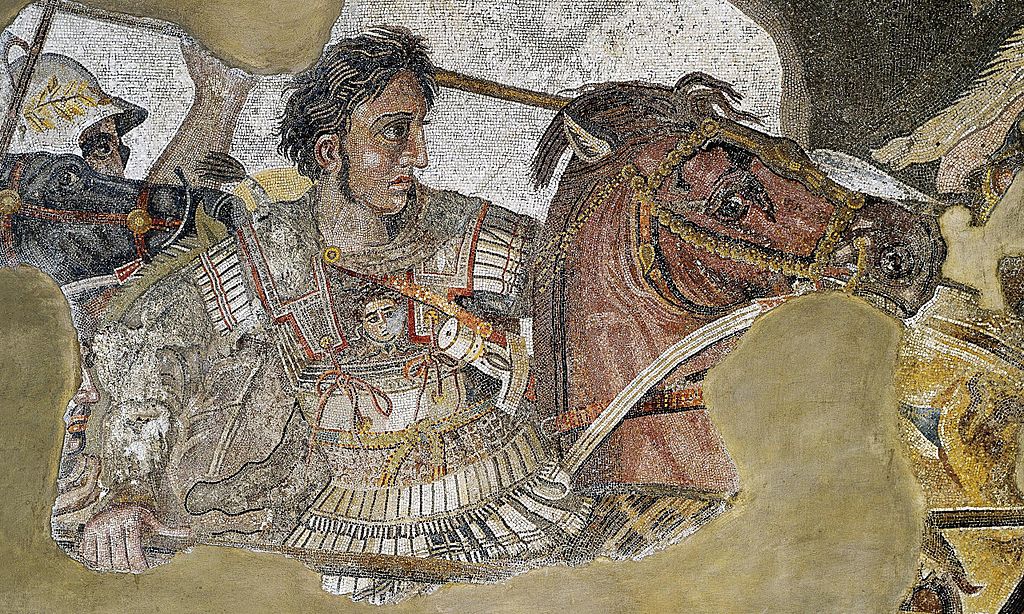
In 326 BCE a formidable European army invaded India. Led by Alexander of Macedon it comprised battle hardened Macedonian soldiers, Greek cavalry, Balkan fighters and Persians allies. The total number of fighting men numbered more than 41,000.
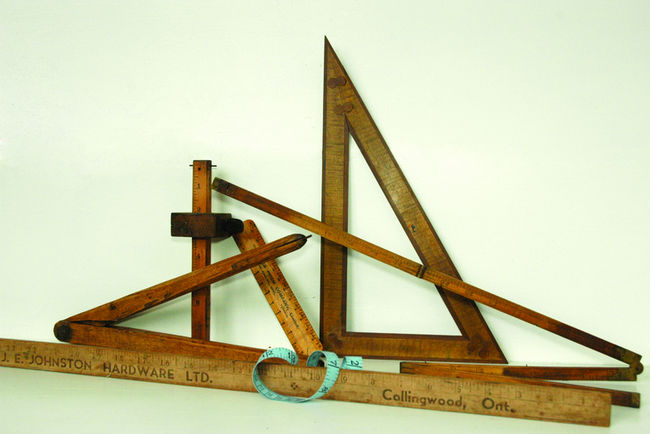
An exact value of the unit of length measurement, used in Indus Valley Civilization, has been determined from the precise scale discovered by Ernest Mackay in the 1930-31 season excavation at Mohenjo-daro, and further correlated with the present day units of measurement.
The debate on the origins of the Rigveda and Aryans in India is not new. It is not so much a scholarly dispute as much as it is an unending controversy.
Recently the University of Delhi’s Sanskrit department has claimed ‘astronomical calculations’ show that the Vedas are much older than what most scholars think and the Aryan invasion theory is a fallacy.
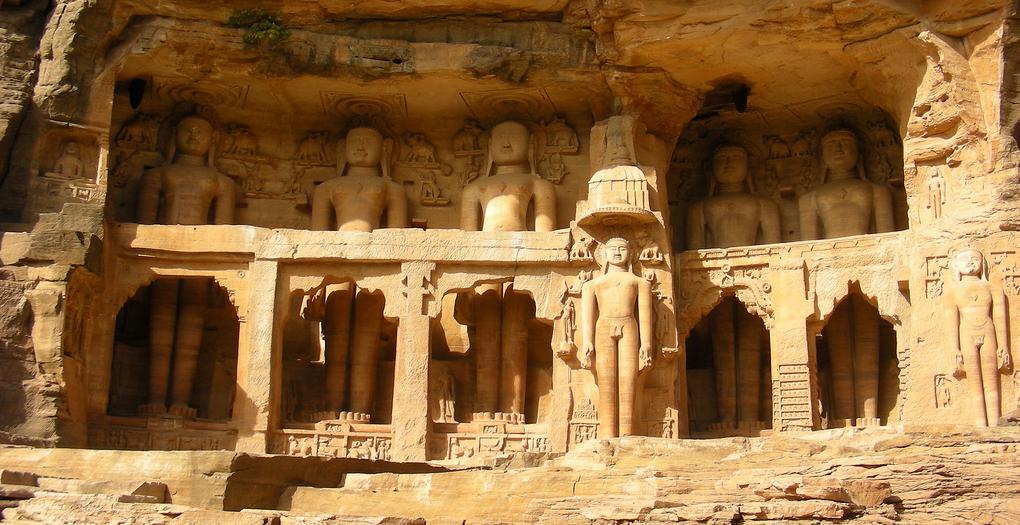
Gwalioris an important city in Madhya Pradesh, India. It is rich in architectural marvels. The fort situated 100 m above from the town of Gwalior is the main attraction here. Although Gwalior is above all a Hindu site, there is a great number of rock cut Jain images situated at the Gwalior Fort.
By continuing to use the site, you agree to the use of cookies. more information
The cookie settings on this website are set to "allow cookies" to give you the best browsing experience possible. If you continue to use this website without changing your cookie settings or you click "Accept" below then you are consenting to this.