
Chausath Yogini Temple, Bhedhaghat

Chausath Yogini Temple, Bhedhaghat

If you are interested in old religious places, there are several to find out in Madhya Pradesh. One such place to go for is the Chausath Yogini Temple located in Bhedhaghat which is just a few kilometers away from the main city of Jabalpur. 

The Concept:

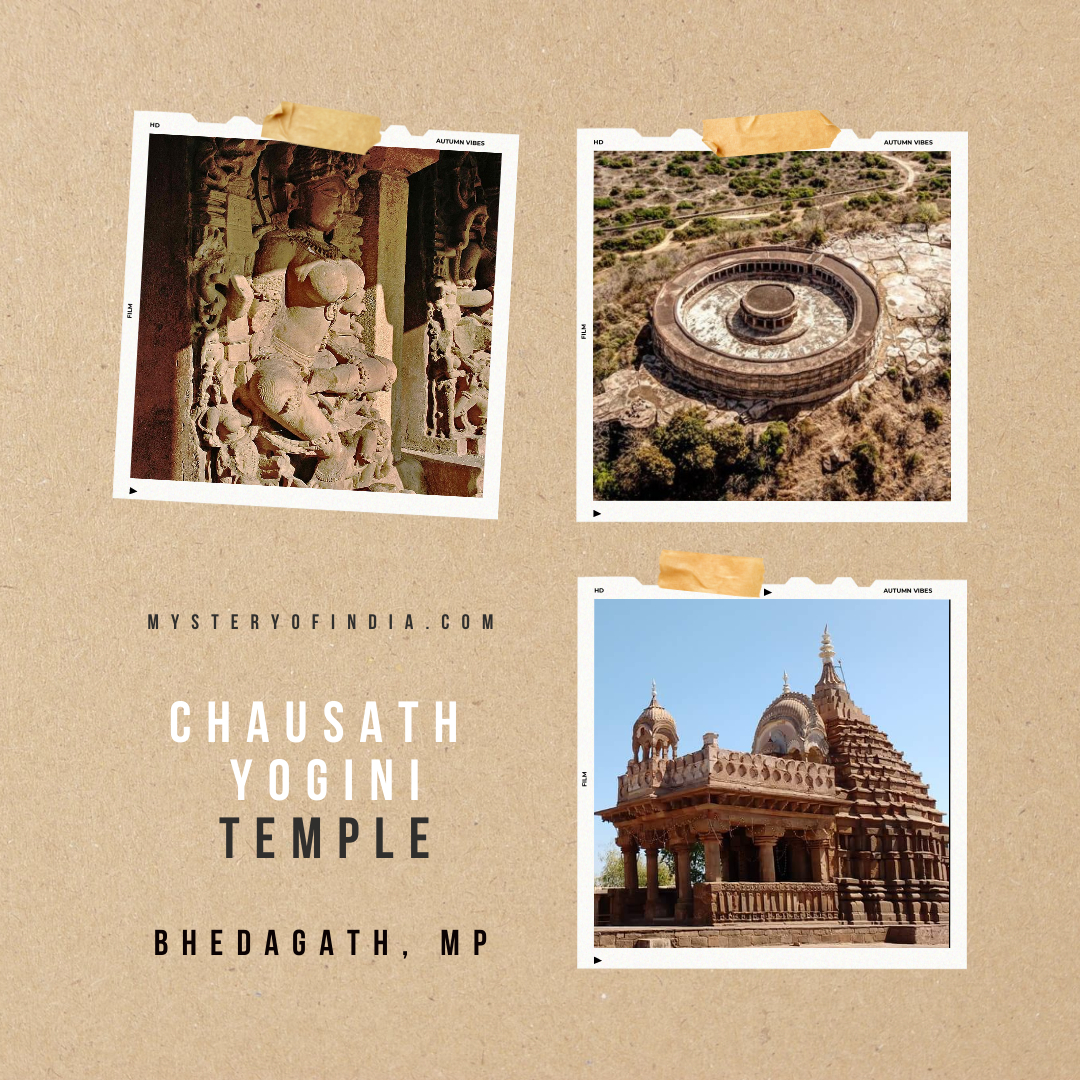
It is quite difficult to trace the concept of this temple as it is one of its kind in the entire country. The name Chausath Yogini depicts 64 yoginis. When you visit the temple, you can see 64 different statues surrounding the actual temple. According to the legends, these yoginis can be devis, who are performing yoga to achieve salvation. 

The Hindu culture has its roots deep in Tantric Yoga. Hence, many experts have tried to decode that the yoginis are in different tantric positions with the aim of reaching moksha. 

The Origin:

Chausath Yogini Temple is one of the oldest heritage sites in the country. Historians have found out that it was during the 10th century CE when Kalachuri Dynasty constructed this temple. The dynasty got quite famous for a number of other architectural masterpieces that they have constructed such as the Elephanta Caves and the Ajanta Ellora caves. 

But initially, just the yoginis were constructed and the main temple of Lord Shiva came into existence after 2 years. It was Queen Alhadevi of the Kalachuri dynasty who constructed the Gauri-Shankar temple during 1155 CE. 

Many centuries later, Chausath Yogini Temple was also subjected to destruction, like many other Hindu temples, by the Islamic forces who reigned in India. But even after the destruction, the temple stands strong to reveal its tale from ancient times. 

What Legends Say?

It is quite obvious that when there is an ancient site, there has to be something or other that is legendary or interesting. There are many such folklores about the Chausath Yogini Temple also. 

According to one such folklore, when Muhammad Ghori was on his mission to destroy all the Hindu temples of India, he came to destroy the Chausath Yogini Temple of Jabalpur also. The signs of wrath can be noticed even today on the inner walls and the statues of the yoginis. But legends say that as soon as he was about to destroy the Gauri Shankar temple, a swarm of bees attacked him and he was forced to run away from the place along with his men. 

The Architectural Beauty of Chausath Yogini

Though the temple has a simple architecture, it still looks magnificent due to the way it has been constructed. The main temple is located at the center of a huge courtyard that is surrounded by the 64 yogini statues that have been carved from rocks. Some of the statues are now in dismantled form due to the attack but still taking a view of statues will evoke many questions in your mind. Also, from the courtyard and the temple is located at a height from where you can have a spectacular view of the soothing river Narmada. Visitors have to climb 150 stairs to reach the temple. 

The Gauri Shankar temple is also one of its kind. Usually, Lord Shiva is found in Shiva Linga form in most of the Shiv temples across the country. But here, the actual idols of Lord Shiva along with Mata Parvati are seen sitting on Nandi, the bull. 

Once you are here, you can surely spend a good amount of time witnessing the temple as well as in the scenic beauty of the place. After having a trip to the temple, you can also visit Dhuandhar Fall of Bhedhaghat which is a mighty natural waterfall. Here, you can even enjoy a boat ride amidst the marble rocks which is again a breathtaking experience. 


Chausath Yogini temple

Reaching Chausath Yogini Temple

Chausath Yogini Temple is mainly at Bhedhaghat which is almost 25 km from the main city of Jabalpur. Thus, you can take a bus ride or a cab from the main city to reach the site quite conveniently. 

Railways: The nearest railway station is Jabalpur which is quite conveniently connected to many cities of the country. 

Airways: The nearest airport is Jabalpur Airport. Though it is a small airport, now you can find many direct flights from different parts of the country. For the rest parts, you can always get connecting flight to reach Jabalpur. 
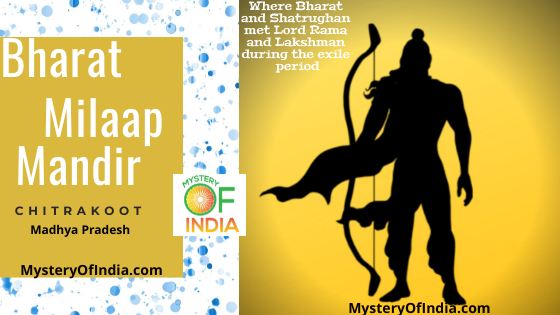
 

Read More on the temple here:

Bharat Milaap Mandir, Chitrakoot

Bharat Milaap Mandir, Chitrakoot

Bharat Milaap is an extremely important Adhyay or Chapter in Ramayana. This chapter reflects the love of a brother towards another brother despite the prevailing hatred and cruelty in the atmosphere.

The beauty of this chapter can be sensed even today by visiting the Bharat Milaap Mandir which is located in Chitrakoot in Madhya Pradesh. 

The Bharat Milaap Adhyay

Though Kakeyi, the mother of Bharat, convinced King Dashrath to send Lord Rama to exile for 14 years, Bharat was extremely tormented by the incident. 

It is said that it was in Chitrakoot where Bharat and Shatrughan met Lord Rama and Lakshman during the exile period. It was during this meeting that Bharat tried to persuade Lord Rama to return back to Ayodhya and reign the kingdom. But Rama was a man of words and was determined to fulfill the order that his father Dashrath gave him regarding the 14 years of exile. In such a situation, Bharat brought the Charan Paduka or the wooden footwear of Lord Rama and kept them on the throne as a symbol that Lord Rama is the ultimate king of Ayodhya and Bharat is a caretaker of the kingdom just till the time Lord Rama is not returning from exile. 

Many legendary stories and folklores also mention that during the meeting, all the four brothers got so much emotional, that even the nearby stones started melting. This statement can be supported by the fact that even today the footprints of the four brothers can be noticed. 

Bharat Milaap Mandir – The Temple

The Bharat Milaap Mandir is located in Chitrakoot with the beautiful Kamadgiri Parvat as the backdrop. This ancient temple has its roots in the Ramayana period and since then it has been a major attraction for tourists and devotees in this region. 

Apart from the story behind the existence of the Bharat Milaap Mandir, there are many other legends that exist such as the Kamadgiri Parvat has the power of absorbing sins. 

Visitors visiting this place can pray at the temple and then can have a view of the footprints of the four brothers imprinted on the rocks. In the last few years, also statues depicting the story of Bharat Milaap have been also created for the visitors to get to know the story and the actual incidents that took place. 

Best Time to Visit Bharat Milaap Mandir

The temple is open for the devotees to visit throughout the year but you should keep a note of the timing. The timings of the temple are:

Morning – 5 AM – 12 noon

Evening – 3 PM – 9 PM

Every year a fair by the name of Bharat Milaap is organized in the temple for which devotees from different parts of the country gather. If you wish to enjoy this fair, you should visit the temple during the months of October and November. 

Nearby Places to Visit

Once you have paid a visit to the Bharat Milaap Mandir, there are many other places to visit nearby that are also associated with the Ramayana period. 

  • Do a parikrama of the Kamadgiri Parvat and all your sorrows and sins will be absorbed by the hill
  • Witness the secret meeting place of Lord Rama and Lakshmana at Gupt Godavari
  • Dip your souls in the aarti that takes place at Ramghat
  • Visit Hanuman Dharam, which is believed to have been created by Lord Rama to cool down the anger of Hanuman
  • Pay a visit to Sati Anusuya Temple as it was Sati Anusuya because of whom River Mandakini came to Chitrakoot
  • Trek into the forest to see Sphatik Sheila which means two crystal stones that have the footprints of Lord Rama and Devi Sita. 

How to Reach Bharat Milaap Mandir?

Bharat Milaap Mandir is located in Chitrakoot that falls in the Satna district of Madhya Pradesh. 

Chitrakoot is located at a serene location of Madhya Pradesh. The best way to reach Chitrakoot is from Madhya Pradesh and Uttar Pradesh. 

Railways – The nearest railway station to Chaitrakoot is Karwi which falls in Uttar Pradesh. Chitrakoot is just 12km from this railway station. 

By Air – There are no such nearby major airports to Chitrakoot. If you are traveling by air, you can drop down at Allahabad, Khajuraho, or Kanpur airport from where you have to take roadways to reach Chitrakoot. 

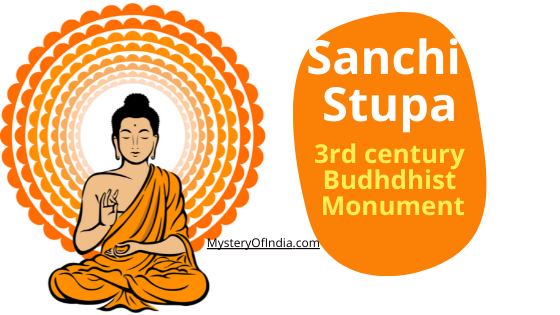
Sanchi Stupa – 3rd Century Ancient Buddhist Monument

Sanchi Stupa

When it is about serenity, one of the names that emerge in Madhya Pradesh is that of Sanchi Stupa. Located about 46 km from the main city of Bhopal, Sanchi Stupa is one of the oldest Buddhist monuments existing in the country. 

The History of Sanchi Stupa

The Sanchi Stupa was built almost thousands of years ago and still, now it is one of the important places for Buddhists and even for tourists. As per the historian records, it was somewhere in the 3rd Century BC when Emperor Ashoka started the construction of the Stupa. By now, the Sanchi Stupa is located on a hilltop and there are many other small stupas surrounding the main Stupa. 

Also, according to the records available in history, the original Stupa was actually almost half the size of the one that is currently standing at its place. It is said that it was almost 50 years after the death of Emperor Ashoka that the size of the Stupa was enlarged with the help of sandstone that was locally available during the Sunga period. This was done because, during the 2nd Century BC, the Stupa has to go through a lot of damages that were ultimately fixed by 1st Century BC. 

Details of the Stupa

Emperor Ashoka built the Ashoka Stupa or better known as Sanchi Stupa now to spread the teachings of Buddhism. In order to understand what exactly does the Stupa depicts, it is essential to understand different elements of the Stupa.

The main structure or the central structure is a dome within which is a deep chamber. This dome represents the Earth. On top of this are squared railings that are known as Harmika. The Harmika mainly holds the three umbrellas that are called Chhatraveli. 

These three umbrellas are the symbol of three essential parts of Buddhism and these are:

  • The Buddha
  • The Dharma
  • The Sangha

Medhi or a circular terrace is there surrounding the dome where the devotees take rounds. 

There are four entry gates that are highlighted by toranas. These huge toranas of entry gates have beautiful carvings on them about the Mauryan times, Buddhism, and even Lord Buddha in the form of a symbol. After entering from the gates, there are also huge Lord Buddha statues in human form that were actually added to the Stupa much later in the 5th Century AD. 

A UNESCO Heritage

Not only the Sanchi Stupa is an important place for the Buddhists but also it has been declared as a UNESCO heritage in the year 1989. 

There are several reasons why the Stupa is an extremely important historical place that should be preserved and protected. One of the major reasons is that the Stupa highlights the architectural marvel that was there in the Mauryan period. Apart from this, as Emperor Ashoka always wanted, the Ashoka Stupa also has several carvings and inscriptions that focus on the teaching of Buddhism. 

Elements to Focus Upon

If you are a first-time visitor to the Sanchi Stupa, you may actually get confused about what are the elements you should focus upon. Here is a simple guide that you can follow. 

  • Sanchi Museum:

On your wy towards the actual Sanchi Stupa, you will cross the Sanchi Museum. It is  great idea learn some theoretical details here in the museum that will definitely help you in understanding the Stupas in a much better way. Also, you can come across several other remain from the Mauryan and Ashokan times. 

  • Buddha Jambudweep:

Just in front of the Sanchi Museum, you will see a theme park that is by the name of Buddha Jambudweep. This is once again a point of attraction where you can witness several elements connected to Lord Buddha as well as Emperor Ashoka.

  • Sanchi Stupa:

As you proceed forward, you will have to climb on the mountains to reach upto the actual Sanchi Stupa. As you enter from the beautiful gates of the main Stupa, take a round around it and explore different carvings on the walls and on the gates. After checking out the main Stupa, you can look around many other smaller stupas at distances. It is a huge area where you will come across several elements such as a huge temple remain, and many others that will take you to the glorifying history of the Mauryan times. 

Reaching Sanchi Stupa

Sanchi is located in the capital city of Madhya Pradesh, Bhopal. Bhopal is well-connected through railways as well as airways to different other cities of the country. You can take cab from the main city of Bhopal to reach Sanchi. The best way is to hire a cab for the whole day so that you can explore Sanchi Museum, Sanchi Stupa, and other related places throughout the day.

Lord Pashupatinath – 8-Faced, 8 Aspect Idol Temple Mandsaur

Pashupatinath Temple

Madhya Pradesh is home to many Shiv temples. But Pashupatinath temple is not just the oldest but also one of the most unique Shiv temples across India. 

Located on the banks of Shivna river in the Mandsaur district of Madhya Pradesh, the Pashupatinath temple has been attracting a huge tourist crowd each year. Pashupatinath is a form of Lord Shiva that is mainly believed in Kathmandu, Nepal but also is a major attraction in Mandsaur. 

Local History and the Temple

The locals and also some mythological experts have faith in one of the major stories that revolve around the construction of this temple several centuries ago. As per the story, the Shiv Linga actually emerged on its own from the Shivna River and after about 21 years, it was established by constructing the temple. The locals celebrate the day of the incarnation of the Shiv Linga in the form of a huge fair or mela. 

The main temple has got four doors but it is in the west direction from where the devotees enter the temple to pray in front of the Pashupatinath. The dimensions of the temple area are 90x30x101 feet in which the Shiv resides. 

Apart from the Pashupatinath Shiva Linga, there are idols of other deities too that have been established later on in the complex. As you enter the temple from the west entrance, you can witness the huge idol of Nandi Maharaj. Also, the other idols that you can witness here are Mata Parvati, Kartikeya, Ganesha, Mata Ganga, Lord Vishnu, Mata Lakshmi, and Adi Sankara.  

The Shiv Linga

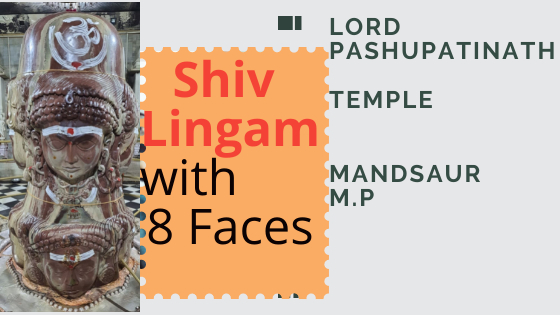
It is the Shiv Linga in this temple that is worth talking about. It is also known as the Ashtamukhi Shiv Linga because it has got four faces, unlike any other Shiv Lingas across the country. Weighing 4.6 tons, the Shiv Linga has a height of 7.25 feet. Among the eight faces, four faces are on the top while the other four faces are on the bottom of the Shiv Linga. 

Not only is this Shiva Linga ashtamukhi but also it is made up of ashtadhatu or eight different alloys. So, what do the eight faces of this Shiv Linga actually mean?

There are eight different aspects that are highlighted by the eight faces of the Shiv Linga and these are:

  • Bhava, meaning creation
  • Sharva, meaning destroyer
  • Rudra, meaning sorrow dispeller
  • Pashupati, meaning master of all beings
  • Ugra, meaning fearsome
  • Mahadeva, meaning Supreme
  • Bhima, meaning tremendous and 
  • Isana, meaning the ruler of directions

The locals also believe that even nature pays a tribute to this ashtamukhi Pashupatinath Shiva Linga. This is because, every year during the monsoons, the water level of River Shivna rises and almost touches the Shiv Linga. This is also named Jalabhishek that is paying an offering to the Shiv Linga with water. This phenomenon is also quite important in this area and is considered quite pious. 

When to Visit Pashupatinath Temple?

The temple remains open for its devotees every day from 6 am in the morning till 8 pm night throughout the year. But if you are looking for the best time of the year, it is during the months of October to March. This is because summers are quite torturous in this region while during the monsoons the water of River Shivna reaches the Shiva Linga in the temple. 

If you wish to witness the grand mela or fair that happens every year to celebrate the incarnation of Lord Shiva, you have to be here in the months of November. It is during the Kartik month according to the Hindi calendar when the district celebrates the mela in respect of Lord Pashupatinath. 

Reaching Pashupatinath Temple

Reaching the Pashupatinath temple is not a difficult task as it is well-connected by all three means of transport. 

  • If you are traveling by train, you can arrive at the Mandsaur Railway Station from where the temple is just at a distance of 3 km.
  • Even when you are taking roadways, you can easily reach out to Mandsaur from different cities of Madhya Pradesh.
  • In case you are planning to come from some other state or country by air, you can land at the cities of Indore or Bhopal from where you can easily take the roadways to reach out to Mandsaur district. 

Usually, devotees arriving at the Pashupatinath temple pray in front of the deities and then make a parikrama around the temple. It is believed that devotees who arrive at the temple and pray with devotion achieve fearlessness, happiness, and strength in their life.

All you need to know about Bhojpur Temple

Bhojpur Temple

The Bhojpur temple or the Bhojeshwar temple plays a predominant role in the tourism and pilgrimage culture of Bhopal. Located at a distance of 28 kms from the main city of Bhopal, this temple is actually built in the Raisen district, on the banks of Vetravati River. 

What attracts tourists from different parts of the country to this ancient temple is the huge Shiva Linga installed at the Garba Griha of the temple. Of course, on reaching this spot, you also cannot stop yourself from getting mesmerized by the scenic beauty and the serenity of the place. 

How to Reach Bhojpur Temple?

Reaching out to Bhojpur Temple is pretty easy from the capital city of Madhya Pradesh, Bhopal. Bhopal is well-connected to different other cities of the country through railways as well as through airways. 

In order to get a glimpse of the Bhojpur Temple, you can take any cab service from Bhopal and directly reach Bhojpur in the Raisen district. The best part of this 28km trip is that you can view several amazing views en-route to the temple. 

If you are an adventure lover, you can also hire 2 wheeler services from Bhopal and can drive all the way to Bhojpur. 

Best Time to Visit Bhojpur Temple

While there is no such specific timing when you can visit the temple, the best time that you can enjoy the place is from October to February. 

As the temple is located on a hilltop, you may feel the extensive heat of the Madhya Pradesh region during the summers and it can make you feel extremely exhausted. During the monsoons, the staircases and the pathway of the temple can become slippery that can lead to accidents. Hence, the best time is during and near the winter season. 

The History of Bhojpur Temple

Surprisingly, locals have different legends about the Bhojpur temple. One of the most common stories that the locals narrate is that the temple was built by the Pandavas so that their mother Kunti can offer her prayers to Lord Shiva.  

But the historians have altogether a different story to highlight about the temple. 

According to historians, the commissioning of the temple dated between the dates of 1010AD and 1053AD. It was the then king of Bhopal, Raja Bhoj who constructed and inaugurated the temple. 

As per a very famous story, Raja Bhoj was determined to fill up the entire Earth with Shiva temples due to his extreme devotion to Lord Shiva. Records mention that he constructed as many as 104 temples alone in the city of Dhara. But somehow due to several factors, not all the temples could exist till the current time and only a few ones such as the famous Bhojpur temple still stand rigidly to remind the world about this great devotee king of Lord Shiva. 

The Architecture of Bhojpur Temple

One thing that makes this temple unique is that it is not complete in terms of construction. It does not have a front covering and the reason for it is not known yet. Some historians mention that the temple work was stopped due to rain and other climatic factors and so what is visible today is the remaining parts of the temple that have been conserved. 

Images courtesy: Meha Prasad. Published with permission.

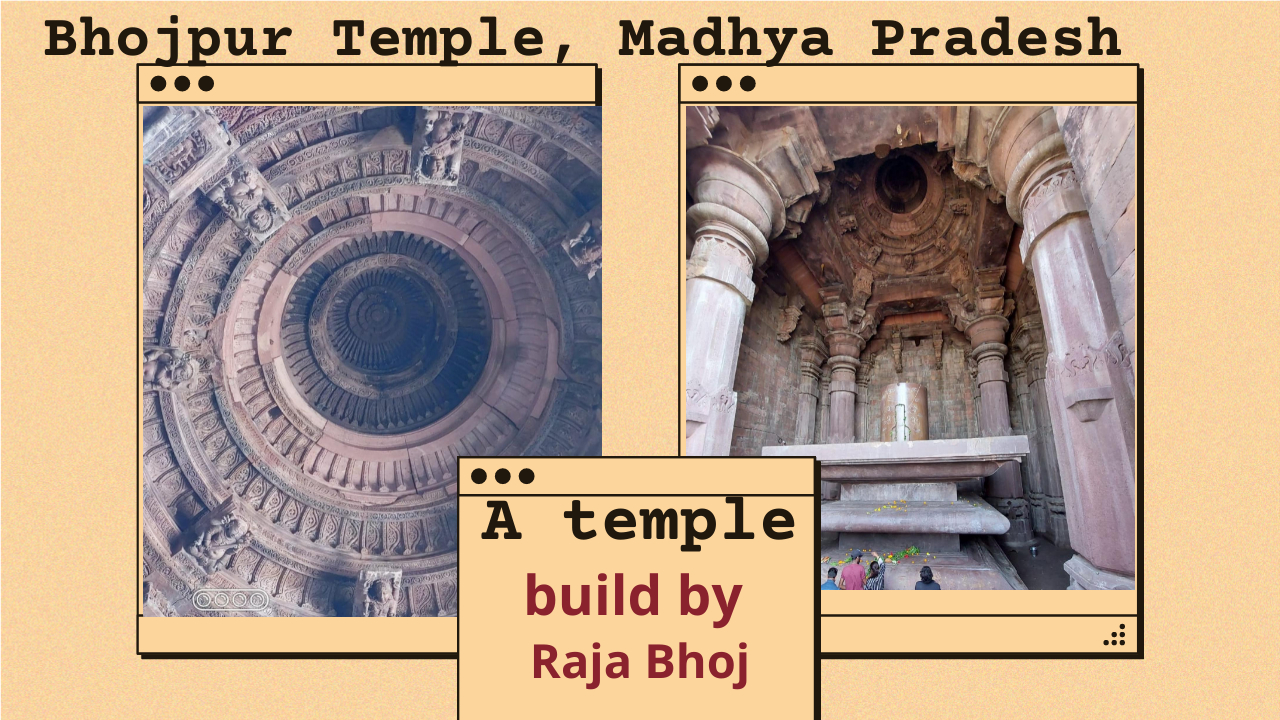
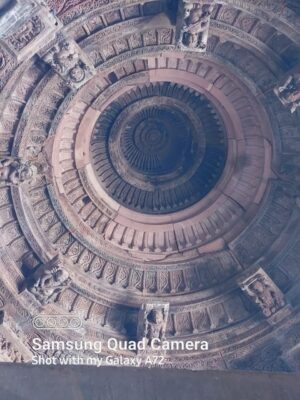
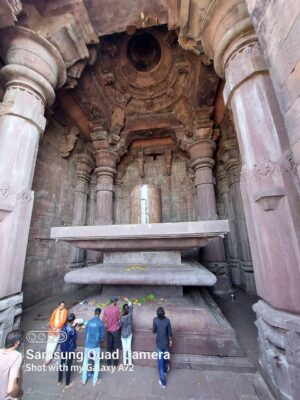
Also, it is the very first temple with an arc. There are four pillars that are responsible for bearing the weight of the dome of the temple while the inner roof of the temple is embellished with beautiful stone carvings. The entire temple is built up of sandstone blocks and there are several faux balconies to offer a jeweled look to the temple. 

The main attraction of the temple is the Shiva Linga which measures about 7.5 feet and is the longest Shiva Linga in the world to be situated in a temple. The Shiva Linga is placed on a huge square sanctum.  

When you take a tour of the entire temple, you will find many carvings on the exterior parts of the temple that add up to the beauty of the temple. 

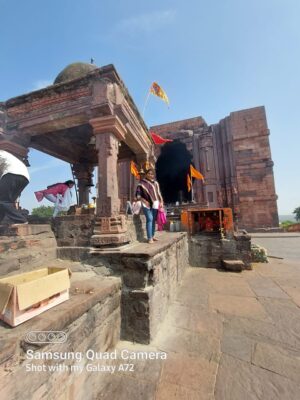
The temple is constructed on a hilltop and when you take a view from the barricades surrounding the temple, you can experience a stunning natural view of the entire area. 

Conservation of the Temple

It was in the year 1950 when the Archaeological Survey of India found that the temple structure had weakened due to extreme weather conditions. Saving such a unique and beautiful monument was more than a mission for the team and soon the operation of conservation started in the year 1951. 

The task started first by repairing the damaged steps of the temple and then soon the task of restoring the walls and other parts of the temple started under the supervision of KK Mohammed. There were several changes made such as adding up cement along with the sandstone material so that a much durable structure can be created without compromising with the original look of the temple. 

What to Do at Bhojpur Temple?

If you are planning for a trip to the Bhojpur temple, it should not take more than an hour for the entire activity. You have to leave your vehicle at the foothills and then have to climb up the hilltop on your feet. So, make sure that you wear comfortable shoes and also that you do not bring along someone who has issues with climbing high stairs. 

You can carry flowers and prasad from the foothills for offering at the temple. Once you have reached the top and have taken the blessing of Lord Shiva, you can sit on the stairs to spend some peaceful moments, enjoying the lush view around.

Getting down from the temple, you can have at the small stalls here from where you can buy crystal Shiva linga or many other items available. For your convenience, there are also many small food joints also available here at the foothills from where you can get refreshments. 

Nalchha Mata- the idol that appears in 3 forms in a day- Mandsaur, M.P

Nalchha Mata Temple

Established on the border of Rajasthan and Madhya Pradesh states of India, Mandsaur is said to be a town that is historically and spiritually important. Nalchha Mata Temple was established in a hamlet named Nalchha near Mandsaur Tehsil in Mandsaur District of Madhya Pradesh. It is the only of its kind in the world where Goddess Durga, in the form of Nalchha Mata, is sitting with Kalbhairav. According to the old scriptures found in the vicinity, the historic significance of the Mandsaur dates back to Mahabharatha times.

Nalchha Mata Temple Location

 Nalchha Mata temple is on the west side of the Nalchha village beside a sewer. Situated on a small hill, the temple is approximately 2.8 km away from the famous Pashupatinath Temple. The surrounding view is beautiful, and a garden of lush green grass inside the establishment also serves as a picnic spot with swings for kids. Nalchha Mata temple is one of the 180 temples around that area. In the radius of 10 km itself, one can find 127 Hindu temples. Nalchha village comes under the Nalchha Panchayat that belongs to Ujjain Division. It is 298 km away from Bhopal, the state capital of Madhya Pradesh.

Nalchha Mata Temple History

The history of this temple dates back thousands of years. Nalchha Mata temple was established in the era of King Dashratha, father of Lord Rama. Once Dashratha reached Malwa from Chitrakoot while hunting. During the hunt, Dashratha mistakenly killed Shravan Kumar, who was on the journey to the famous four abodes with his parents. Shravan Kumar was the only caretaker for his blind parents. Shravan Kumar’s parents cursed King Dashratha after this sin that he committed. For the atonement of this sin, Dashratha established the idols of Goddess Bhairavi and Lord Bhairav and worshipped them for a long time. People believe that these statues are in the same conditions as were established thousands of years back by Dashratha. Though the infrastructure has been repaired quite a few times since then, the murti of a lion at the entrance and the oil lamp holders are still the same.


Nalchha Mata Murti

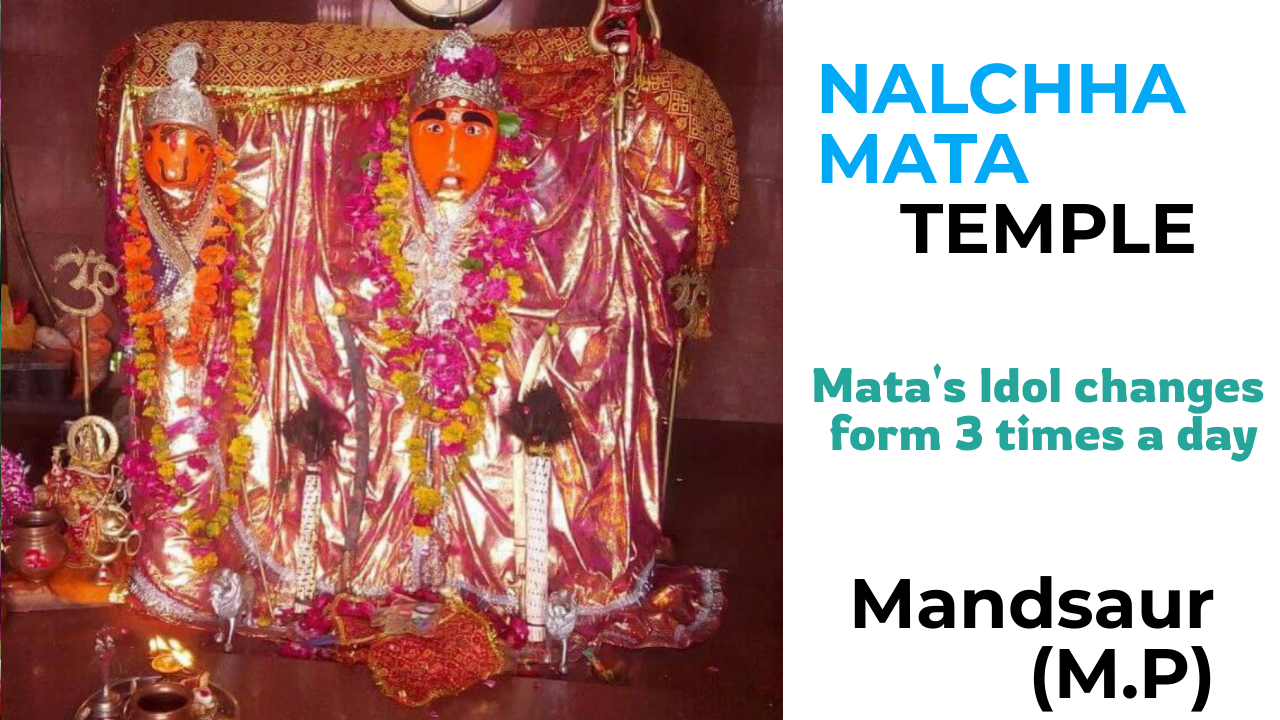
Nalchha Mata Murti is one of its kind where deity Goddess Durga, in the form of Goddess Nalchha, is sitting along with Bhairavji. The idols of Goddess Durga and Lord Shiva are seen erected, and their murtis being together is rarely seen. These ancient murtis are said to be miraculous among the devotees.

Interestingly, the face of mata in the Murti or the idol appears like a girl in the morning, like a lady during the day and like an old woman post evening.  

Significance

It is believed that Maa Nalchha changes three times a day. She is in her childhood and puberty during the afternoon in the morning. In the night, she turns into old age.

This temple is said to be miraculous, being thousand years old. The childless couples visit every year during Navratri days to worship them. After one year, they come again with their newly born kids to thank the Goddess and Lord Bhairav for listening to their prayers. Many devotees having epidemics are also said to be cured after worshipping them. People visit from different parts of the country during Navratri, as this temple has the utmost age-old sculptures of Goddes Bhairavi and God Bhairav. The seeds of wheat are sown during Navratri in the feet of Goddess, and if they germinate nicely, then it is believed that the coming year will be filled with prosperity, and the coming monsoon will be good. Leather items like the belt and purse are strictly forbidden inside the temple premises to maintain the piousness of the temple. Moreover, the Archaeological Conservation Department of India declared the temple under-protected monuments. The temple has been added to the plan of religious tourism by the Tourism Development Corporation of Madhya Pradesh. 

Conclusion

Nalchha Mata is not only worshipped by the people of Madhya Pradesh but is also popular among distinct places of the country. The holy shrine is considered a famous place after the Pashupatinath temple, where  The premises have a good space without any city crowd. It is significant to worship Goddess Durga and Bhairavnathji during Navratri as the devotees believe that their prayers are listened to and fulfilled by them. It’s also a rare sight to see them sitting together. This ancient temple is famous among devotees to receive the blessings of Goddess Durga and Lord Shiva. Navratri is a significant time where the idol of Goddess Nalchha is covered with beautiful dresses and jewelry to celebrate the festival of Navratri.