
Mamleshwar Temple, Omkareshwar

Mamleshwar Temple, Omkareshwar

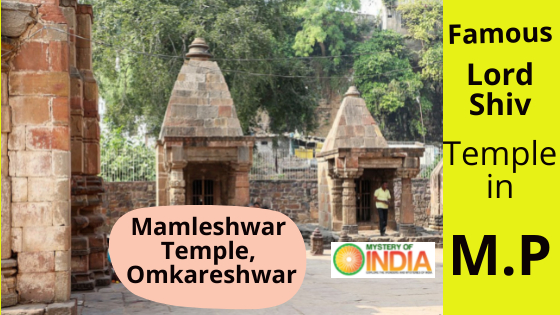
Mamleshwar Temple is a ancient Shiv temple that is located on the banks of River Narmada in Omkareshwar. Mamleshwar Temple is also known by the name of Amreshwar Temple the meaning of which is immortal. 

It is said that both Omkareshwar and Mamleshwar are the same and are among the 12 Jyotirlingas of India. People with religious faiths have menioned that though both the temples are located opposite to each other, they both denote the same jyotirlinga. 
Mamleshwar Temple, Omkareshwar
Image derived from Bernard Gagnon, CC BY-SA 3.0 <https://creativecommons.org/licenses/by-sa/3.0>, via Wikimedia Commons

History behind Mamleshwar Temple

There have been different legends behind the existence of the Mamleshwar Temple. According to one such legend, Lord Shiva once took the form of a massive linga in order to get a competition done in between Lord Vishnu and Lord Brahma. 

Some other legends say that Lord Shiva came in the form of Linga here on the banks of River Narmada on request of Vindhyas. 

It is said that it was the pandavas who established the jyotirlinga here and Lord Shiva divided the Linga into two parts that are now known as Omkareshwar and Mamleshwar. 

Among both the temples, Omkareshwar Temple is more popular but legends say that the visit to Omkareshwar jyotirlinga is absolutely incomplete if you do not visit the Mamleshwar Temple. 
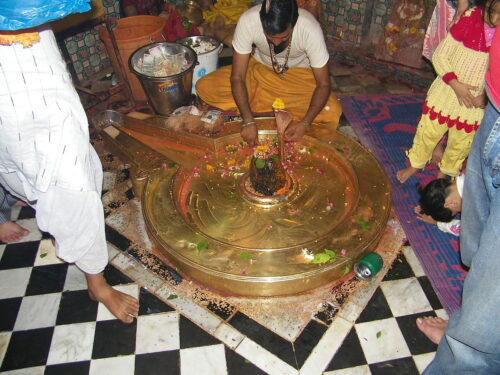
Mamleshwar Temple, Omkareshwar
Image derived from ShivShankar.in, CC BY-SA 3.0 <https://creativecommons.org/licenses/by-sa/3.0>, via Wikimedia Commons

Architecture of Mamleshwar Temple

Mamleshwar Temple is not just one of the most ancient temples of India but also one of those temples that are preserved for its architectural beauty. One can find gorgeous stone work on the temple walls. The temple has a shikhar and the entire structure looks extremely stunning even from a distance. 

If you pay proper attention to the walls of the temple, you will find several carvings and inscriptions on them. Researchers are still trying to decode the inscriptions as these are not easily visible and are quite ancient. Truely, Mamleshwar Temple is also said to be one such temple with many secrets that are yet to be revealed. As of now, it has been found out that these inscriptions date as ancient as around 1063 AD. 


Rituals at Mamleshwar Temple

The Brahmins here follow the traditional ritual of Lingarchan Puja that was started way back in the reign of Queen Ahalyabai Holkar. This is a ritual where the brahmins create lingas everyday out of clay and then submerge them into the River Narmada after the praying ritual is over. This ritual was started by 22 Brahmins during the reign of Holkar but now the same tradition is carried out only by 5 Brahmins. 

Apart from this main traditional ritual, there are also many other rituals that are followed in the temple accordingly. The other rituals that the devotees can see and can perform at the Mamleshwar Temple are:

  • Partheshwar Pujan
  • Kaalsarp Shanti
  • Panchamrat Rudra Abhishek
  • Samanya Abhishek
  • Laghu Rudra Abhishek


There are different purposes of each of these rituals. Some are for the peace of the planetary impacts on the kundali of a person while some others are for other reasons. 


When to Visit Mamleshwar Temple?

There is no such specific time period when you should pay a visit to the Mamleshwar Temple. But you can witness a crowd of devotees and many festivities happening in the temple during special occasions such as Shiv Ratri. Also, devotees from different places visit Mamleshwar and Omkareshwar Temple during the Shravan months for Jal Abhishek. 

There are no tickets to enter the temple. But you need to maintain the timing of the temple. 

Opening Time – 6:30 am 

Closing Time – 9:30 pm

How to Reach Mamleshwar Temple?

As Omkareshwar is among the 12 jyotirlingas, the place has been accessible from different parts of the country so that the devotees do not face trouble reaching here. 

Airways – The nearest airport to Omkareshwar is Indore that is about 75 km away. 

Railways – The Omkareshwar railway station is just 12 km from the main location of Omkareshwar. 

Roadways – The nearest bus stand is just about 1.9 km away. 


Different national highways and state highways also connect Omkareshwar to different parts of the country. So, you can even book a cab or can drive your own vehicle to Omkareshwar. 

Once you have reached the main Omkareshwar Temple in Omkareshwar, you can either take the foot bridge or can even take a ferry to cross the River Narmada and reach upto Mamleshwar Temple. 
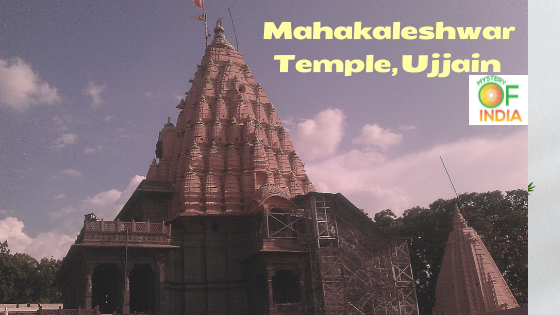
Mahakaleshwar Jyotirlinga, Ujjain – Complete Details

Mahakaleshwar Jyotirlinga, Ujjain

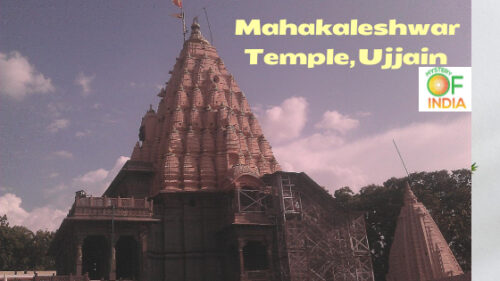
Mahakaleshwar Jyotirlinga is among the 12 jyotirlingas of India and is located in the ancient city Ujjain or Madhya Pradesh. The description of Mahakaleshwar has been inscripted even in the Hindu puranas. It is said that the life of the city Ujjain revolves highly around the blessings and the power of Mahakal.

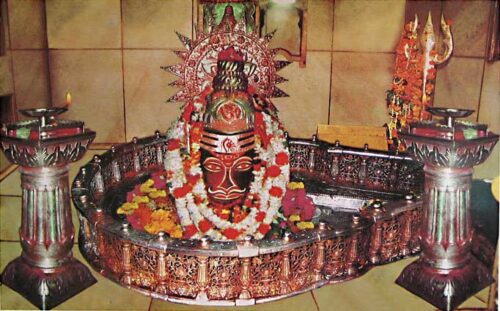
The shiv linga in the Mahakaleshwar Temple is known by different names also such as Swayambhu which means that the Shiv Linga gains power on its own. Another name is Dakshinamurti because the Shiv Linga in this temple faces towards the South direction. 

Mahakaleshwar Jyotirlinga, Ujjain
Mahakaleshwar Jyotirlinga, Ujjain. Gyanendra_Singh_Chau…, CC BY 3.0 <https://creativecommons.org/licenses/by/3.0>, via Wikimedia Commons


The Legend of Mahakaleshwar

As per the puranas and many other legendary sources, Mahakaleshwar denotes time. As per this meaning, Lord Shiva or Mahesh, among the trinity (Brahma, Vishnu, Mahesh) is known to have control over time. 

Apart from this, there are many other tales coming from the depth of myths. 

One such story says that Devi Sati got married to Lord Shiva against the will of her father King Daksha. When Daksha insulted Lord Shiva in front of everyone during an occasion, Devi Sati entered the fire in a state of rage. Lord Shiva could not control his feelings on the death of Devi Sati and performed the dance of rage called Tandav in the form of Mahakal. 

Similarly, there is another story in which Lord Shiva took the form of Mahakal when a demon Dushan tried to harm four of his eminent bhakts. 


The Architecture of Mahakaleshwar Temple

This ancient temple reflects a beautiful architectural combination of different ancient styles that are of Bhumija, Chalukya, and Maratha. The temple has five levels and the Garbhagriha is located underground where the Shiva Linga is situated. 

Mahakaleshwar Jyotirlinga Ujjain
Mahakaleshwar Jyotirlinga Ujjain. Udit Sharma, CC BY-SA 3.0 <https://creativecommons.org/licenses/by-sa/3.0>, via Wikimedia Commons

Apart from the Mahakaleshwar Shiv Linga, there are more two Shiv Lingas present in the temple and these are Nagachandresvara and Omkareshvara. The Nagachandresvara Shiv Linga is located at the uppermost part of the temple and devotees are allowed to have darshan of this Shiv Linga only on the pious day of nag Panchami. 


While you are entering the Garbhagriha of the main deity Mahakaleshwar in the temple, you will also witness many other idols such as that of Lord Ganesha, Mata Parvati, Kartikeye, Shri Rama, and others. The main shrine or the Shiv Linga has a silver plated roof on the top that increases the royalty of the Mahakaleshwar even more. 


Celebrations at Mahakaleshwar

Usually, the pujaris of the temple perform arti and abhishek with proper ritual every day, but there are also a few celebrations for which devotees visit the temple from different parts of the country. 

Nitya Yatra is when the devotees take a dip in the holy Sipra River and then pay a visit to the deities in the temple. 

The Sawari is a possession of Lord Mahakaleshwar that takes place every Monday on the streets of Ujjain. This possession is followed by devotees from different parts of the country on special occasions such as Vijaydashami. 

Bhasm-arti – This is a special kind of arti that takes place every day in the morning. For this ritual, the pujaris apply bhasm or fresh ashes from the burial ground on the Mahakaleshwar. It is said that Lord Shiva is above life and death and so the bhasm-arti is an important ritual in the temple. 

Devotees who wish to witness the grand bhasm-arti of Mahakaleshwar should arrive at the temple early in the morning with a proper photo identity proof provided by the Government of India. Though all the Governmenr-approved identity cards are accepted, it is advised not to carry PAN card for the purpose. 

Reaching Mahakaleshwar Temple

Mahakaleshwar Temple in Ujjain is quite accessible through various means of transport. 

Airways: The nearest airport to Ujjain is Indore that is at a distance of 51 km. Other airports that are near to Ujjain are Bhopal, Udaipur, Jaipur, and Ahmedabad. 

Railways: The best route is through railways as you can get down directly at the Ujjain Railway Station from where you can take any vehicle to reach to the temple. Other railways stations where you can get down are Chintaman, Vikram Nagar, Omkareshwar, and Pingleshwar. 

Roadways: There are different bus services that connects Mahakaleshwar to different cities of the country such as Delhi, Mumbai, Bhopal, Pune, and Bengaluru. If you are opting for a cab service, Mahakaleshwar is 4 hours drive from Omkareshwar. 

Raireshwar Temple – Where Shivaji took the oath of Hindu Swarajya

Raireshwar Temple:- An Introduction


India is a mystical land with many ancient, beautiful temples spread across its landscape. Many temples carry with their legacy stories of courage and grit. Raireshwar temple is also known for an interesting story related to Shivaji and his oath. Moreover, the mystical Raireshwar temple is a witness to India’s early struggle for independence or SWARAJ. 


Shivaji, The Great Maratha Ruler:-

Before we learn about the importance of the Raireshwar temple in Indian ethos, let’s mention certain essential qualities of the great man behind making it so famous. Yes, you heard it right! India’s Great and invincible icon, specifically, Maharashtra-Shivaji Maharaj. 

Shivaji was born with commendable traits, bravery, honesty, the ferocity to fight for freedom, a genuine interest in the welfare of the people of his country. He was a man who had great foresight. He chose such places where the defense can be made a weapon. 

He is also known as the Father of the Navy as he was the first person to realize the importance of having a naval force. 

Historical Significance of Raireshwar temple:-

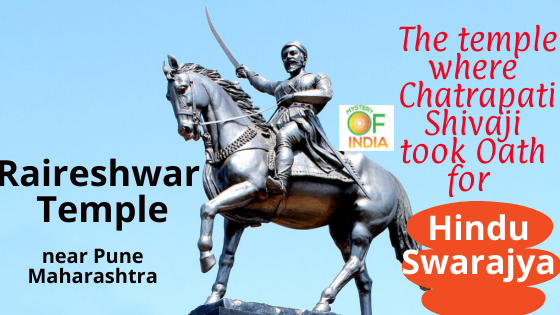
Raireshwar temple is famously known for its historical importance. It is said that here, Chhatrapati Shivaji Maharaj, all of 16 years old, took the oath of Hindavi Swaraj on 27 April 1645 by cutting his little finger. The blood dripping from the finger was dedicated to Shivalinga inside the temple as an epitome of his truthful oath.

We all know the rest that happened. Shivaji was one of India’s most exemplary leaders, who inspired and is still inspiring the crowds.


Where is the temple located? 

Raireshwar temple is located near Pune, Maharashtra. To be specific. It is located in Bhor Taluka, Pune. It is surrounded by majestic hills and forts such as Kenjalgad. The place nearby the temple is ideal for camping.

Architectural Design of the temple:-

The entire temple is stone and has a rock-solid structure with a metal roof. It was rebuilt in 18 th century. Constructed on a plateau, it becomes more beautiful when various flowers surround it during the monsoon.

Meaning of Shivaji’s oath:-

Hindavi Swaraj, the oath taken by Shivaji, literally meant a big denial to live as enslaved people. It was a massive call towards freedom with Lord Raireshwar as a prime witness. Even today, the temple’s architecture has portraits of Shivaji with his ardent followers. 

Shivaji’s words were, “God thinks this kingdom should shape as HIndavi Swaraj. We shall see that God’s wish is fulfilled “.

Key details of the temple:-

  • Maintained by:- local Jungam community.
  • Timings to visit:- 6 a.m. to 10 p.m.
  • What:- A 400-year-old structure with historical relevance.

Historians believe that Shivaji chose this temple as the oath-taking place because its location was favorable back then. It was not easily accessible at that time, so secret meetings could be organized here with lesser chances of being caught. Because of this reason, Shivaji and his followers opted for the Raireshwar temple as the focal point from where they would begin the Maratha march towards freedom.

There are undoubtedly other places worth seeing near Raireshwar temple. These are also considered tourist attractions. Some of them are as follows:-

  1. Kenjalgad 
  2. Waghjai temple
  3. Ashwalkhind
  4. Nageshwar temple
  5. The Hanging bridge

Villages nearby the temple are also beautiful to visit and are ideal for hiking adventures.


How to reach Raireshwar temple? 

Now Raireshwar temple is easily accessible through the public or private mode of transport. The road route from Pune is quite good, and one can easily reach the temple through this route, enjoying the natural beauty along the way. The temple is around 82 km from Pune, near Bhor.

One can take flight or rail or road route till Pune. After reaching Pune, a private taxi can also be hired to visit the temple and its nearby places. The place is connected quite well with all the major cities across India. So, you can choose air travel, rail transport or road route as per your convenience. 

Many travel companies offer a good travel plan, including a visit to the temple with an itinerary including the places as mentioned above surrounding it. However, it would be an eye delight for the tourists and other nature enthusiasts to cover the entire scenic location surrounding the Raireshwar temple. 

It is a haven for people who love to hike and go camping. Reasonable packages are being provided, including hiking, camping, sightseeing, etc., that can help you soak in the scenic beauty here. 


Conclusion:-

Raireshwar temple is an indispensable part of Maratha history. It has been a stoic witness to Shivaji Maharaj’s immense bravery, love for his motherland, and wish to bring happiness to his fellowmen’s lives. So, it’s a place that should be seen, written about, and promoted as India’s proud heritage.


Kandariya Mahadeo Temple, Khajuraho

Kandariya Mahadeo Temple, Khajuraho

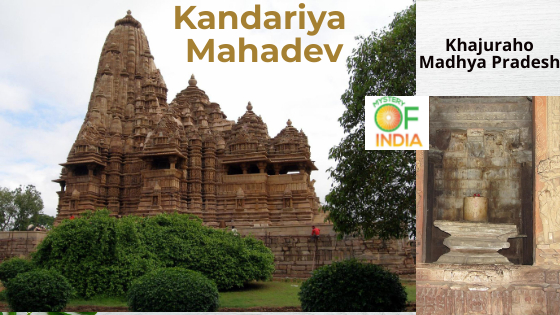
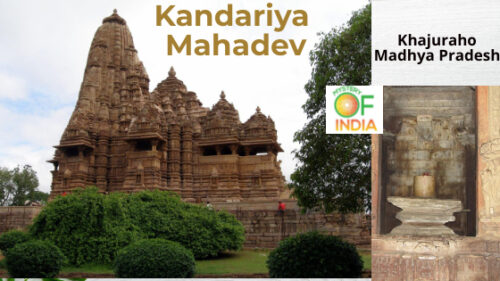
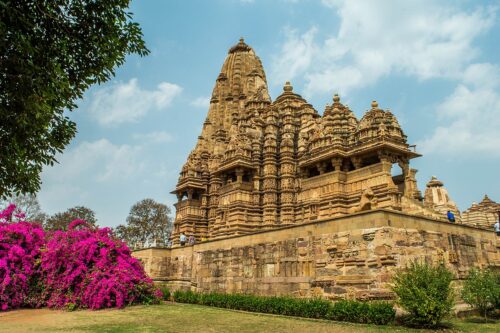
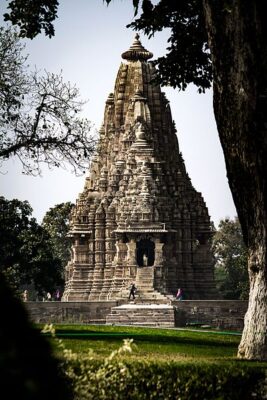
The majestic sculptures of the temples at Khajuraho are widely popular throughout the world now. Each year, tourists from different corners of the world visit Khajuraho to witness the epic architecture and carvings on the Khajuraho temples. One such temple that also has a religious belief here is the Kandariya Mahadeo Temple in Khajuraho. 

Kandariya Mahadeo Temple, Khajuraho
Rajenver, CC BY-SA 3.0 <https://creativecommons.org/licenses/by-sa/3.0>, via Wikimedia Commons
China Crisis, CC BY-SA 3.0 <https://creativecommons.org/licenses/by-sa/3.0>, via Wikimedia Commons

About the Temple

Kandariya Mahadeo Temple is one of the most popular temples of Khajuraho. Not just famous, this temple is also the largest one in the entire vicinity. The temple dates back to ancient history and was earlier known by the name of Shivalaya. 


The ruler of the Chandel Dynasty, King Vidyadhar constructed the temple between the time period of 1025 AD to 1050 AD. The locals have interesting folklore to narrate that describes the reason to construct the Kandariya Mahadeo Temple. 

According to the local folklore, Mahmud Ghaznavi attacked the fort of King Vidyadhar in 1022 AD but he was not able to capture it and returned with his failure. King Vidyadhar considered this victory as the blessing of Lord Shiva and in gratitude decided to construct the Kandariya Mahadeo Temple. 

It was in the year 1986 when UNESCO considered the temple in the list of World Heritage Sites. 


The Architecture of Kandariya Mahadeo Temple

Kandariya Mahadeo Temple has a height of about 31m and it stands on a base that is again 4m high. The temple is also known as the Chaturbhuj temple as the dimension of the temple is based on a quadrilateral shape. The outer part of the temple has 84 parts that are all equal in size. 

Sandstone and granite are used for the construction of the temple and there are several beautiful carvings on the walls that depict different stories. The architecture of the temple is considered one of the epitome of Hindu art even today. Historians mention that the architecture of all the temples in Khajuraho is based on the Nagara style that dates back to the Gupta period. 

Kandariya Mahadeo Temple, Khajuraho
Bhajish Bharathan, CC BY-SA 4.0 <https://creativecommons.org/licenses/by-sa/4.0>, via Wikimedia Commons

The sculptures on the walls of the temple are still a subject of study for many historians. There are carvings of lotus, chariots, animals, human figures, and many others depicting different tales. Some historians have mentioned that the erotic human figures found in some sculptures are either the Tantric symbols or the chapters of Kamasutra. 


The Vastu of Kandariya Mahadeo Temple

Similar to architecture, Kandariya Mahadeo Temple has the most perfect Vastu design too. When you have an aerial view of the temple, you may feel it in the form of a Shiv Linga. 

The main Shiva Linga for prayer is kept in the central part of the temple which is known as the Garbha Griha. Around the Garbha Griha, the parikrama area is kept quite ventilated. The embellished balconies, the ventilated corners, and every part of the temple are perfect examples that Kandariya Mahadeo Temple stands on the best Vastu design of all time. 


Festivities in Kandariya Mahadeo Temple

The temple is open for visits throughout the year. But if you are interested in witnessing the real glory of the temple, you should visit this place by the last week of February. The Khajuraho Dance Festival is organized during that time that lasts till the month of March each year. 

Dancers from different parts of the world arrive at this festival to participate and you will be able to experience a beautiful moment of Indian cultural dance forms. 

Apart from the Dance Festival, Shiv Ratri is another festival that attracts a huge crowd of devotees each year who come here to offer prayer to Lord Shiva. Devotees are allowed to offer sweets and fruits to Lord Shiva in the temple. 

If you are interested in visiting the temple, you should be aware of the times when the temple remains open. 

Morning Visit – 5am – 12noon

Evening Visit – 4pm – 9pm

Prasad Collection – 12noon – 2pm

Also, you have to pay an entry fee and it varies depending on whether you are a domestic or international visitor.

For Domestic Visitor – Rs 10/-

For International Visitor – Rs. 250/- 


Nearby Places to Visit

Once you have paid a visit to Kandariya Mahadeo Temple, you may also wish to visit the nearby attractions as well. Some of the nearby places that you can visit are:

  • Lakshmana Temple
  • The Javari Temple
  • The Chausath Yogini Temple
  • Vishvanath Temple
BSSKrishnaS, CC BY-SA 4.0 <https://creativecommons.org/licenses/by-sa/4.0>, via Wikimedia Commons

Reaching Kandariya Mahadeo Temple

Kandariya Mahadeo Temple in Khajuraho is well-connected to different parts of the country through different means of transport. 


Railways: Mahoba is the nearest railway station that is about 63 km away from Khajuraho. 

Airways: Khajuraho airport is well-connected to major airports of the country now. 

Roadways: There are bus services to Khajuraho from different parts of Madhya Pradesh and Uttar Pradesh. 


Apart from this, one can always take cab services to reach Khajuraho from their locations. 


Significance Of 9 Days Of Chaitra Navratri

Significance Of 9 Days Of Chaitra Navratri

Navratri is one of the most significant and auspicious Hindu festivals. It is a nine-day festival where people worship the different roops of the goddess. Navratri is a festival of prosperity that is celebrated by the Hindu community. It is observed two times every year. One is in March, known as Chaitra Navratri, and the other is in October, known as Sharad Navratri. 

Significance Of 9 Days Of Chaitra Navratri

Temples and other religious sites are decorated for the auspicious festival of Chaitra Navratri for those who wish to visit to offer their prayers. Also, many people refrain from drinking alcohol and eating non-veg food and eating garlic and onion during the nine days. A lot of people also participate in rituals and pujas according to Hindu Astrology.

The History of Chaitra Navratri

The Chaitra Navratri festival is dedicated to the worship of the nine avatars of the goddess Durga. Every day of the festival has a distinct significance in honor of the 9 avatars of Maa Durga. They are Shailputri, Brahmacharini, Chandraghanta, Kushmanda, Skanda Mata, Katyayani, Kaalratri, Mahagauri, and Siddhidatri.

Many also associate this celebration with the birthplace of Lord Ram who is the seventh avatar of the Hindu God Vishnu and the son of King Dasharatha and Queen Kausalya of Ayodhya. The places that are associated with Lord Ram’s birth, as well as his life, are decorated during this time and visitors visit these locations to honor him. 

Chaitra Navratri is also known as Rama Navratri or Rama Navami. The birth date of Lord Rama is usually celebrated on the 9th day of Navratri celebrations. Find out about the importance of the dates and nine-day celebration.

Chaitra Navratri

Day 1: Shailaputri Puja

It is the day that Chaitra Navratri begins, also known as Pratipada. On this day, the devotees worship Goddess Parvati as an incarnation called Shailputri. On this day, many devotees build Kalash at their residences. Kalash is a goddess with a half-moon on her forehead. She also holds the trident in her right hand and opal in her left.

Significance Of 9 Days Of Chaitra Navratri
representational image

Day 2: Brahmacharini Puja

Goddess Brahmacharini embodies Goddess Paravati and is celebrated during the 2nd day of the festival. Devi Brahmacharini is known for her sincere and pure dedication and determination.

Significance Of 9 Days Of Chaitra Navratri
rep image

Day 3: Chandraghanta Puja

On the 3rd day of Chaitra Navratri, Goddess Chandraghanta is revered. She is a tiger riding on her back and has a crescent moon adorning her forehead. Chandraghanta is the name for the moon that is upon her forehead.

representational image

Day 4: Kushmanda Puja

Goddess Kushmanda is revered every fourth day for her earth’s vegetation. This version of goddess Durga is a lion riding on her back and has eight hands, seven deadly weapons, and the Rosary.

representational image mata

Day 5: Skandamata Puja

On the fifth day of the festival, devotees pay homage to goddess Skandamata as a symbol of the determination of motherhood, who is a mother when her child is faced with danger. According to Hindu texts, Maa Skandamata is the mother of Lord Kartikeya. She is a deity with four arms that hold a lotus and two arms. She also holds an esoteric Kamandalu and an unidentified bell in the remaining two.

Day 6: Katyayani Puja

An incarnation from Durga, Goddess Katyayani, is celebrated during the 6th day of the festival. Based on Hindu theology Maa Parvati assumed the Katyayani form to destroy Mahishasura, the evil demon, Mahishasura.

rep image

Day 7: Kalaratri Puja

Goddess Kalaratri is considered the most fierce and most violent manifestation goddess of Durga and is revered every seventh day during Navratri.

Day 8: Mahagauri Puja

It is believed to be the most sacred time of Durga Puja. Mata Mahagauri symbolizes peace, purity, and peace. The devotees of Goddess Durga keep an observance of fasting on Mahashtami to ask for her blessings.

Day 9: Siddhidatri Puja and Ram Navami

Goddess Siddhidatri worships on the last day, i.e., the ninth day of Navratri. Siddhdhdatri Siddhi refers to Medi Dhatri refers to giving. Kanya puja also celebrated every Ram Navami. In the beginning, the devotees clean the feet of nine girls and then serve them food that is called Kanya-prasadam.


Kalmadhav, Amarkantak – one of the shaktipeeths in MP

Kalmadhav, Amarkantak

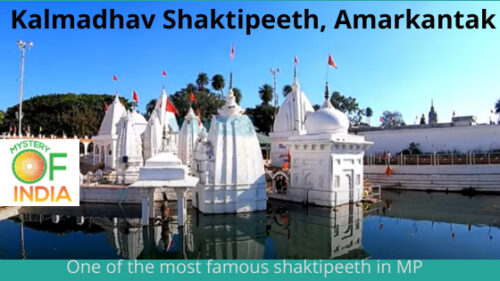
Kalmadhav Temple is one of the Shaktipeeths in India where the incised body parts of Devi Sati fell. It is said that there are as many as 51 Shaktipeeths in all over India and Kalmadhav Temple in Amarkantak is also one of them. 

The Origin of Kalmadhav Temple

Kalmadhav temple mandir , Amarkantak

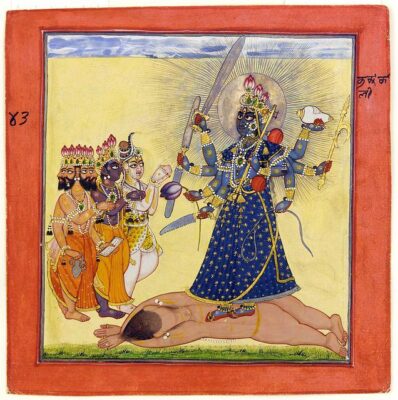
The story of Shaktipeeth is quite famous in Hindu culture and sculptures. Devi Sati got married to Lord Shiva against the will of her Father King Daksha. One day King Daksha organized a holy festivity and invited everyone except Lord Shiva. Devi Sati visited her father to make him understand his mistake but in return, King Daksha insulted Lord Shiva. Devi Sati could not stand the insult of her husband and entered the fire to end her life.

When Lord Shiva got this news, he ended the life of Daksh and started mourning carrying the burnt body of Sati in her arms. This mourning was creating a situation of catastrophe on Earth. In order to bring back everything in control, Lord Vishnu incised the body of Sati using his Sudarshan Chakra. It is said that different parts of the incised body fell on different parts of the Earth where Shaktipeeths were constructed. 

Kalmadhav in Amarkantak is the place where the left buttock of Devi Sati fell. Talking about the construction of the Kalmadhav Temple, it is said that Suryavanshi Samrat Mandhata constructed the temple here almost 6000 years ago. 

The Deity of Kamaldhav Temple

Devi Kali is prayed here by the name of Kalmadhava. Also, Lord Shiva is prayed in the temple who is in the form of Asitananda. 

The Architecture and Surrounding of Kamaldhav Temple

The architecture of this ancient temple is extremely beautiful as it is made up of completely white stones. The devotees have to climb 100 steps to reach up to the actual temple. Thus, the temple is at a height and from there, one can have a mesmerizing view of the surrounding. 

Kamaldhav Temple is surrounded by a number of ponds and the Son river also flows nearby. Also, Amarkantak is the spot from where the River Narmada starts its journey that again offers a beautiful view. 

Apart from the water bodies, one can also have a view of the merging of two mountains here and these are the Satpura and Vindhya. 

When to Visit Kamaldhav Temple?

Kamaldhav Temple is located within the lush greenery of Amarkantak and has charming weather throughout the year. Hence, devotees, as well as nature lovers, can visit this place any time of the year.

But devotees believe that paying a visit to the temple during certain festivals makes their journey even more pious. Some of the festivals during which you can actually visit the temple are:

  • Sharad Purnima,
  • Ram Navami,
  • Somvati Amavasya,
  • Navratri,
  • Deepawali, and many others. 

Navratri is the biggest festival that is celebrated twice a year and special arrangements are made in the temple. There are special rituals that are carried on such as offering homemade sweets and other ingredients to the Devi. 

Apart from Navratri, Shivratri is another major festival that is celebrated with great pomp show in the temple, praying Lord Shiva. Devotees offer milk, honey, and other elements that are known to be the favorites of Lord Shiva. 

Other Nearby Places to Visit

Once you have paid your visit to the Kamaldhav Temple, there are also many other attractive spots nearby that you can pay a visit to. Some of the other places where you can visit are:

  • Ma Narmada Temple
  • Shri Amareshwar Mahadev Mandir
  • Pataleshwar Mahadev Mandir
  • Gayatri Sarovar
  • Doodh Dhara Waterfall
  • Kapildhara Waterfall
  • Kabir Chabutara
  • Gayatri Shakti Peeth’

Apart from these many places, you can also take a glance at many ancient temples nearby that were constructed during the Kalachuri period. 

Reaching Kalmadhav Temple, Amarkantak

There is no such direct access to Amarkantak apart from roadways. Once you have reached the nearest railway station or the nearest airport, you can take roadways to reach Amarkantak. There are several buses available today that can drop you at Amarkantak or you can also take cab services as per your comfort. 

Railways: The nearest railway station is Pendra from where Amarkantak is around 38 km. If you are taking a cab service, it should take you around an hour to reach Amarkantak from Pendra railway station. 

Airways: The nearest airports to Amarkantak are Jabalpur and Raipur. While you may not get direct flights for Jabalpur from a number of cities, reaching Raipur airport is much more convenient in such a case. Amarkantak is 228 km away from Raipur while 222 km away from Jabalpur. 

Â