
Deepawali -Significance of Shri Lakshmi Puja – Day 3

Significance of Mata Lakshmi Puja – Deepawali

Lakshmi Puja is one of the most popular festivals in India, celebrated by Hindus all over the country. It’s celebrated to pray for prosperity and good fortune, so that people may have a prosperous life. But what exactly is Lakshmi Puja? How is it celebrated? Find all answers in this blog post!

What exactly is Goddess Lakshmi Puja?

Lakshmi Puja is a Hindu festival that is celebrated on the 15th day of Kartik. This year, it falls on October 24th. Lakshmi is the goddess of riches, auspiciousness, prosperity, and good fortune. During this puja, Hindus also honor Ganesha, Kubera, and Saraswati.

This festival marks a new beginning for Goddess followers. On Lakshmi Puja’s eve, the goddess roams the land. Devotees burn earthen lamps and leave doors and windows open for her. The next morning, they perform puja to welcome her into their homes. After the puja ceremony, people offer food to Lakshmi and then share it with others as prasadam.

This festival is a time of joy and giving thanks for all that we have been blessed with. It is also an opportunity to ask for Lakshmi’s blessings in our lives.

Bhog, which can also be translated as food, is what Goddess Lakshmi is usually given on this day. In addition to Khichuri, Bhaja, which is a bunch of different kinds of fried vegetables, is given to the Goddess as an offering. “Bhog” is also referred to as dishes made with peas and cauliflower. Laddoos made with til and laddoos made with coconut are essential. All of the food that the women make for the Lakshmi Pooja is served on banana leaves, clay pots, or metal plates and bowls.

The legend behind Shri Lakshmi Puja

The story of Lakshmi puja begins with the sage Durvasa and Lord Indra. Durvasa was a great sage who had the power to curse anyone who displeased him. One day, he decided to honor Indra, the king of the gods, with a garland. However, when Indra received the garland, he disrespectfully put it on Airavat, his elephant. Airavat got irritated and tossed the garland in anger. When Durvasa saw what happened, he cursed Indra for this deed. He said that as Indra had mistreated the garland, his entire empire would be destroyed.

Sure enough, evil demons soon invaded Amravati, the city of the gods. The deities’ qualities turned against them, and they were unable to fight back effectively. Finally, Lord Vishnu appeared and healed Indra. He told Indra that the only way to defeat the demons was to churn the ocean.

So, the gods and demons churned the ocean until finally, Goddess Lakshmi appeared seated on a lotus flower. She chose Lord Vishnu as her master and joined forces with the gods against their common enemies –the demons. With Goddess Lakshmi’s help, they were able to defeat them easily and restored Amravati to its former glory.

By making friends with the gods, goddess Lakshmi made it possible for them to do good things, act in a kind and helpful way, get their strength back, and made them feel calm. Because of this, the Goddess Lakshmi is in charge of both material and mental wealth.

Why do you need to celebrate Mata Lakshmi Puja?

Hindus around the world celebrate Lakshmi Puja during the five-day festival of Deepawali. It is one of the year’s most important Hindu events. On this day, worshippers pray to Goddess Lakshmi for the forgiveness of past misdeeds and for blessings in the future. Families gather together to chant to the goddess and to bless their new ledgers and accountancy books.

For Hindus, Deepawali and Lakshmi Puja reset them spiritually. It is a profound experience that pulls people onward toward righteousness. The puja renews Hindu hope and faith in the divine. As worshipers adore Goddess Lakshmi, they are filled with a sense of purpose and direction.

The five-day festival of Deepawali is celebrated with much pomp and ceremony across India. Long-distance relatives visit home for the occasion, and neighbors and communities share sweets/gifts with each other. For Hindus, Deepawali is an opportunity to come together as a community and to strengthen social bonds.

How to celebrate Lakshmi Puja?

1. Prepare sweets at home

To celebrate Lakshmi Puja, you can start by making some traditional Indian sweets. The Internet has several easy Indian sweets recipes that you can follow. For example, kheer is a traditional Indian dessert made with milk, rice, sugar, and almonds. You can also recreate a typical Indian kitchen for Shri Lakshmi Puja. This involves setting up an altar with a picture or statue of Goddess Lakshmi and lighting candles and incense.

2. Perform a deep cleaning of your home

One of the most important parts of Lakshmi Puja is the deep cleaning that is done beforehand. Every nook and cranny must be cleaned so that Lakshmi will be pleased and bestow her blessings upon the household. This means taking everything apart – removing carpets, taking down chandeliers, unplugging electronics, and even defrosting the fridge! – and giving it a good scrub. Make sure to use clean cloths or disposable wipes, and don’t forget to wear rubber gloves to protect your hands.

3. Light a diya

The lamp made of earth, called a “Diya,” is more than just a decoration. It shows that a place is good and clean and that evil has been removed from it. Since Lakshmi Puja takes place on the day of the new moon, which is also called “Amavasya,” the diya light is used to compensate for the absence of star light. By kindling a lamp with its flame, this Lakshmi Puja will dispel the gloom that has settled over your life.

Conclusion

In conclusion, Lakshmi Puja is an important festival that celebrates the goddess of wealth and prosperity. It has been celebrated for centuries, and will likely continue to be celebrated for many more.

This holiday gives us a chance to reflect on our values as well as our desires for the future. As you go through the day, take a moment to think about what you would like to see happen in your life over the next year, and set aside a time at night during which you can express those desires to Lakshmi with a candlelit puja ceremony.

Significance of Naraka Chaturdashi


Story Mythology behind Naraka Chaturdashi

Significance of Naraka Chaturdashi

The ancient stories of Indian history contain the key to comprehending the significance of the Naraka Chaturdashi festival. A celebration commemorating Mahakali is conducted on the day known as Naraka Chaturdashi. This event is observed on the 14th day of the Ashwin month in the Indian calendar. Every year, this ceremony is held in an effort to purge people’s lives of wickedness and sloth. It is presently practiced in order to purify oneself of all misdeeds and to save one’s soul from being doomed to hell.

Let us know more about this festival.

The story behind Naraka Chaturdashi

The mythology behind Naraka Chaturdashi has its roots in Hinduism. According to the legend, Narakasura was born when Vishnu incarnated as Varaha (boar). At that time, Goddess Bhudevi had a demon called Bhaumasura who was created from a drop of her sweat. Vishnu then gifted Bhudevi’s demon with a weapon called Vaishnavastra which caused Naraka to start tormenting both gods and humans alike with it.

Not only did he take away Indra’s white umbrella and Manishikhara but he also stole Aditi’s earrings. As a result of this, Indra felt powerless and ashamed. He went to Lord Krishna for help. Lord Krishna decided to wage a war against Murasura. However, upon Murasura‘s death, his seven sons with Peethasura  as their general fought against Krishna. All of them lost the war and were killed.

In the end, Narakasura came to battle Krishna, which eventually got killed as well. After his death, Bhudevi came back to her original form and she promptly gave all the valuables and kingdoms that rightfully belonged to their owners back; just like how Indra got his umbrella and Manishikhara back while Aditi got her earrings returned   Consequently, with Naraka gone along with all of his familiars including devils, demons and evil spirits; everyone became pleased.

This can be seen in how people react even today whenever an evildoer is destroyed or killed; there is always a sense of relief among good people.

Before his death, Narakasura repented for his actions and asked that people commemorate him once a year on Chaturdashi Day.

On that day, Hindus burst crackers and light lamps in honor of Narakasura. It is said that he enjoys watching the fireworks from the underworld and is pleased when people remember him with kindness. This wish was granted and from there comes the tradition of bursting crackers.

How is Naraka Chaturdashi celebrated in different parts of India?

Goa

The most important part of Narak Chaturdashi celebrations in Goa is the burning of effigies made of paper and straw. These effigies represent Narkasura and his followers, and their destruction signifies the triumph of good over evil. Every year, elaborate effigies are designed and built by artists across Goa.

An interesting tradition associated with Narak Chaturdashi is that of crushing bitter kareet fruits under one’s feet. This act is symbolic of stomping out all negativity from one’s life and welcoming positivity and goodness. Candles are also lit on this occasion as a sign of hope and prosperity.

Narak Chaturdashi would not be complete without its traditional feast or “sopari”. This meal typically consists of items like pumpkin curry, beans curry, sweet potato pudding, coconut rice cake etc., which are all prepared using seasonal produce specific to this time of year. The feast is followed by a tasty breakfast which might include items like nevri (sweet dumplings), puran poli (flatbread stuffed with sweetened chana dal) or halwa (semolina pudding).

West Bengal

On the eve of Naraka Chaturdashi, also known as Bhoot Chaturdashi, families in West Bengal celebrate by lighting 14 diyas (lamps) around their house. It is believed that on this night, the dead visit their loved ones on Earth. The diyas are meant to guide a family’s 14 predecessors’ home and ward off any bad spirits.

To further create a festive atmosphere and ward off any evil spirits, people often spend the evening singing bhajans (religious songs) and sharing stories. homes and temples are decorated with lights and flowers, and everyone is dressed in their best clothes. The day is spent in remembrance of those who have passed away and in prayer for their souls.

How to celebrate Naraka Chaturdashi?

1. Exchange gifts or sweets

Naraka Chaturdashi is a festival that celebrates the triumph of good over evil. It is also about spreading joy and happiness. People give gifts or make sweets to celebrate this special day.

One of the most popular sweet dishes during Naraka Chaturdashi is Patishapta. It is a Bengali dessert made with rice flour, milk, and sugar. The dish is usually filled with caramelized coconut filling. Pancakes are also a common treat during this festive season.

2. Wear new or fresh clothes

On Naraka Chaturdashi, Hindus rise early and rub scented oil before bath. The oil is scented with fresh flowers, and the bath is meant to purify the body and soul. After the bath, males put on clean or new clothes. Then, the group shares a big breakfast.

Throughout the day, family and friends will visit each other’s homes to exchange gifts and sweets. At night, everyone comes together for a special puja, or prayer ceremony. The puja includes lighting candles and incense, singing devotional songs, and reading from religious texts.

You may assist your Indian friends rejoice by doing tiny, heartfelt things. For example, you could offer to help prepare food for the feast or decorate one of the puja altars.

3. Wish peace and happiness!

On this day, people remember that good won over evil. This is a feeling that a lot of people share. Even if you are not Hindu or Indian, wishing others happiness and prosperity on this day will be noticed and appreciated by your friends and acquaintances who celebrate this holiday in a spiritual way.

Conclusion

In conclusion, Naraka Chaturdashi is a very special day for the people of India. It is celebrated with great pomp and show. The festival of Naraka Chaturdashi signifies the victory of good over evil. The victory of Lord Krishna over evil forces. This day is also known as Dussehra, Vijayadashami, Dussera or Dashain in different parts of India.

Deepawali Day 1: Dhanteras – Significance,

Everything you need to know about Dhanteras

Dhanteras is one of the most important festivals in India, and it’s celebrated on the thirteenth day of the month of Kartik. It’s a day when people buy new things for their homes and businesses. Dhanteras is also about giving thanks for all that we have and expressing our sincere gratitude to god.

Let us know about this festival in detail.

The story behind Dhanteras

The story of Dhanteras is a popular one in the Hindu context. It is said that once there was a great king named Hima. He was a just and kind ruler who was loved by his people. However, tragedy struck when the king’s son was born.

An astrologer prophesied that the prince would be killed by a snake bite on his 16th birthday. The king was devastated but he did not give up hope. He consulted with a brilliant astrologer who recommended that the prince marry a wealthy girl in order to save his life.

As the prince’s 16th birthday approached, the king began to feel anxious. However, his wife was witty and crafty, and she saved him. She heaped her riches in front of the door to prevent the snake’s entry and urged the prince to stay awake with her.

Lord Yam, the god of death, came disguised as a snake and tried to enter the castle on that night, but he could not pass through because of the dazzle of the ornaments, and he also paused to listen to the queen’s melodious singing. Eventually, Lord Yam had to give up trying to claim the prince’s life and he left empty-handed. The young prince lived because of his smart wife who used her wit and resources to save him from certain death.

Significance of Dhanteras

Dhanteras is one of the most popular festivals in India. It is celebrated on the 13th day of the Hindu month of Ashvin, which falls in October or November. The word ‘Dhan’ means wealth and ‘teras’ refers to the 13th day.

Dhanteras marks the beginning of the five-day Diwali festival. On this day, Hindus worship Lakshmi, the goddess of wealth, prosperity, and good fortune. It is believed that worshipping Lakshmi on Dhanteras brings good luck and prosperity.

People clean their homes and offices and decorate them with lights and diyas (oil lamps) on Dhanteras. Families buy new clothes, gold and silver jewelry, kitchen utensils, and other items to mark the occasion.

The festival of Dhanteras holds great significance for businesses as it is considered an auspicious day to start new ventures. Many people buy cars, bikes, or other expensive items on this day.

In recent years, Dhanteras has also become a major shopping festival with many retailers offering heavy discounts on their products. This has made it one of the busiest shopping days in India.

3 Things to buy on Dhanteras

1. Gold and silver

On this day, it is considered auspicious to buy gold and silver.

There are many reasons why one should purchase these precious metals on Dhanteras. First and foremost, they are a popular choice among those looking to invest their money.

Gold and silver have always been valuable commodities, and their worth is only expected to increase in the years to come. Not only will investing in them bring you financial security, but it may also bring you good luck and fortune.

Another reason to buy gold and silver on Dhanteras is for the purpose of gift-giving. These precious metals make for beautiful gifts that can be passed down from generation to generation. They are also a symbol of wealth and status, making them an impressive present for any occasion.

2. Utensils

Dhanteras is an auspicious day for Hindus, and it is considered to be the best day to buy utensils. On this day, you can buy silver, copper, and brass kitchenware. It is believed that these metals are auspicious and bring good luck. Avoid steel and iron cookware on this day as they are considered inauspicious. Hindus don’t bring empty utensils on Dhanteras as it is believed that they will bring bad luck.

3. Broom

Are you looking for a way to improve your financial luck? If so, you may want to consider buying a broom on Dhanteras.

According to Hindu tradition, you should buy brooms during Dhanteras. Buying a broom on this day is supposed to relieve home-related financial troubles.

There are several reasons why buying a broom on Dhanteras can be beneficial. For one thing, it is considered lucky to purchase a broom on this day.

Additionally, sweeping away dirt and debris is seen as metaphorically clearing away negative energy. This can create positive vibes in your home and attract good luck.

What is the significance of 13 diyas that should be lit on Dhanteras?

On Dhanteras, 13 old or used earthen diyas should be lit and placed facing south near trash outside the home to keep loved ones from dying. This must be done with everyone being present at the time of lighting the diyas.

  1. The first diya protects the family from deaths that come too soon.
  2. On the evening of Diwali, you must light a second diya with ghee and place it in front of your puja mandir or another place set aside for worship. If you do this, good things will happen to you.
  3. The third diya is supposed to be lit in front of Lakshmi to ask for her blessings of good luck, wealth, and plenty.
  4. The fourth diya is put up in front of the tulsi plant. Its goal is to bring peace and happiness into the home.
  5. You should put up a fifth diya in front of the main entrance to your home. It means that you want happiness, love, good luck, and pleasure to come into your home.
  6. The sixth diya, which should be lit with mustard oil, is meant to be put under a peepal tree, which is thought to be a lucky place.
  7. The seventh diya must be lit in any temple that is a reasonable distance from your home.
  8. Next to the trash can, the eighth diya needs to be lit.
  9. Place the ninth diya outside the bathroom to make sure that positive energy keeps flowing freely through the house.
  10. It’s important to light the tenth diya at the edge of the roof, which stands for safety.
  11. Putting the eleventh diya in the window as a decoration is a good way to spread holiday cheer.
  12. Set up the twelveth diya on the roof or on the patio to get into the holiday spirit.
  13. By lighting the thirteenth diya, you can make the corner of your house look nicer.


Mysterious Group of Temples at Bateshwar

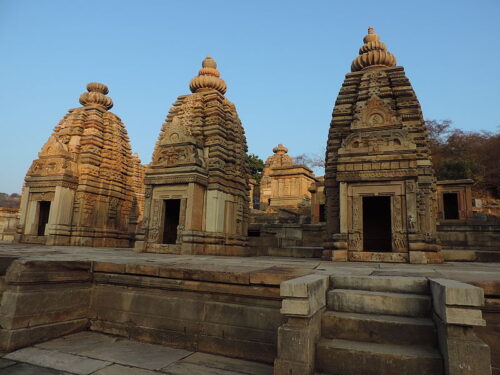
Temples at Bateshwar

An interesting thing about Madhya Pradesh is that you will discover a number of mysterious spots with fascinating history here. One such spot is the Morena district which is located at a distance of about 34 km from Gwalior. This place is home to a huge collection of very old temples that are collectively known as Temples of Bateshwar. 

A strange fact about these temples is that they were discovered just a few years ago while the construction of these temples dates to the ancient years. 

Temples at Bateshwar
Vikramjit.rooprai, CC BY-SA 4.0 , via Wikimedia Commons

Discovery of the Temples of Bateshwar

To understand the discovery of these temples, we have to time travel to the year 2005. It was in this year when the Archaeological Survey of India started its expedition in this area and found a group of ancient temples. These temples were in damaged condition and required extreme restoration work. 

It was under the archeologist KK Mohammad that the great restoration work of the temples started. The temples were made up of sandstone and the team restored these temples stone by stone to create a miracle that stands in front of us. 

In total there are 200 sandstone-made temples and this whole group of temples collectively is known as the Temples of Bateshwar. 

So, how did this huge collection of temples vanish all of a sudden before 2005?

During the expedition and research, archeologists found out that these temples are quite ancient and it was during the 14th Century when due to an earthquake, these temples not just got destroyed but also a major part of it went underground. 

The dacoits of Chambal found this area to be a serene place and a perfect spot for their hiding due to the devastating condition. Hence, it was only after the escape of the dacoits from this spot that the archaeologists started working on these temples in 2005. 

Temples at Bateshwar
Temples at Bateshwar Varun Shiv Kapur from New Delhi, India , CC BY 2.0 , via Wikimedia Commons

History of the Temples of Bateshwar

The actual construction date of these temples is still not confirmed but as per the researchers, it should be somewhere between the 9th and the 11th Century when these temples may have got constructed during the reign of the Gujar Pratihara Dynasty. 

Among almost 200 temples or more, the largest one is devoted to Lord Shiva and the locals call this temple by the name of Bhuteshwar Temple. Apart from Lord Shiva, there are also many other temples that are devoted to the other two eminent deities of the Hindu culture and these are Lord Vishnu and Devi Shakti. 

The temples are known to have different elements in them that denote different themes or religious meanings. Researchers are able to decode only a few of them till now. According to such research, there are some temples representing the Navagraha while there are some other temples that showcase the Dashavatar or the 10 incarnations of Lord Vishnu. Apart from these, there are also some temples that showcase Saptamatrikas, a symbol of Shakti in the Hindu religion. 

The diversity of themes shown in different temples found here also offered a hint to the researchers that maybe this area was a spot for religious art and architecture during the 10th century or so. 


The View at the Temples of Bateshwar

This area is not just a spot for architectural excavations and beauty. Also, this place has become a tourist attraction in Madhya Pradesh. Surrounded by forests, it is a serene spot that is perfect for picnics and even having a look at the ancient temples of India. If you are planning to visit the Temples of Bateshwar, make sure to have ample time in hand because you will not even realize how you have spent a good chunk of your time while witnessing the temples and the surroundings here. 


How to Reach the Temples of Bateshwar? 

Though this area is quite serene in nature, it is connected with different parts of Madhya Pradesh and India through different modes of transport. 


Airways: The nearest airport to Morena, where these temples are located, is Gwalior. You have to travel just 30 km by road from Gwalior airport to reach Morena to visit these temples. 


Railways: You will find a railway station in Morena that connects to different other parts of Madhya Pradesh such as Gwalior and Bhind.


Roadways: Today, there are regular bus services to Morena from other districts of Madhya Pradesh. Also, you can travel to this place easily using your own car. 

Parsvanath Temple, Khajuraho

Parsvanath Temple, Khajuraho


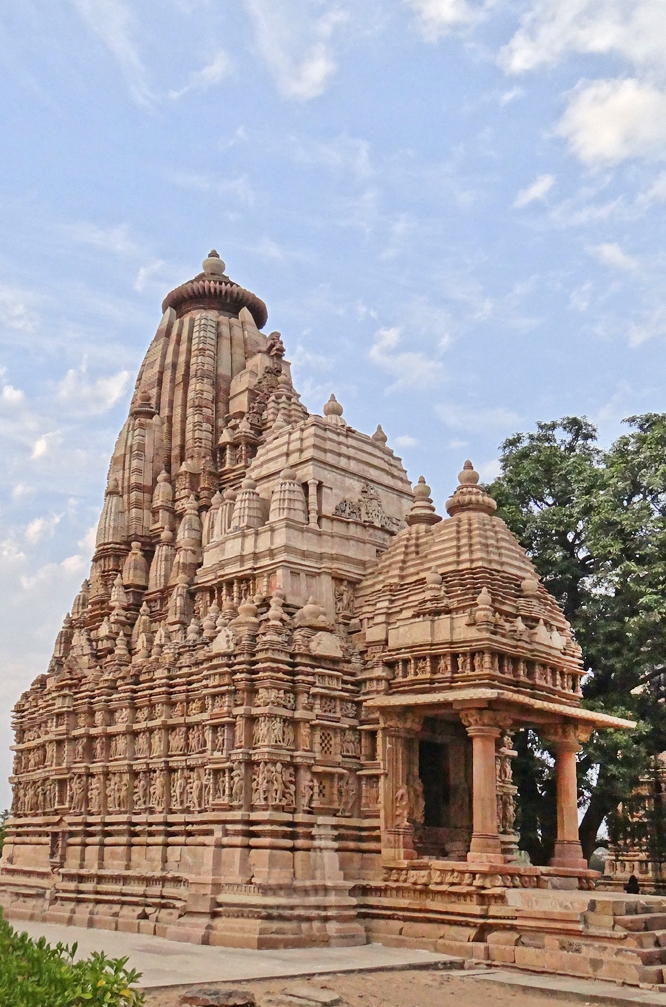
Khajuraho is one of the most popular tourist destinations of Madhya Pradesh that is known for its beautiful temples. These temples were constructed during the Chandela Dynasty and all these temples are divided into Eastern, Western, and Southern temples. 

When you explore the Eastern temples, you will come across some of the most attractive monuments and Parsvanath Temple is also one of them. 

Parsvanath Temple, Khajuraho
Parsvanath Temple, Khajuraho. Jean-Pierre Dalbéra from Paris, France, CC BY 2.0 <https://creativecommons.org/licenses/by/2.0>, via Wikimedia Commons

The history behind Parsvanath Temple

Parsvanath Temple is not just the oldest but also the largest temple among all the Eastern Temples in Khajuraho. It is said that the temple is dedicated to Lord Parsvanath who was the 23rd Tirthankara of Jains. 

There have been several inscriptions that were found in the temple through which the archaeologists found some details and history of the temple. According to one such inscription, this temple was constructed during the reign of King Dhanga in the 10th Century. 

There are also many inscriptions found that mention how the Jain family contributed towards the construction of the temple while a court man of the king bestowed gifts towards the temple.  Also, it was found that it was in the 19th Century, that a Jain family took the responsibility for the repair work of the temple. 

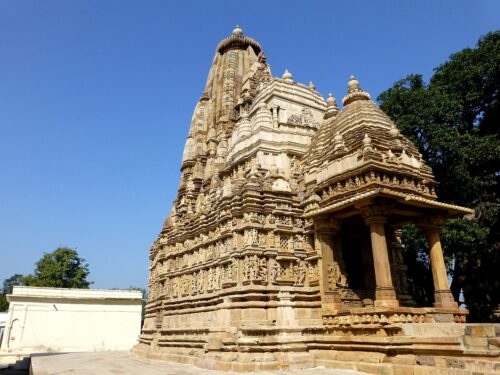
Parshwanath Temple Eastern Group of Temples Khajuraho India
Hiroki Ogawa, CC BY 3.0 <https://creativecommons.org/licenses/by/3.0>, via Wikimedia Commons

Similarly, archeologists found another important fact about the temple that initially the temple was getting constructed for Lord Adinath who is the first Tirthankara in Jainism. But again due to unknown reasons, finally Lord Parsvanath became the main deity of the temple and it got its name, Parsvanath Temple. But you will still find the shrine of Lord Adinath which is located near the main temple. 


The architecture of Parsvanath Temple

Similar to other temples of Khajuraho, one can notice beautiful carvings on the Parsvanath Temple also. You can notice carvings of motifs as well as several religious symbols on the interior walls of the temple. On the other hand, the outer walls of the temple hold carvings of animals as well as human figures. 

Though it is a Hindu temple with the Shikhara style as the dominant one, the architecture of the temple also consists of Buddhist and Islamic styles. 

Talking about the floorplan, the temple has a big porch at the entrance after which you will see the hall or the mandapa that is followed by Sanctorum. If you have visited the Lakshmana Temple, you will find the floorplan of Parsvanath Temple a bit similar. 

Talking about the sculptures found on the walls of the temple, all of them showcase different themes. You can notice the sculptures of different Hindu deities such as Lord Vishnu, Devi Lakshmi, and others. Also, you can find other thematic sculptures such as a female applying makeup, and so on. 

It is due to the architectural beauty and the old age of this temple that The Archaeological Survey of India has considered Parsvanath Temple in their list of Monuments of National Importance. 


When to Visit Parsvanath Temple?

There is no such specific time of the month when you should visit Parsvanath Temple. But keeping a note of the extreme summer that you may find in Khajuraho, it is better to avoid the summer seasons. According to some travel experts, September to March is the perfect time period to visit Parsvanath Temple. 

Entry to the temple is free. If you wish to explore the temple in detail and wish to witness the architectural beauty in-depth, you should spend at least 1 hour in this temple. While you are visiting the temple, you should keep a note of the opening and closing times of the temple. 

Opening Time – 8 am

Closing Time – 6 pm

How to Reach Parsvanath Temple?

Parsvanath Temple, located in Khajuraho is quite easily accessible from different parts of the country through different modes of transport. 

Airways: Khajuraho has its own airport, Khajuraho airport. The distance from Khajuraho airport to the temple area is just about 2 km that you can easily cover it by a cab from the airport. 

Railways: Khajuraho is also connected to other parts of the country through a nearby railway station, Rajnagar which is just 3 km away. 

Roadways: Khajuraho has easy accessibility to the National Highway that connects Khajuraho to different cities of Madhya Pradesh. There are different bus services that you can get or you can even drive your car to reach Khajuraho directly. 


Matangeshwar Temple, Khajuraho

Matangeshwar Temple, Khajuraho


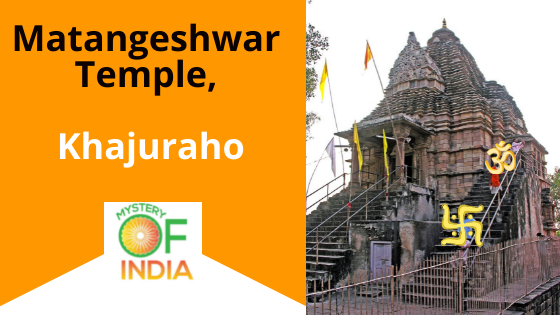
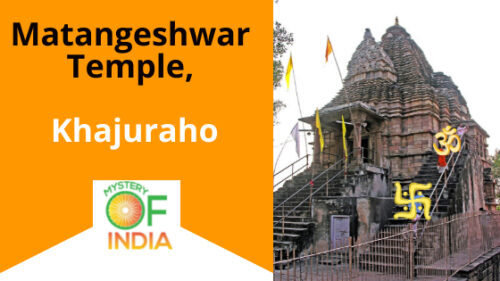
Khajuraho in Madhya Pradesh is widely known for some of the most beautiful architectural monuments. The temples at Khajuraho also have some such temples that are considered extremely pious for varied reasons. One such temple is Matangeshwar Temple. Even at times, the city Khajuraho is also known by the name, the city of Matangeshwar. The temple is situated among the Southern temples of Khajuraho and just beside Lakshmana Temple. 


History of Matangeshwar Temple

The Matangeshwar Temple is considered one of the most pious temples of Khajuraho for a number of reasons. The very first reason is that it is constructed in the respect of sage Matang, who is considered one of the incarnations of Lord Shiva. Thus, inspired by the name Matang, this temple is provided the name Matangeshwar. 

Matangeshwar Temple is also called the name of Mrityunjaya Mahadeo Temple because Lord Shiva is also known to be the Hindu god who has control over death. 

Matangeshwar Temple, Khajuraho
Matangeshwar Temple, Khajuraho. Image derived from Dennis Jarvis from Halifax, Canada, CC BY-SA 2.0 <https://creativecommons.org/licenses/by-sa/2.0>, via Wikimedia Commons

Construction and Architecture of Matangeshwar Temple

This ancient temple was constructed in the 10th century AD by Chandra Dev, the ruler of the Chandela dynasty. Not only is Matangeshwar Temple one of the oldest temples in Madhya Pradesh but also it is the only temple left out from the Chandela era where even today devotees visit for the purpose of praying. 

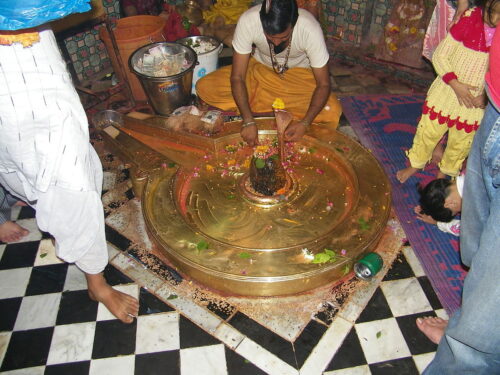
Matangeshwar Temple is not just known for its ancient history but also for its architecture and unique features. The temple has a Shiv Linga that is made up of yellow limestone and has a height of about 8 feet. Apart from the Shiv Linga, the temple also has a structure of Lord Ganesha, a goddess, and a few other deities. 

The architecture of Matangeshwar Temple is much different from the other temples in Khajuraho. While you will find carvings on the walls of other temples of Khajuraho, there is no such carvings on the walls of Matangeshwar Temple. But as you enter the temple, you will find some carving work on the ceiling of the temple. 

Also, there is an open-air exhibition hall towards the south of the temple where you can find several structures of different deities. It is due to the ancient construction and importance of the temple that Matangeshwar Temple has been considered a heritage site by UNESCO. 

Mamleshwar Jyotirlinga Khajuraho
Mamleshwar Jyotirlinga Khajuraho ShivShankar.in, CC BY-SA 3.0 <https://creativecommons.org/licenses/by-sa/3.0>, via Wikimedia Commons

Festivities at Matangeshwar Temple

Usually, the Brahmins at the temple follow the traditional ritual of bathing the Shiva Linga with milk, honey, and water every day morning and then offering flowers and other elements that are known to be favourites of Lord Shiva. 

Devotees arriving at the temple also are allowed to offer milk and sweets on the Shiv Linga. 

While the traditional ritual is followed every single day followed by morning arti and then evening arti, there are special festivities and arrangements on special days of the year such as Holi, Diwali, and others. The enthusiasm reaches an ultimate level during Shiv Ratri, the day when it is said that Lord Shiva got married to Devi Parvati. On this day, the deity is decorated in the form of a bridegroom and devotees come up to get a glance. 

On the occasion of Shiv Ratri, also there is a fair organized every year that lasts for almost 10 days at a stretch. A large number of traders, folk artists, and others participate in this fair that is visited by devotees from different parts of the country. 


Entry at Matangeshwar Temple

The temple is open only for 12 hours and you need to be aware of the timings in order to complete your puja at the temple. 


Opening Time – 6 am

Closing Time – 6 pm


There is a fee of Rs. 10/- for entering the temple for Indians while the entry fee is higher for international visitors. 


Photography or videography is not allowed inside the temple and the management is quite strict regarding this rule. 


Reaching Matangeshwar Temple

There are a number of ways through which you can reach Matangeshwar Temple in Khajuraho with ease. 

Airways – Khajuraho airport is just 2 km away from the location of the temple that you can cover by getting a cab. 

Railways – Similar to the airport, the nearest railway station Rajnagar is also at a distance of just 3 km. 

Roadways – Khajuraho is also quite conveniently accessible through roadways such as regular bus services from various nearby spots such as Koda. 

Â