
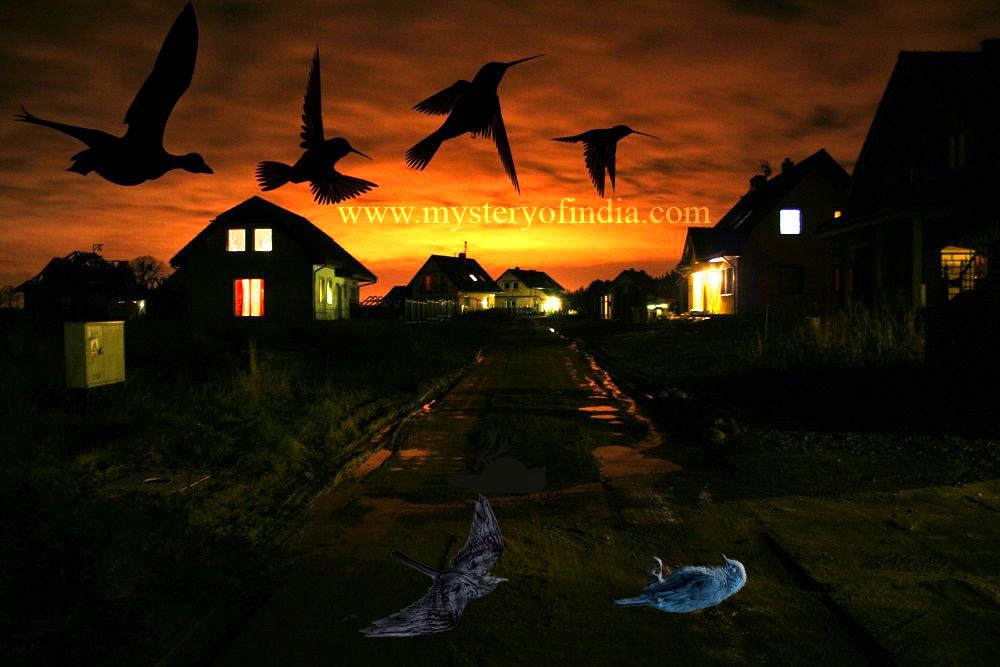
Mystery of Bird Suicide at Jatinga, India

Jatinga is a village on a ridge, is located in Dima Hasao District, Assam State in India. It is 330 km south of Guwahati. The village is inhabited by about 2,500 Khasi-pnar tribal people and few Dimasa people. This small Village is famous for the phenomenon of birds “committing suicide”. Over the last 100 years, thousands of birds have flown to their death over a small strip of land in Jatinga, India.

The Bird Suicide Mystery is a unique phenomenon that occurs at Jatinga between September and November each year. During these late monsoon months, several migratory and local birds commit mass suicide at the village. Just after sunset, between 7 and 10 pm, hundreds of birds descend from the sky, plummeting to their deaths by crashing into buildings and trees. Since birds aren’t known to be suicidal, the phenomenon has baffled villagers, visitors and scientists alike.

Many ornithologists have dedicated their time in research of this unnatural phenomenon. They have found that there are many species of local birds such as Kingfishers, Pond Heron, Black Bittern, Tiger Bittern, etc. are subjected to such strange behaviour. Studies have also revealed that the birds commit suicide in Jatinga during the late monsoon as most of the water bodies in Assam are flooded by that time. The birds lose their natural habitat. So they appear to be migrating to other places, and Jatinga is in their migratory path. But it isn’t clear why the birds fly at night, or why they get voluntarily trapped at the same place every year.

In 1988 when Assam faced severe floods maximum number of bird suicides was reported in Jatinga. Some of the long distance migratory birds are not affected by this phenomenon.

Curiously, most of the doomed birds do not attempt to fly away after they land near the lights. They look dazed and disheveled, perhaps due to the trauma of the whole shocking experience. Such birds fall easy prey to the villagers. Some of the birds hovering around the light sources are brought down by a vigorous swing of the bamboo poles. Catapults are also used to bring down the birds in flight as well as those perching on the trees and bushes near the light sources. However, contrary to the popular belief, birds do not commit suicide. Under circumstances not yet fully explained, these birds get caught in the fog and wind, get disoriented and seek solace of the light sources put out by the villagers. They hit against trees or other objects and get injured in their flight towards the light source. The villagers hit the hovering birds with bamboo poles or catapults to bring them down.

Studies also show that the birds come in only from the North and land only on a well-defined strip in the village – that’s 1.5 km long and 200 meters wide. Lights placed along the southern side of the village have failed to attract any birds.

“It is not suicide, to be precise,” said Anwaruddin Choudhury, a well-known ornithologist in Assam. “But the fact remains that birds are attracted by light and fly towards any object with a light source. This phenomenon still puzzles bird specialists.”

The phenomenon of ‘avian harakiri’, as the locals call it, was first observed by the Zeme Nagas, the inhabitant tribe of the region in the early 1900s. It frightened them so badly that they sold their land to Jaintias and left the place in 1905. The new inhabitants also observed the phenomenon, but interpreted it as a gift from God.

The Jaintias aren’t entirely wrong. After all, the phenomenon has captured the interest of wildlife circles and tourists, making the village of Jatinga world famous. The birds alone are responsible for a boost in tourism during the monsoon months. And they’re quite delicious; locals relish these exotic delicacies. The villagers deliberately switch on lights and lanterns to attract the birds and capture them every year.

Electricity In Ancient India

In the Prince’s Library of Ujjain in India, there is a well preserved document called the ‘Agastya Samshita‘, which dates back to the first millennium BC. It contains a detailed description not only of how to construct an electric battery/cell, but also, how to utilize the battery to ‘split’ water into its constituent gasses.

Modern battery cell resembles Agastya’s method of generating electricity. For generating electricity, Sage Agastya had used the following material: One earthen pot, Copper plate, Copper sulphate, Wet saw dust, Zinc amalgam

His text says :

संस्थाप्य मृण्मये पात्रे ताम्रपत्रं सुसंस्कृतम्‌। छादयेच्छिखिग्रीवेन चार्दाभि: काष्ठापांसुभि:॥ दस्तालोष्टो निधात्वय: पारदाच्छादितस्तत:। संयोगाज्जायते तेजो मित्रावरुणसंज्ञितम्‌॥

Translation:

Place a well-cleaned copper plate in an earthenware vessel. Cover it first by copper sulfate and then moist sawdust. After that put a mercury-amalgamated-zinc sheet on top of an energy known by the twin name of Mitra-Varuna. Water will be split by this current into Pranavayu and Udanavayu. A chain of one hundred jars is said to give a very active and effective force.”

When a cell was prepared according to Agastya Samhita and measured, it gives open circuit voltage as 1.138 volts, and short circuit current as 23 mA.

Anen Jalbhangosti Prano Daneshu
Vayushu
Evam Shatanam
Kumbhanamsanyogkaryakritsmritah.

Translation:
He says that if we use the power of 100 earthen pots on water, then water will change its form into life-giving oxygen and floating hydrogen.

Vayubandhakvastren Nibaddho
Yanmastake
Udanah Swalaghutve
Bibhartyakashayanakam.

Translation:
If hydrogen is contained in an air tight cloth, it can be used in aerodynamics, i.e. it will fly in air.

Kritrimswarnarajatalepah
Satkritiruchyate

Translation:
A layer of polish of artificial gold or silver is called satkriti (good deed.)

Yavksharamyodhanau
Sushaktjalsannidhau.
Aachhadyati Tattamram Swarnen
Rajten Va
Suvarnliptam Tattamram
Shatkumbhmiti Smritam.

Translation:
In an iron vessel and in a strong acidic medium, gold or silver nitrate covers copper with a layer of gold or silver. The copper that is covered by gold is called shatakumbha or artificial gold.

These things came to light when Rao Saheb Krishnaji Vajhe had passed the engineering exam in 1891 from Pune. While looking for scriptures related to science, he found a few pages of the Agastya Samhita with Damodar Tryambak Joshi of Ujjain. These belonged to around Shaka Samvat 1550. Later on, after reading the said description in the pages of the Samhita, Dr.M.C.Sahastrabuddhe, the Head of the Sanskrit Department in Nagpur felt that the description was very similar to that of Daniel Cell. So he gave it to P.P. Hole, the Professor of Engineering at Nagpur, with a request to investigate.

When Mr. Hole and his friend started preparing the apparatus on the basis of the above description, they could understand all the things except shikhigreeva. On checking the Sanskrit dictionary, they understood that it meant the neck of a peacock. So, he and his friend went to Maharaj Bagh and asked the chief when a peacock would die in his zoo. This angered the gentleman. Then they told him that they needed its neck for an experiment. The gentleman asked them to give in an application. Later, when during a conversation, they narrated this to an Ayurveda expert, he burst out laughing and said that here it did not mean the neck of a peacock, but a substance of that colour, that is copper sulphate. This solved the problem. Thus, a cell was formed and measured with a digital multimeter. It had an open circuit voltage of 1.38 volts and short circuit current of 23 milli amperes.
 
The information that the experiment was successful was conveyed to Dr.M.C. Sahastryabuddhe. This cell was exhibited on August 7, 1990 before the scholars of the fourth general meeting at the Swadeshi Vigyan Sanshodhan Sanstha, Nagpur. It was then realised that the description was of the electric cell. They investigated as to what the context was and it was realised that Sage Agastya had said many things before this.

Rao Saheb Vajhe, who spent his life in rummaging the Indian scientific scriptures, and discovering various experiments, gave different names to electricity on the basis of the Agastya Samhita and other scriptures and that electricity is created in different ways. Ancient Vedic technologists produced six kinds of electricity:

  • Tadit—the one produced by friction from leather or silk,
  • Saudamini—that produced by friction from gems or glass,
  • Vidyut—produced from clouds or steam,
  • Shatakoti alias Shatakumbhi—that produced from a battery of hundreds of cells,
  • Hradini—that obtained from storage cells,
  • Ashani—the one emanating from a magnetic rod.

Elephanta Caves – ancient rock-cut chambers

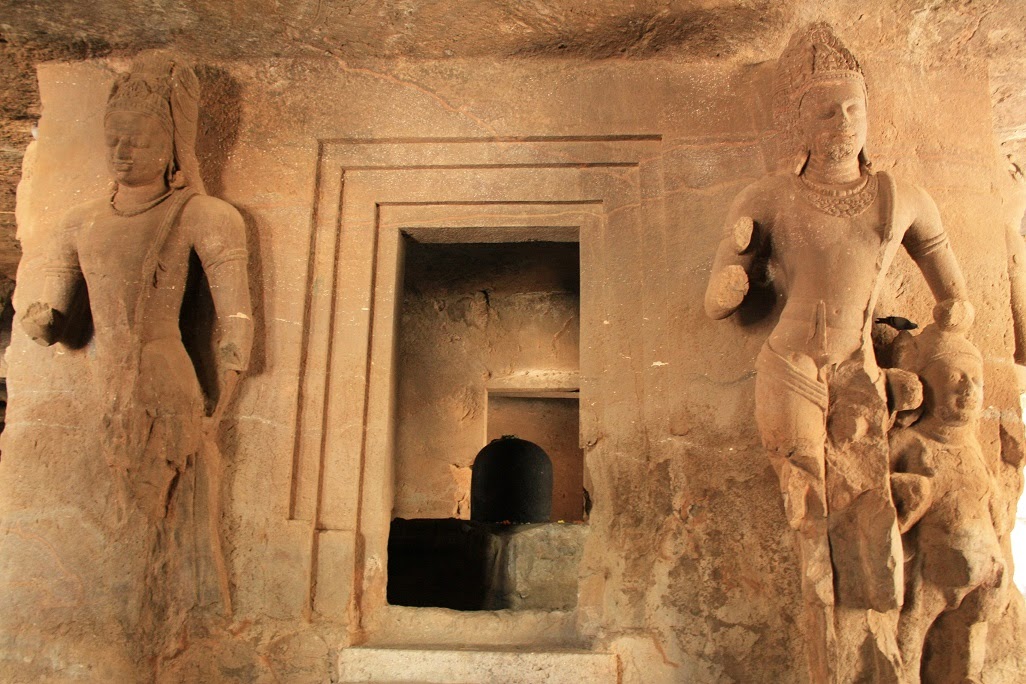
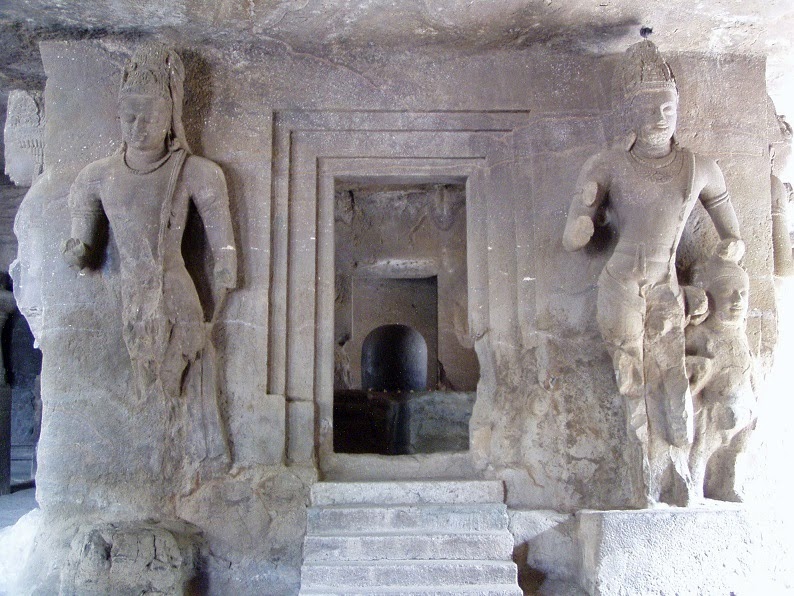
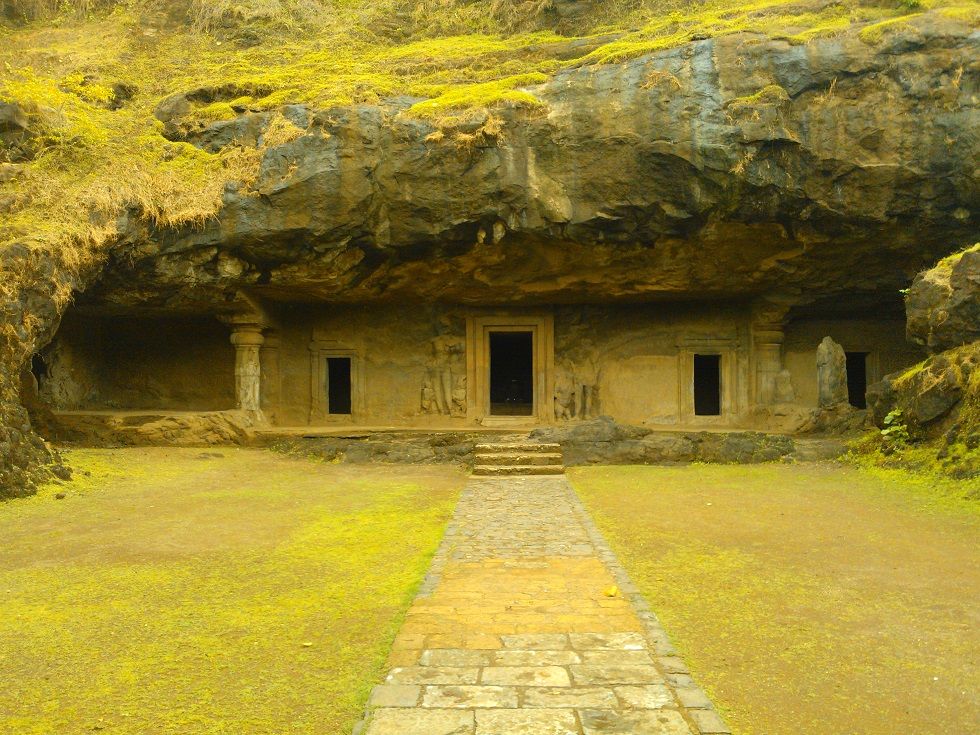
The Elephanta Caves are a complex of ancient cave temples on Elephanta Island, located 10 km away from the Gateway of India at Mumbai. One of the oldest rock cut structures in the country, the Elephanta Caves are the perfect expressions of archaic Indian art associated to the cult of Lord Shiva.

Here, Indian art has found one of its most perfect expressions, particularly the huge high reliefs in the main cave. Here you will find two categories of caves; one is the Hindu rock art and the other is the Buddhist rock art. The place is still worshipped by the locals, and is dedicated to Lord Shiva. One can spot some resemblance to the Ajanta and Ellora caves, which are around 300 km from Elephanta.

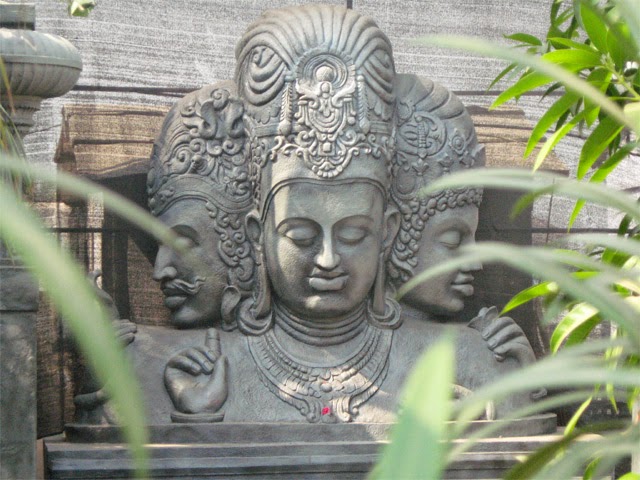
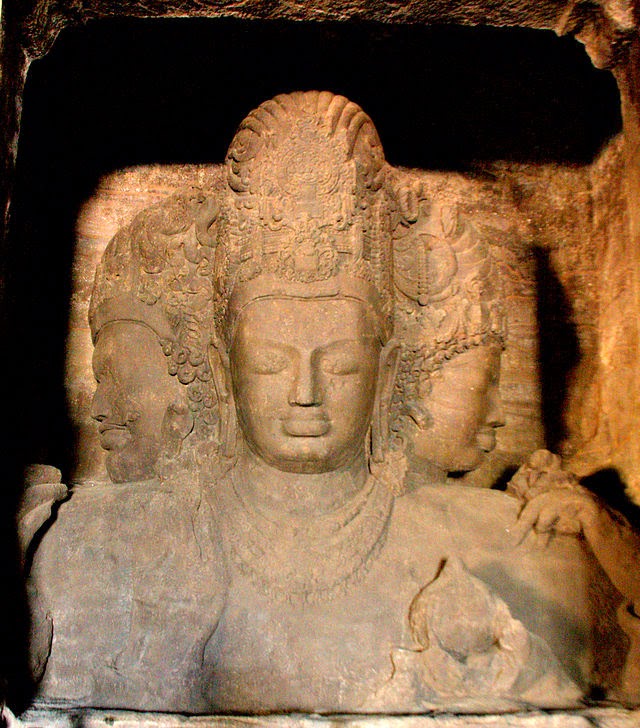
Trimurti statue at elephanta caves near mumbai

The origins of the Elephanta Caves have been debated time and again, though the sculptures and the art speak volumes about the time from when they could have been popular-6th or the 8th century.

The island on which the caves are built was originally known as Gharapuri, and the Portuguese retitled it as Elephanta Island when they discovered a large stone structure of an Elephant on the island. However, it is believed that the Portuguese destroyed many other structures and even used the idols of Hindu Gods within the caves for target practice.

Pillar of elephanta caves near mumbai

Shortly before the Elephanta temples were created, Bombay had experienced the golden age of the late Guptas, under whom the arts flourished. Sanskrit had been finely polished, and Kalidasa and other writers had helped incite a Hindu religious revival under the court’s liberal patronage. Shaivism, the worship of Shiva, inspired the building of these temples.

trimurti statue at Elephanta cave of Mumbai

Many of Elephanta’s priceless statues were damaged or destroyed by the Portuguese, who apparently used the Hindu gods for target practice. There have also been reports of vandalism and carelessness by modern visitors.

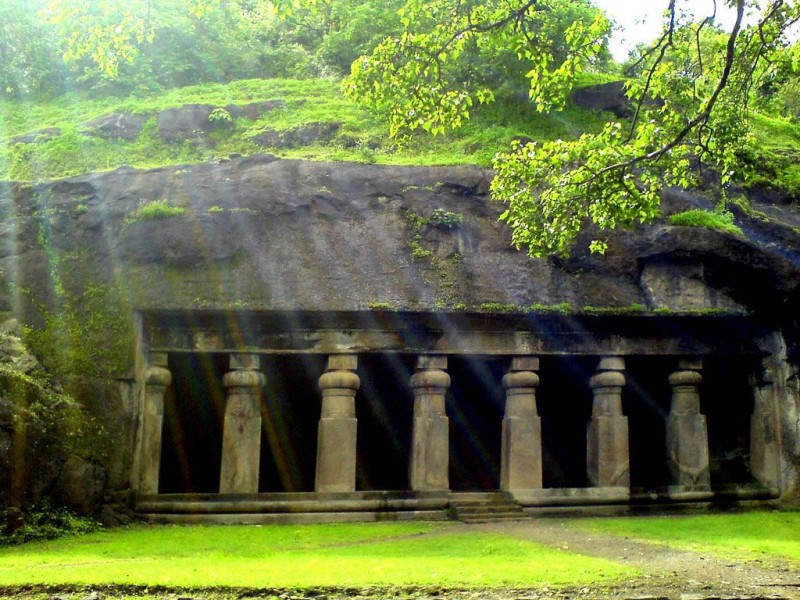
This rock cut temples were created by carving out rock, and creating the columns, the internal spaces and the images. The entire temple is akin to a huge sculpture, through whose corridors and chambers one can walk. The entire complex was created through a process of rock removal. Some of the rock surfaces are highly finished while some are untreated bare rock.  The entire cave temple complex covers an area of about 60000 squrare feet.

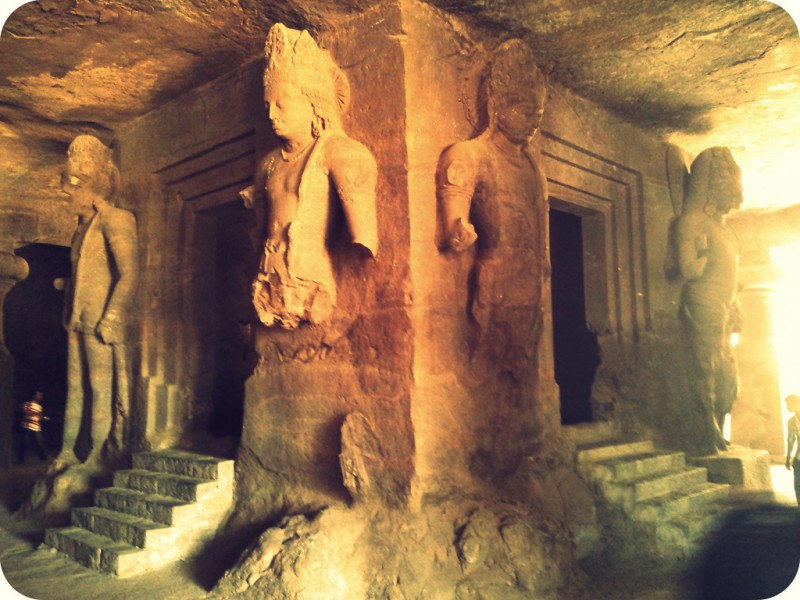
There are two groups of caves. To the east, Stupa Hill (thus named because of a small brick Buddhist monument at the top) contains two caves, one of which is unfinished, and several cisterns. To the west, the larger group consists of five rock-cut Hindu shrines. The main cave is universally famous for its carvings to the glory of Shiva, who is exalted in various forms and act ions. The cave consists of a square plan mandapa whose sides measure about 27 m.

A broken statue of Shiva as Nataraja at elephanta caves
Shiva as Nataraja (Cosmic dancer)

Various temples are cut out of rock, along with columns. The space inside consists of a main chamber and has two lateral chambers, shrines and courtyards. Above the temples you can see the natural rock out of which the temples have been carved. The entrance provided is from three sides. What attracts the visitor most are the Trimurti, Shivalingam, Kalyansundara, Gangadhara, Uma maheswara and Ardhanarisara sculptures, which are all the forms of Lord Shiva.

To the east of the main temple is a courtyard, flanked by the secondary shrine. This temple contains six pillars at its entrance, four of which are free standing and two engaged. The entrance leads to a hall decorated with sculptured panels depicting legends from the Shiva Purana.

One statue shows Shiva bringing the Ganges River down to Earth, letting it trickle through his matted hair. He is also depicted as Yogisvara, lord of Yogis, seated on a lotus, and as Shiva Nataraja, the many-armed cosmic dancer.

Elephanta Caves. Elephanta Caves.
Rock cut statue at elephanta caves
Elephant Lingam shrine 1 at elephanta caves
Elephant Lingam shrine – photo by Sivaraj
Elephanta caves in india
Smaller Cave, Elephanta – Photo by Elroy Serrao

The Skeleton Lake of India

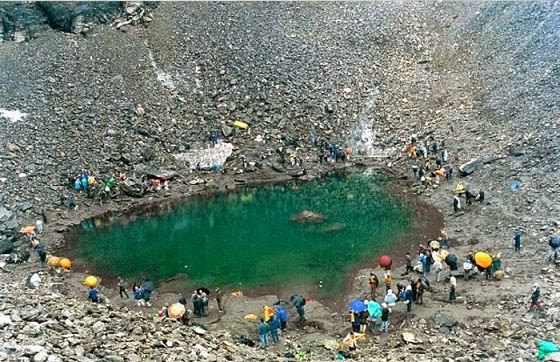
In 1942 a British patrol in Roopkund, India made a shocking discovery. Approximately 17,000 feet above sea level, at the bottom of a small valley, was a frozen lake full of human skeletons. That summer, the ice melted to reveal even more skeletal remains, floating in the water and lying haphazardly around the lake’s edges. Had something horrible had happened here?

Scientists now believe they have finally solved the mystery of how and why the skeletons of over 200 people were found in a frozen lake in northern India.

Lake Roopkund is located in northern India along the border of Nepal at 4,800 meters (~16,000 ft) above sea level with edges covered in snow for most of the year. The water is rather shallow, only reaching a maximum depth of 2 meters, and frozen most of the year. The frozen climate at this altitude has aided significantly in the preservation of hair, soft tissue, and leather clothing, prompting the everyone to believe these were recent deaths. These skeletons were initially thought to be the bodies of Japanese soldiers who had died of exposure while travelling through India as part of a World War II invasion. More recent analyses conclude the remains were much older than anyone expected, dating them to approximately 850AD.
The significant amounts of soft tissue present first confused everyone. How could these skeletons be old if there was still flesh on the bones?

Who were these people? DNA evidence of the remains indicates there were two distinct groups – (1) a closely related or family group, and (2) a shorter group of local people, likely hired as porters and guides. Many artifacts (spears, leather shoes, rings, etc.) were found among remains, leading experts to conclude the family group was most likely made up of pilgrims heading through the valley with the help of the locals as guides.

What happened to them? It was initially proposed these people died as a result of exposure, perhaps trapped in an avalanche. But closer inspection of the bones reveals evidence of perimortem trauma on many of the skeletons. This is trauma that occurred at the time of death. Scientists apparently discovered a surprising pattern, in which the skulls and mostly bones of the upper body were inflicted with a similar type of trauma.

bones at skeleton lake in India
Remains showcased on a boulder along with artifacts–personal belongings such as leather shoes

Were they murdered? According to experts, the skeletons only showed signs of one type of perimortem wound. Furthermore, they did not have typical wounds indicative of the time period’s weaponry. Instead, experts determined the injuries were indicative of an impact from a large, rounded object.

A 2004 expedition to the lake revealed a new and unexpected scenario that could have led to the death of over 200 people. The prevalence of head and shoulder injuries led experts to wonder if their deaths were the result of something falling from above. Taking skeletal evidence and the cold environment into consideration, it is now proposed injuries were due to a sudden and severe hailstorm in which people were pelted with large hailstones (estimated 23 cm/9” diameter). Trapped in a valley with no shelter, there would have been no easy escape, thus resulting in this mysterious mass of skeletons. Their bodies remained hidden in the glacial valley, freezing and thawing for the next 1,200 years until their gruesome discovery.

Is this event really possible? It’s difficult to assess this traumatic scenario without seeing images of the vaguely described skeletal trauma. But a quick web search of hailstones reveals they can indeed reach sizes of 9 inches that experts proposed. The largest hailstone collected in the US measured 8 inches across and weighed in at almost 2 pounds. Despite some extreme sizes of hailstones, only 3 individuals have died in the US (in 3 separate storms).

Historical records indicate that the deadliest hailstorm occurred on April 30, 1888 in the northern districts of India, killing 230 people. The hailstones were reportedly as big as oranges, accumulating up to 2 feet high. Although rare, it appears these freak hailstorms with monstrous hailstones have a history of forming in the Deccan Plateau of India and in Bangladesh. Recently around January 31, 2013, a severe 20-minute hailstorm suddenly struck several villages in the state of Andhra Pradesh in southern India, killing 9 people. The short duration of storms may account for a minimal amount of trauma to the lower body.

skeleton lake at himalaya

The deaths at Rookpund Lake could very likely be the result of a freak hailstorm. Although they are quite rare, history indicates these hailstorms do have a higher occurrence in that particular area and have been known to produce small boulder-sized hailstones. Taking all of the evidence into consideration, it seems probable that a very short but intense hailstorm would have led to the death of ~200 individuals in 850AD, thus solving this curious mystery.

The Amazing Rock Cut Kailasa Temple

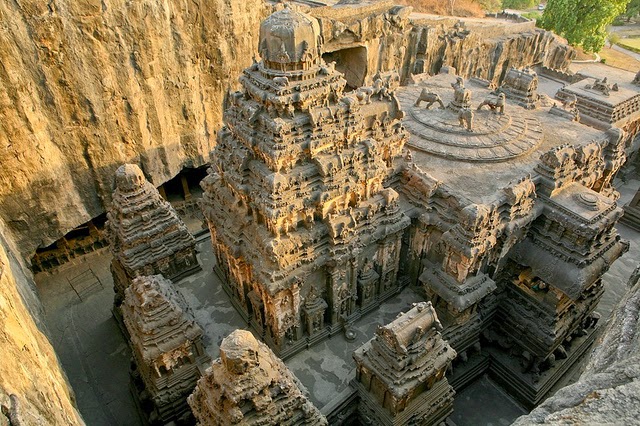
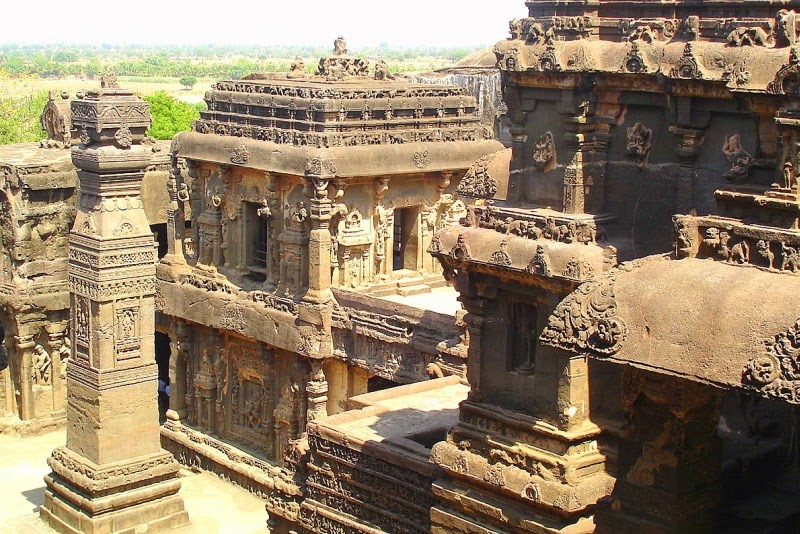
When most of us were growing up, we learned about a handful of man-made wonders of the world such as the pyramids in Egypt, the Colosseum in Rome, and the Great Wall of China. One that may have slipped right past you could have been the Kailasa Temple in Maharashtra, India. This temple is the world’s largest monolithic structure carved out of one single rock. Considered as one of the most astonishing ‘buildings’ in the history of architecture, Kailasa Temple measures about 109 ft wide and 164 ft long.

Kailasa Temple is one of the 34 monasteries and temples that constitute Ellora Caves. They were dug side by side in an area of 2 km in the wall of a high basalt cliff of the Sahyadari Hills. The temple – cave number 16 – has traces of Pallava style and bears resemblance to Dravidian architecture for its workmanship and sculptural ornamentation of rock-cut architecture.

Dedicated to Hindu Lord Shiva, the temple was built in 8th century by the Rashtrakuta king Krishna I. But looking closely at the many symbols and codes at the Kailasa Temple, their origin point to an unknown past, though the sculptures of the deities, celestials, pillars, pots and animals seem to have been done in AD times.

The construction of the temple began in 757 CE and was completed in 783 CE.

Rock cut kailash temple front view at Ellora caves
Image Source

According to Archaeologists over 400,000 tons of rocks were scooped out which would have taken not years, but centuries of human labor to construct this monolithic structure. Historians have no record of such a monstrous task and they think that it was built in less than 18 years.

The temple design has surprised historians and architects due to the complexity involved in creating such a magnificent complex. Kailasa Temple’s architecture is notable for its vertical excavation, dug from top to bottom. Legend has it that carvers took 20 years to remove about 200,000 tonnes of rock to construct this monolithic structure.

Entire Temple covers an area twice the size of the Parthenon on the Acropolis in Athens, Greece. It is one of the largest structures in the world, rivaling even the Taj Mahal in Agra.

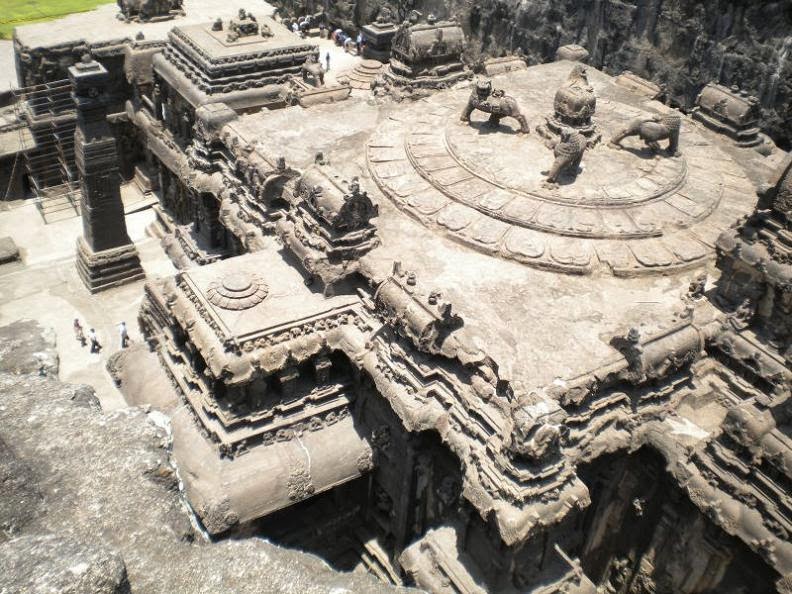
This is the only example in the whole world where a mountain was cut out from the top, to create a structure. Carvers started at the top and excavated downward, exhuming the temple out of the existing rock. The traditional methods were rigidly followed by the master architect, which could not have been achieved by excavating from the front.

Even the sculptures at Kailasa Temple are carved from the same piece of rock as the rest of the temple. Most of the deities on the left side of the temple’s entrance were Shaivaites while those on the right are from Vaishnava community. A three-floor high columned arcade edges the temple courtyard.

The Kailasa Temple is sometimes called the Kailashnath Temple, and was designed to resemble the sacred Mount Kailash located in Tibet, which is said to be the abode of the Lord Shiva.

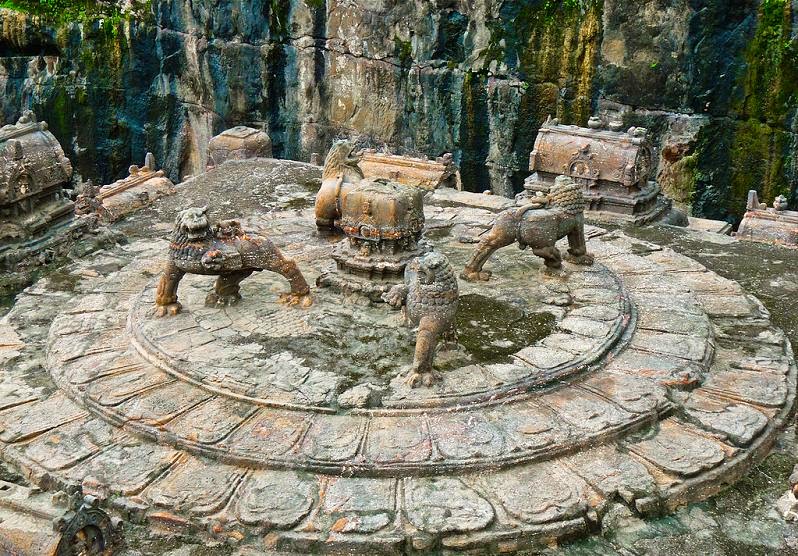
The two structures in the courtyard, as per traditional Shiva temples, have an image of sacred bull, Nandi, facing the Shivalinga. The Nandi mandapa and main Shiva temple are 7 m tall and built over two floors. Both are solid structures with elaborate illustrative carvings. The base level gives an effect as if elephants are holding the entire structure.

Originally, this structure was coated in a thick layer of white plaster so that it appeared to be covered with snow like the sacred mountain; some traces of this plaster remain today.

One of the noteworthy structures in the temple is of demon king Ravana attempting to lift Mount Kailasa.

Ellora Caves remained in oblivion for several centuries but the cave temples of Ellora were known to the civilised world through ages as an example of Indian religion and art. The Baroda Copper Plate grants of Karka II refer to the magnificent excavations at Elapura (ie Ellora). Arab traveller Al Masudi and historian Farishta were two early authorities of the Muslim period to record Ellora in their accounts.

Mugahl King Aurangzeb who destroyed thousands of Hindu temple, also tried to destroy Kailasa temple. In 1682, he ordered that that the temple be destroyed, so that there would be no trace of it. Records show that a 1000 people worked for 3 years, and they could only do a very minimal damage. They could break and disfigure a few statues, but they realized it is just not possible to completely destroy this temple. Aurangzeb finally gave up on this impossible task.

Kailasa Temple among the caves also stands out as the highest architectural attainment during the rule of Rashtrakuta dynasty. Thousands of sculptures, drawings and inscriptions in Ellora exude artistic richness and philosophy making the caves a major achievement of ancient Indian civilisation.

Lions at Rock cut kailash temple
Rock cut kailash temple at ellora caves in Maharashtra
Lions at Rock cut kailash temple
Rock cut kailash temple

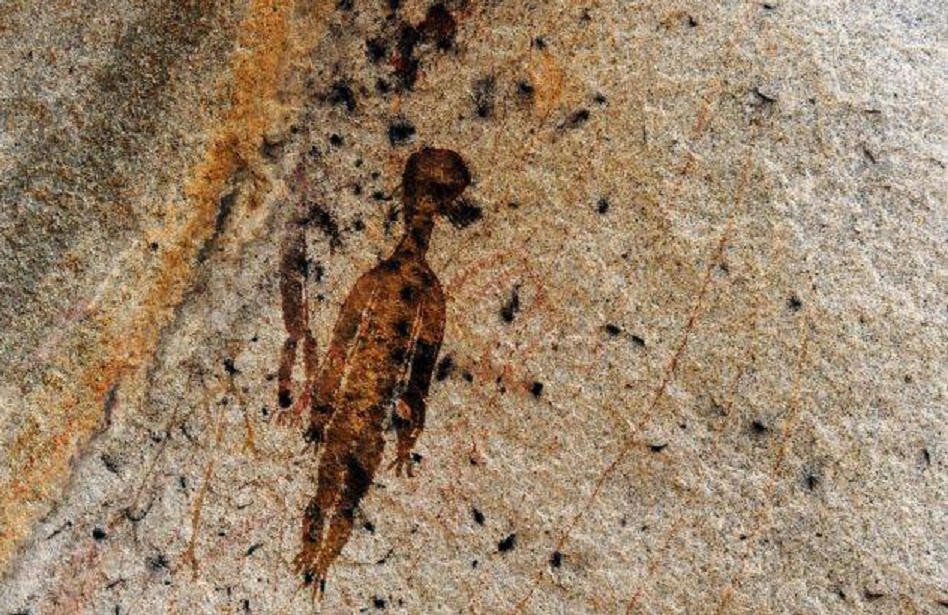
10,000-year-old cave paintings depicting aliens found in India

An archeologist of India found 10000 years old paintings depicting Aliens and UFO in a Cave near Chhattisgarh, India. According to archaeologist JR Bhagat, these paintings have depicted aliens like those shown in Hollywood and Bollywood flicks and says they may serve as evidence that Earth was once visited by an advanced alien civilization.