

Medical Science in Ancient India

Medical Science was surprising advanced in ancient times in India. Specifically these advances were in the areas of plastic surgery, extraction of catracts, dental surgery, etc., These are not just tall claims. There is documentary evidence to prove the existence of these practices.

The Aitareya Upanishad (1-1-4) states how the organs develop in the foetus. It says that first the mouth comes into existence, then the nostrils, then eyes, then ears, then heart, then navel, then the penis. The same order of development is given in the Bhagawata. It is surprising that the same order is discovered by the modern science, recently.

The Bhagawata (3/31/3) states that the head of the foetus is formed at the end of the first month. This appears true in the light of the modern investigations in embryology. The Bhagawata gives further information that as soon as the nostrils develop there appears Prana and vocal chords also develop. Modern science has the same opinion.

The Bhagawata (2/10, 3/6,26) clearly tells that foetal heart begins working in the second month of pregnancy. In December 1972, nodern scientists discovered that the foetal heart begins working during 7th and 8th weeks of pregnancy. 

Rare Painting Anatomical Man Sanskrit Ayurveda

The Bhagawata (2/1022, 3/26/55) states that ears are responsible for recognizing the directions. Here the directions are personal e.g. in front, at back, to the right or left, up or down. These six directions are original, personal and they are sensed by the ears.
 The Bhagawata is composed around 1650 years BC and the Aitareya is composed around 6000 years BC. But the statements recorded in them are found true by the modern science during 1935 AD when Ross and Tait wrote an essay showing that the Labyrinth or the vestibular apparatus situated in the internal ear recognise the directions. Is it not miraculous that the discovery of 1935 is recorded in scriptures, thousands of years old? It proves that the medical science was well advanced during the ancient era in India.
Surgery was far advanced in the Rigveda era, therefore it is recorded that Queen Vishpala was fitted with an artificial lower limb when it was severed in a battle.(Rg.1-116-15), and was made fit, again, to fight in a battle. Modern surgeons do fit an artificial limb; but a patient takes about a year to walk with it, and he cannot take part in a battle again.

There is a surgical concept of transplant operations in India since the Rigveda. One sage Daddhyanga got some disease in his head. To cure it Ashvinau took his head away and in its place implanted a head of a horse for a while.(Rg.1-116-12). After repairing his human head they replaced it again removing the horse’s head. The sage became normal. One may laugh at this statement because at present no such operation on head or brain is possible. But is it really impossible? At present, heart can be transplanted. During an operation on heart, it is totally stopped by freezing and with the help of Heart-lung machine circulation is maintained and after correcting the defect in the heart it is connected to the circulation, removing the heart-lung machine. In the same way, was not it possible to implant a horse’s head in place of human head to maintain the give and take of sensory and motor impulses and to continue the vital functions, which are similar in man and horse? Serum of horse is tolerated by humans, then nervous tissue may also be tolerated. We have to experiment on this technique.
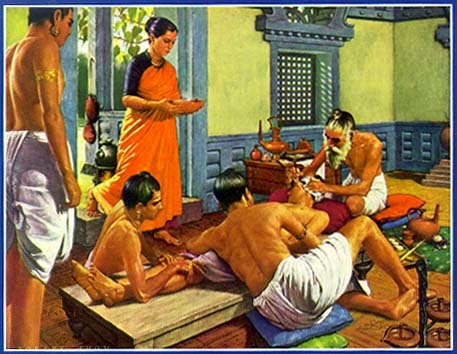
Sage Sushruta and nose surgery

Because of this Vedic tradition of surgery, Sushruta could develop plastic surgery to repair severed or deformed nose – Rhinoplasty. He used a flap of skin from forehead to repair nose. In 1957 Prof. Vartak was working as a surgeon in S.T.R. Hospital and Tilak Ayurvedic college, where he read Sushruta Samhita. He suggested to use that old technique but it was neglected. Twelve years later one German surgeon read Sushruta and operated accordingly with good results. Since then all the surgeons are using the same technique thinking that it is a German technique.

Shrimad Bhagawata (9-3-27 to 36) gives a story that king Kakudmi went with his daughter Revati to the Brahmaloka to find her a husband. Brahmadewa told him that in some seconds of his presence in that Loka (solar system) 27 Tetra-Yugas (About
216 years) on the Earth had passed and that there was nobody from his family alive. Brahmadewa advised him to return and wed Rewati to Balarama, who had then born. Accordingly Kakudmi returned with Rewati and gave her to Balarama in marriage. The important scientific points in this story are thus:
The two went on another solar system leaving the Earth. They spent some seconds there, but during that seconds 27 Tetra-Yugas passed on the Earth. It shows that Sage Vyasa knew that the time scales are different on different planets or solar systems. This is agreed to by the science now. They returned after 216 years but still Rewati was in puberty and her father was alive. Aging factor had stopped working on them. After their return, they could not see their descendents, so at least 216 years had passed. They had defeated the death. Their life had extended. The only cause attributed is the space travel to another solar system with tremendous speed. One may not agree that the two actually traveled to some other Loka; but one has to accept the theoretical knowledge present in the story, which is the same as that propounded by Einstein in the 20th century, that if some body travels with a great speed to another place in the space, its or his life extends. Even in the present world nobody has traveled to another solar system, even then the theory is accepted by science.

The Prashnopanishad (3/8) states that Deity present in the Earth attracts Apana of a living person and helps its action. Adi Shankaracharya comments on this verse that if the famous Goddess of the Earth did not help Apana and did not hold down by its attraction force or Gravitation, then this physical body would have floated in the space or fallen anywhere. Thus the Prashnopanishad of 6000 years B.C. and Shankaracharya of, at least, 800 A.D. knew the gravitation force of the Earth much before Newton of 18th century A.D. This proves that the gravitational force of the Earth was known to the Indians 7000 years earlier than Newton.

Thus it seems that medical and biological sciences were very well developed along with other physical sciences in ancient India and all that knowledge is stored in our Shastras. We have to decifer their meanings on the basis of modern science. Scientists should do this work because they are well versed with the present scientific knowledge, which is helpful to expose the knowledge concealed in the Shastras. If our scientists do so, we can progress much in the scientific field. 

Source: Medical Science from ancient Indian Shastras. by Dr. P.V. Vartak

Myth of Ancient Nuclear War in India

Is man on the threshold of a new world or merely stuck on a circular treadmill repeating the doomed lessons from history which he never seems to learn? A growing number of scholars believe the world’s macabre fascination with nuclear war is just the latest repeat in a series of blunders human technology seems obsessed with repeating.

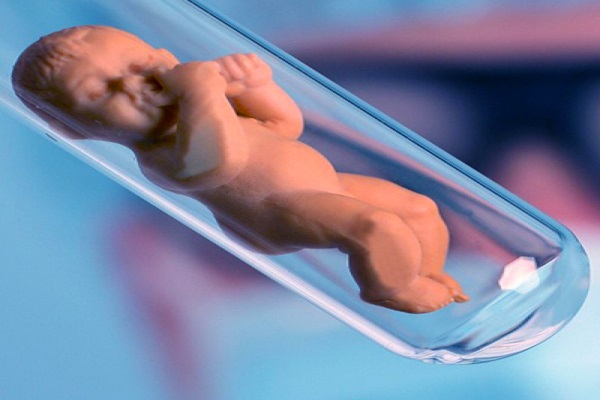
Test Tube Babies in Ancient India

Medical science is presented in the books of Ayurveda as a separate Shastra. However the original medical science present in the Vedas, the Mahabharata and the Puranas is far more superior to the Ayurveda. All the Shastras (sacred scripture) of India have their origin in the Vedas. The Vedas are composed in the Vedic era extending from 23960 years B.C to 5560 BC. The Mahabharata is composed during 5560 BC and the Puranas still later.

Animal and Human cloning is well explained the Veda. Rubhus Brothers produced a Horse from another horse and a cow from the skin of a cow. They also brought youthfulness to their old parents. Their father was old but they were cloned young to bring back the youth of aging parents.
Other achievements like Parthenogesis, Test-tube-baby etc are also reported in ancient literature of India. 

princess gandhari with 100 sons Early in The Mahabharata, there is a story about how the hundred Kaurava brothers came into being.  Gandhari became pregnant naturally from her husband Dhrutarashtra. However she did not deliver a child even after two years passed. Therefore, burning with anger, Gandhari aborted her foetus. In fact it was not a foetus, not a developed child; but a mole, a mass of living cells having no shape like a human child. As soon as the sage Vyasa heard about her abortion, he came immediately, took the aborted cell mass in possession and divided that mole. Sage Vyasa dissected the mole carefully and found out normal living cells, which he kept separately in Ghruta Kumbha. Ghruta Kumbha does not mean an ordinary pot of clay, filled with Ghee. ‘Ghruta’ means a nutrient medium supplying life energy, which was kept in a special Kumbha, a highly sophisticated urn. There were 101 cells and those cells were grown separately in Ghruta Kumbhas or nutrient urns. In due course children were born, 100 Kaurawas and their sister Dusshala. (Mahabharata, Adi, 115) 

Sage Vyasa relied on the principle of ‘Chamasa division’ (Division of Living cells), laid down by Rubhus brothers in the Rigveda and worked further to give birth to 100 Kaurawas. Following Vyasa the modern scientists must work on the principles stored in the Rigveda and other ancient literature, so as to produce new miracles. 

Many experiments on Test-Tube babies can be found in Mahatbharata’s Adi Parva. Draupadi and Dhrushtadyumna got birth from an utensil only from the semen of king Drupada. They had no mother. Drona was born from the semen of Bharadvaja, without any help of any mother. Further observations were also done in the Mahabharata period that one test tube baby Drona was married to another test tube baby Krupi and they lead normal married life producing one son Ashvatthama. Another test-tube baby Krupa was married to normal girl. This couple too behaved normally. Such an experiment has not yet been done in the modern science.

Concept of test tube baby is also found in the birth of Lord Balarama. An embryo of Devaki was taken out and implanted in the uterus of Rohini. Rohini delivered a child, which was termed as Samkarshana, who later became famous as Balarama, elder brother of Krishna. (Bhagawata 10-2-13). This means that the ancient sages had the technology to implant the embryo of one woman into the womb of another woman.

Kunti used a technique of Parthenogenesis. She stimulated her ovum with the help of solar energy and produced Karna.(Mahabharata Adi 111.) Such experiments are done in the modern science to produce young ones only in the lower animals and not yet in the human beings. The technique is termed as Parthenogenesis by the present day European scientists. The term Parthenogenesis contains a word ‘Partha’ which means ‘of Prutha’. Prutha is Kunti’s second name. Was this a chance happening or did they coin the term from Kunti’s experience?

Thus it seems that medical science was very well developed in ancient India and all that knowledge is stored in our Shastras. Ancient method of test tube baby was more efficient as they knew the way of creating babies outside the mother womb. Ayurveda is an ancient medicinal science that not only has information on many highly advanced genetics theories but also many others that is either discovered or yet to be discovered.

Source: Medical Science from ancient Indian Shastras. by Dr. P.V. Vartak
Human and Animal cloning in Ancient India

Cloning is the scientific process of creating an exact replica of any living being. Such a clone has the same face, same body structure and same genetic code. This means DNA of clone is same as the DNA of the living being that was used to create a clone. Clone can be created from a single cell and thus, thousands and millions of replica can be created from a single living being by transfusing his/her living cell in an embryo of another living species.
In Vedic age, cloning of animals was done by sages to clone the species of powerful horses and productive cows. Ancient Indian produced a horse from another horse and a cow from the skin of a cow. Other achievements like Parthenogesis, Test-tube-baby etc are also reported in ancient literature of India.

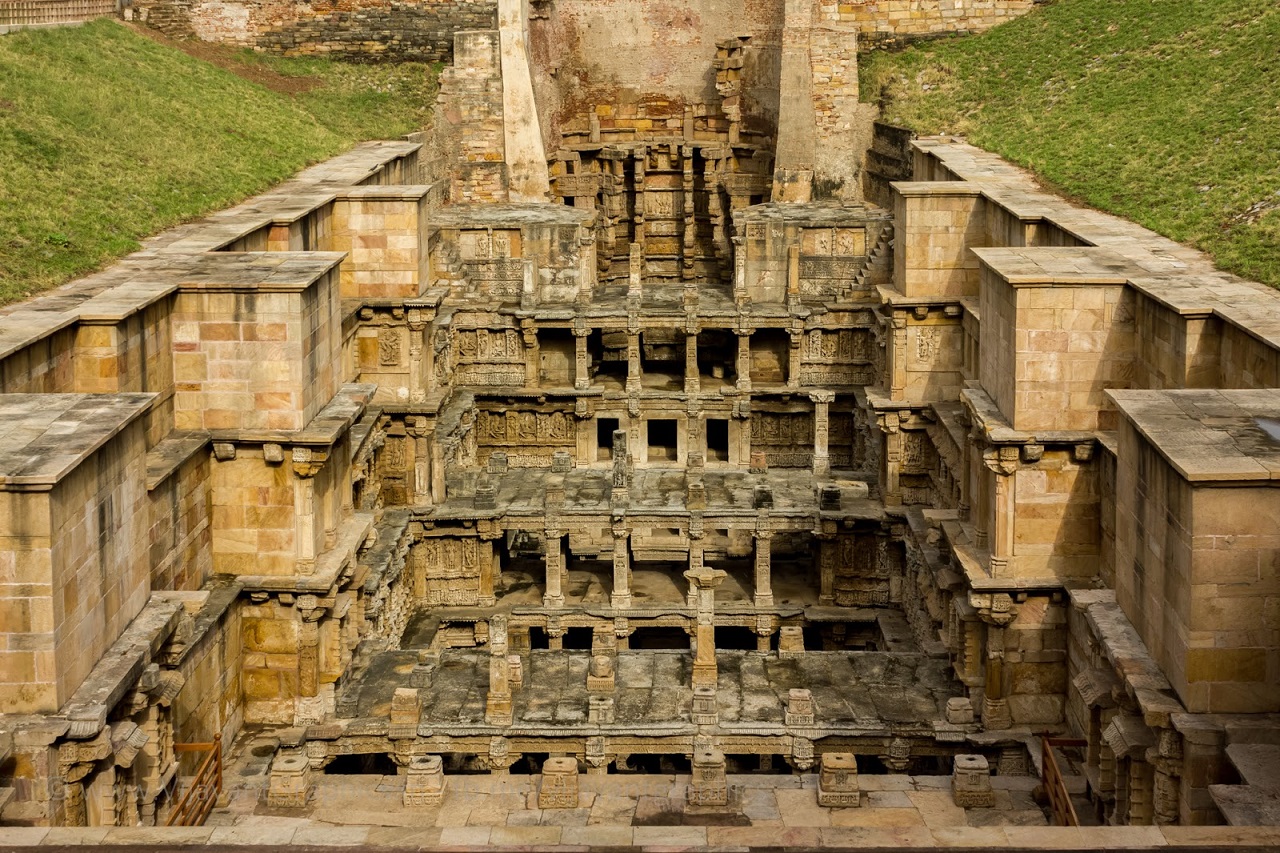
Rani ki Vav – Beautiful stepwell of India

Rani Ki Vav is the oldest and the grandest stepwell in the state of Gujarat, India. It is situated at Patan and is believed to have been built during 1022 to 1063 AD. Rani (Queen) Udayamati commissioned this vav or stepwell, in the memory of her husband King Bhimdev I of the Solanki dynasty. In Hindi, “Rani” means “Queen,” and “Vav” means “Well.”

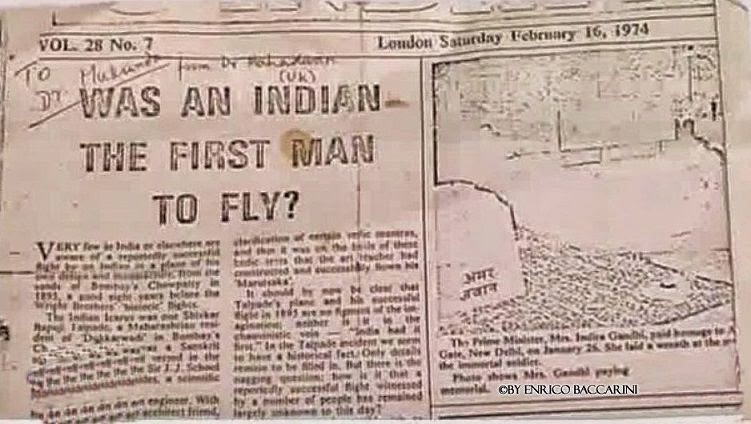
First aircraft was build by an Indian?

The Wright brothers, Orville and Wilbur, are acknowledged to have invented and built the world’s first successful airplane and made the first controlled, powered and sustained flight in 1903. However, in 1895, an Indian, Shivkar Talpade, a drawing teacher from JJ School of Art in Mumbai, is said to have flown an aircraft, Marutsakha, on Girgaon Chowpatty.

Indian Vimana
Ancient Indian flying machine Vimana

Shivkar Bapuji Talpade, an Indian scientist and a Sanskrit scholar along with his wife at chowpathy beach was found more excited and anxious that day. The people around found that something sensational are going to happen there. Some knew what it was, some did not. Some were putting their instinct to work.  A huge mass of crowd has accumulated and among them was Shri Sayaji Rao Gaekwa, who was the Maharaja of Baroda during that time and the most influenced famous scholar justice Mahadeva Govin-da Ranade. Everyone there was waiting with anxiety and before that anxiety drowned that miracle happened. Yes! The world’s first unmanned aircraft named Marutsakhā was thrown into the space and it tarred the sky at a velocity of about 40,000 Km/hr. After reaching a height of more than 1500 feet it landed safely without any damage. Between the hustle, talpade was literally appreciated by Maharaja at that moment itself. It was Maharaja’s happiest moment for which he has been waiting for long period. The News was then published in the famous News Paper “Kesari”, the next day.

After the news release in the media, few years later Talpade and Sasthri were jailed by the British Government. Maharaja was warned literally. Few years later, after talpade returned home, his wife passed away and he withdrew his research. After his death in 1916, it is said that his relatives sold some of his important works to few German people.  A model reconstruction of Marutsakhā was exhibited at an exhibition on aviation at Vile Parle, and Hindustan Aeronautics Limited has preserved documents relating to the experiment.
 
Shivkar Babuji Thapled  from his childhood developed his dreams of flying and getting into space. He was a great Sanskrit scholar and started searching the possibilities of man flying in the space in ancient Indian scripts, Vedas. He thoroughly learned the ancient scripts containing Vimanika Sasthras (Aeronautics Theory). On that fine morning, Talpade was lucky enough to meet Shri Suparaaya Sasthri. Sasthri gave him a bundle of treasures which contained sutras (formulas) of making an aircraft, written by the great rishi Bharadwaja. After this incident Talpade continued his work more seriously than before. Maharaja provided the funds necessary for his project. It may be too hard to believe that modern day aircrafts and even most advanced one are discussed in Vedas which are written some 10,000 years ago. But, Talpade was fully dependent on Rig Veda and Vimanika Sashthra only.

Few years later, a scholar named Acharya mentioned that “Vaimanika Shastra deals about aeronautics including the design of aircraft the way they can be used for transportation and other applications in detail. The knowledge of aeronautics is described in Sanskrit in 100 sections, eight chapters, 500 principles and 3000 slokas including 32 techniques to fly an aircraft. In fact, depending on the classifications of eras or Yugas in modern Kaliyuga aircraft used are called Krithakavimana flown by the power of engines by absorbing solar energies!’ It is feared that only portions of Bharadwaja’s masterpiece Vaimanika Shas-tra survive today.

Marutshakha was the first model to have an Ion Mercury Vortex Engine. The Vaimanika Shastra describes in detail, the construction of what is called, the mercury vortex engine the forerunner of the ion engines being made today by NASA. The information on the mercury engines can be found in the ancient Vedic text called Samaranga Sutradhara. This text also devotes 230 verses, to the use of these machines in peace and war. 
Featured Image: Enrico Baccarini