

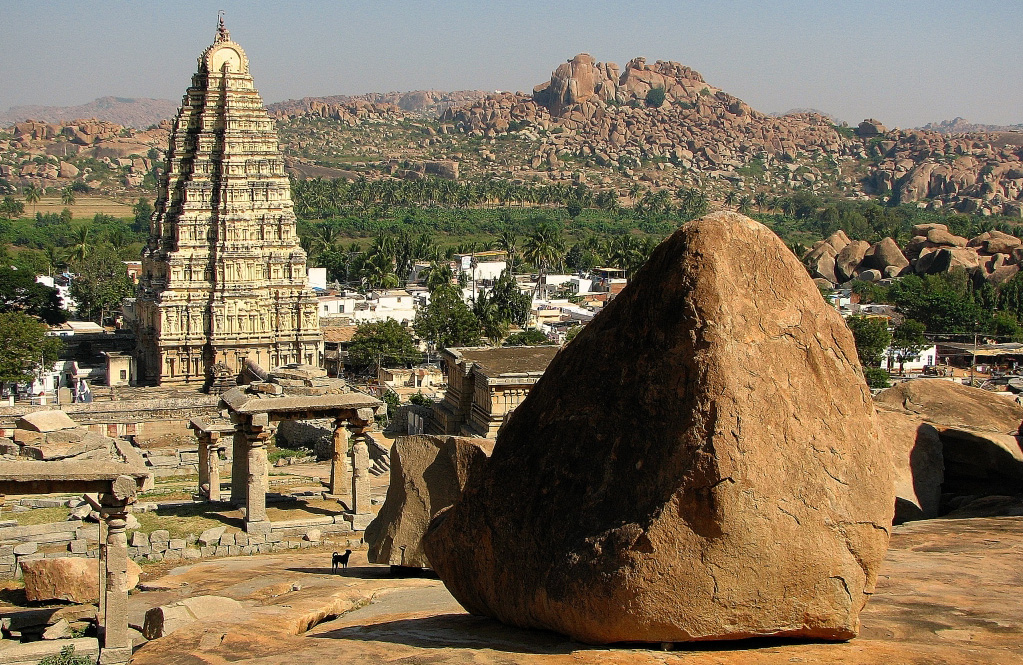
Ancient Vijayanagar, now known as the village of Hampi was the capital of the greatest and one of the most famed Hindu Kingdom of Vijaynagar. Located in the northern part of the state of Karnataka in South India, the village of Hampi has some extremely captivating ruins, intriguingly intermingled with large boulders that rear up all over the landscape.
Haryana’s Bhirrana is oldest Harappan site
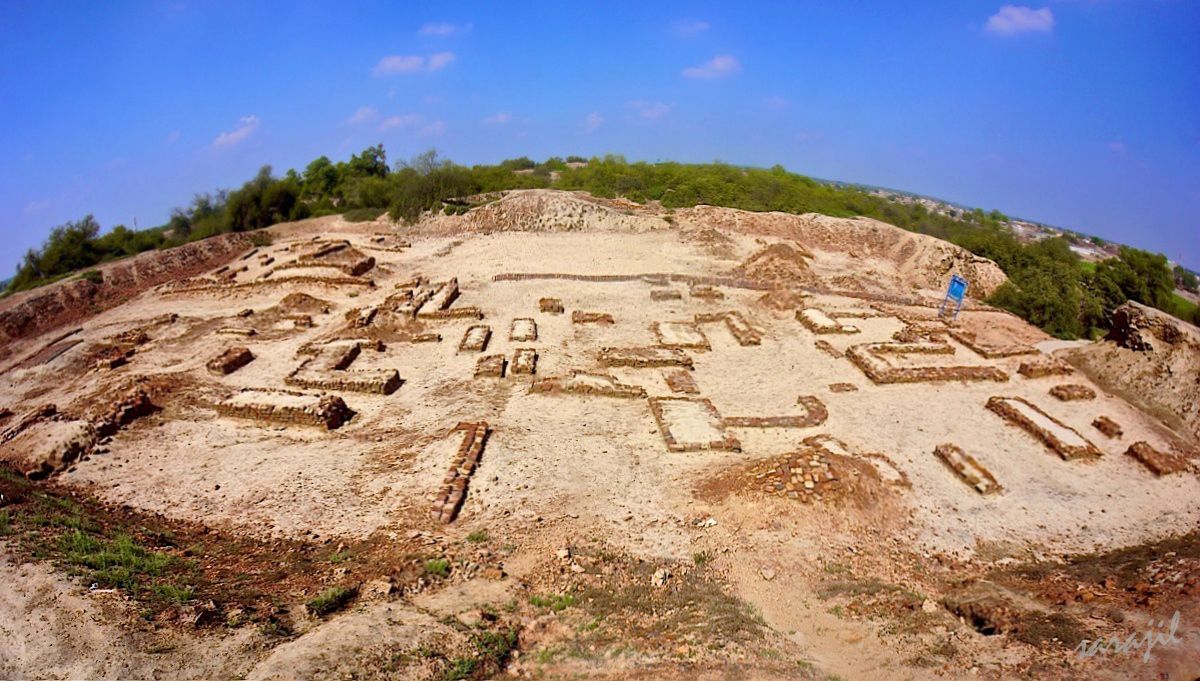
The oldest archaeologically attested civilization in South Asia, roughly on par chronologically with ancient Egypt and Sumer, the Indus Valley Civilization is considered the fount of ancient Indian civilization and its heritage is claimed by both Pakistan and India.
The Indus Valley Civilization was discovered in the early 20th century by the Archeological Survey of India. At that time, the two largest Indus Valley Civilization sites were Harappa and Mohenjo-Daro. Since then, subsequent discoveries have upended assumptions about the Indus Valley Civilization’s chronology, geographical range, linguistic characteristics, and demise.
Initially, the Indus Valley Civilization was assumed to have lasted at most about a thousand years, with a mature period dating from around 2600 B.C.E. to 1900 B.C.E. Furthermore, the range of the civilization has steadily expanded with new discoveries.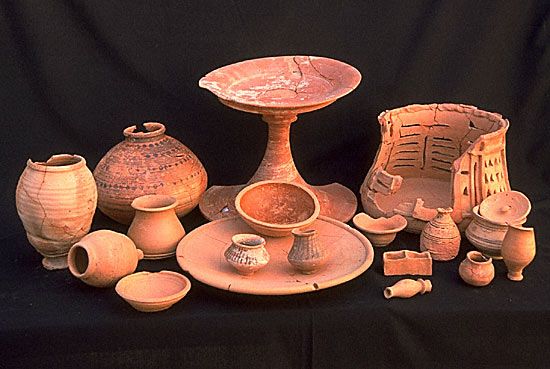
New discoveries in the Indian state of Haryana, underscore many of these trends. Bhirrana is now considered the oldest discovered Indus Valley Civilization site, with some of the oldest mounds dating back to 7500 B.C.E.
According to a report published in Times Of India, the recent study has debunked the early research that the Indus Valley civilization’s Harappan phase originated in Sind, in present-day Pakistan.
The report states that while the c 14 radio-dating of the excavations at the Mehrgarh site in Pakistan puts it in the 6400-7000 BC bracket while the latest study has revealed that the cultural remains at the Bhirrana village go back to the time bracket of 7300 BC. It is situated on the banks of Ghaggar river, in Fatehabad district of Haryana.
Last year, Rakhigarhi, in Haryana, India, has been determined to be the largest-ever Indus Valley Civilization site. This has led to speculation that the Indus Valley Civilization reached its mature phase farther east than previously thought.
Bhirrana and Rakhigarhi show continuous occupation from 8th millenium BC. Bhirrana was occupied from the earliest to the last dates of the Harappan era and Rakhigarhi is home to the largest and one of the oldest sites of the ancient Indus Valley Civilization.
Related Articles
Countless Rock Carved Shiva Lingas of Sahasralinga
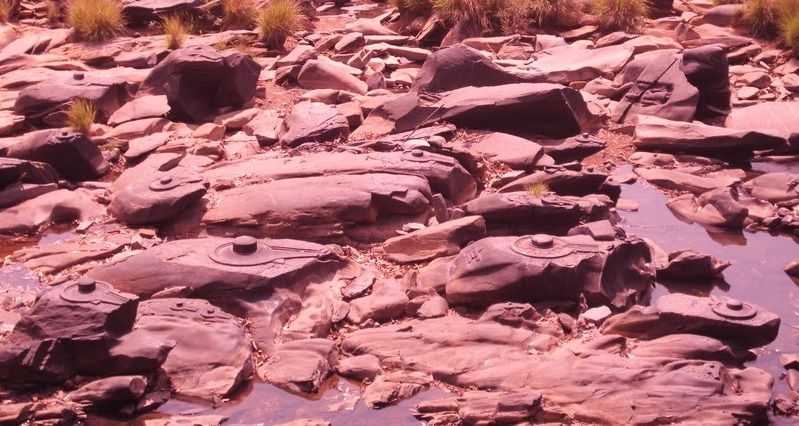
Sahasralinga is a pilgrimage place in the Sirsi Taluk in Karnataka state of India. It is in the river Shalmala and is famous for being the location where small-sized Shiva Lingas carved out of stones embedded on the river bed lay scattered all over. Most of the lingas are clearly visible when the water level in the river is not very high.
Linga is a symbol of worship of the Hindu God, Shiva. The place derived its name Sahasralinga (thousand lingas) because of the existence of these uncountable lingas on the river bed.
Aryabhata: The Great Indian Astronomer & Mathematician
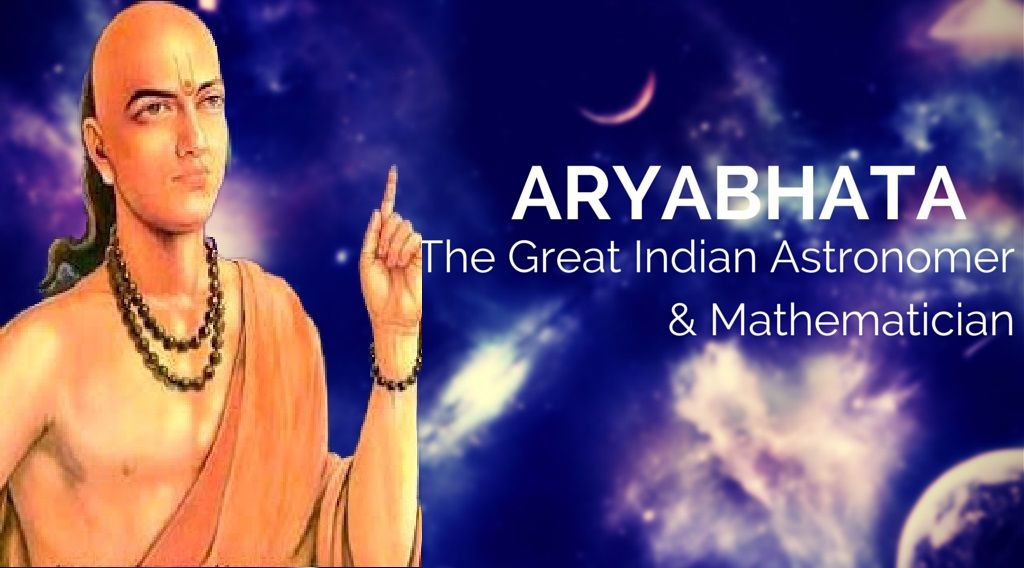
On October 22, 2008, a group of space scientists huddled together in tense anticipation. They were awaiting the launch of Chandrayaan-1, India’s first lunar probe. The probe, which made India just the fourth nation to plant its flag on the moon, led to important findings such as evidence of water and ice on the moon’s surface. As opposed to trying to reach the moon on a direct trajectory, the mission involved sending the probe to the moon via an unorthodox method, a series of orbit-increasing manoeuvres. To do so, the probe used an equation by Aryabhata – as explained by the then head of the Indian Space Research Organization, G. Madhavan Nair, in an India Today news article on February 22, 2015.
5,000 Years Old skeletons Found at Harappan Site
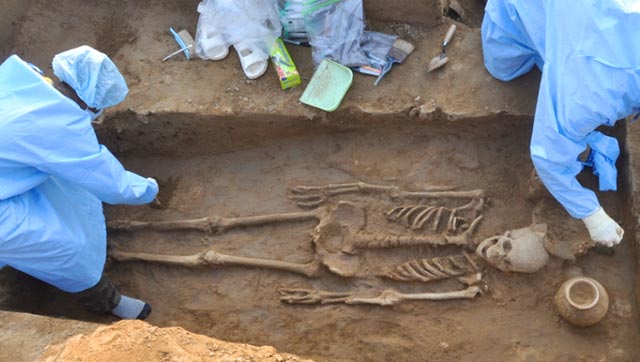
Archaeologists in India have found a group of skeletons from one of the world’s most ancient civilisations, in a discovery which could provide clues to the origins of the first human settlements. Four human skeletons, believed to be 5,000 years old, have been found in a cemetery at Rakhigarhi village in Hisar, a large Indus Valley (also known as Harappan) site. Archaeologists and scientists from India and South Korea have been carrying out excavations at the cemetery at Rakhigarhi village since 2013.
These skeletons are of two men, one woman and a child. The height of the skeletons of the men is five feet and six inches and both were aged about 50 years while the height of the skeleton of the woman is five feet and four inches and was aged around 30 years. The child’s age was believed to be around 10 years.
Enthused at the recovery of well-preserved skeletons, archaeologists hope forensic scientists will reconstruct the DNA extracted from bones to help decipher the history and origin of the human settlement, which is part of the Indus Valley civilisation. Using a novel software developed in South Korea, archaeologists are confident of projecting, in a few months, how the Harappans looked like 4,500 years ago — their build, the colour of their skin or hair, their facial features and so on.
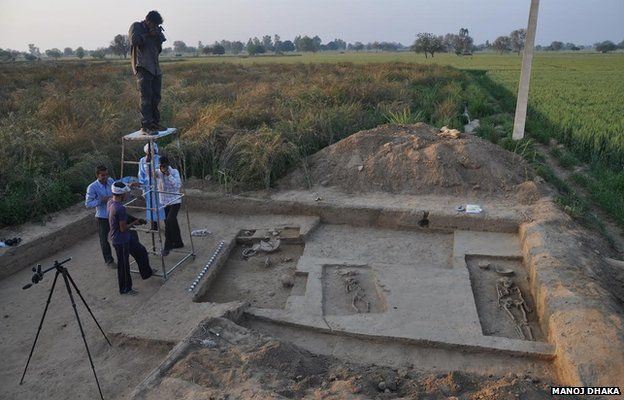
Besides pottery with grains of food, bangles, toys, mini wheels and sling balls of different sizes have also been recovered from the excavation site. The archaeologists have also found certain things that reveal that the settlers believed in reincarnation.
During the excavation, it has also come to the fore that toy culture must have been in the vogue among the Harappans. Researcher Malavika Chatterjee said toys were found during the excavation including “figurines of animals and mythical characters”. She told the Hindustan Times: “A figurine of dog with a leash points towards their domestication aspect. Then we also found figurines of unicorns too, giving us impression about their mythical state of mind.”
Besides, the toys include mini wheels, miniature lids and sling balls of different sizes. The stuff is mostly made up of terracotta.
The jewellery and the stamps found during the excavation give the impression that the settlers used to go out for their trade and also used to get some of their jewellery from outside the state.

Archaeologists also recovered a seal which has some tiger-like figure inscribed on it. They believe that it was used in trade or for some other purposes. Tools which could have been used for fishing and hunting purposes have also been recovered.
The excavation work was spread over an area of 50 acres and the archaeologists are still working on three mounds numbering 4, 6 and 7. According to archaeologists, the excavations at the different mounds have different significance.
The excavation at mound number 4 will help them to figure out how and when did the Harappans settled here while the mound 6 reveals how were they living. Likewise, the mound number 7 has been established as the burial place, the archaeologist said.
The Indus Valley Civilisation is one of the three oldest urban civilisations, along with Egypt and Mesopotamia. Ancient India during the Harappan era had one of the largest populations in the ancient world, far greater than the Middle East or Europe.
More:
Gwalior Fort – India’s most impregnable fortress
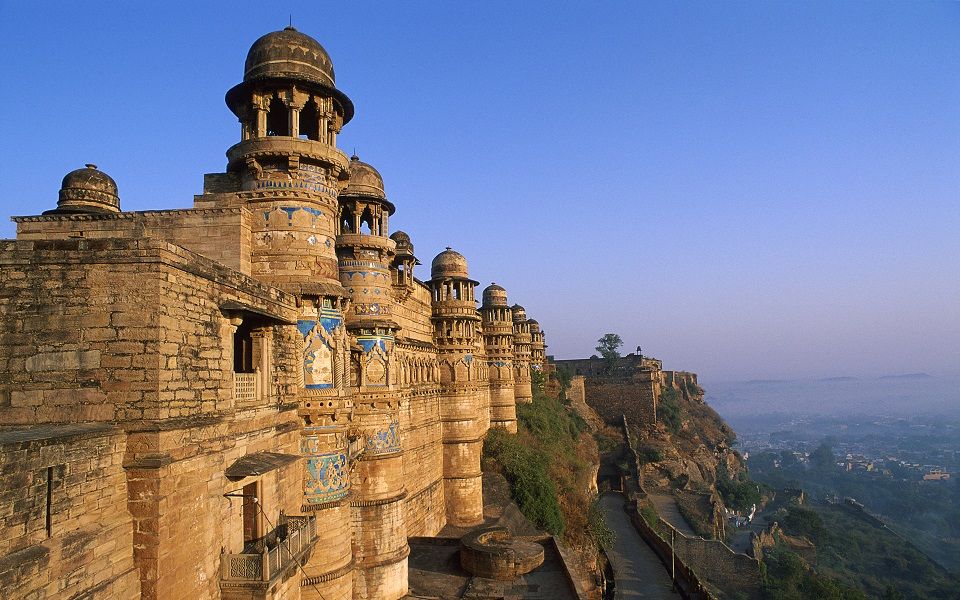
The Rajputs, Marathas, Mughals, British, Muslim rulers, Sikhs and some more may have played out their roles in India’s rich history, but they all seem to have a unique common link to a city in central India – Gwalior.
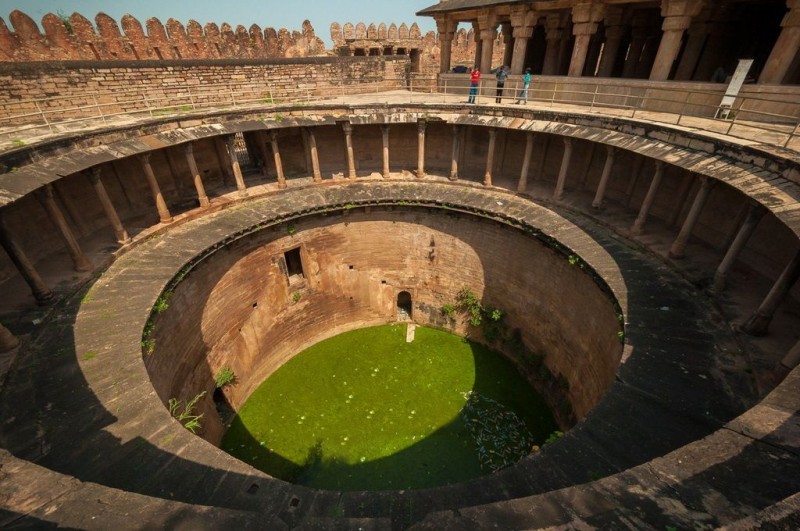
The Gwalior Fort is perched on a hilltop, near the Gwalior city of Madhya Pradesh. Regarded as North and Central India’s most impregnable fortress, the Gwalior Fort spreads out over an area of 3 square km, surrounded by 35 feet high concrete walls of sandstone. A massive structure spanning more than a square mile, Gwalior Fort houses dozens of smaller structures including water tanks, temples, shrines, monuments, and multiple palaces sheltered by thick, sandstone walls painted with bright blue accents.
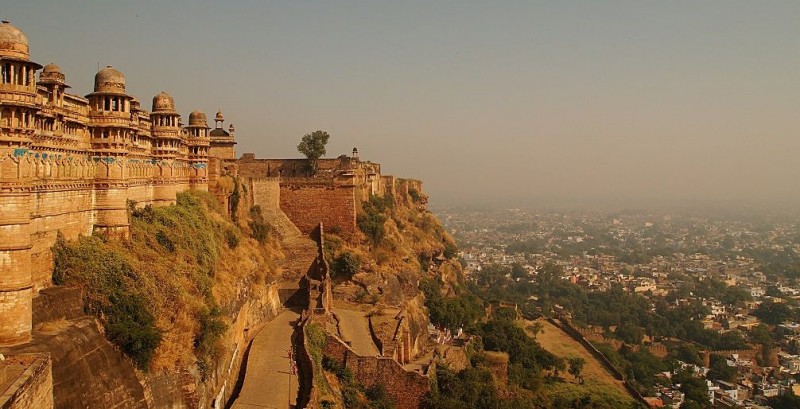
History of Gwalior Fort
Being adhered to the conquests of various dynasties and rulers, the design of this majestic hill top had been subjected to various changes. History of Gwalior Madhya Pradesh mentions that in the 5th century the Gwalior Fort came into being during the rule of Suraj Sen, the Kachhwaha Rajput prince. In the 10th century, Vrajdaman of the Kachapghat Rajvans took over Gwalior. In 1021 AD Mahmud of Gazni attacked Gwalior and Malik Bahauddin Tughluq, one of his lieutenants won it after an intense battle.
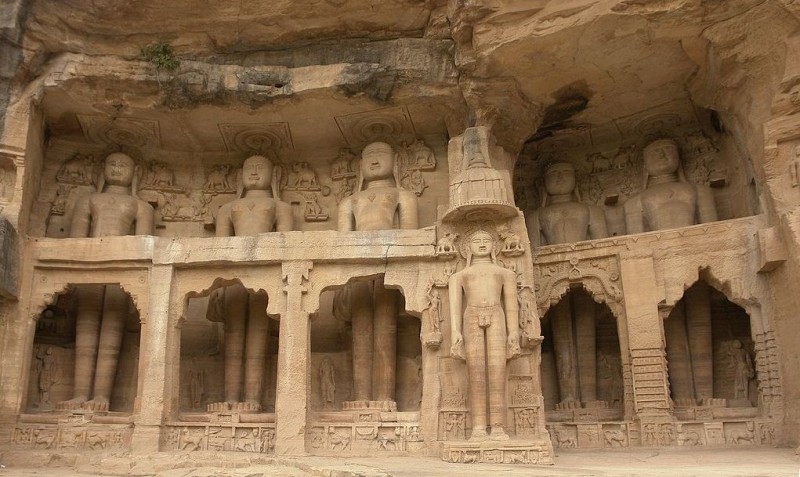
According to the History of Gwalior Madhya Pradesh, the 14th century saw the Tomar clan coming into power taking advantage of the weak Islamic rulers. Many rock-cut Jain statues were constructed during this period. The most illustrous ruler of this dynesty was Raja Man Singh who was instrumental in rebuilding the fort of Gwalior.
Lodi took the passion of the fort shortly after the death of Raja Man Singh. After Lodi the fort went to Mogul and this place was used as a prison by Jahangir and then Aurangzeb. With the growing power of Marathas the fort came under the rule of Scindia (Maratha clan). British took over the fort on several occasions and finally it was restored to Scindia in 1886 in exchange of Jhansi.
Monuments and Temples inside Fort
The fort and its premises are well maintained and house many historic monuments including palaces, temples and water tanks. There are eleven temples to Gautama Buddha and the tirthankaras of Jainism. Below Gwalior Fort carved directly into the sandstone bedrock, a series of Jain carvings watches the southern path leading up the hill. These carvings, the tallest over 50 feet high, were excavated between the 7th and 14th centuries.
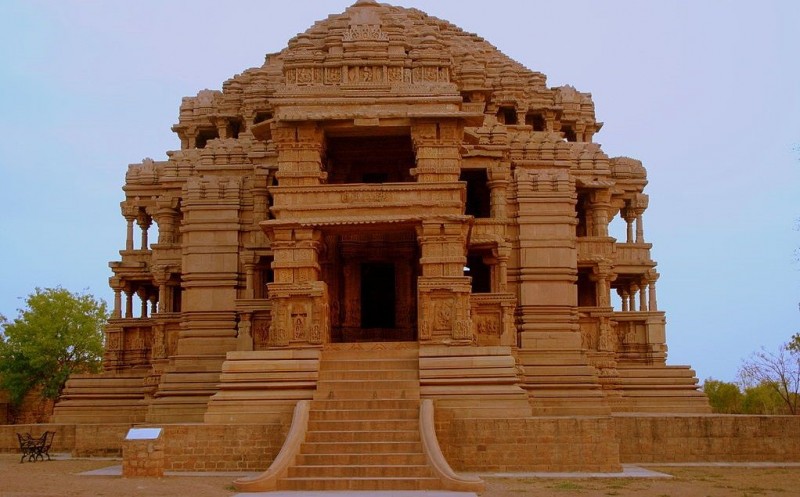
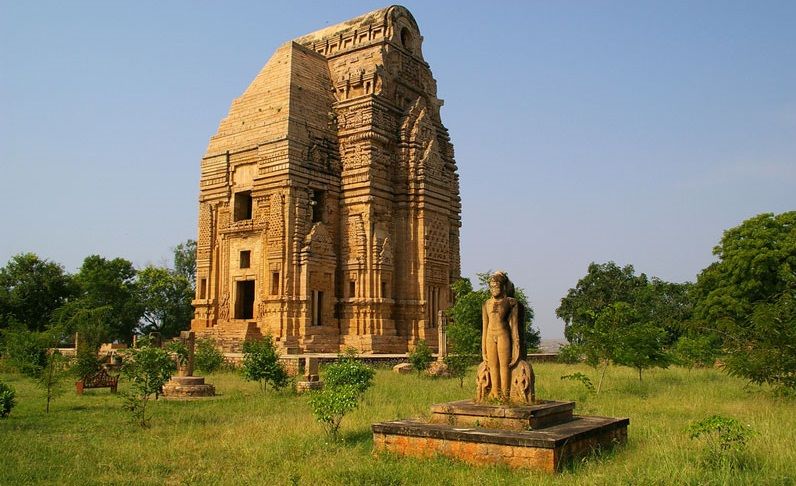
Within Gwalior Fort are several Hindu temples, one pair known as the Sas Bahu Ka Mandir, feature beautiful bas-reliefs. This pair was finished in 1083 and although crumbling they still feature lovely interiors. The 15th Century Gujari Mahal was built by Raja Mansingh Tomar as a monument of his love for his Gujar queen, Mrignayani. The exterior of the Gujari Mahal is well preserved and now houses an archeological museum. The Teli Ka Temple, or “Oilman’s Temple” was originally dedicated to Vishnu and later converted to the worship of Shiva. Close to the Teli ka Mandir temple is the Garuda monument, dedicated to Vishnu, is the highest in the fort.
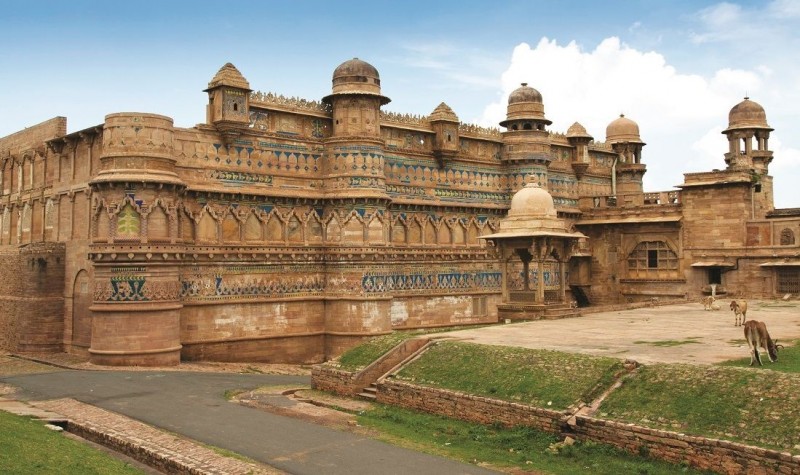
Then there is the Man Singh Palace, built by the king Man Singh in the 15th century. The reputed Palace has an amazing design. With blue ceramic tiles at the front façade and an impressive structure the Man Singh Palace reflects the true colors of Tomar dynasty.
The under ground floors are designed to pass sun light and ventilation inside and there is a unique communication system to talk between floors by using hollow pipes. These underground floors were used by the queens. It was in the same palace the Mughal emperor Aurangzeb imprisoned and later murdered his brother Murad.
There are several underground escape tunnels to allow occupants of the fort to escape during the war. These underground paths had some exposed opening for light and air however with the closing of those openings it became impossible and dangerous. Now the entrances to the escape ways are closed as some incidents took place as some enthuastic tourist tried to explore.
Then there is gruesome Jauhar Kund, where the women of the harem burnt themselves to death after the defeat of the king of Gwalior in 1232.
Gwalior also has its link to Sikh history. It was here that Mughal emperor Jahangir had imprisoned the sixth Sikh Guru Hargobind Sahib Ji, along with 52 princes for nearly two years. Guru was reluctant to go alone and requested release of 52 princes who were locked inside jail for various reasons. A Sikh Gurudwara Data Bandi Chhod is constructed in memory of Guru Hargobind Sahib Ji.
Other notable structures in the majestic Gwalior Fortress are the Karan Palace, the Jahangir Mahal and Shahjahan Mahal.
Source: IndianHoliday.com and Wikipedia