
Stonehenge of Manipur

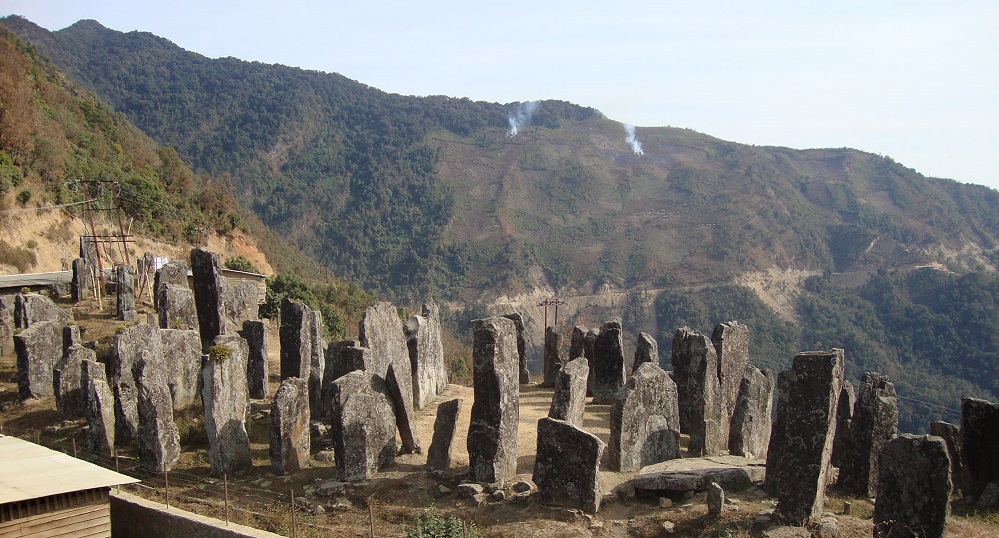
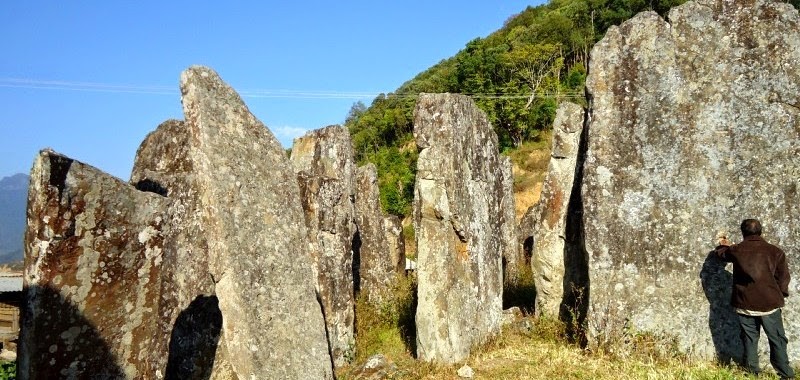
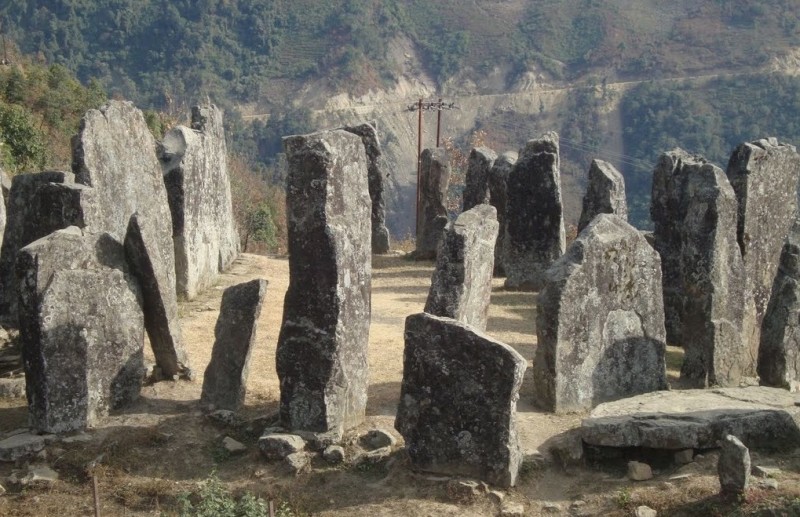
Located at a distance of 39 kilometers from the Maram Village in Manipur, Willong Khullen is characterized by its numerous stone erections which are similar to the Stonehenge. The tallest of the stones are as high as 7 meters and are about a meter in thickness. The place is located on the slopes of the valley and offers a serene picnic and resting spot for the travelers. It is said that the stones are uncountable as there is a spirit that would confuse you midway while counting.

According to local villager, these giant stone structures were ercted by their forefathers and this megalithic structures has a close connection with the mythology of the area. Each Stones has a unique story. They also believe that all the stones have their own name and they ‘really talk’ to each other at night. In male’s voice, each stone called one another with their names such as ‘Kala’, ‘Kanga’, ‘Hila’, etc.

Villagers explained that only a man of exceptional strength and power can think of erecting a stone at the site. He would have to go and find a suitable stone from a far off place and the villagers would assist him in bringing the stone to the village. Before bringing the stone to the village, the man have to fast for one whole night and perform a ritual by offering wine before the stone. Only after getting a favourable nod from the stone, he would be allowed to lift it from the original place. If the man found any difficult in lifting the stone then the villagers would sing a special folk song to bring it to Katak Tukhum area.

Stone erection of willong village in Manipur India.
Megalithic structures at Willong village’s Katak Tukhum area in Mao-Maram

According to villagers, none could count the exact number of stones that have been erected at Katak Tukhum area. There is also a folk tale about a Japanese, who challenged to count the number of stones but had to retreat after a white wild boar chased him away from the place.

Even today, there is still a giant stone at the outskirt of the village which the villagers regarded it as sent by God to mark the demarcation of Willong village.

But with the advent of Christianity such tradition and culture of the Marams seem to be moving away. Fortunately there is still a microscopic minority among the Marams who have been bonding with their ancestral practices and beliefs. Because of this group of people we are indeed grateful in capturing a glimpse of the bygone remnants.

As only a few elders who know about the history of these stones are surviving today, villagers feared that all the folk songs, riddles, tales that are connected with these giant stones might be forgotten soon, never to be heard by the new generations to come. Most youngsters are in no mood to listen to all these stories to understand the importance of this historical legacy.Stone_Erections_of_Willong_Khullen
Expressing desire for declaring the area as a historical site, the villagers have also urged the state government and its department concerned to construct a building where all these stones, their associated folklores could be preserved. In fact, with an eye on keeping alive the historical legacy of Katak Tukhum, the process of collecting some folk tales and songs have already been started by the villagers themselves. However, the state government never bothers to preserve the age-old stones for future generations.Stonehenge of manipur
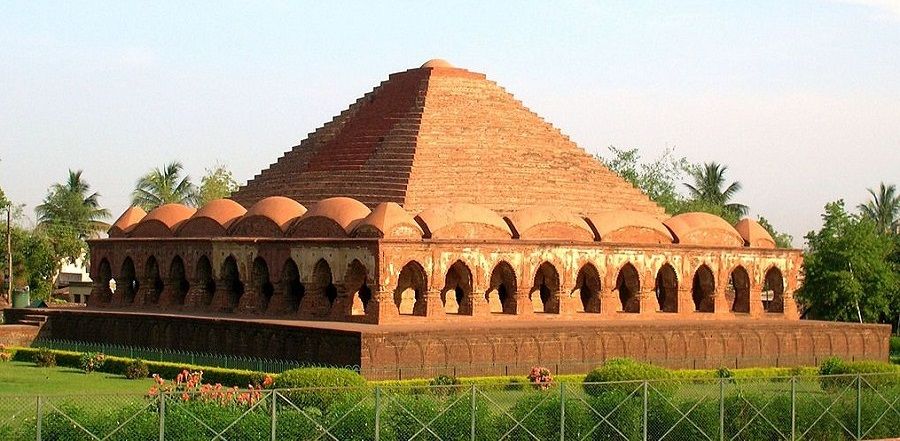
The pyramidal Ras Mancha Temple

RasMancha is a pyramid like building located at Bishnupur, West Bengal, India.The name Rasmancha implies ‘a stage for dances’. The massive building was built in between the years of 1557 – 1600 A.D. by Malla King, Vir Hambir to celebrate the Vaishnava Ras festival.

During the Malla Regime, all the portraits from the neighbouring shrines were brought during the Ras Festival and exhibited in the open doorways for common public. The monument was also used to stage dances every evening to celebrate scenes from the Krishna Leela. However, it is no longer a temple today; it is an ancient monument now. The festival was last celebrated in 1932 after which the temple was declared a protected monument by the Archaeological Survey of India.  Nowadays the annual festival has been shifted to the nearby grounds near the temple of Goddess Durga

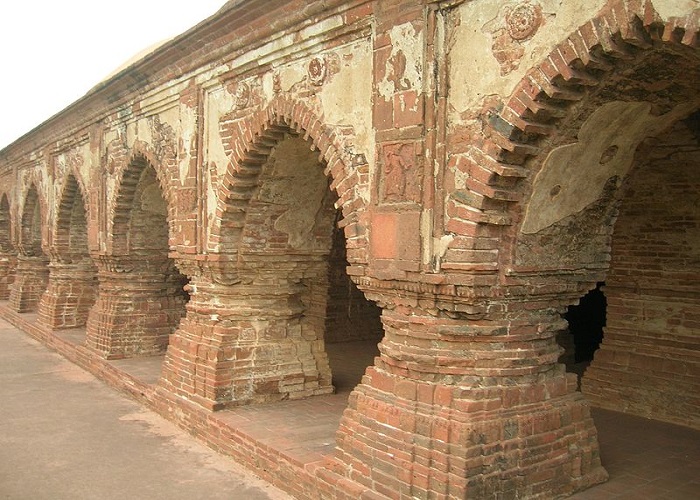
Eastern veranda of Rasmancha
Eastern veranda of Rasmancha – Image Source
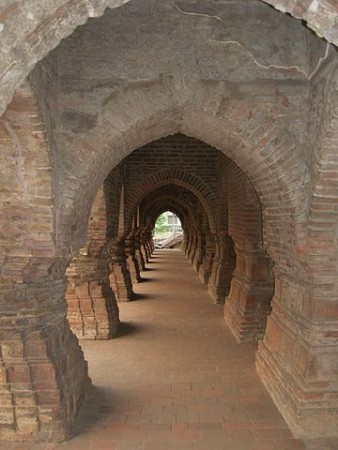
The inner terrece of the Rasmancha
The inner terrece of the Rasmancha – Image Source

The temple is absolutely unique in style and architecture, not only in Bengal, but in India. It is the oldest brick temple in the town.  The red brick structure of the building is in the form of a pyramid summit which is built upon a roomy platform. The foundation of the structure is 1.5 meters high with each side measuring 24.5 meters and rising to a height of 11 meters. It consists of a single chamber with an elongated tower which is surrounded by hut-shaped turrets. The masterpiece has 108 doorways and houses some large ancient cannons which date back to the Malla dynasty. The temple has three consecutive circumblatory galleries. The archways of these galleries are highlighted with terracotta lotus motifs, enclosing the sanctum of the holy place.

The masterpiece is maintained by Archaeological Survey of India (ASI) which provides special illumination facilities to conserve the fragile terracotta crafts. The entrance to this monument would cost Rs. 5 per head. This building is located near the Archaeological Museum, which is also an interesting place to visit.

Makara – A Dinosaur in Bhagwad Purana

You wouldn’t find any information on dinosaurs or other similar species in any of the ancient western texts but if you go through the ancient Indian literary texts, you might be able to extract some information on dinosaurs and other species similar to dinosaurs.

Mystery of Red Rain in India

The Kerala red rain phenomenon was a blood rain (red rain) event that occurred from 25 July to 23 September 2001, when heavy downpours of red-coloured rain fell sporadically on the southern Indian state of Kerala, staining clothes pink. Yellow, green, and black rain was also reported. Coloured rain was also reported in Kerala in 1896 and several times since,most recently in June 2012.

After intense analysis at two labs in the UK, Astronomer Chandra Wickramasinghe who studied the cells with microbiologists at Cardiff University says that “As the days pass, I’m getting more and more convinced that these are exceedingly unusual biological cells. The Red Rain cells of 2001 multiply under extreme heat and were found not to contain DNA.

In 2001, numerous people observed red rain falling over Kerala in the southern tip of India during a two month period. One of them was Godfrey Louis, a physicist at nearby Cochin University of Science and Technology. Intrigued by this phenomena, Louis collected numerous samples of red rain, determined to find out what was causing the contamination, perhaps sand or dust from some distant desert.

Sample of Red Rain In kerala – Image Source

Under a microscope, however, he found no evidence of sand or dust. Instead, the rain water was filled with red cells that look remarkably like conventional bugs on Earth. What was strange was that Louis found no evidence of DNA in these cells which would rule out most kinds of known biological cells (red blood cells are one possibility but ought to be destroyed quickly by rain water).

Louis published his results in the peer-reviewed journal Astrophysics and Space in 2006, along with the tentative suggestion that the cells could be extraterrestrial, perhaps from a comet that had disintegrated in the upper atmosphere and then seeded clouds as the cells floated down to Earth. In fact, Louis says there were reports in the region of a sonic boom-type noise at the time, which could have been caused by the disintegration of an object in the upper atmosphere.

Red rain of keralaSince then, Louis has continued to study the cells with an international team including Chandra Wickramasinghe from the University of Cardiff in the UK and one of the leading proponents of the panspermia theory, which he developed in the latter half of the 20th century with the remarkable physicist Fred Hoyle.
Panspermia is the idea championed by physicist Fred Hoyle that life exists throughout the universe in comets, asteroids and interstellar dust clouds and that life of Earth was seeded from one or more of these sources.

This is an extraordinary claim that will need to be independently verified before it will be more broadly accepted. It would be fair to say that more evidence will be required before Kerala’s red rain can be satisfactorily explained. In the meantime, it looks a fascinating mystery. 

30,000 years old Rock Shelters of Bhimbetka

The Bhimbetka rock shelters are the collection of 750 rock shelters from which 500 are inwrought by the paintings. Situated in the Raisen District of Madhya Pradesh of India, these Stone Age rock paintings are around 30,000 years old. It is one of the largest repositories of prehistoric art in India.

The shelters were designated a UNESCO World Heritage site in 2003. In addition to the cave paintings, archaeologists have unearthed large numbers of artifacts in the caves and in the dense teak forests and cultivated fields around Bhimbetka, the oldest of which are Acheulean stone tool assemblages.

The Bhimbetka shelters exhibit the earliest traces of human life in India. A number of analyses suggest that some of these shelters were inhabited by hominids like Homo erectus more than 100,000 years ago. Some of the Stone Age rock paintings found among the Bhimbetka rock shelters are approximately 30,000 years old ( Paleolithic Age).

The name Bhimbetka is associated with Bhima, a hero-deity of the epic Mahabharata. The word Bhimbetka is said to derive from Bhimbaithka, meaning “sitting place of Bhima“. It is believed that when the five brothers, called Pandavas, were banished from their kingdom, they came here and stayed in these caves, the massive rocks seating the gigantic frame of Bhima, the second Pandava. However, these claim still remains to be corroborated with concrete evidence.

Exterior of Rock Shelters of Bhimbetka

The caves were eventually discovered in 1957-58 by accident. An archaeologist from Ujjain, Dr. Vishnu Wakankar, strayed too far from the beaten path and found himself amidst this prehistoric treasure trove. Since then more than 700 such shelters have been identified, of which 243 are in the Bhimbetka group and 178 in the Lakha Juar group. Between 1972 and 1977 excavation undertaken by Wakanakar, Misra and Hass revealed a continuous sequence of Stone Age cultures from the late Acheulian to the late Mesolithic and also some of the world’s oldest stone walls and floors. 

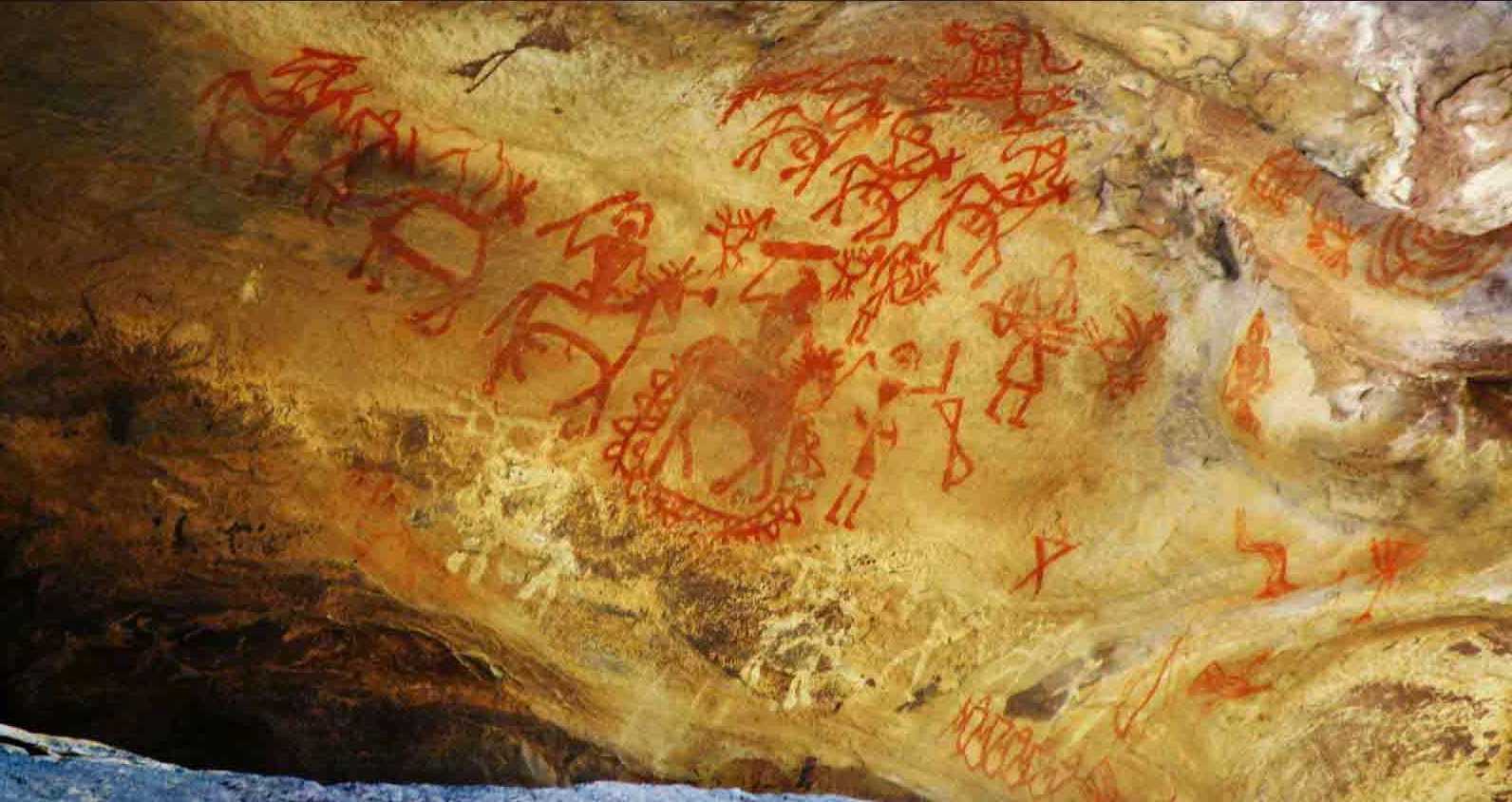
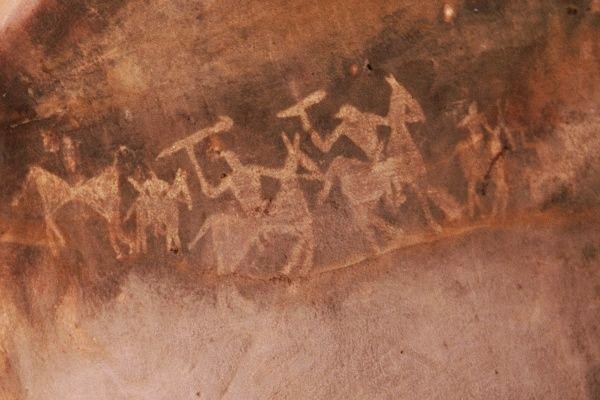
Rock Shelters of Bhimbetka depicting a War Scene
A War Scene

The caves have evolved over time into excellent rock-shelters, ideal sites for aboriginal settlements. The smooth shape of the rocks has led some scientists to believe that the area was once under water. The rocks have taken on incredible shapes in several stunning hues and textures. Apart from the central place the aboriginal drawings have in human history, the caves themselves offer interesting material for a study of the Earth’s history.

Executed mainly in red and white, with the occasional use of green and yellow with themes taken from the everyday events, the scenes usually depict hunting, childbirth, communal dancing, drinking, religious rites, burials, horse and elephant riders, animal fights, honey collection, decoration of bodies, disguises, masks and different type of animals etc. It depicts the detail of social life during the long period of time, when man used to frequent these rock shelters. The entire area is covered by thick vegetation, has abundant natural resources in its perennial water supplies, natural shelters, rich forest flora and fauna, and bears a significant resemblance to similar rock art sites such as Kakadu National Park in Australia, the cave paintings of the Bushmen in Kalahari Desert, and the Upper Paleolithic Lascaux cave paintings in France

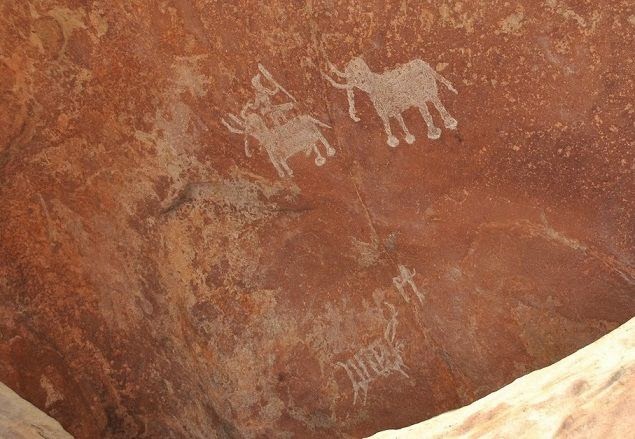
two elephants with tusks
two elephants with tusks at Bhimbetka rock shelters

One rock, popularly referred to as “Zoo Rock”, depicts elephants, sambar, bison and deer. Paintings on another rock show a peacock, a snake, a deer and the sun. On another rock, two elephants with tusks are painted. Hunting scenes with hunters carrying bows, arrows, swords and shields also find their place in the community of these pre-historic paintings.

Bhimbetka rock painting showing man riding on horse.
Bhimbetka rock painting showing man riding on horse. – Image Source

It is a marvel that the paintings have not faded even after thousands of years. The colors used by the cave dwellers were prepared by combining manganese, hematite, soft red stone and wooden charcoal. Perhaps, animal fat and extracts of leaves, vegetables, and roots were also used in the mixture. Brushes were made of pieces of fibrous plants. The natural pigments have endured through time because the drawings are generally made deep inside a niche or on inner walls. Some of the geometric figures date to as recently as the medieval period.

The rock art of Bhimbetka has been classified into various groups on the basis of the style and subject. The superimposition of paintings shows that different people used the same canvas at different times. The paintings, which display great vitality and narrative skill, are categorized into different prehistoric periods. The oldest are dated to the Late Paleolithic Period (Old Stone Age) and consist of large linear representations of rhinoceroses and bears. Paintings from Mesolithic (Middle Stone Age) times are smaller and portray, in addition to animals, human activities. Drawings from the Chalcolithic Period (early Bronze Age) showcase the early humans’ conceptions of agriculture. Paintings from Early Historic perioddepict religious motifs, including tree gods and magical sky chariots. Medieval paintings are geometric, linear and more schematic but show degeneration and crudeness in their artistic style. 

Mount Kailash – A man-made pyramid?

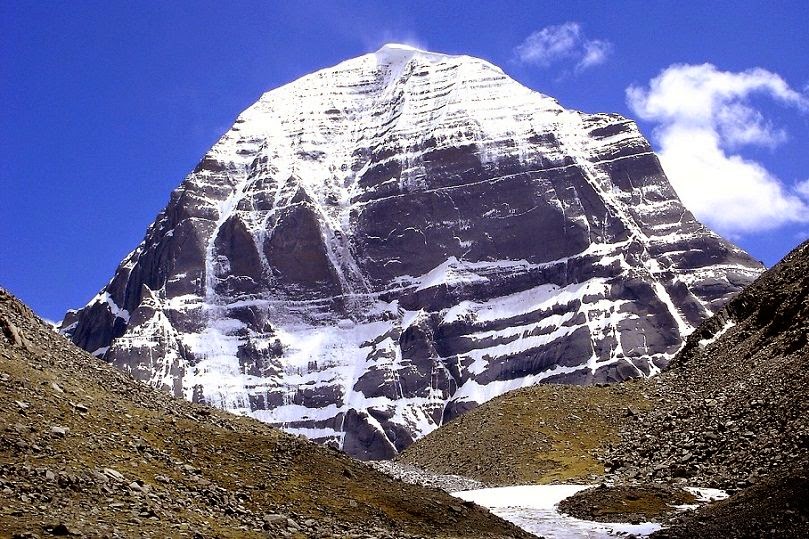
Kailash is a sacred Tibetan mountain shrouded in mystery and legends. With an impressive height of 6718 meters, Mount Kailash represents the axis of the world or the stairway to heaven for the people in the region. Both Buddhists and Hindus, as well as older religions, recognize Mount Kailash as an ancient holy place. Its shape is like the pyramids in Egypt with four nearly symmetrical sides. Its glistening snow-covered top makes it the most eye-catching one. Approach Kailash not only prohibited, but dangerous. In the immediate vicinity of mountains time flows much faster, and people have gone to the mountain, often not returned.

Its shape is remarkable and has led to speculations over the centuries. The area around this great mountain is the source of four life-giving rivers; the Indus, Brahmaputra, Sutlej and the Karnali River (a tributary of the Sacred River Ganga). Two lakes are situated at the base of the mountain. The higher lake Manasarovar (one of the highest freshwater lakes in the world), is the sacred lake, and is round like the sun. The lower lake Rakhast Tal (one of the highest salt-water lakes) is the devil’s lake and has the shape of the crescent moon. The two lakes represent solar and lunar forces, good and negative energies respectively.

Mount Kailash is a Pyramid?

In 1999, the expedition of Russian scientists led by Professor ER Muldasheva found that the top of Mount Kailash is actually a giant man-made pyramid from ancient times. It is surrounded by more than 100 other small pyramids and various monuments, clearly oriented to the cardinal points. According to tentative estimates, the height of the rest of the complex of pyramids lie in the range 100-1800 m (for comparison: the pyramid of Cheops – 146 m). This complex, moreover, might be the centre of a worldwide system connecting other monuments or sites where paranormal phenomena have been observed. If this is true, then human history has to be re-written. It is larger than any pyramid known today.

Scientists headed by Professor ER Muldasheva concluded that the complex of pyramids Kailash, the so-called “City of the Gods“, was built by the representatives of advanced civilization, who knew the laws of subtle energy (torsion field) and the time and knew how to manage them they had been, and is subject to gravity. Otherwise it is impossible to move large masses of stone or grinding of mountain ranges that had to be done during the construction of these Pyramids, and “mirrors”. 

North face of Mount Kailash
North face of Mount Kailash – image Source

In shape it (Mount Kailash) resembles a vast cathedral… the sides of the mountain are perpendicular and fall sheer for hundreds of feet, the strata horizontal, the layers of stone varying slightly in colour, and the dividing lines showing up clear and distinct…… which give to the entire mountain the appearance of having been built by giant hands, of huge blocks of reddish stone. (G.C. Rawling, The Great Plateau, London, 1905).

The idea of the pyramid in this region is not new. It goes back to the timeless Sanskrit epic of the Ramayana.

 
Vedas mentioned Mount Kailash as cosmic axis and world pillar, center of the world, and world tree. It has other names… Meru, Sumeru, Sushumna, Hemadri, Deva Parvata, Gana Parvata, Rajatadri, and Ratnasanu. Kang Tisé or Kang Rinpoche (the ‘Precious Jewel of Snow’ in Tibetan), Meru (or Sumeru), Swastika Mountain, Mt. Astapada, Mt. Kangrinboge (the Chinese name) – all these names, real or legendary, belong to one of the holiest and most mysterious mountains in the world – Mount Kailash. In religion or mythology, the world center or the connection is between Heaven and Earth. As the celestial pole and geographic pole, it expresses a point of connection between sky and earth where the four compass directions meet.  

According to Hinduism, Lord Shiva, the destroyer of ignorance and illusion, resides at the summit of mountain Kailash, where he sits in a state of perpetual meditation along with his wife Pārvatī. Hindu mythology recognises it as the only abode of the gods that can be visited by man in his mortal body.

To Tibetan Buddhists, Kailash is the abode of the tantric meditational deity Demchog.
Jains revere Kailash as the site at which their first prophet received enlightenment.

The Bön, an aboriginal religious sect of the Tibetan pre-Buddhist era call it Yung-drung Gu-tzeg, or “9-storey Swastika” because on the south face of Kailash can be seen a swastika.

Perhaps the Buddhist legends about Mount Kailash gives the most interesting indication of its true significance. Buddhists believe that ‘their’ sorcerer Milarepa challenged the sorcerer of the Bön religion, Naro Bön-chung. There was a fierce superhuman battle, but both sorcerers turned out to be equally powerful. They then decided to race each other to the top of Mount Kailash. Now what is interesting is that one of them used some sort of magic drum to reach the top, while the other won by using ‘rays of the sun’.

What does this sound like, if we take it literally? Did one of these legendary figures use a spacecraft and the other some form of teleportation? What if these magicians were actually ancient aliens, using advanced technology that primitive humans could only explain by calling them ‘Gods’?

However, it is only fair to add that the Russian claims to have discovered in the Mt.Kailash area the highest ever human-built pyramids were denied three years later by Chinese scientists in the official Chinese Press.


Reference: http://www.unspecial.org/UNS640/t47.html

Ancient Nalanda University of India

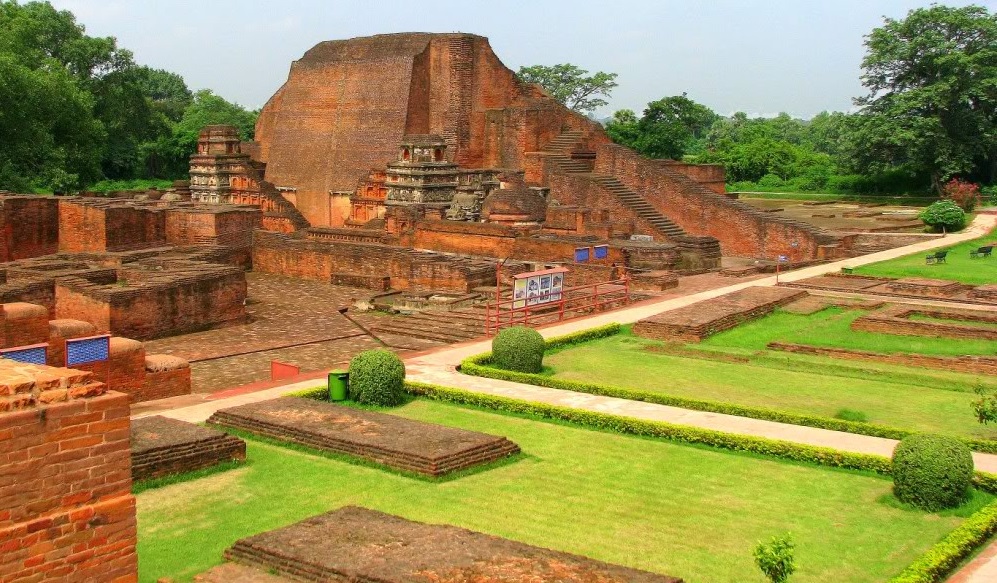
Nalanda University was an ancient centre of learning in India. Established in the 5th century AD by Gupta Kings, Nalanda University was among the first great universities in recorded history, pre-dating such institutions of higher learning like Al-Azhar in Egypt (10th century AD), the University of Bologna in Italy (11th century AD), and Oxford University in England (12th century AD).

Vijay Stambh – Tower of Victory in Rajasthan

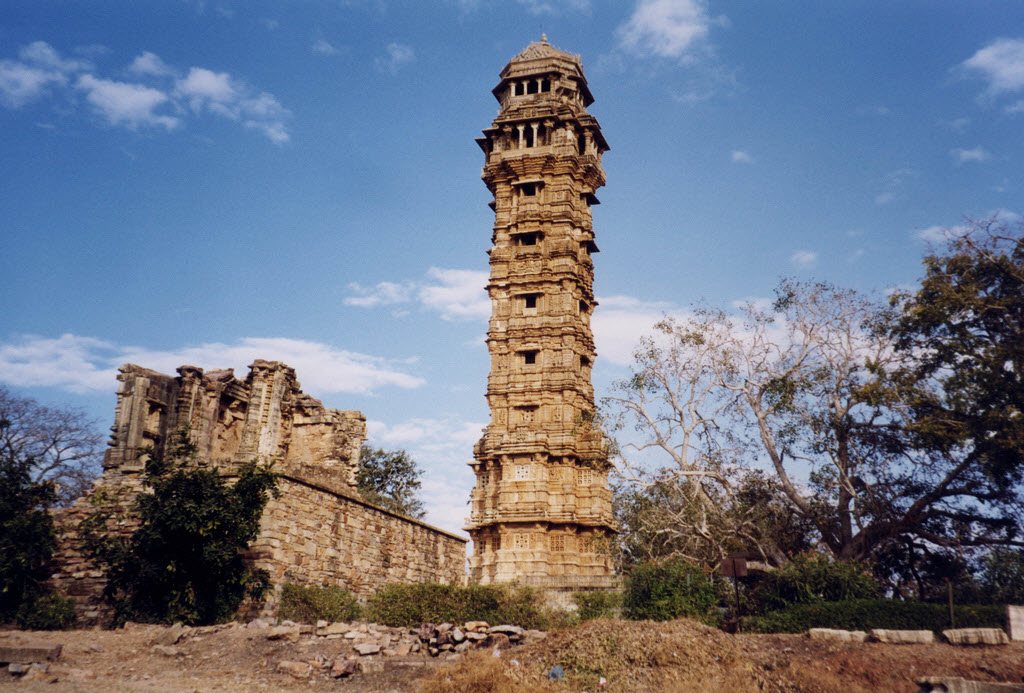
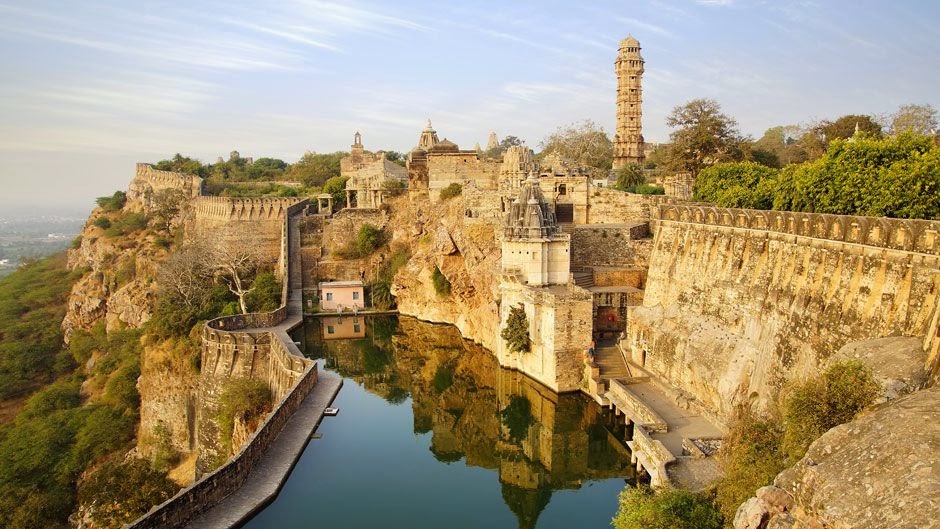
Vijay Stambha or Tower of Victory is one of the most famous monuments of India and is an important tourist attraction of Rajasthan.  Located in Chittorgarh fort in Rajasthan, India, Tower of Victory was constructed by Mewar king Rana Kumbha between 1442 AD and 1449 AD  to honour his distinguished victory over the joint attacks of Sultan Mohammad Khilji of Malva and Sultan Kutubuddin Shah of Gujarat.

Its graceful and immaculate architecture is unique. Dedicated to Vishnu, this 37.19 m high tower was constructed on a 14 m square platform. Its base width is 9 m. The Tower is built partly of red sand stone and partly of white marble.  

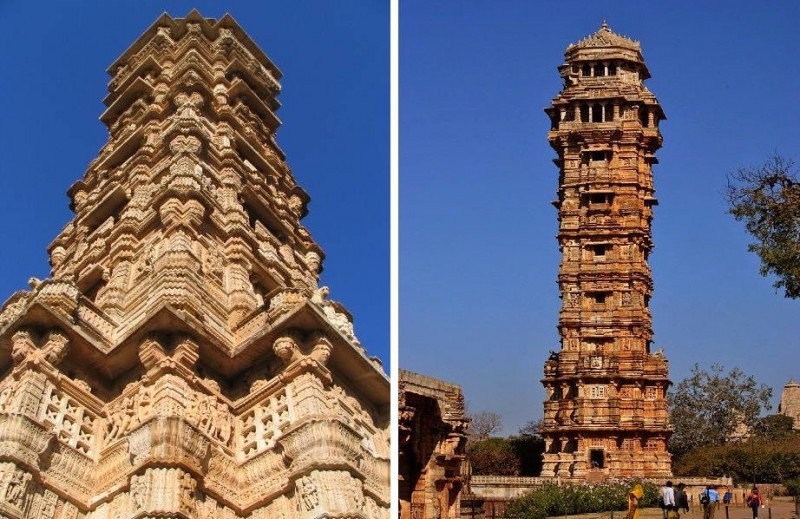
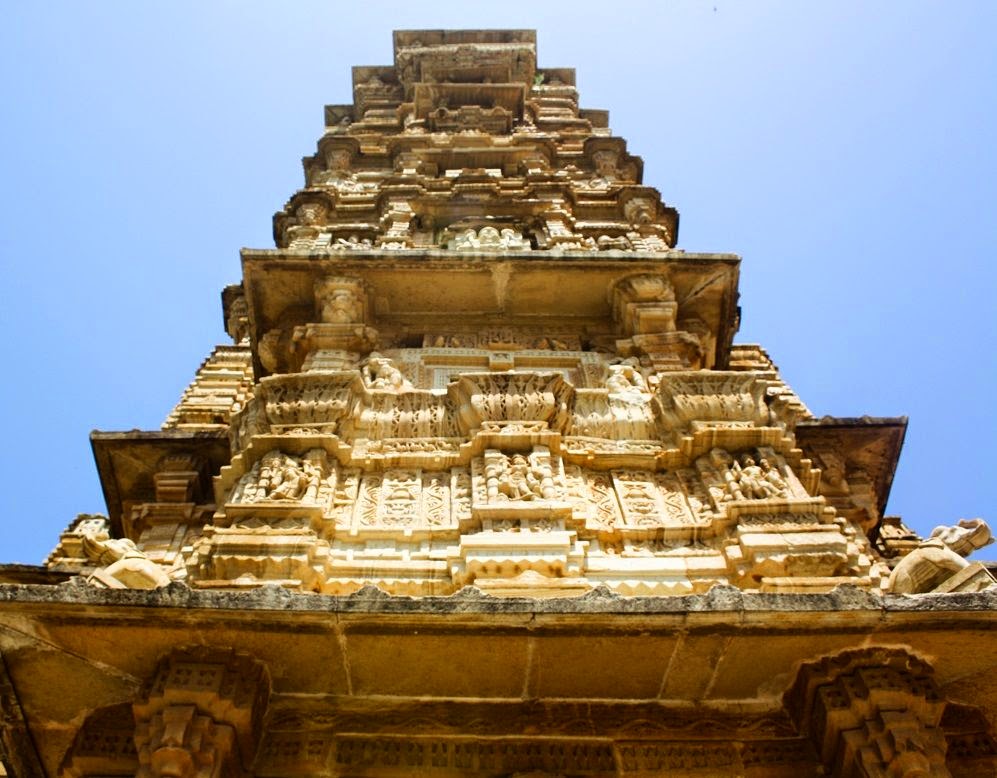
The interior and exterior are delicately carved showing Hindu deities of mythological characters with names. The inscribed slabs in the uppermost story contains genealogy of the rulers of Chittaur from Hamir to Rana Kumbha. The entire tower is covered with architectural ornaments and inscribed images of gods and goddesses, seasons, weapons, musical instruments, etc. Its inscribed sculpture are a veritable text-book of Hindu iconography. The portraits of the architect of this tower Jaita and his 3 sons, Napa, Puja, and Poma are carved on the fifth floor of the tower. Architecture of Towern Of Victory Rajasthan

The Tower has nine storey, each of the nine storey are distinctly marked with openings and balconies at every face of each storey. The 157 circular and narrow steps which leads to the terrace is also a noticeable feature of the architecture. After reaching at the top of tower, anyone can see a great and unique view of the whole city. The uppermost floor has been sealed off and is no longer accessible to visitors. 

Chittorgarh fort and Tower of victory

The area around the Vijay Stambh is littered with an impressive number of further remains, including a pair of monumental gateways and a number of florid temples, including the superbly decorated Samiddhesvara Temple, whose shrine houses an image of the trimurti, a composite, three-headed image of Shiva, Brahma and Vishnu.

Several temples line the route, but the most impressive monument is Kirti Stambh. The inspiration for the tower of victory, this smaller Tower of Fame is 22 metre high and was built by a Jain merchant Jeeja Bhagerwala during the reign of Rawal Kumar Singh (1179-1191) for the glory of Jainism.

In the night, colourful lights increase its beauty. When reaching near Vijaya stambh (Tower of Victory) and viewing it from bottom gives great feelings of old time architecture and joy of victory. So really its a great piece of monuments and must be included in great architecture of India. 

Vijay Stambha -Tower of Victory, Indian architecture

Tower of victory | Vijay Stambha - view from bottom
A View from Bottom

Mystery of 1600 years old Iron Pillar of Delhi

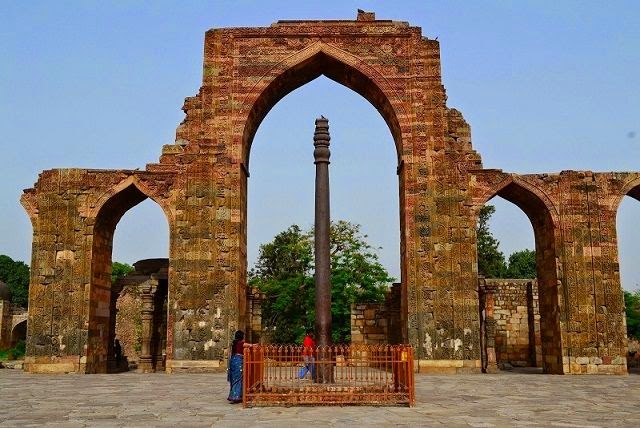
The skill and the technology possessed by ancient Indians may not be agreed by present day ‘secular’ historians, but the truth cannot be suppressed for long. The Iron Pillar standing tall at Mehrauli, Delhi is stands proof of how advanced science was in ancient India.

The pillar which has not rusted for the past 1600 years has been found to be the handiwork of a great Vishnu Bhakth namely Chandragupta II Vikramaditya. The inscriptions on the pillar are in Sanskrit and refer to the mighty king. Inspite of all these evidences, school children will still continue to be taught that it was the Mughals who were responsible for the pillar. Yes, the Mughals were responsible for stealing the pillar from its original place!

It is arguable that Indian scientists and technologists were producing high-quality corrosion-resistant iron and steel as early as 400 AD. There is considerable evidence of the ingenuity of ancient India’s metallurgists in the form of permanent installations, museum exhibits and pillars installed in places of worship across the country. The most famous of these – one which has defied and confounded students and professors of metallurgy in India and abroad — is the 32 ft high pillar of rust-free iron sited contiguous to the 239 ft tall red sand stone in Qutab Minar. And the wonder of this metallurgical marvel is that it has not rusted or succumbed to atmospheric corrosion despite being unprotected against the elements for over 1600 years. During the past two centuries since the existence of this wonder pillar was brought to public attention by British archaeologist James Prinsep in 1817, over 250 books have been written on this subject. The first systematic research was done by British metallurgist Sir Robert Hodfield in 1912, and since then several scientists from across the world have researched, presented papers and written books on the pillar.Details of the top of iron pillar of Delhi

The iron pillar in Delhi fascinates scientists all over the world, due to its excellent resistance to atmospheric corrosion. This is an attempt to explain the story behind the pillar in a very simple manner, so that a lay reader can appreciate the history, science and technology of the iron pillar. In addition the artistic merit of the pillar is highlighted …It is sincerely hoped that the imagination, especially of the young readers, will be fired by the facts and ideas presented in this book,” writes Balasubramaniam.

The Story of the Delhi Iron Pillar traces the history of this metallurgical wonder and recounts that it was engineered in Udayagiri. The author reveals that the iron pillar was originally installed atop a hill near Udayagiri in the hinterland of Madhya Pradesh during the reign of Chandragupta II Vikramaditya (374-413 AD) of the Gupta dynasty. The original site of the pillar was the exact location where the imaginary line that is the tropic of cancer crosses India from where one can observe the sun rising in the east and setting in the west on spring and autumn equinox days. However in 1234 King Iltutmish (1210-36 AD) the third sultan of Delhi’s slave dynasty captured Udaygiri and transported the pillar to Delhi as part of his victory booty.

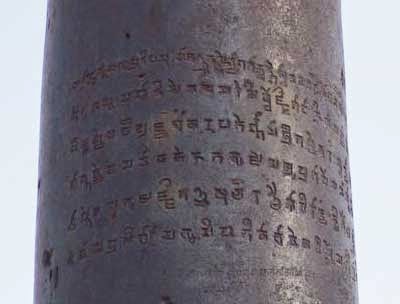
Inscription on the rust resilient Iron Pillar from Delhi.

The pillar carries a number of inscriptions and graffiti of different dates which have not been studied systematically despite the pillar’s prominent location and easy access. The oldest inscription on the pillar is in Sanskrit, written in Gupta-period Brahmi script.This states that the pillar was erected as a standard in honour of Viṣhṇu. It also praises the valor and qualities of a king referred to simply as Chandra, now generally identified with the Gupta King Chandragupta II. Some authors attempted to identify Chandra with Chandragupta Maurya and yet others have claimed the pillar dates as early as 912 BCE. The dating of the inscription is supported by the nature of the script and the Sanskrit poetics, both of which reflect the conventions of Gupta times.

That the Delhi iron pillar is indeed an engineering marvel was conceded by the president of the Institute of Mechanical Engineers, London. The incumbent professor of materials and metallurgical engineering at IIT-Kanpur, Balasubramaniam also unravels the mystery of the amazing durability of Delhi’s iron pillar. According to him unnamed engineers of that era used the film forming quality of phosphoric acid to create a thin protective layer of ‘misawite’, a compound of iron, oxygen and hydrogen to prevent rusting and corrosion. This protective film encapsulated the pillar within three years after its erection and has been growing imperceptibly since. Today 1,600 years later, the film is of a thickness of one-twentieth of a millimeter.

Source: Prof. R. Balasubramaniam’s Story of the Delhi Iron Pillar

Ancient India’s contribution to Mathematics

Mathematics represents a very high level of abstraction attained by human brain. In ancient India, roots to mathematics can be traced to Vedic literature, which are around 4000 years old. Between 1000 BC and 1000 AD, a number of mathematical treatises were authored in India.

Will Durant, American historian (1885-1981) said that India was the mother of our philosophy of much of our mathematics. 

It is now generally accepted that India is the birth place of several mathematical concepts, including zero, the decimal system, algebra and algorithm, square root and cube root. Zero is a numeral as well as a concept. It owes its origin to the Indian philosophy which had a concept of “sunya“, literal translation of which is ‘void‘ and zero emerged as a derivative symbol to represent this philosophical concept.

mathematician Aryabhatta
Mathematician Aryabhatta

Geometrical theories were known to ancient Indians and find display in motifs on temple walls, which are in many cases replete with mix of floral and geometric patterns. The method of graduated calculation was documented in a book named “Five Principles” (Panch-Siddhantika) which dates to 5th Century AD. A. L. Basham, an Australian Indologist, writes in his book, The Wonder That was India that “… the world owes most to India in the realm of mathematics, which was developed in the Gupta period to a stage more advanced than that reached by any other nation of antiquity.”
The success of Indian mathematics was mainly due to the fact that Indians had a clear conception of the abstract number as distinct from the numerical quantity of objects or spatial extension.

Algebraic theories, as also other mathematical concepts, which were in circulation in ancient India, were collected and further developed by Aryabhatta, an Indian mathematician, who lived in the 5th century, in the city of Patna, then called Pataliputra. He has referred to Algebra (as Bijaganitam) in his treatise on mathematics named Aryabhattiya

Decimal system origionated in India between 400 B.C. to 400 A.D. The system was adopted by the Arabs by about A.D. 800 at the very earliest. They brought it to Spain about 900. In 1202, Leonardo Fibonacci, an Italian mathematician wrote a hugely influential book called “Liber Abaci” (Book of Calculation), in which he promoted the use of the Hindu-Arabic numeral system. Fibonacci called number “Numeri Indian” (Indian Numbers).

Decimal system or Indian Numbers

Another mathematician of the 12th century, Bhaskaracharya also authored several treatises on the subject – one of them, named Siddantha Shiromani has a chapter on algebra. He is known to have given a basic idea of the Rolle’s theorum and was the first to conceive of differential calculus.
In 1816, James Taylor translated Bhaskaracharya’s Leelavati into English. Another translation of the same work by English astronomer Henry Thomas Colebruke appeared next year in 1817.
The credit for fine-tuning and internationalizing these mathematical concepts – which had originated in India – goes to the Arabs and Persians. People from Arab and other countries used to travel to India for commerce. While doing commerce side by side, they also learnt easy ways to use calculations methods of India. Through them this knowledge reached Europe. It was from this translation of an Indian text on Mathematics that the Arab mathematicians perfected the decimal system and gave the world its current system of numeration which we call the Arab numerals, which are originally Indian numerals. 
 Al-Khawarizmi, a Persian mathematician, developed a technique of calculation that became known as “algorism.” This was the seed from which modern arithmetic algorithms have developed. Al-Khwarizmi’s work was translated into Latin under the title Algoritmi de numero Indorum, meaning The System of Indian Numerals. A mathematician in Arabic is called Hindsa which means from India.
The 14th century Indian mathematician Madhava of Sangamagrama, along with other mathematicians of the Kerala school, studied infinite series, convergence, differentiation, and iterative methods for solution of non-linear equations.
Jyestadeva of the Kerala school wrote the first calculus text, the Yuktibhasa, which explores methods and ideas of calculus repeated only in seventeenth century Europe. 

The Hindu cosmological time cycles explained in the Surya Siddhanta, give the average length of the sidereal year (the length of the Earth’s revolution around the Sun) as 365.2563627 days, which is only 1.4 seconds longer than the modern value of 365.2563627 days. This remains the most accurate estimate for the length of the sidereal year anywhere in the world for over a thousand years.