
Best Places to Visit in Kutch

Places to Visit in Kutch

Kutch, one of the most expansive districts in the state of Gujarat presents one with a unique cultural mélange, coming from the numerous tribes that inhabit the region in complete harmony with each other. Mesmerizing landscapes, vibrant history and culture, the camel and jeep safaris across the great salt marsh of the Rann of Kutch are the prime attractions for tourists visiting Kutch. But there are plenty to explore in Kutch apart from these. A good holiday package Kutch will take you on a tour of some of the best places to visit in Kutch. Read on to learn more:

Kutch desert wildlife sanctuary
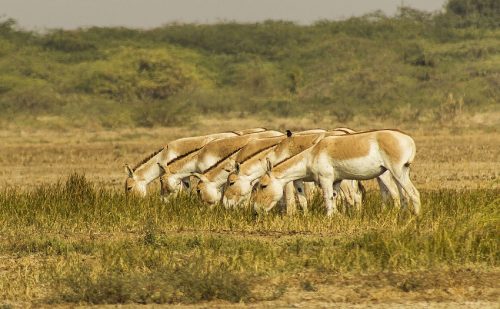
For passionate wildlife enthusiasts, this place is a true heaven. The Kutch Desert Wildlife Sanctuary sprawls across an area of more than 2797.7 sq miles. Rare and endangered wildlife species like Wild boar, Desert fox, Chinkara, Spiny tailed lizard, Porcupine, Jackals can be seen here. The sanctuary houses a special reserved space called ‘Flamingo city’ where tourists can feed birds and enjoy themselves.

The Rann
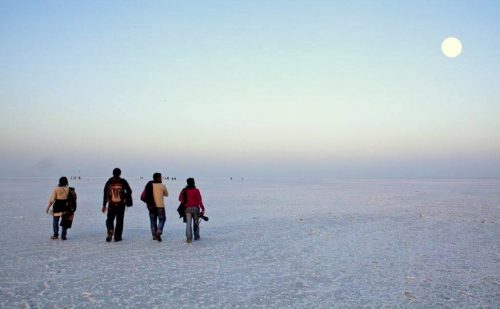
Rann is a vast unending stretch of salt marshes flanked by Arabian Sea on one side and the great Indian Thar Desert on the other. The sand and salt mingle on the marshy flats to create a marvelous wonder of nature. On a moonlit night, the Rann glitters giving an impression of millions of sequins lying pell-mell at your feet. Rann Utsav is an important colorful and culturally enriched event held on the Rann of Kutch. Lively celebrations pep up the ambiance during the festive times. Traditional dances, music and crafts of the region are brought to limelight during the time.
Mandvi beach
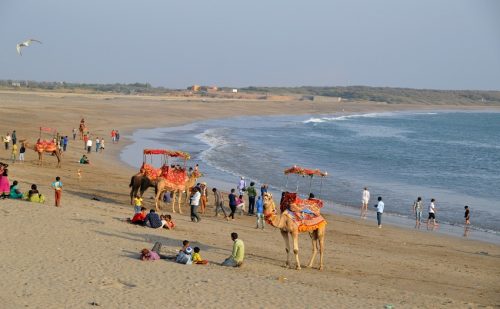
Mandvi, a popular beach resort of the Kutch region is a popular tourist attraction offering enough of sand and surf. The long shoreline bordering the sea offers an ideal setting for evening beach strolls, horse rides, camel rides. One could also pay a visit to the luxurious and magnificent Vijay Vilas Palace located on the beach.
Topansar Lake
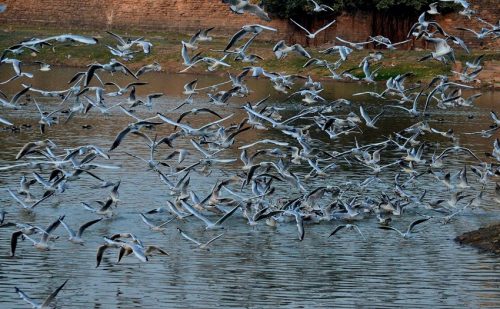
The Topanasar Lake is located amid the city of Mandvi and is one of the most visited lakeside in the Kutch region of Gujarat. The scenic lakeside is used by locals for relaxation, jogs and walks and also as picnic spot. For birdwatchers this place is a true paradise as lots of migratory birds flock here in the winters. Brown headed and black headed gulls should not be missed while you are at the Topansar Lake.
Kala Dungar
Kala Dungar is black colored dune hillock and the highest of all points in the entire region of Kutch. From the peak of Kala Dungar, you can catch a bird’s eye view of the entire Kutch region below and the views are truly jaw-dropping. Tourists can reach this highland by means of jeeps/buses from Khavda. Dattatreya temple located on the hilltop is a prime tourist attraction. This ancient temple dates back to as much as 400 years and is an abode of the holy trilogy of Brahma-Vishnu-Maheshwar.
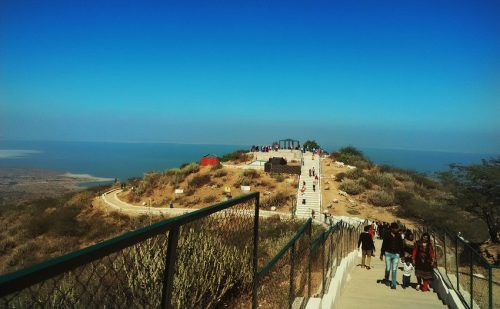
Kutch museum
If you are a history buff, you’ll surely love being at this most ancient museum in the state Of Gujarat. Maharao Khengarji is the founder of this museum. It came into being in the year 1877. The museum houses some rare and valuable ancient collections such as tribal artifacts, Kshatrapa inscriptions, Kutchi scripts, Kori-Kutch coins, precious sculptures, metal works, paintings, embroideries, musical instruments, arms and ammunitions etc.
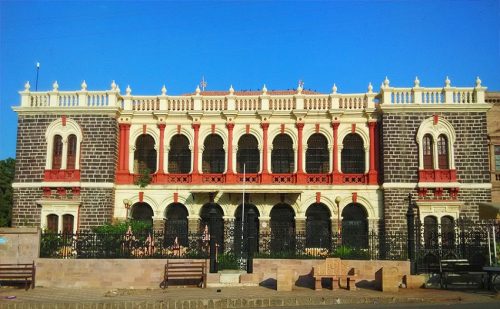
Siyot Caves
The origin of this ancient cave may be traced back to 1st century AD. The cave has both Buddhist as well as Hindu linkages. The walls of the cave are replete with ornate carvings and paintings related to ancient folklore. The wall carvings also portray important historical events like Chinese migration. This is a great place for tourists who wish to delve deep into the past.
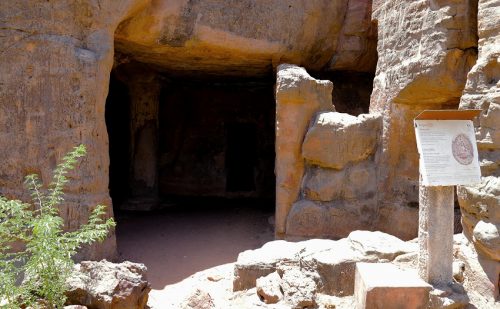
Aina Mahal
Aina Mahal/Sheesh mahal is one of the most amazing tourist attractions of the Kutch region. Aina mahal also known as Madan Singhji museum is a place exhibiting various forms of artistic mirror works. The beauty of Venetian glasses, marble work, mirrors used in combination with reflective lighting and jewels/gems comes alive in this museum. The artworks exhibited here are a fusion of European and Indian forms. Apart from mirror works, you can view amazing antiques such as sculptures, toys and paintings here.
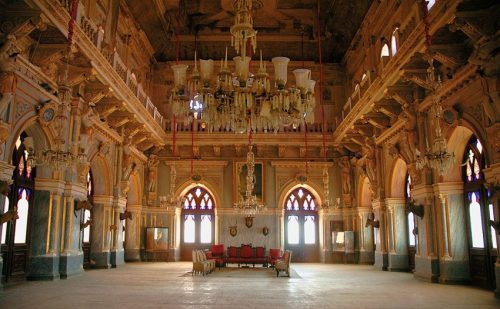
This post was contributed by Holiday Package Kutch
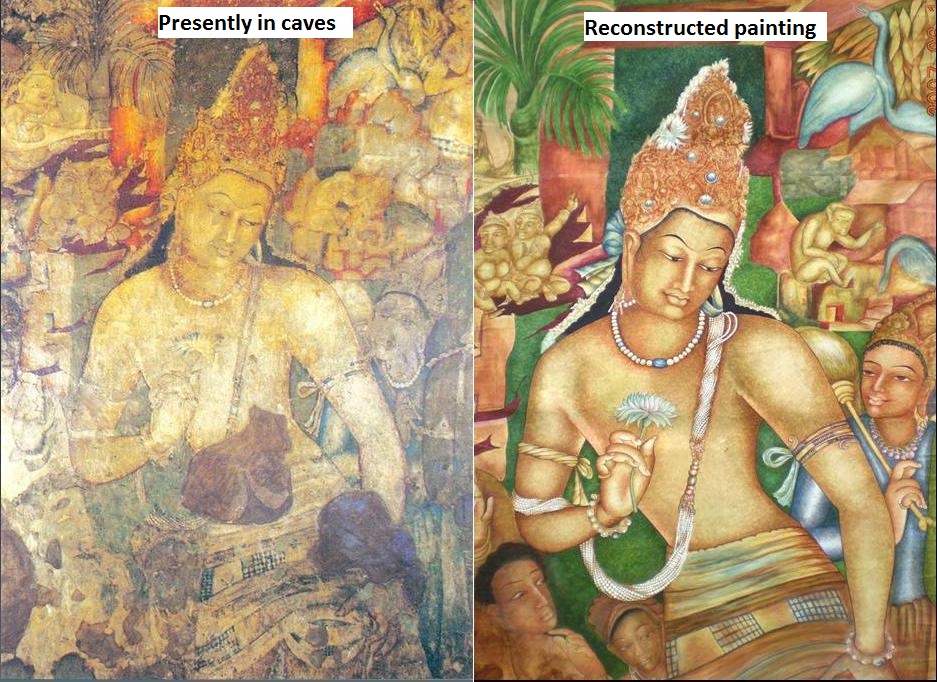
Mysterious work on Ajanta Caves

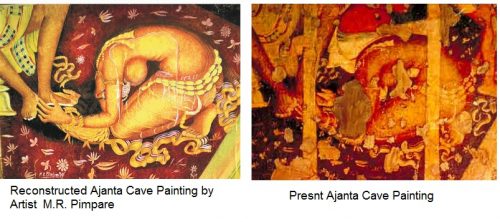
Despite a hoard of scholars having explored the significance of Ajanta it still remains fathomless due to its boundless scope for investigation and inquiry. An interminable and immortal work, it provides internal space to rummage and research. Some paintings in Ajanta still retain the original splendor but most have either withered, faded, blurred, creased or degraded. Scientists have tried to preserve by applying the layer of some chemical on wall painting to make frescos clear and fresh, but after a due period of time these chemicals reacted awfully which damaged frescos more terribly. ASI started pasting cement blotches wherever painting surface pilled off, with this result, in most of the caves what is conspicuous more is blotches of cement more than paintings.

Likewise, almost all struggle were failed. There are virgin and untried areas of scrutinizing through a complete regeneration of all those portions of paintings which have been erased, abraded of damage due to time, climate and man. Now only option leftover is to restoring World Heritage separately on canvas without touching and damaging original monument. As per the rule of ASI.

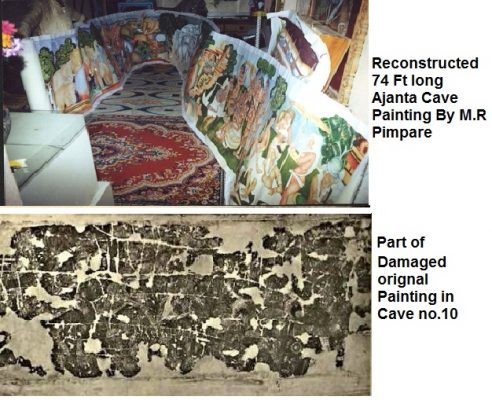
The centuries-old paintings of Ajanta caves recreated exactly as they were when freshly painted by the renowned Artist from Marathwada Mr. Pimpare from the past 50 Years, trying to recapture the past glory of the wall paintings on gigantic sheets of paper. Recreates the paintings of the Gupta – Vakataka period around 450 A.D. unfolding to the world the actual glory of Ajanta which over the years has suffered deterioration. The cave paintings of Ajanta have been damaged to such an extent that it is practically impossible to decipher what the artists wanted to convey through their brushes.Mr. Pimpare has completed 300 paintings which measure from one foot to 75′ x 4′ in length capturing minute details of expression, facial flexion, contours of the body, movement of the muscles and other minute details.

Inadvertently magnetized by Ajanta paintings at the age of twelve, Mr.Pimpare has remained busy in recreating the deteriorating paintings of Ajanta.

Articulate & microscopic visibility could become possible due to the patient and tenacious efforts put in by Mr. Pimpare for fifty years. Artist Mr. Pimpare has undertaken an entirely new approach of preservation and conservation, He has also utilized scientific methodology by taking assistance of modern equipment like epidiascope to enlarge the details of the photographs .his has enabled him to complete major portions of the paintings. For discerning details of these paintings micro-lens was also used. Mr. Pimpare has emerged in deep into the sea of Ajanta colours to dig into the secrets shrouded by thick layers of dust. There is an ocean of historical facts which can be perceived through this art but most scholars have ignored this kind of study. The artist reveals minute details of the palm are white, where he attempts at distinguishing between the outer colours of the skin and protected skin. Microscopic details of the veins and arteries are lucid and anatomical study is extremely; minute. Even the movement of hair blown by air is beautifully drawn. There is an evidence of advance medical science where a person is seen donating his eyes. Mr. Pimpare set out to work on Ajanta paintings on the basis of work done by both Indian and foreign artists.

Mr. Pimpare’ s greatest feat which required herculean efforts is the Shad-danta Jataka longest panel in cave 10 which measures 74 feet, has been completely rejuvenated. Initially, the entire line work treated and perfected after which the colors were filed carefully and the paintings perfected in its original shape, only 10% of the painting now exists. There are scratches throughout the panel of the Jataka tale and nothing much is visible. Despite this major drawback Pimpare has managed to complete this painting. The 2000year old paintings have been retrieved and the original effect is recreated. These paintings are significant as they possess universal value due to the efforts at exploring details not visible to the eye.

A number of reproductions have been produced since and lying either in the custody of the Archaeological Survey of India or a few national museums. But no copies have been patched up the way Pimpare has ventured.

(Submitted to MysteryOfIndia by Mayura Pimpare)

Beauty in ruins: The Sun Temple at Konark

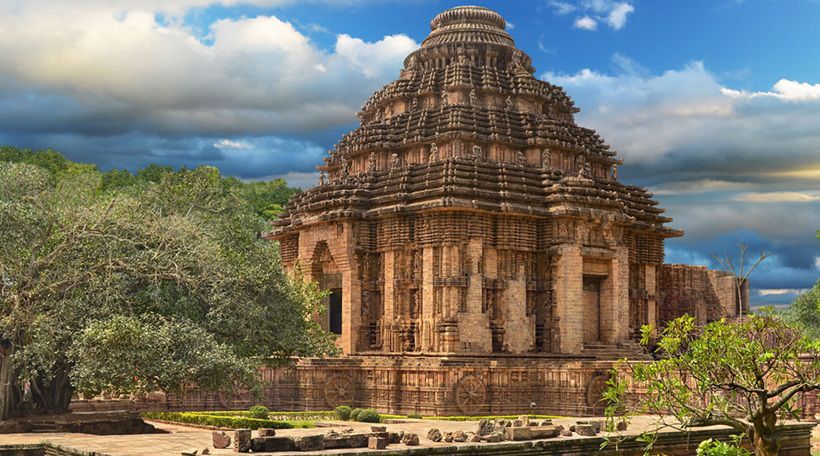
The Konark Sun Temple is a 13th-century Hindu temple dedicated to the sun god. Shaped like a giant chariot, the temple is known for the exquisite stone carvings that cover the entire structure.

One of the most important temples dedicated to the Sun god in India — the Konark Temple — shares the brilliance and the dazzle of the sun with its fascinating architecture, exotic sculptures and intriguing social history of medieval Odisha. Located in Konark, 35 km from Puri, the abode of Lord Jagannath, this 13th-century temple is a leading Hindu pilgrimage centre.

Origin

Konark got its name from two Sanskrit words — kona and ark — with the former meaning corner and the latter implying the sun. Experts say the Sun god worshipped in Ark Kshetra is called Konark. Legend has it that after slaying demon Gyasur, Lord Vishnu left all his belongings at several places to commemorate his victory — conch in Puri, disc in Bhubaneswar, mace in Jajapur and lotus in Konark.

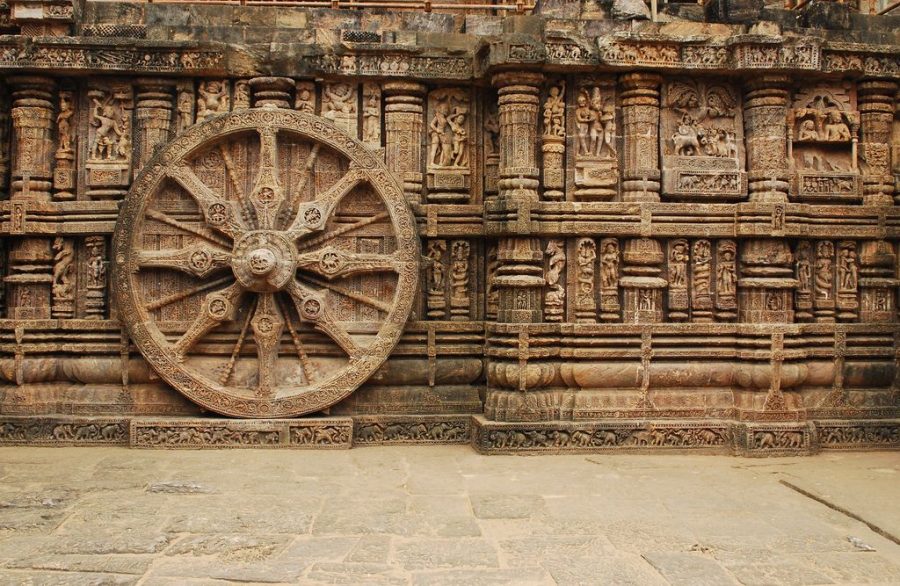
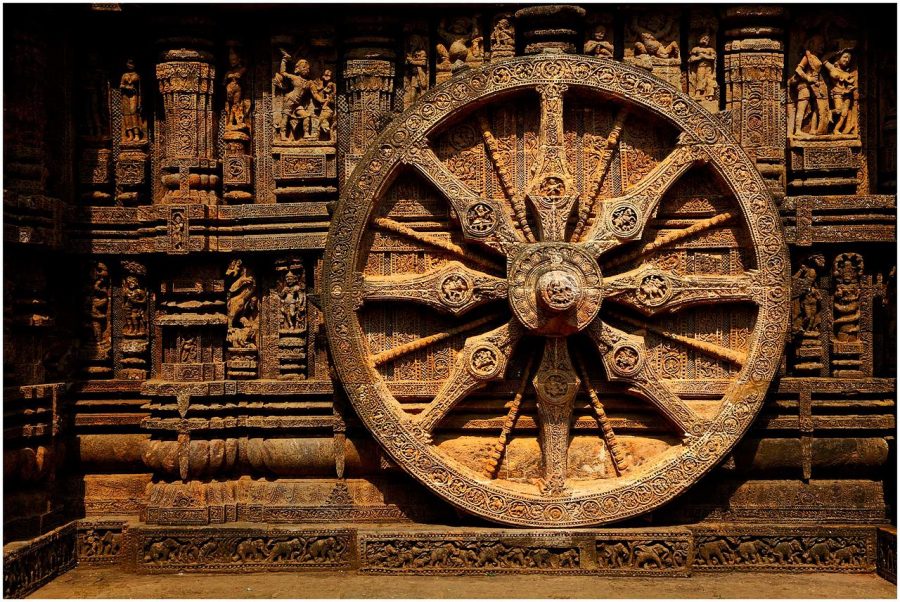
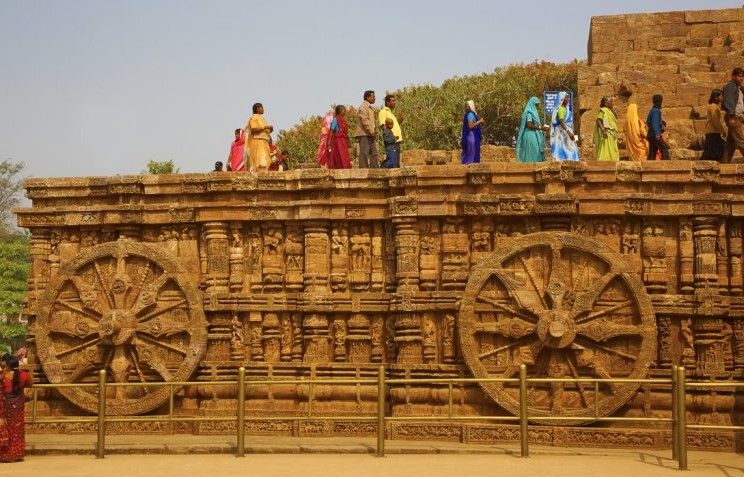
Wheel at Sun Temple Konark
img source

Architectural glory

Designed as colossal chariot on 12 pairs of giant wheels being pulled by seven galloping horses, carrying the Sun god across the heavens, the temple was built by Raja Langula Narasimha Deva of the Ganga dynasty around 1250 AD.

Seven horses pulling the Sun Temple eastwards towards dawn is symbolic of the seven days of the week; a dozen pair of wheels represent the 12 months of the year and the eight spokes in each wheel symbolise the eight ideal stages in a woman’s day.

These wheels are not normal wheels but show time as well – the spokes of the wheels make a sundial. One can analyze the exact time of the day by just looking at the shade cast by these spokes.

The Wheel of Life at Sun Temple Konark
The Wheel of Life at Sun Temple Konark. img source

The beauty and aesthetics of the temple is best summed up by India’s noble laureate Rabindranath Tagore, who wrote about Konark:

“Here the language of stone surpasses the language of man.”

The placement of the main temple and the Sun God had been aligned in such a way that the first ray of the Sun from the coast would cross the Nata Mandir (Dancing Hall) and would fall & reflect from the diamond placed at the crown of the Sun God.

The temple consists of a vimana (main temple) for housing the deity, Jagamohana, a prayer and an offering hall for worshippers and a nirtya-mandapa (dancing hall). The main entrance faces the eastern side which faces the sea. Konark Temple is an epitome of Kalinga architecture.

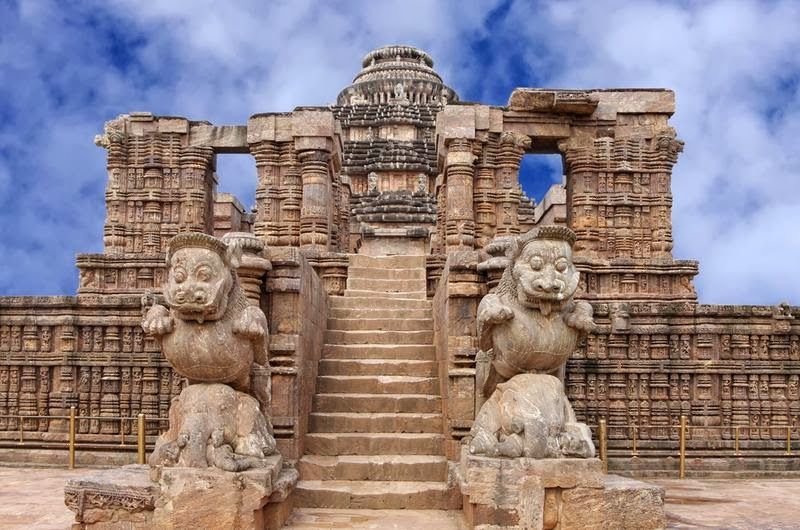
Entrance of Konark Sun Temple Guidede by Lions
img source

The entrance is guarded by two huge lions, each killing a war elephant and beneath the elephant is a man. While the lions represent pride, elephants represent wealth and both of them consume man akin to the conquest of spiritual power over worldly power and the symbol of ignorance conquered by knowledge.

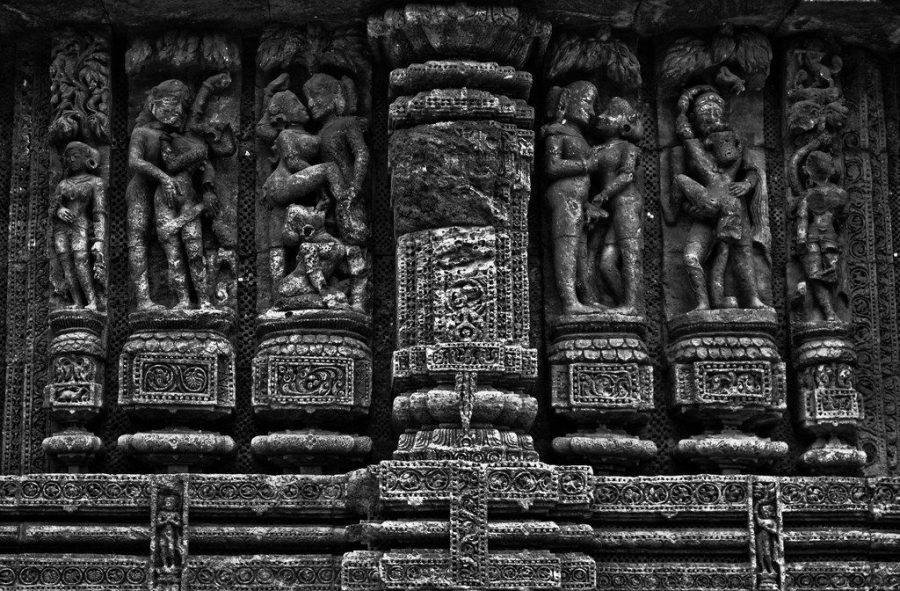
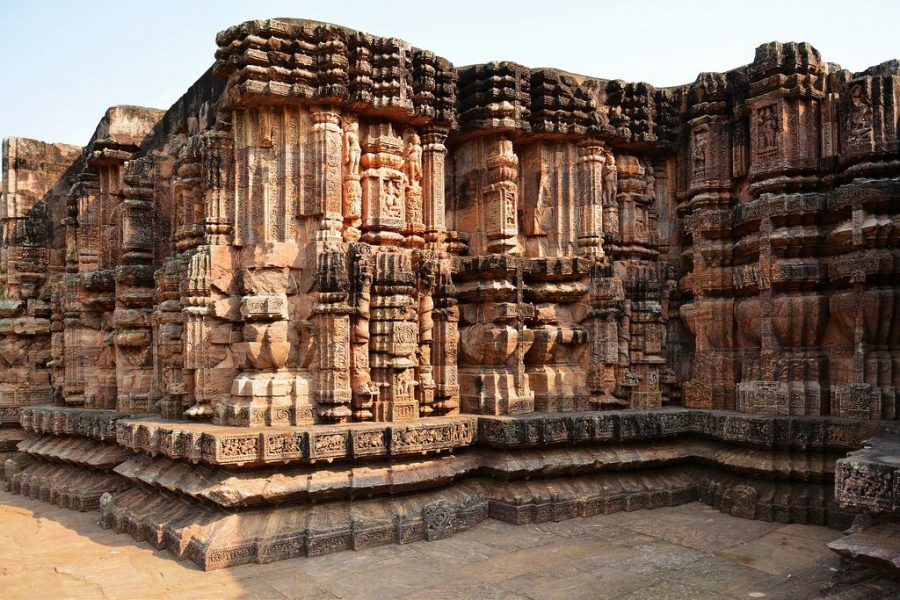
The surfaces of the temple are carved with exquisite stone sculptures with a wide variety of subjects, including many erotic scenes based on the Kama Sutra. Erotic sculptures are found especially in niches halfway up the porch, along the sides of the platform and around the doorways of the main building.

Erotic stone carving at the Konark Sun Temple
Erotic stone carving at the Konark Sun Temple. img source

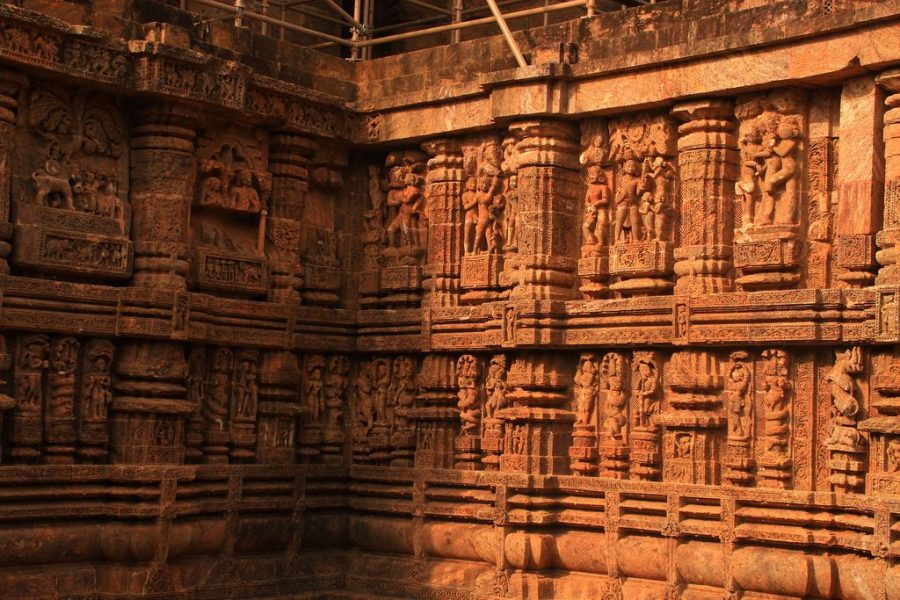
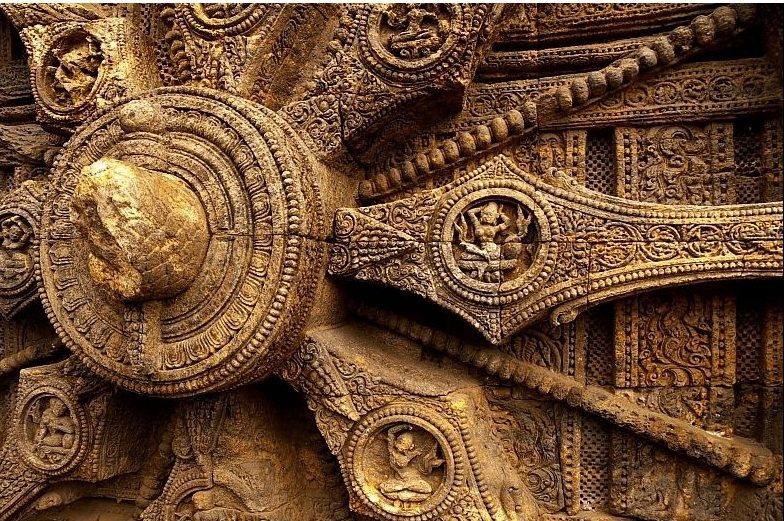
Other sculptures decorating the temple’s exterior include deities, animals, floral patterns, voluptuous women, mythical beasts and aquatic monsters. The 24 giant wheels are beautifully carved and each of the eight spokes bears a medallion containing figurative carvings.

exquisite stone sculptures at Sun Temple Konark
img source

Originally built on sea shore, the temple is also known as black pagoda due to its dark colour and was used as a navigational landmark by ancient sailors to Odisha.

Magnets & Floating Idol

The uniqueness of the Sun Temple of Konark lies in the fact that it was built with an architectural setup of various magnets. According to legend, the statue of the Sun God inside the temple was built of a material with iron content and was said to be floating in air, without any physical support, due to the unique arrangements of the top magnet, the bottom magnet and the reinforced magnets around the temple walls.

Other legends state that, the magnetic effect of the lodestone was so strong that it caused disturbance in the ships compasses those passed by the coast (Konark being a major port at that time), thus making the navigation very difficult for the sailors. To save their trade and their ships, the Portuguese sailors destroyed the temple and took away the lodestone. The removal of the lodestone leads to the collapse of the main temple structure.

The Konark Temple is part of ancient Surya cult that flourished across India and was dedicated to the worship of the Sun god. The sun is held as the soul of whole manifestation, primal cause of this universe and its different cycles of manifestation and annihilation. Suryopanishad — a scripture on the Sun god — summarises the significance of the sun and the importance of its worship, saying, “From the sun arises all beings. The sun sustains them all. They all vanish into the sun…” It asserts that the sun is the creator, protector and destroyer.

Konark Temple Wheels
img source

Collapse

There have been several proposed theories for the collapse of the main sanctum.

As per one theory, part of the Konark temple collapsed because of its incomplete structure. The Konark Sum Temple was not completed because of the early death of the king Langula Narasimha Dev who initiated the construction of the temple.

Mayadevi Temple also called Chhayadevi Temple, Konark temple complex
Mayadevi Temple also called Chhayadevi Temple is located in the Konark temple complex. img source

Next is the theory of lodestone located at the top of the temple. Due to its magnetic effects, vessels passing through the Konark sea were drawn to it, resulting in heavy damage. Other legends state that magnetic effects of the load stone disturbed ships’ compasses so that they did not function correctly. So, to remove the cause of the trouble, Portuguese voyagers stole the lodestone. The displacement of the lodestone led to total imbalance and so the Konark temple fell down. But there is no historical record either of this event or presence of such a great lodestone at Konark.

As per another very popular theory, the temple was destroyed by Kalapahad (a Muslim governor Sultan Sulaiman Karrani of Bengal) who invaded Odisha in 1508. He had also destroyed many other Hindu temples in Orissa along with the Konark Sun Temple.

Other proposed causes include lightning and earthquake. Over the centuries, the sea receded, sand engulfed the building and salty breezes eroded the stone. It remained buried under a huge mound of sand until the early 20th century, when restoration began under the British.

Konark Sun temple chariot wheel
Close view of Konark Sun temple chariot wheel. img source

Source: TheKonark.in & India Perspectives jul-aug 2016 by Indian Diplomacy

Tsunami might have destroyed Harappan port town of Dholavira

Port town of Dholavira in Gujarat, the fifth largest Harappan site, might have been destroyed by a massive tsunami, a study by CSIR-National Institute of Oceanography (NIO) has revealed.

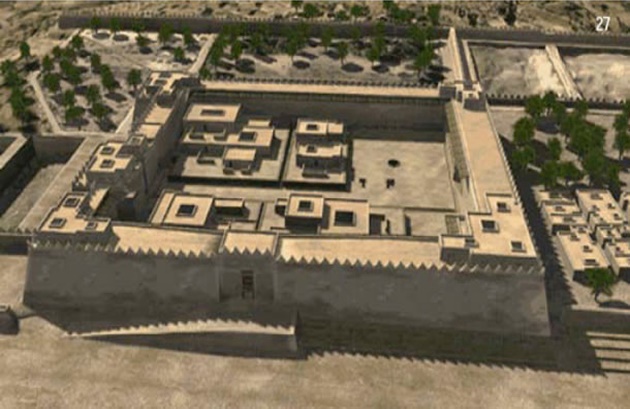
Dholavira, the second largest Harappan site located within the present borders of India, comprises three parts including a castle, the middle town and the lower town.Dholavira is a site of an ancient metropolitan town of the Harappan period and was known as the largest port-town of the Harappans which flourished around 5,000 years ago, until the tsunami destroyed it 3,450 years ago.

Also Read: Unearthing the civilisation of Lothal

“The results clearly indicate that massive tsunamis are not uncommon in the region. The thick wall in Dholavira shows that Harappans were not only aware of the potential threats from tsunamis, but they were also pioneers in coastal disaster management.

“Most importantly, results of this study opens that possibly Dholavira, at least in part, could have been destroyed by such a tsunami,” NIO Director Dr SWA Naqvi said yesterday.

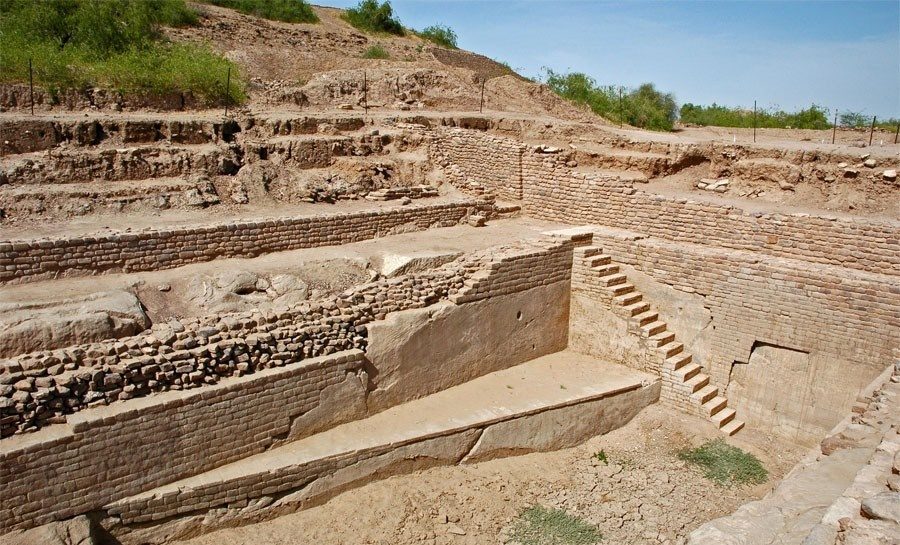
Water tank at Dholavira
Water tank at Dholavira. img source

The team of scientists, led by Rajiv Nigam, had embarked on the study on the port town at a time when the real purpose of the Dholavira wall has been a topic of considerable debate.

The study has proposed that the thick wall was built to protect the town from extreme oceanic events such as storm surges and tsunamis.

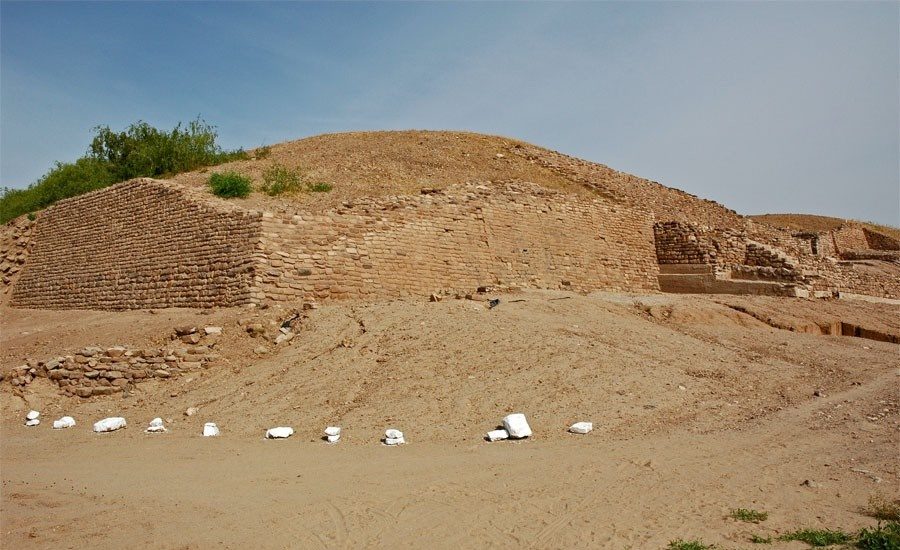
Remains of the citadel at Dholavira
Remains of the citadel at Dholavira img source

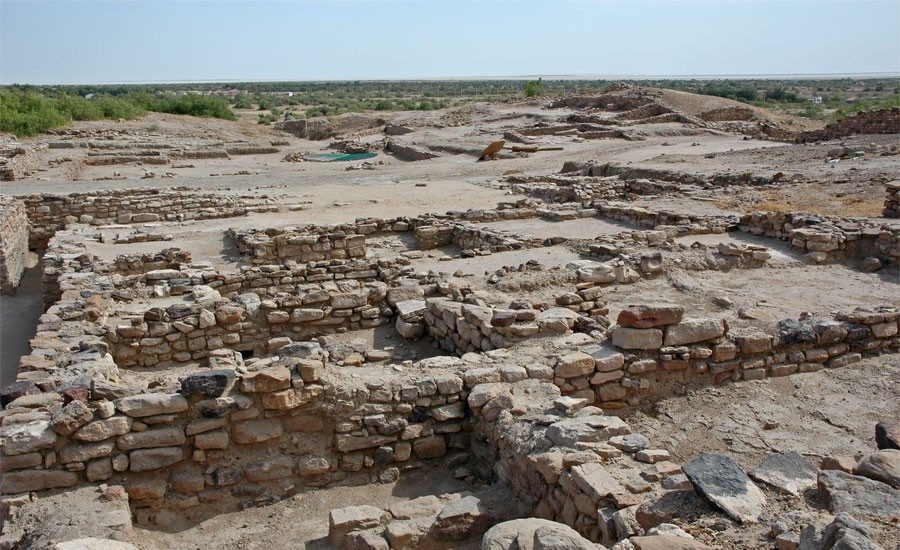
“This well-planned urban settlement flourished for about 1500 years from about 5000 to 3450 years before present archaeological excavations show that the township comprised three parts — castle, the middle town and the lower town,” he said.

Ruins of the middle town at Dholavira img source

A unique feature of Dholavira is the presence of a 14-18 meters thick wall, apparently built as a protective measure.

“Intriguingly, walls of such thickness are not found even in historic times when the conflicts have been more common and the weapons had become increasingly more destructive,” he said.


Over 10,500 years old camping site discovered in Ladakh

The site was unearthed at 14,000 feet above sea level — on the way to Sasar La which leads to the Karakoram Pass. It suggests that humans camped in the area 10,500 years ago.

As investigations revealed repeated human activity at this camping site for about eight hundred years, archeological survey of india will be carrying out further investigations into the site.

Sources said that the research so far carried out has proved the antiquity and nature of human activities to an extent, but their camping patterns, extent of camping area, tools and other cultural aspects are yet to be traced.

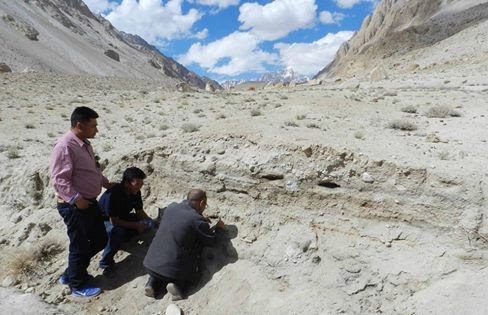
Over 10,500 years old camping site discovered by ASI in Ladakh
An ASI team at the unearthed camping site on the Saser La-Ladakh route. -img Tweeted by @MIB_India

Interestingly, the site was also discovered by chance. Dr SB Ota, joint director deneral in ASI, who was travelling in Ladhak, last year, along the Saser stream. After covering a distance of about 22 km, he noticed a section, exposed due to road construction, showing successive layers comprising burning residue and immediately stopped to explore the area.

The area offered a perfect site for camping. It was a small flat area with snow-covered peaks on one extreme, dry barren land with loose rocks all around and gushing stream within the deep western gorges, an ideal place for camping in a picturesque setting.

A charcoal sample collected from the site, which was sent to Beta Lab, Florida for radiocarbon, dated it back to 8500 BC. Realising the significance of the evidence, a team of ASI officials were sent for further inspection.

“During this visit, more charcoal samples and associated bones were collected. Two of the charcoal samples from lower and upper deposits sent for dating have provided new radiocarbon dates of c. 8500 BC and c. 7300 BC (c. 10500 and 9300 years before present) respectively. These dates have indeed confirmed the earlier date,” the culture ministry official statement said.

Apart from that, new dates also indicate repeated human activity at this camping site for about eight hundred years. Preliminary studies of charred bones collected from here, carried out by Prof P.P. Joglekar of Deccan Collage, Pune, have shown the presence of Gorel and Yak.

ASI has planned to carry out proper archaeological excavations and explorations to address these issues. It added that it would be difficult to carry out the task in such a rugged terrain at an altitude of 14,000 feet, with low oxygen and habitation.

Source: Ministry of Information and Broadcasting

The Rock Cut Cave Temples Of Pataleshwar

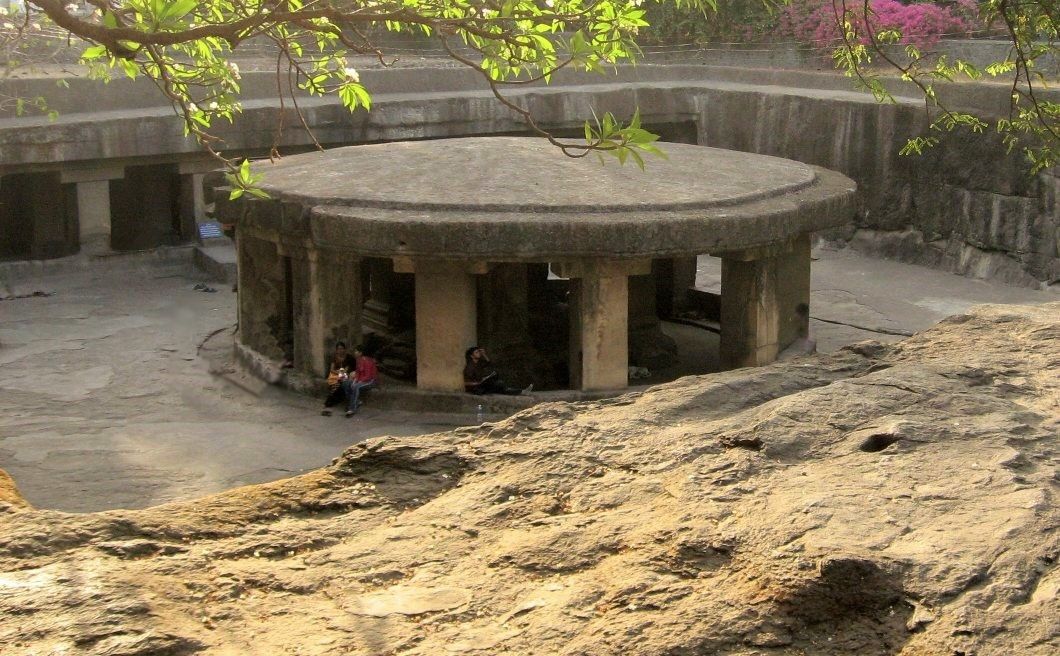
Pataleshwar cave temple is one of the most popular rock- cut cave temples of India. This temple is a reminiscent of Ellora and was carved out of a single gigantic basalt rock during the Rashtrakuta dynasty in the 8th century.

It was originally built outside of town but due to the expansion of the city frontiers over the years, it is now situated in the downtown Jungli Maharaj road in Pune. The temple is dedicated to Lord Pataleshwar (God of Underworld) and Lord Shiva. The entire cave temple is below the ground level, making ‘Pataleshwar’ an appropriate name (‘Patal’ is an underground civilization as per Hindu mythology).

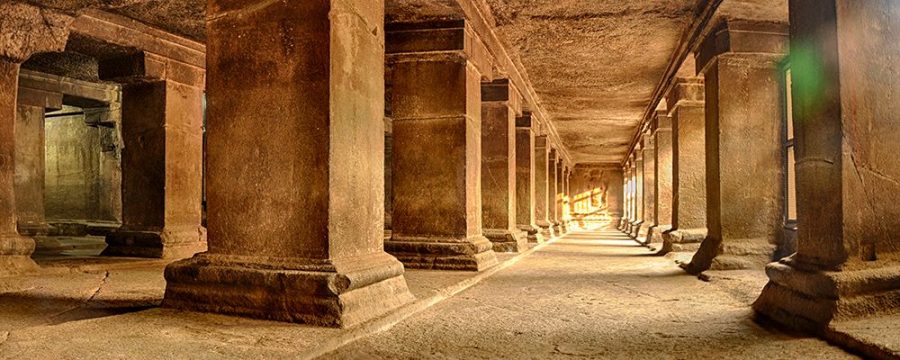
Pataleshwar cave temple provides the perfect example of rock cut architecture. The entire temple is hewn out of a single block of stone, and houses gigantic pillars, a shrine of Lord Shiva and a Nandi bull.

Pataleshwar Caves Internal Temple Corridors
Pataleshwar Caves Internal Temple Corridors. – img source

The construction of temple is left incomplete, but the original plan was to build something on the lines of elephanta caves.

It is believed that the construction of this temple remained unfinished, may be due to the presence of a defective line, detected at the back region of the sanctum, or due to the political turmoil that resulted in financial loss. Still, the architecture and the elegance of the temple surprise the visitors every time and remind them of how difficult it was then to build such a beautiful monument.

The Pataleshwar cave temple has an exotic arrangement of circular stone at the entrance. The entrance is a sight worth seeing, as it highlights acute sense of geometry of these architects.

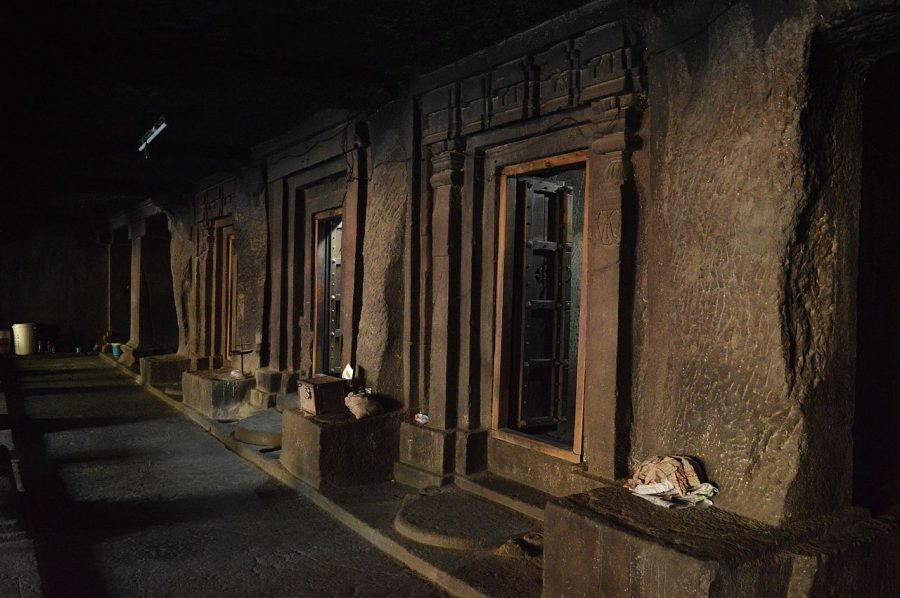
The temple also has the seating arrangements for the tourists along with small rooms. Most of the rocks in the cave, dates back to the 700 – 800 AD. One can see  few ornate carvings on the black rock, which are simply amazing.

Pataleshwar Caves 04 - img source
Pataleshwar Caves 04 – img source

The architecture of the temple cave looks similar to that of the Elephanta caves And Ellora caves. The shrine of Lord Shiva forms the main attraction of the temple. The pillars of the temples are extremely beautiful and unique.

A linga, the symbol of Shiva, is housed in the sanctum, which is a cube-shaped room about 3 to 4 metres high. On each side of the sanctum, two smaller cells are present.

There are a number of massive pillars those add to the grandeur of the temple along with grand statues of Nandi, Sita, Ram, Lakshman, Lakshmi and Ganesh and an oversized shivalingam under a single roof.

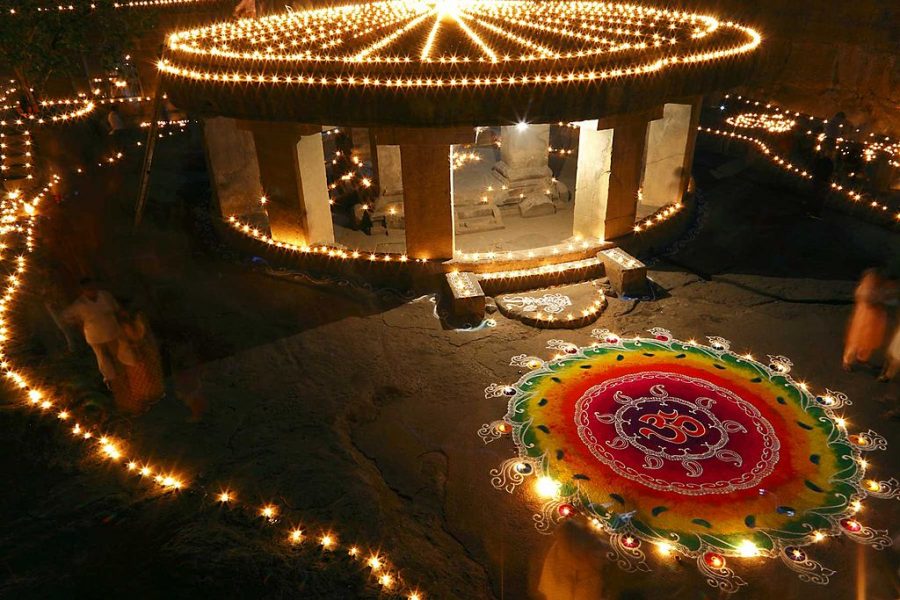
Diwali lighting at Pataleshwar Caves Temple Maharashtra
Diwali lighting at Pataleshwar Caves Temple Maharashtra. – img source

There is a museum in the cave temple that is listed in the Guinness Book of Records. In the museum, there is a grain of rice which is believed to have around 5,000 characters inscribed on it.