
8 Heritage Sites in Uttarakhand

8 Heritage Sites in Uttarakhand

Home to some of the most iconic and spiritual hubs in the world, Devbhoomi Uttarakhand is more than just lush green rolling valleys and snowcapped mountain peaks. Dotted with temples dating back to the ancient ages and a well preserved range of national parks and sanctuaries, Uttarakhand represents a complete picture of how coexisting with nature and preserving heritage looks like.

If you are planning on a visit to Uttarakhand then these heritage sites should not be missed out on:

Valley of Flowers

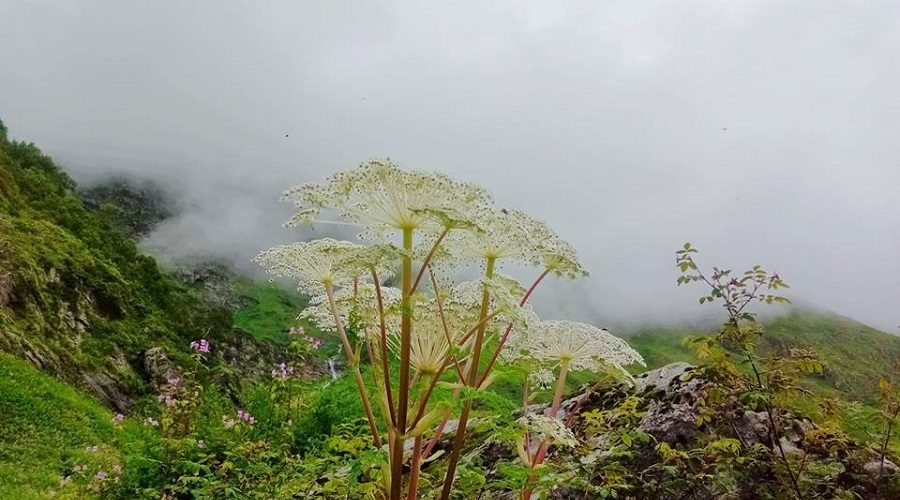
Situated in the Chamoli district of Uttarakhand this UNESCO world heritage site is known for its colorful and rich diversity of flowers. Perched at an elevation of 3,352 to 3,658 metres above sea level this rugged mountain wilderness filled with pleasing sights, charming vistas and a colorful collection of birds and animals. During the ancient ages this valley was frequented by a number of rishis looking to meditate in its lush green undulating landscape. If you want to encounter the valley in its full bloom then the post monsoon month of August is recommended. The valley explodes with colors and springs to life after a refreshing rainfall.
Nanda Devi National Park
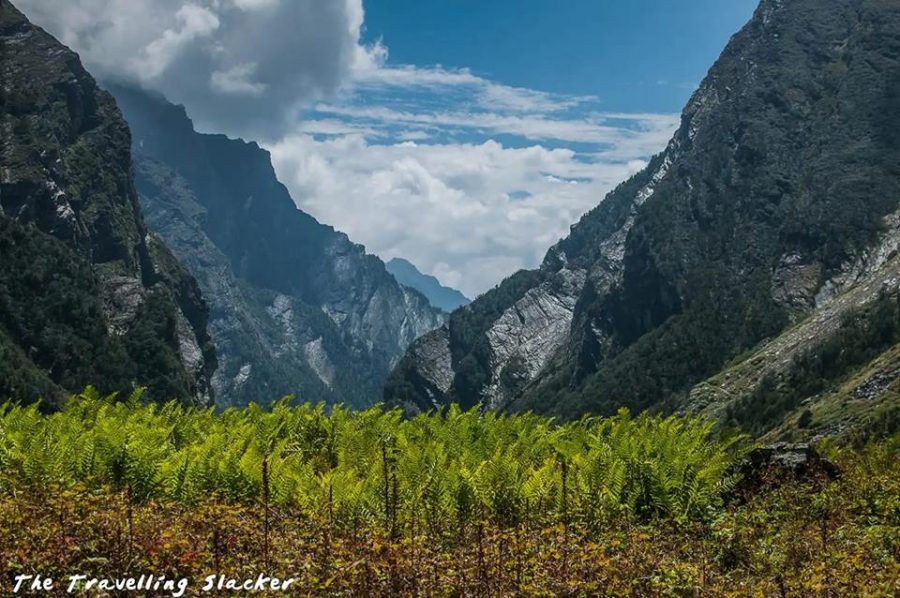
Established in the year 1982 at an elevation of more than 3,500 metres above sea level this national park is deemed as a UNESCO world heritage site in the year 1988. Dominated and framed by the majestic Nanda Devi peak and situated in the district of Chamoli this national park is known for its spectacular collection of some of the most stunning Himalayan and high altitude fauna. The entire ecosystem of this park displays a unique climate and topography which is believed to be the reason that supports this type of a wildlife culture. The park remains open to visitors for a period of just 6 months which starts from May and ends on September.

Jageshwar Group of Temples
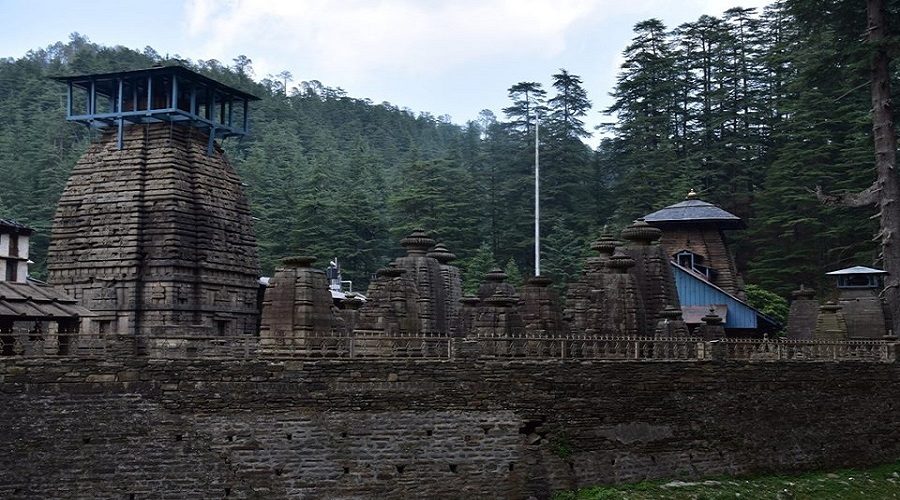
Jageshwar is a complex of over 100 Hindu temples and is also known for being one of the most legendary holy establishments of India. Located close to the district of Almora and established between the period of 7th and 12th century this cluster of temples has been created from a cut stone. Where some temples among the group are elaborate and impressive looking the other temples here are small and insignificant. The temples showcase a north Indian Nagara style of architecture and looks like a sight to behold amidst the surrounding lush greenery. While some temples here are dedicated to Lord Shiva other temples are dedicated to Lord Vishnu, Surya and Goddess Shakti.   

Dwarahat
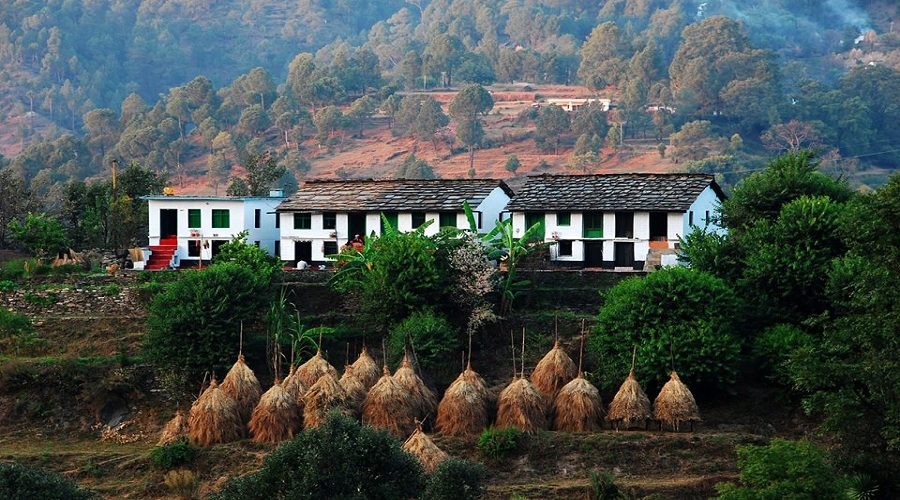
Popular nicknamed as ‘the village of temples’, the scenic town of Dwarahat is perched amongst the Kumaoni hills at an elevation of 1,510 metres above sea level. Translating literally into ‘way to heaven’ in the local Kumaoni language this place is extremely famous for its numerous temples constructed by the Katyuri Kings. The most popular attraction here is the group of 55 ancient temples here. This hill town of Dwarahat springs to life during the festive occasions when all the temples are decorated with colorful lights and decorative items. You will be able to visit temples dating back to 11th century where you can get to know about culture and customs of this region.  

Katarmal Sun Temple
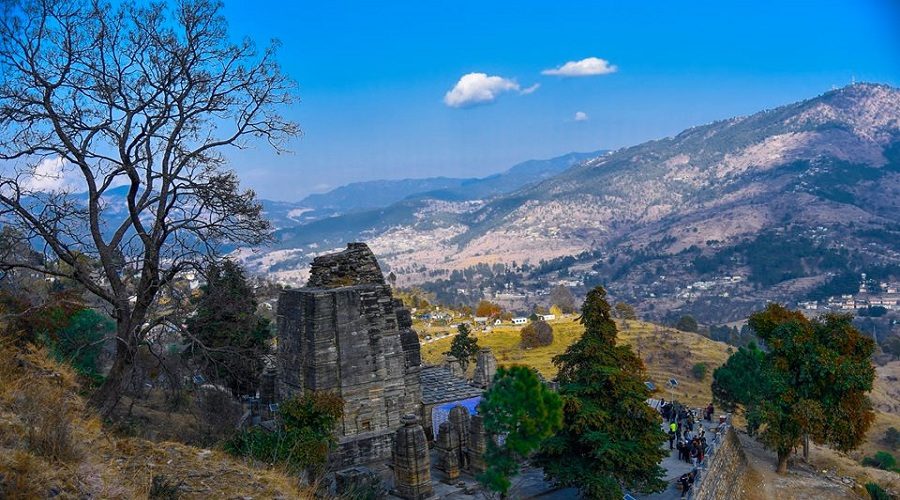
Sun Temples

Built by the Katarmal sun temple by the Katyuri king between the 9th and 13th century this magnificent looking temple cluster is located at a comfortable and scenic distance of 17kms from the district of Almora. After the sun temple of Konark in Orissa this Katarmal sun temple is considered to be significant and is believed to be the only sun temple on the hills. The temple can be reached after covering a steep climbing distance of 2kms which is fruitful since the resulting views of the surroundings are stunning. Perched at an elevation of 2,116 meteres above sea level the main shrine of this temple is surrounded by a collection of 45 small shrines. Every feature of the temple, from walls to pillars and from doors to panels are covered in elegant and intricate carvings.

Baijnath Temple
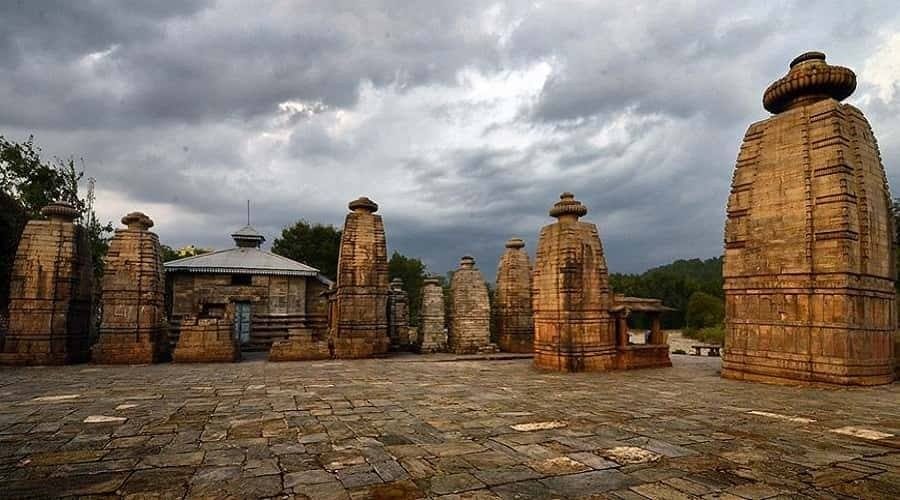
Baijnath Temple. Mystery Of India

Baijnath group of temples consists of one main shrine dedicated to Lord Shiva accompanied with 17 subsidiary shrines. These temples form an impressive sight which is set against the pleasing backdrop of the snow clad mountain peaks. The temples are constructed by utilizing the Nagara style of architecture and dates back to 9th and 12th century AD. As the name suggests this temple is dedicated to a form of Lord Shiva i.e. Vaidyanath and this place holds immense significance since it is believed that Lord Shiva and Goddess Parvati were married right on the confluence of River Gomati and Garur Ganga.

Narendra Nagar
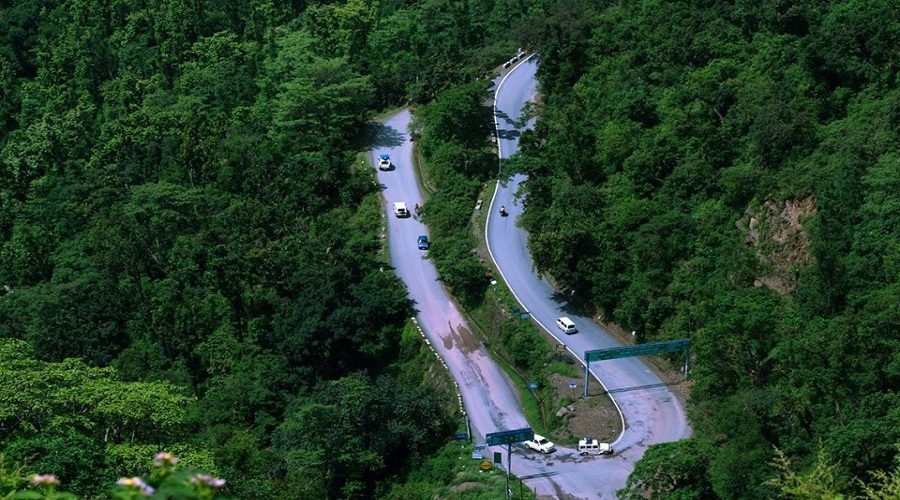
Situated in the district of Tehri Garhwal and brought to life in the year 1919 by Maharaja Narendra Shah of Tehri Garhwal this place is home to the small town of Odathali that is situated amongst the foothills of the mighty Shivaliks. This place is known for its scenic vistas as well as its proximity to the plains of Rishikesh and Haridwar which can be gazed upon during a clear day. This place holds immense mythological as well as historical significance since this was a hub for spirituality and meditation ever since the ancient ages. Sage Uddhav is believed to have performed penance here. Purasara, the founder of astrology, is also believed to have performed various experiments on the movement of planets and stars here.   

Chaukhutia
Charukhutia – Mystery Of India

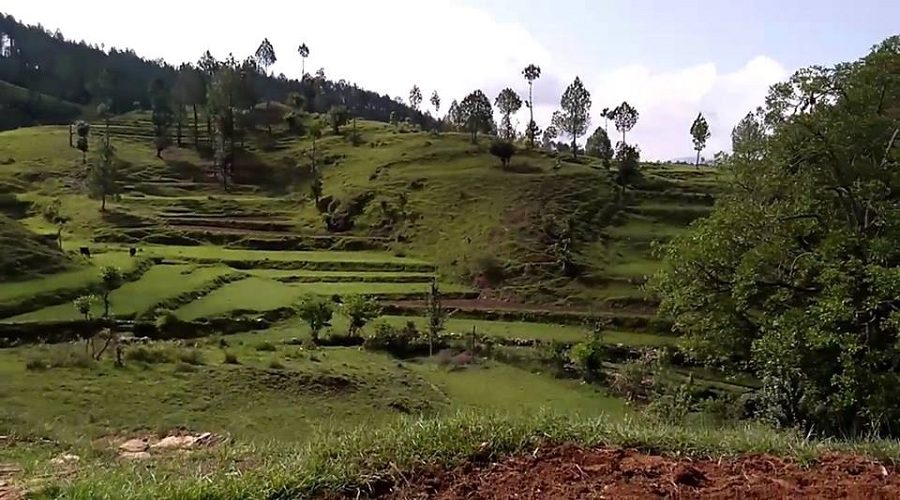
Situated in the hilly and stunning district of Almora right on the bank of river Ramganga, this place derives its meaning from the Kumaoni term ‘Chau-Khut’ that translates in to 4 feet or in this context it means ‘four ways’ or directions. The place is famous for its group of small temples that date back to the 9th century AD and was discovered during an excavation project in 2016-17. These temples consist of intact Shiv Lingas and are considered to be a [art of a bigger group of temples that adds to the heritage factor of this place. The place is a beautiful blend of spirituality and history combined in beautiful proportions with each other.
Ahmedabad: Calling You for Fun

Ahmedabad: Calling You for Fun


Ahmedabad is the city that is one among those places settled in India that are seemed to be flooded with tourist attractions.

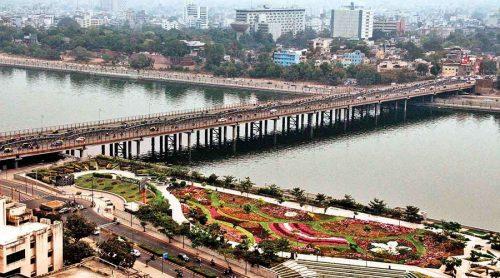
Recognized as the largest of all cities in Gujarat, Ahmedabad enjoys an esteemed reputation for being the most entertaining places of India. It is located at the bank of River Sabarmati. This tourism spot accommodates some of the popular textiles as well as pharmaceuticals industries.

When talked of tourist attractions, the rate of tourism is always recorded in rising numbers due to the fact that it has many historical as well as many political cultural facets associated which can be explored by availing a travel package to Ahmedabad. These aspects draw major count of the population each year. Take a look at the tourist attractions here:

The Walled City

First and the foremost in the list to mention the Walled city, which is a prominent tourist attraction recommended to those who are traveling around Ahmedabad. This attraction favors the tourists to take a glimpse of the affluence of the ancient buildings that were made during the 18th century.

Gandhi Ashram

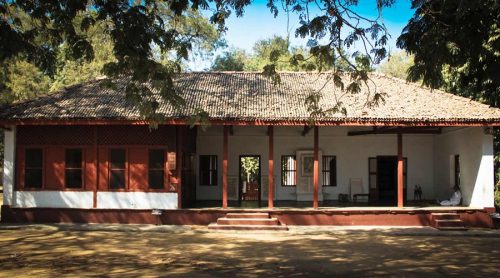
Ahmedabad features Gandhiji Satyagraha Ashram, yet another admired tourist attraction which got set-up in AD 1920. It is located on the lull western banks of the River Sabarmati.

Mosque of Sidi Saiyad

Moving to some of the religious attractions, the Mosque of Sidi Saiyad is must-see here in Ahmedabad. With its stone tracery and alluring patterns of the banyan tree on the windows, it throws a great impression keeping the visitors spellbound while praising its beauty.

Hathee Singh Jain Temple

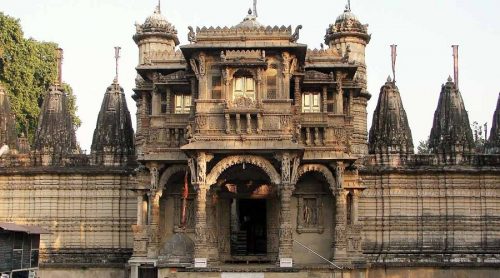
Another religious attraction which was built by Sheth Hathee Singh, in the year 1848 is the Hathee Singh Jain Temple.

The temple sits just outside Delhi Gate which has a pure white marble construction. It comprises of 52 shrines, each having an idol of Jain Tirthankar.

Sidi Bashir Mosque

This famous tourist spot is located outside the Sarangpur Gate, and has got minarets. If one of them gets shaken, it leads to the vibration in another which is an impressive quality of the sight.

Kankaria Lake

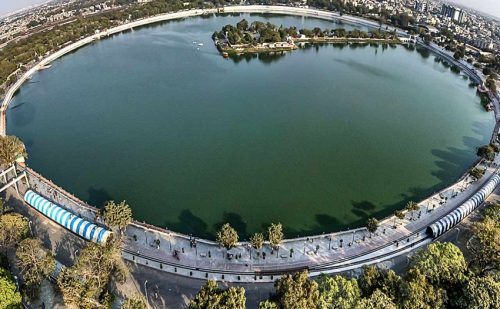
This is a circular lake that was constructed in AD 1451 by Sultan Qutub-ud-din. This lake handover a number of tourist places to the travelers such as island garden also known as Nagina Wadi, parks, a natural historical museum, a boat club, an aquarium, and a zoo. An all-in-one attraction for tourists who carry diverse interests!!

Bhadra Fort and Teen Darwaza

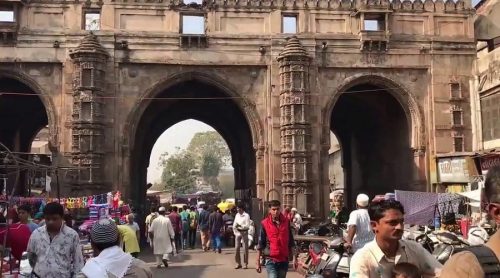
Also recognized as the venue for Republic Day and Independence Day celebrations held in Ahmedabad, Teen Darwaza of Ahmedabad accommodates a temple that is devoted to the Mother Goddess, Bhadrakal.

Calico Museum

When we count on some of the renowned museums featured by the city, this is the one stands on the upper edge. The Calico museum is a museum of fabric, yarn and textiles that was established in the year 1949. It is a result of the meticulous efforts of Ms Gira Sarabhai.

Nalsarovar

This place dishes up some exclusive and attractive visit sites for wildlife lovers. One of such is Nalsarovar, which is a 116 square km lake where from November to February, vast flocks of indigenous and migratory birds-ducks, pelicans, geese, and flamingos can be seen.

Akshardham

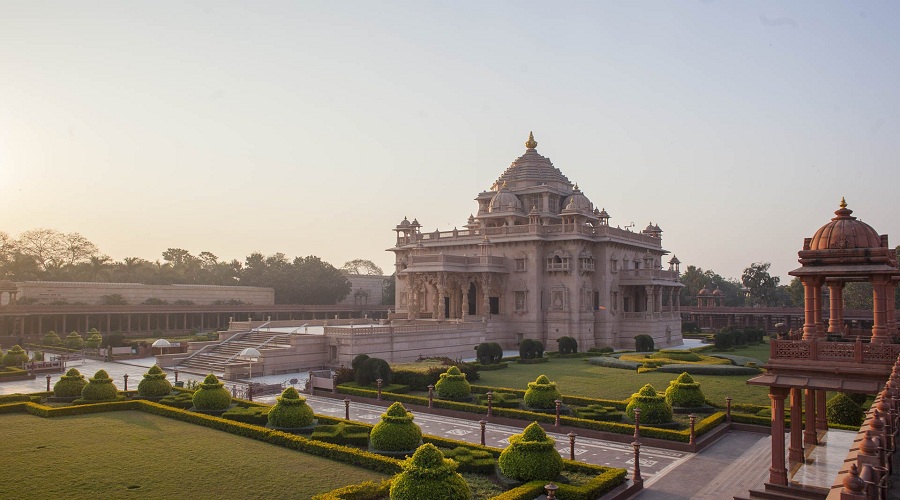
This monument was built to commemorate Lord Swaminarayan and is an inimitable cultural complex located in Gandhinagar. It is an intricately carved, regal monument that was constructed using 6000 tons of pink sandstones. Sounds interesting…no?? The monument was constructed without taking steel into use. Also, it consists of 7 feet gold leafed idol of Lord Swaminarayan along with his holy relics.

Don’t miss out watching this place, if you are at Ahmedabad.

Hussain-Doshi`s Gufa

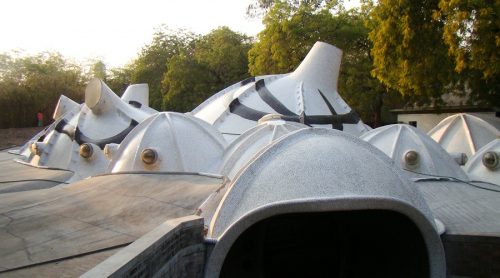
Again something interesting for art lovers, it is gallery that is located in the campus of the Centre for Environment Planning and Technology. It houses the collaborative efforts of artist M.F.Hussain and architect B.V.Doshi. Here, where art and architecture seemed merged together and thus complement each other admirably.

Art lovers can never ask for something more than this!!

Jama Masjid

How can this be missed out from the must sees of Ahmedabad? One of the finest mosques in India that comprises of 260 pillars and supports 15 domes at different elevations, this religious attraction was built Ahmad Shah in 1423. It is settled in an easily accessible location which is in the centre of the old city.

The other sites worth visiting in Ahmedabad are the Utensil Museum, Rani Rupmati Mosque, Shreyas Museum of Folk Art, Raj Babri Mosque, Rani Sipri’s Mosque and the Kite Museum.

Events and Festivals

Counting on the major events to be attended in Ahmedabad, Navratri and Rath Yatra are the mains. Also, the city hosts the contemporary International Kite Festival which can be seen to enjoy something different and novel.

Places to Visit in Gangotri and Yamunotri

Places to Visit in Gangotri and Yamunotri

Gangotri and Yamunotri Yatra form two of the most crucial and scenic pilgrimage destinations in India and probably the world. These two destinations witness an immense amount of devotees and pilgrims from across the subcontinent when the Kapat of the temples are opened for Darshan. During the off-season, when the temple Kapat closes for Darshan, the entire region remains covered in a thick layer of stark white snow.

Apart from the main holy temple sites Gangotri and Yamunotri are also home to a number of other interesting tourist attractions which are:

Bhagirathi Shila (Gangotri)

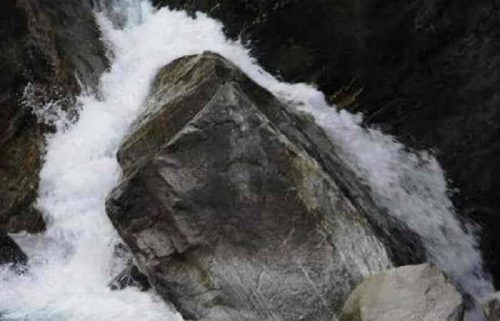
Located among the scenic and picturesque surroundings of the radiant Gangotri Bhagirathi Shila is a holy rock where King Bhagirathi is believed to have meditated. This stone signifies the exact spot where Goddess Ganga had laid her first step down on the earthly realm. It is also believed that the Ganga water or Ganga Jal from here never gets old or goes bad. The entire region is extremely breathtaking and a sight to behold.

Saptarishi Kund (Yamunotri)

Located at a mere distance of 10 km from the main Yamunotri Dham Saptarishi Kund is considered to be the original source of the holy River Yamuna. Sitting in the upper parts of the massif which is created by the famous and picturesque BandarpunchMountain the deep blue colored lake water is home to the famous and rare Brahma lotus which only grows here. The trek to this place takes you through the dense forests and rugged mountains. Saptarishi Kund is also famous for its natural source of high-quality blue sapphires.


Gauri and Surya Kund (Gangotri)

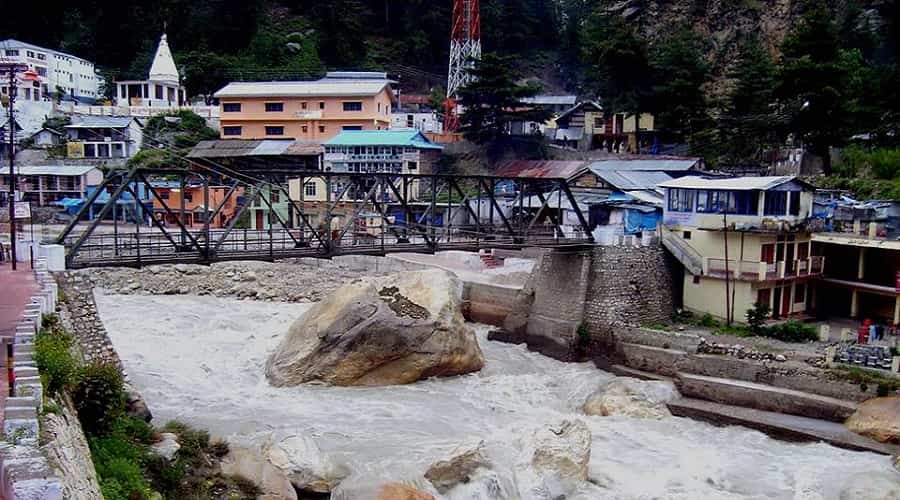
Located at a mere distance of 500 metres from the main Gangotri Dham Mandir, GauriKund and Surya Kund are located on the either sides of the main iron bridge. These places are considered to offer some of the most spectacular views of the gushing and cascading waterfalls. These waters are a part of the holy River Bhagirathi which runs downstream from here. People visit here to witness the spectacular falls and sit and listen to the calming sound of the fast running river water.

DivyaShila (Yamunotri)

Sitting among the massive snowcapped Garhwal Himalayas lays one of the famous Hindu pilgrimage destinations of Yamunotri Dham.Before setting foot inside the Mandir pilgrims and devotees are required to first worship this rock pillar.A visit here is advised to be mandatory in order to have a complete and immensely spiritual journey to Yamunotri Dham. This popular pilgrim destination is located at a whopping height of 3,000 metres above sea level.

Jalmagna Shivling (Gangotri)

Apart from the main Gangotri Dham, Jalmagna Shivling is another prime tourist attraction. This unique and naturally created Shivling’s feature is the fact that it remains submerged in the water during summer season when the snow melts. It is only clearly visible during the winter months when the water level goes substantially down. This place is believed to be the exact spot where Lord Shiva had held the holy River Ganga inside his matted locks making it extremely pious.

Hanuman Chatti (Yamunotri)

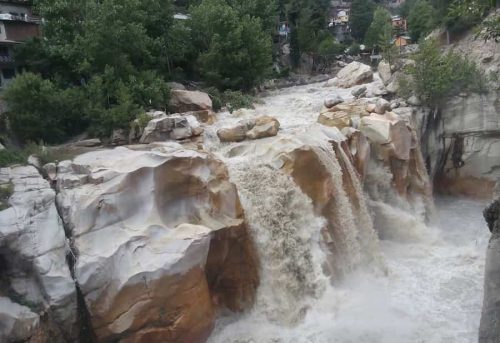
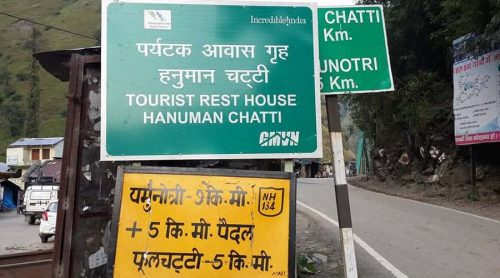
This holy and extremely sacred site is located right on the confluence of the Hanuman Ganga and River Yamuna. Situated at a comfortable distance of 13 km from the Yamunotri Dham this place is known for its unparalleled serenity and untouched beauty. This is the perfect place to observe some peace and quiet among the nature. This place is also a famous trekking destination for every adventure enthusiast. Engulfed in the green natural surroundings Hanuman Chatti is a must visit.

PandavGufa(Gangotri)

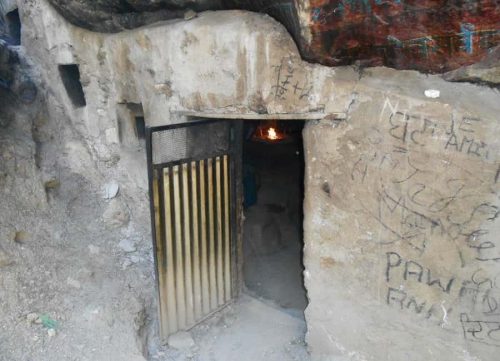
Located at a trekking distance of 1.5 km from Gangotri Dham this Gufais the exact spot where the Pandavas from Mahabharat had spent some time meditating on their way to Kailash Parbat. Situated en route Chinchali village this Gufahas 5 different rooms or Khandaswhere the biggest one is said to be of Bheem. This is also one of the best locations to spend some quality time with your loved ones.

Best Places to Visit in Kutch

Places to Visit in Kutch

Kutch, one of the most expansive districts in the state of Gujarat presents one with a unique cultural mélange, coming from the numerous tribes that inhabit the region in complete harmony with each other. Mesmerizing landscapes, vibrant history and culture, the camel and jeep safaris across the great salt marsh of the Rann of Kutch are the prime attractions for tourists visiting Kutch. But there are plenty to explore in Kutch apart from these. A good holiday package Kutch will take you on a tour of some of the best places to visit in Kutch. Read on to learn more:
Kutch desert wildlife sanctuary
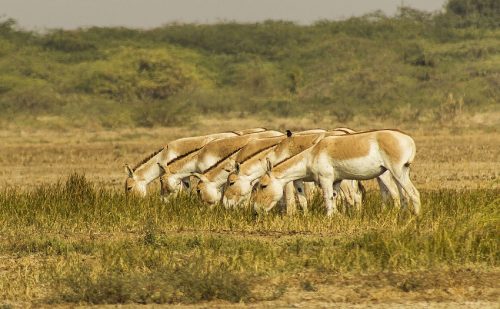
For passionate wildlife enthusiasts, this place is a true heaven. The Kutch Desert Wildlife Sanctuary sprawls across an area of more than 2797.7 sq miles. Rare and endangered wildlife species like Wild boar, Desert fox, Chinkara, Spiny tailed lizard, Porcupine, Jackals can be seen here. The sanctuary houses a special reserved space called ‘Flamingo city’ where tourists can feed birds and enjoy themselves.


The Rann
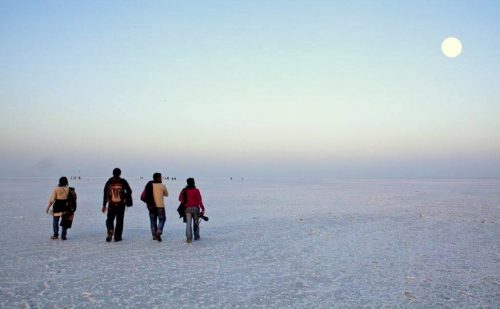
Rann is a vast unending stretch of salt marshes flanked by Arabian Sea on one side and the great Indian Thar Desert on the other. The sand and salt mingle on the marshy flats to create a marvelous wonder of nature. On a moonlit night, the Rann glitters giving an impression of millions of sequins lying pell-mell at your feet. Rann Utsav is an important colorful and culturally enriched event held on the Rann of Kutch. Lively celebrations pep up the ambiance during the festive times. Traditional dances, music and crafts of the region are brought to limelight during the time.
Mandvi beach
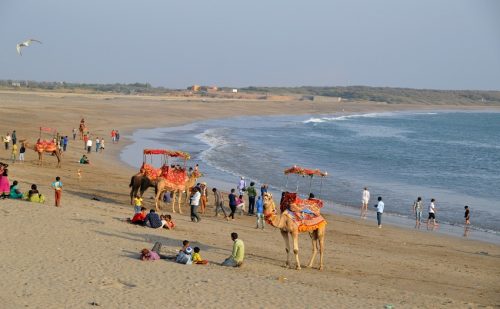
Mandvi, a popular beach resort of the Kutch region is a popular tourist attraction offering enough of sand and surf. The long shoreline bordering the sea offers an ideal setting for evening beach strolls, horse rides, camel rides. One could also pay a visit to the luxurious and magnificent Vijay Vilas Palace located on the beach.

Topansar Lake
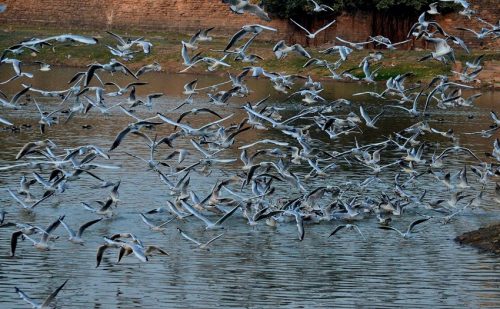
The Topanasar Lake is located amid the city of Mandvi and is one of the most visited lakeside in the Kutch region of Gujarat. The scenic lakeside is used by locals for relaxation, jogs and walks and also as picnic spot. For birdwatchers this place is a true paradise as lots of migratory birds flock here in the winters. Brown headed and black headed gulls should not be missed while you are at the Topansar Lake.

Kala Dungar
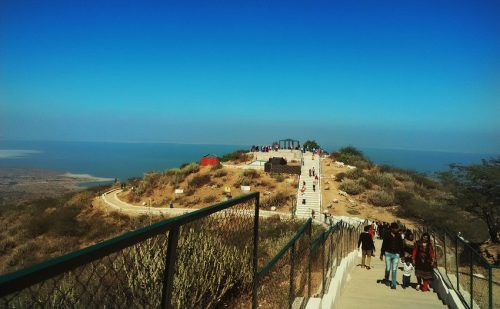
Kala Dungar is black colored dune hillock and the highest of all points in the entire region of Kutch. From the peak of Kala Dungar, you can catch a bird’s eye view of the entire Kutch region below and the views are truly jaw-dropping. Tourists can reach this highland by means of jeeps/buses from Khavda. Dattatreya temple located on the hilltop is a prime tourist attraction. This ancient temple dates back to as much as 400 years and is an abode of the holy trilogy of Brahma-Vishnu-Maheshwar.

Kutch museum
If you are a history buff, you’ll surely love being at this most ancient museum in the state Of Gujarat. Maharao Khengarji is the founder of this museum. It came into being in the year 1877. The museum houses some rare and valuable ancient collections such as tribal artifacts, Kshatrapa inscriptions, Kutchi scripts, Kori-Kutch coins, precious sculptures, metal works, paintings, embroideries, musical instruments, arms and ammunitions etc.

Siyot Caves
The origin of this ancient cave may be traced back to 1st century AD. The cave has both Buddhist as well as Hindu linkages. The walls of the cave are replete with ornate carvings and paintings related to ancient folklore. The wall carvings also portray important historical events like Chinese migration. This is a great place for tourists who wish to delve deep into the past.

Aina Mahal
Aina Mahal/Sheesh mahal is one of the most amazing tourist attractions of the Kutch region. Aina mahal also known as Madan Singhji museum is a place exhibiting various forms of artistic mirror works. The beauty of Venetian glasses, marble work, mirrors used in combination with reflective lighting and jewels/gems comes alive in this museum. The artworks exhibited here are a fusion of European and Indian forms. Apart from mirror works, you can view amazing antiques such as sculptures, toys and paintings here.

This post was contributed by Holiday Package Kutch

Beauty in ruins: The Sun Temple at Konark

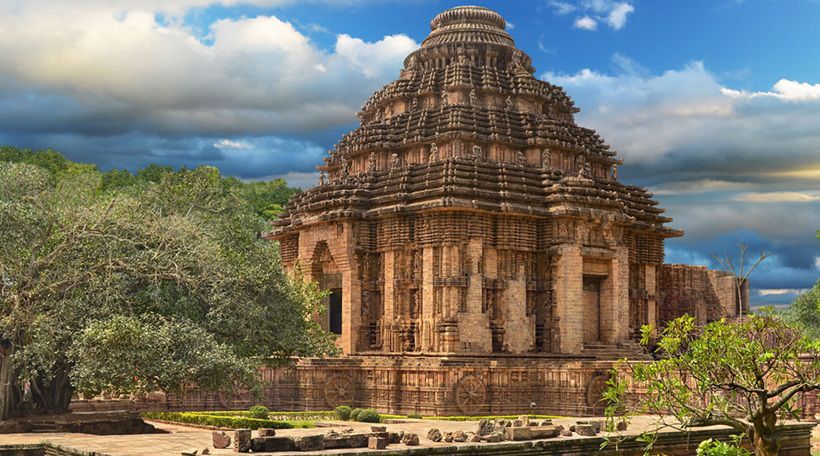
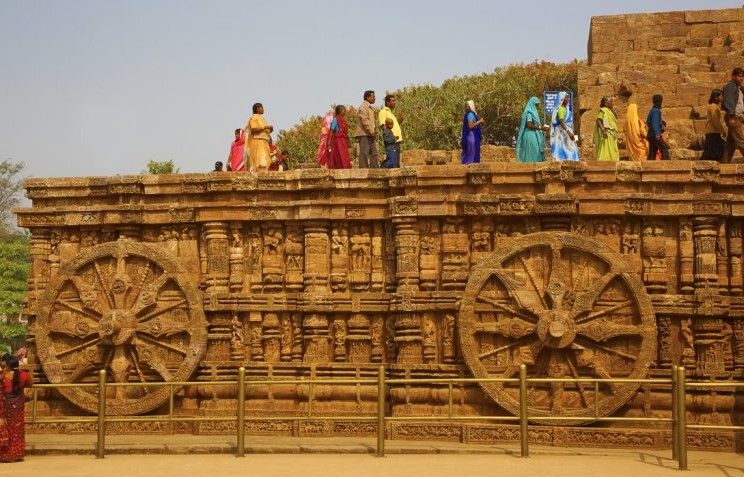
The Konark Sun Temple is a 13th-century Hindu temple dedicated to the sun god. Shaped like a giant chariot, the temple is known for the exquisite stone carvings that cover the entire structure.

One of the most important temples dedicated to the Sun god in India — the Konark Temple — shares the brilliance and the dazzle of the sun with its fascinating architecture, exotic sculptures and intriguing social history of medieval Odisha. Located in Konark, 35 km from Puri, the abode of Lord Jagannath, this 13th-century temple is a leading Hindu pilgrimage centre.

Origin

Konark got its name from two Sanskrit words — kona and ark — with the former meaning corner and the latter implying the sun. Experts say the Sun god worshipped in Ark Kshetra is called Konark. Legend has it that after slaying demon Gyasur, Lord Vishnu left all his belongings at several places to commemorate his victory — conch in Puri, disc in Bhubaneswar, mace in Jajapur and lotus in Konark.

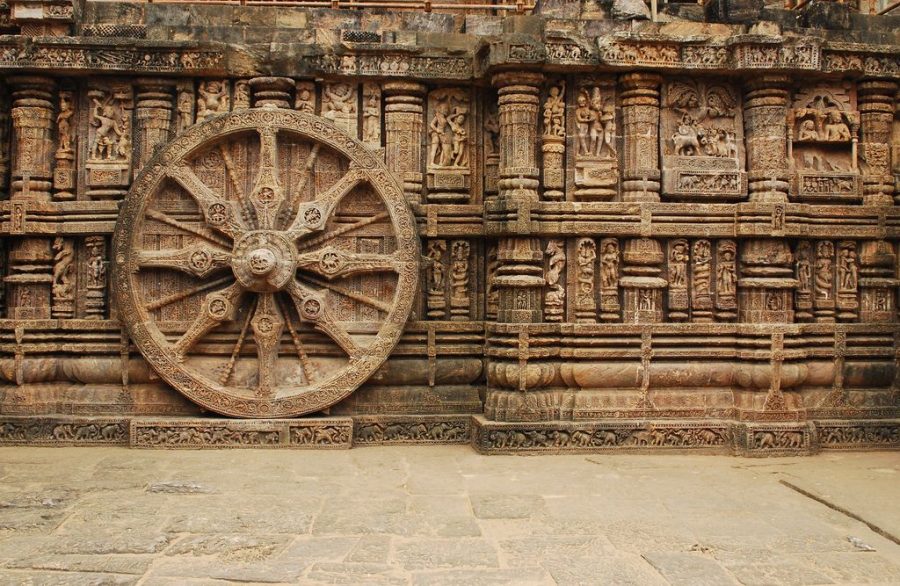
Wheel at Sun Temple Konark
img source

Architectural glory

Designed as colossal chariot on 12 pairs of giant wheels being pulled by seven galloping horses, carrying the Sun god across the heavens, the temple was built by Raja Langula Narasimha Deva of the Ganga dynasty around 1250 AD.

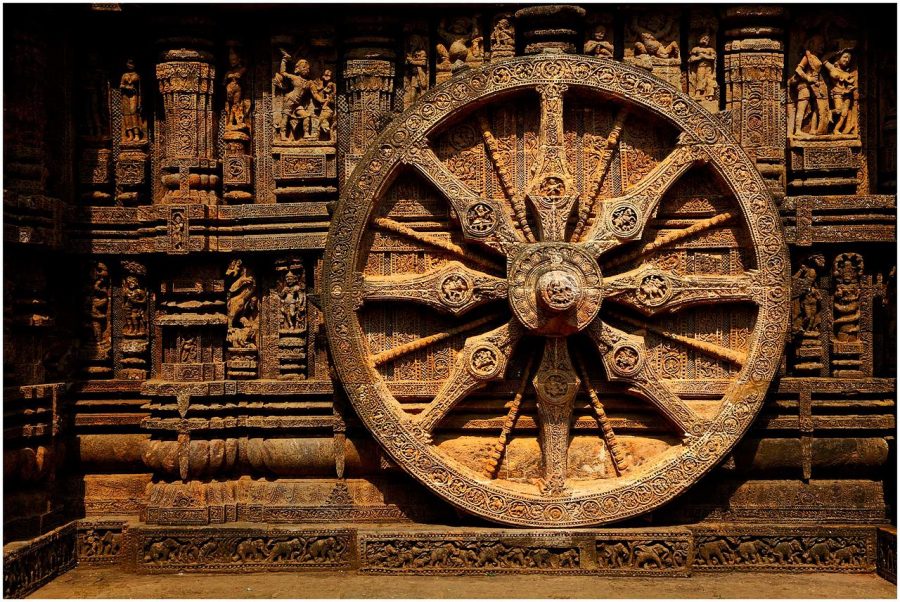
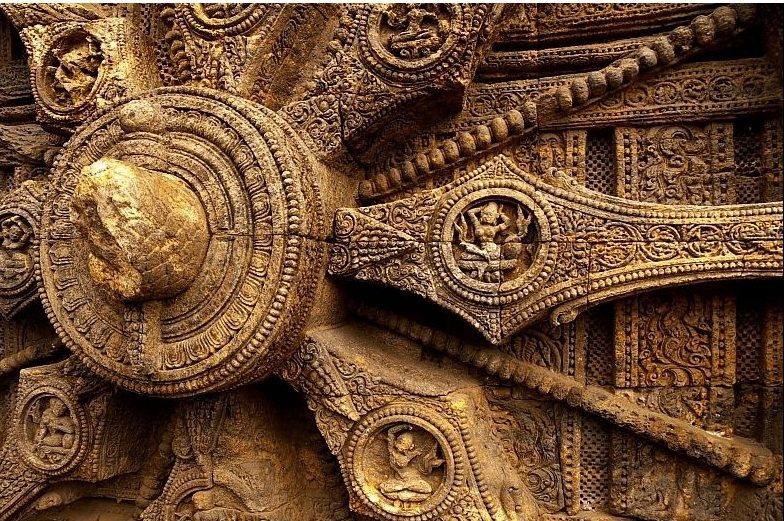
Seven horses pulling the Sun Temple eastwards towards dawn is symbolic of the seven days of the week; a dozen pair of wheels represent the 12 months of the year and the eight spokes in each wheel symbolise the eight ideal stages in a woman’s day.

These wheels are not normal wheels but show time as well – the spokes of the wheels make a sundial. One can analyze the exact time of the day by just looking at the shade cast by these spokes.

The Wheel of Life at Sun Temple Konark
The Wheel of Life at Sun Temple Konark. img source

The beauty and aesthetics of the temple is best summed up by India’s noble laureate Rabindranath Tagore, who wrote about Konark:

“Here the language of stone surpasses the language of man.”

The placement of the main temple and the Sun God had been aligned in such a way that the first ray of the Sun from the coast would cross the Nata Mandir (Dancing Hall) and would fall & reflect from the diamond placed at the crown of the Sun God.

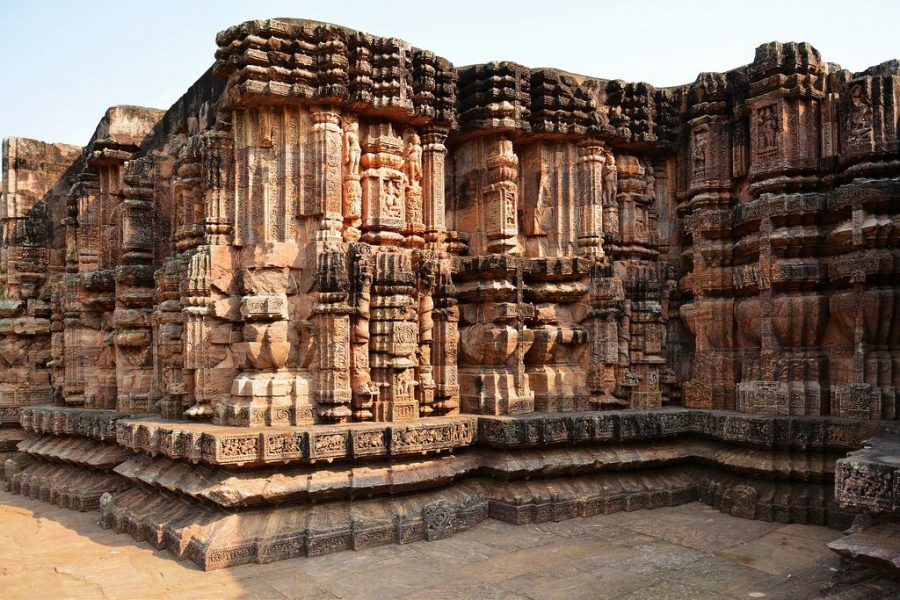
The temple consists of a vimana (main temple) for housing the deity, Jagamohana, a prayer and an offering hall for worshippers and a nirtya-mandapa (dancing hall). The main entrance faces the eastern side which faces the sea. Konark Temple is an epitome of Kalinga architecture.

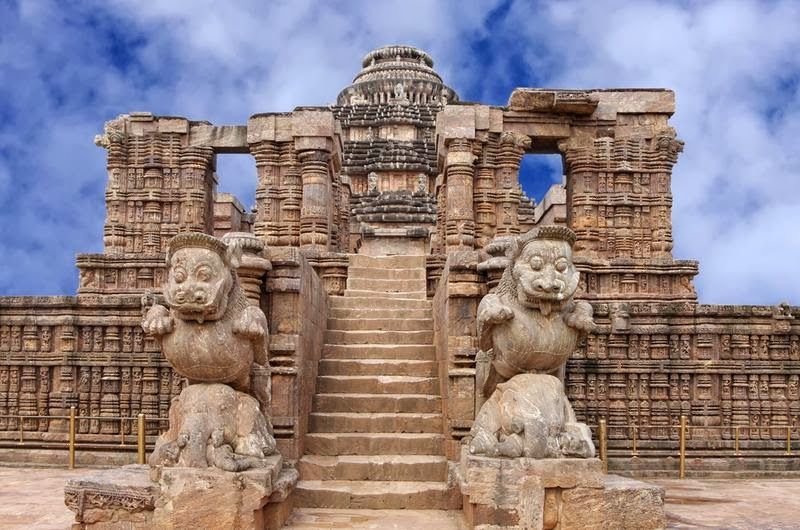
Entrance of Konark Sun Temple Guidede by Lions
img source

The entrance is guarded by two huge lions, each killing a war elephant and beneath the elephant is a man. While the lions represent pride, elephants represent wealth and both of them consume man akin to the conquest of spiritual power over worldly power and the symbol of ignorance conquered by knowledge.

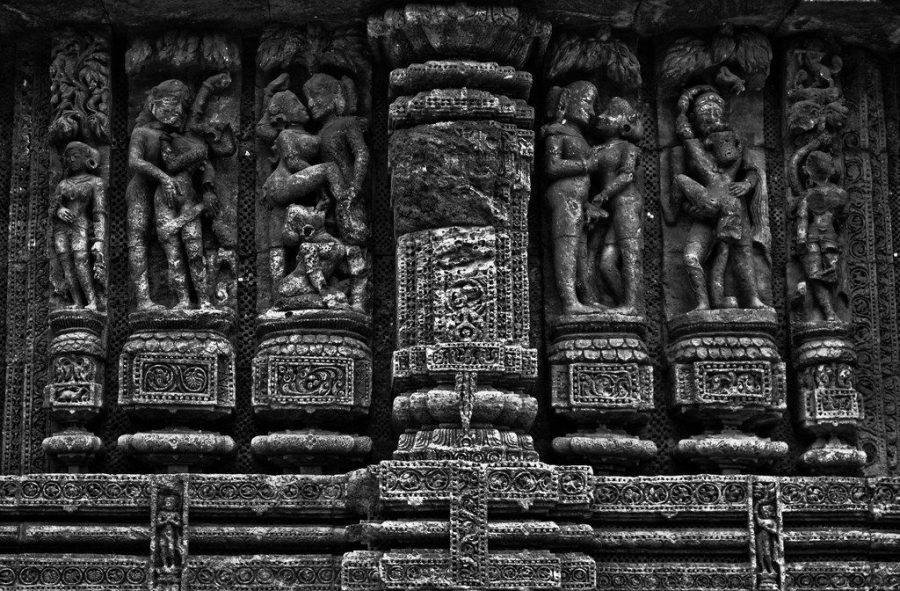
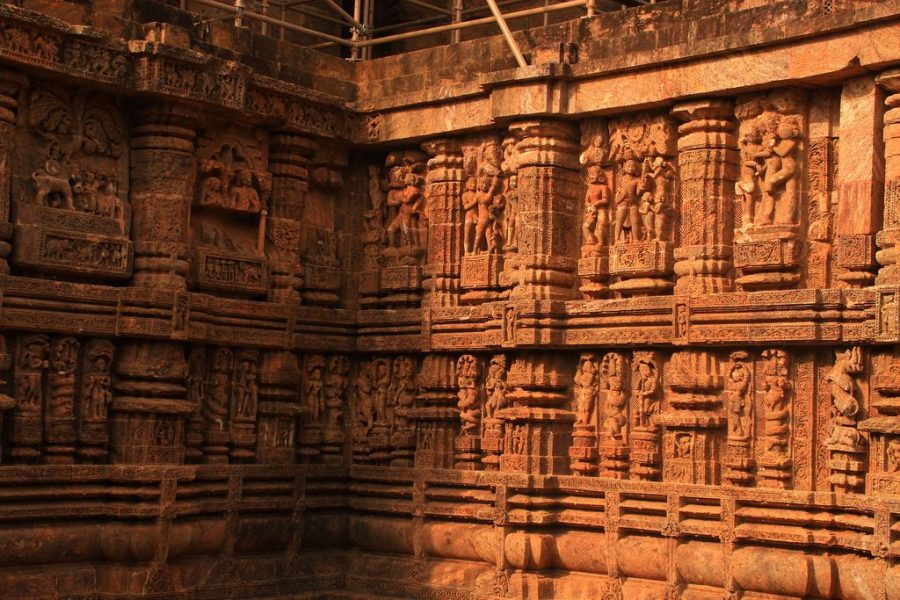
The surfaces of the temple are carved with exquisite stone sculptures with a wide variety of subjects, including many erotic scenes based on the Kama Sutra. Erotic sculptures are found especially in niches halfway up the porch, along the sides of the platform and around the doorways of the main building.

Erotic stone carving at the Konark Sun Temple
Erotic stone carving at the Konark Sun Temple. img source

Other sculptures decorating the temple’s exterior include deities, animals, floral patterns, voluptuous women, mythical beasts and aquatic monsters. The 24 giant wheels are beautifully carved and each of the eight spokes bears a medallion containing figurative carvings.

exquisite stone sculptures at Sun Temple Konark
img source

Originally built on sea shore, the temple is also known as black pagoda due to its dark colour and was used as a navigational landmark by ancient sailors to Odisha.

Magnets & Floating Idol

The uniqueness of the Sun Temple of Konark lies in the fact that it was built with an architectural setup of various magnets. According to legend, the statue of the Sun God inside the temple was built of a material with iron content and was said to be floating in air, without any physical support, due to the unique arrangements of the top magnet, the bottom magnet and the reinforced magnets around the temple walls.

Other legends state that, the magnetic effect of the lodestone was so strong that it caused disturbance in the ships compasses those passed by the coast (Konark being a major port at that time), thus making the navigation very difficult for the sailors. To save their trade and their ships, the Portuguese sailors destroyed the temple and took away the lodestone. The removal of the lodestone leads to the collapse of the main temple structure.

The Konark Temple is part of ancient Surya cult that flourished across India and was dedicated to the worship of the Sun god. The sun is held as the soul of whole manifestation, primal cause of this universe and its different cycles of manifestation and annihilation. Suryopanishad — a scripture on the Sun god — summarises the significance of the sun and the importance of its worship, saying, “From the sun arises all beings. The sun sustains them all. They all vanish into the sun…” It asserts that the sun is the creator, protector and destroyer.
Konark Temple Wheels
img source

Collapse

There have been several proposed theories for the collapse of the main sanctum.

As per one theory, part of the Konark temple collapsed because of its incomplete structure. The Konark Sum Temple was not completed because of the early death of the king Langula Narasimha Dev who initiated the construction of the temple.

Mayadevi Temple also called Chhayadevi Temple, Konark temple complex
Mayadevi Temple also called Chhayadevi Temple is located in the Konark temple complex. img source

Next is the theory of lodestone located at the top of the temple. Due to its magnetic effects, vessels passing through the Konark sea were drawn to it, resulting in heavy damage. Other legends state that magnetic effects of the load stone disturbed ships’ compasses so that they did not function correctly. So, to remove the cause of the trouble, Portuguese voyagers stole the lodestone. The displacement of the lodestone led to total imbalance and so the Konark temple fell down. But there is no historical record either of this event or presence of such a great lodestone at Konark.

As per another very popular theory, the temple was destroyed by Kalapahad (a Muslim governor Sultan Sulaiman Karrani of Bengal) who invaded Odisha in 1508. He had also destroyed many other Hindu temples in Orissa along with the Konark Sun Temple.

Other proposed causes include lightning and earthquake. Over the centuries, the sea receded, sand engulfed the building and salty breezes eroded the stone. It remained buried under a huge mound of sand until the early 20th century, when restoration began under the British.

Konark Sun temple chariot wheel
Close view of Konark Sun temple chariot wheel. img source

Source: TheKonark.in & India Perspectives jul-aug 2016 by Indian Diplomacy

Tsunami might have destroyed Harappan port town of Dholavira

Port town of Dholavira in Gujarat, the fifth largest Harappan site, might have been destroyed by a massive tsunami, a study by CSIR-National Institute of Oceanography (NIO) has revealed.

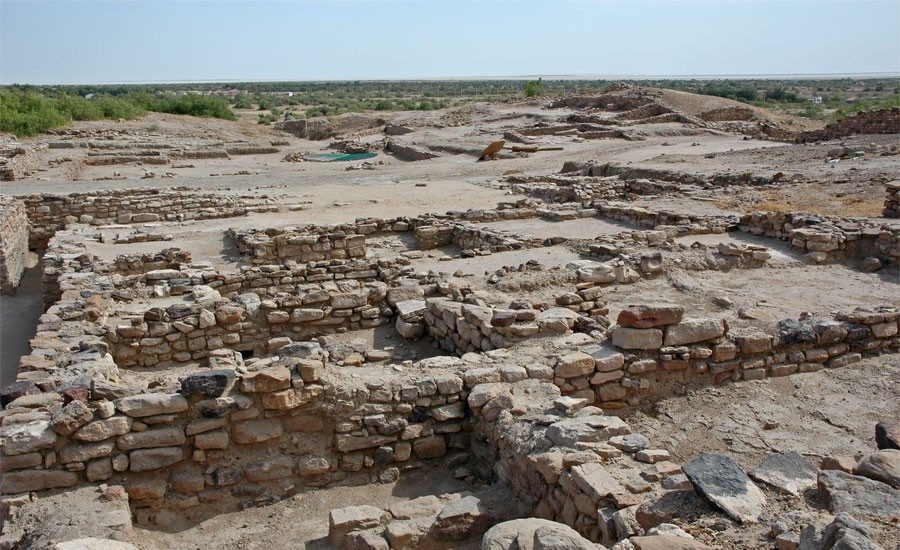
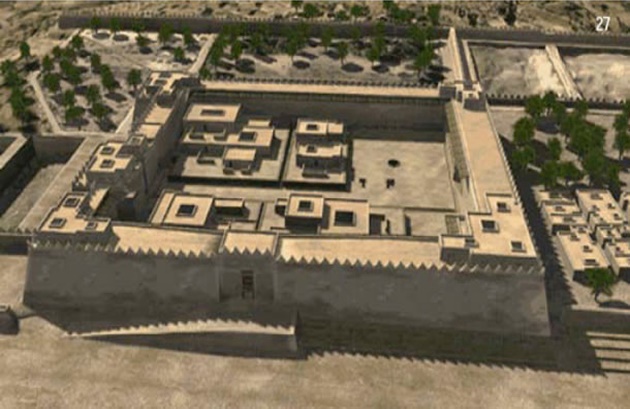
Dholavira, the second largest Harappan site located within the present borders of India, comprises three parts including a castle, the middle town and the lower town.Dholavira is a site of an ancient metropolitan town of the Harappan period and was known as the largest port-town of the Harappans which flourished around 5,000 years ago, until the tsunami destroyed it 3,450 years ago.

Also Read: Unearthing the civilisation of Lothal

“The results clearly indicate that massive tsunamis are not uncommon in the region. The thick wall in Dholavira shows that Harappans were not only aware of the potential threats from tsunamis, but they were also pioneers in coastal disaster management.

“Most importantly, results of this study opens that possibly Dholavira, at least in part, could have been destroyed by such a tsunami,” NIO Director Dr SWA Naqvi said yesterday.

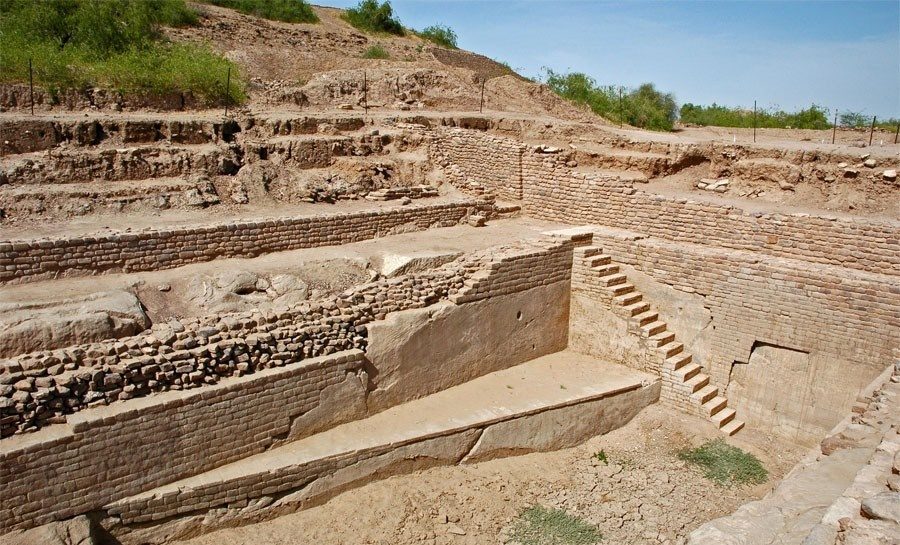
Water tank at Dholavira
Water tank at Dholavira. img source

The team of scientists, led by Rajiv Nigam, had embarked on the study on the port town at a time when the real purpose of the Dholavira wall has been a topic of considerable debate.

The study has proposed that the thick wall was built to protect the town from extreme oceanic events such as storm surges and tsunamis.

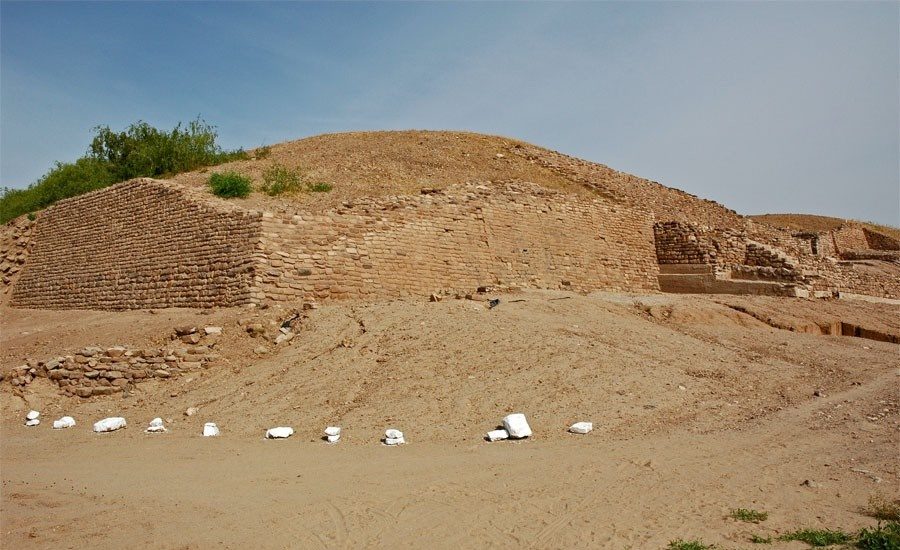
Remains of the citadel at Dholavira
Remains of the citadel at Dholavira img source

“This well-planned urban settlement flourished for about 1500 years from about 5000 to 3450 years before present archaeological excavations show that the township comprised three parts — castle, the middle town and the lower town,” he said.

Ruins of the middle town at Dholavira img source

A unique feature of Dholavira is the presence of a 14-18 meters thick wall, apparently built as a protective measure.

“Intriguingly, walls of such thickness are not found even in historic times when the conflicts have been more common and the weapons had become increasingly more destructive,” he said.


Over 10,500 years old camping site discovered in Ladakh

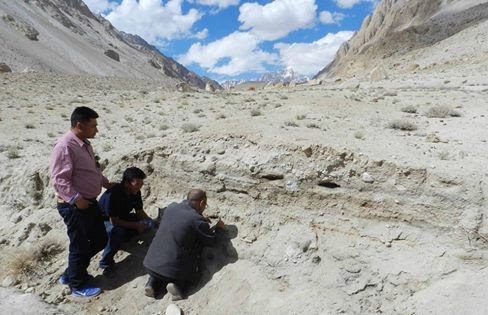
The site was unearthed at 14,000 feet above sea level — on the way to Sasar La which leads to the Karakoram Pass. It suggests that humans camped in the area 10,500 years ago.

As investigations revealed repeated human activity at this camping site for about eight hundred years, archeological survey of india will be carrying out further investigations into the site.

Sources said that the research so far carried out has proved the antiquity and nature of human activities to an extent, but their camping patterns, extent of camping area, tools and other cultural aspects are yet to be traced.

Over 10,500 years old camping site discovered by ASI in Ladakh
An ASI team at the unearthed camping site on the Saser La-Ladakh route. -img Tweeted by @MIB_India

Interestingly, the site was also discovered by chance. Dr SB Ota, joint director deneral in ASI, who was travelling in Ladhak, last year, along the Saser stream. After covering a distance of about 22 km, he noticed a section, exposed due to road construction, showing successive layers comprising burning residue and immediately stopped to explore the area.

The area offered a perfect site for camping. It was a small flat area with snow-covered peaks on one extreme, dry barren land with loose rocks all around and gushing stream within the deep western gorges, an ideal place for camping in a picturesque setting.

A charcoal sample collected from the site, which was sent to Beta Lab, Florida for radiocarbon, dated it back to 8500 BC. Realising the significance of the evidence, a team of ASI officials were sent for further inspection.

“During this visit, more charcoal samples and associated bones were collected. Two of the charcoal samples from lower and upper deposits sent for dating have provided new radiocarbon dates of c. 8500 BC and c. 7300 BC (c. 10500 and 9300 years before present) respectively. These dates have indeed confirmed the earlier date,” the culture ministry official statement said.

Apart from that, new dates also indicate repeated human activity at this camping site for about eight hundred years. Preliminary studies of charred bones collected from here, carried out by Prof P.P. Joglekar of Deccan Collage, Pune, have shown the presence of Gorel and Yak.

ASI has planned to carry out proper archaeological excavations and explorations to address these issues. It added that it would be difficult to carry out the task in such a rugged terrain at an altitude of 14,000 feet, with low oxygen and habitation.

Source: Ministry of Information and Broadcasting

The Rock Cut Cave Temples Of Pataleshwar

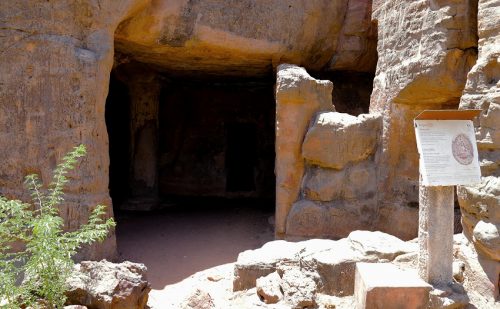
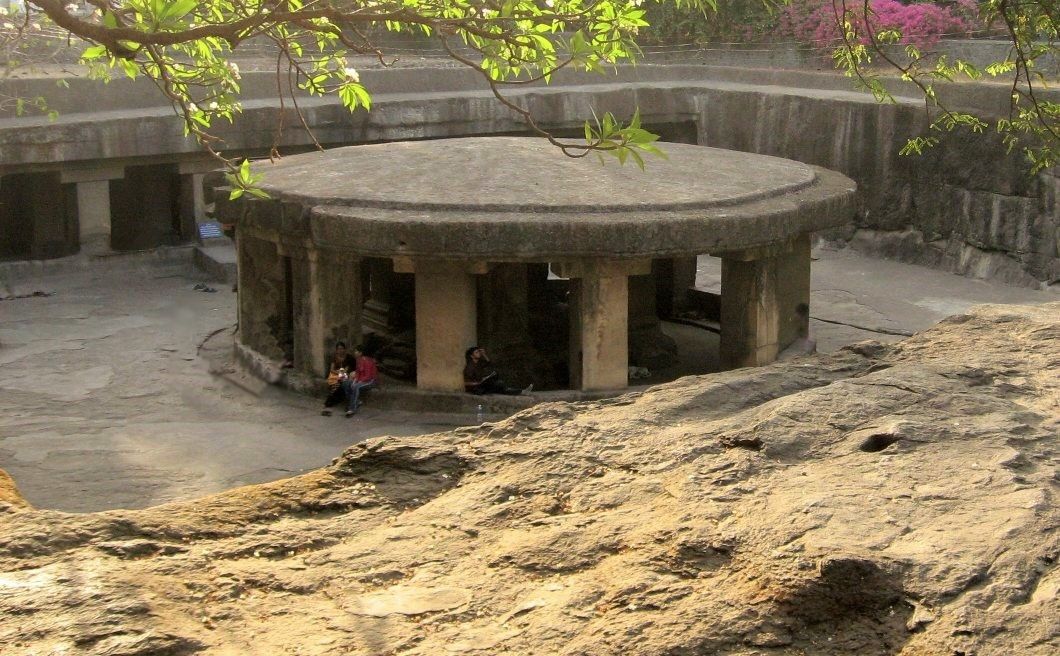
Pataleshwar cave temple is one of the most popular rock- cut cave temples of India. This temple is a reminiscent of Ellora and was carved out of a single gigantic basalt rock during the Rashtrakuta dynasty in the 8th century.

It was originally built outside of town but due to the expansion of the city frontiers over the years, it is now situated in the downtown Jungli Maharaj road in Pune. The temple is dedicated to Lord Pataleshwar (God of Underworld) and Lord Shiva. The entire cave temple is below the ground level, making ‘Pataleshwar’ an appropriate name (‘Patal’ is an underground civilization as per Hindu mythology).

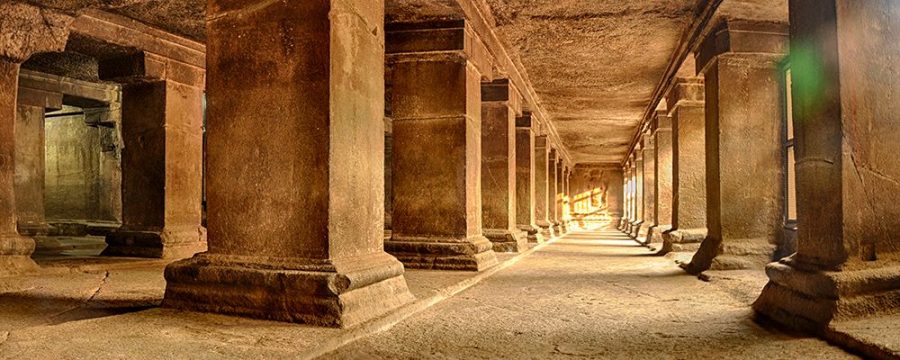
Pataleshwar cave temple provides the perfect example of rock cut architecture. The entire temple is hewn out of a single block of stone, and houses gigantic pillars, a shrine of Lord Shiva and a Nandi bull.

Pataleshwar Caves Internal Temple Corridors
Pataleshwar Caves Internal Temple Corridors. – img source

The construction of temple is left incomplete, but the original plan was to build something on the lines of elephanta caves.

It is believed that the construction of this temple remained unfinished, may be due to the presence of a defective line, detected at the back region of the sanctum, or due to the political turmoil that resulted in financial loss. Still, the architecture and the elegance of the temple surprise the visitors every time and remind them of how difficult it was then to build such a beautiful monument.

The Pataleshwar cave temple has an exotic arrangement of circular stone at the entrance. The entrance is a sight worth seeing, as it highlights acute sense of geometry of these architects.

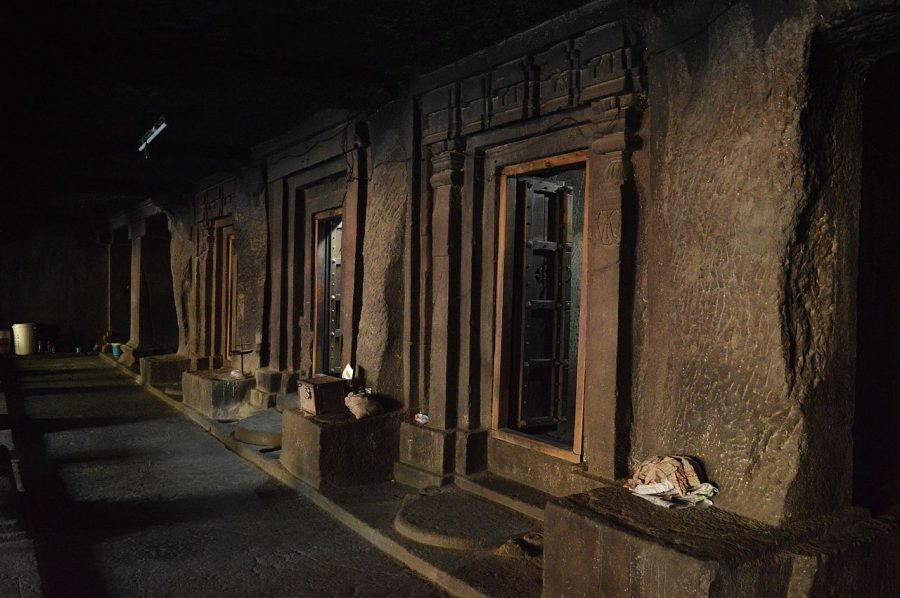
The temple also has the seating arrangements for the tourists along with small rooms. Most of the rocks in the cave, dates back to the 700 – 800 AD. One can see  few ornate carvings on the black rock, which are simply amazing.

Pataleshwar Caves 04 - img source
Pataleshwar Caves 04 – img source

The architecture of the temple cave looks similar to that of the Elephanta caves And Ellora caves. The shrine of Lord Shiva forms the main attraction of the temple. The pillars of the temples are extremely beautiful and unique.

A linga, the symbol of Shiva, is housed in the sanctum, which is a cube-shaped room about 3 to 4 metres high. On each side of the sanctum, two smaller cells are present.

There are a number of massive pillars those add to the grandeur of the temple along with grand statues of Nandi, Sita, Ram, Lakshman, Lakshmi and Ganesh and an oversized shivalingam under a single roof.

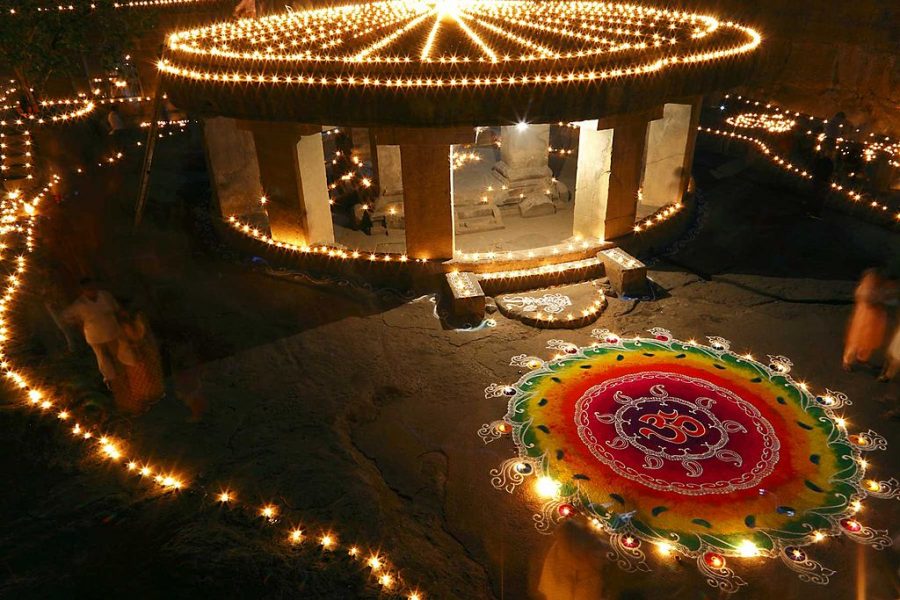
Diwali lighting at Pataleshwar Caves Temple Maharashtra
Diwali lighting at Pataleshwar Caves Temple Maharashtra. – img source

There is a museum in the cave temple that is listed in the Guinness Book of Records. In the museum, there is a grain of rice which is believed to have around 5,000 characters inscribed on it.

Lachit Borphukan – The Unsung Hero who Stopped Mughals From Conquering Northeast India

Assam was the only State in India which defeated successive attempts at invasion by the Delhi Sultans and the Mughal Emperors. The state survived 17 invasions.

Lachit Borphukan and many other brave kings and generals ensured that the North East of India remained free from the Muslim invasions.

In the mid 1600s the Mughal Empire was in the noontide of its glory – one of the greatest and largest empires in the world with a power army to match it. By force and conciliation it had overrun a large part of India before their fanatical policies of religious persecution led to a series of uprisings and revolutions that brought the entire empire crashing into the dustbin of history.

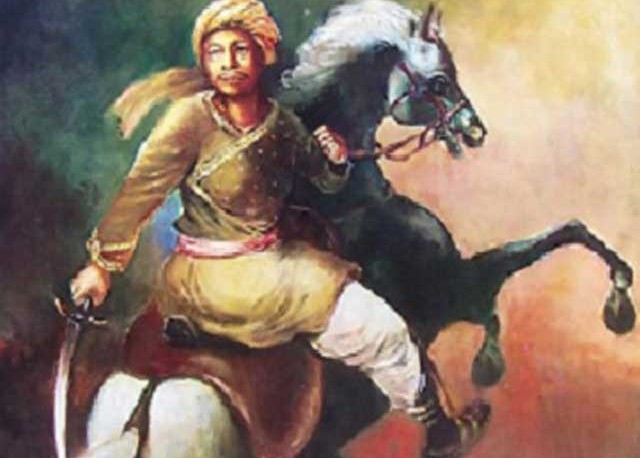
Popularly referred to as Momai Tamuli, the first Borbarua and also Commander-in-Chief of Ahom forces during the reign of King Prataapa Singha. Momai Tamuli ensured that his son Lachit was properly educated in the disciplines necessary for nobility. After the completion of his formal education, Lachit was appointed as the scarf bearer of the Ahom Swargadeo, a post equivalent to that of a private secretary.

From his father, Lachit had inherited an unwavering sense of duty, involvement and loyalty. He now immersed himself completely in the preparations for the war. He was a harsh taskmaster, but very sincere to his job that he did not hesitate to behead even his uncle, who was found to be negligent on duty during an important situation of the war.
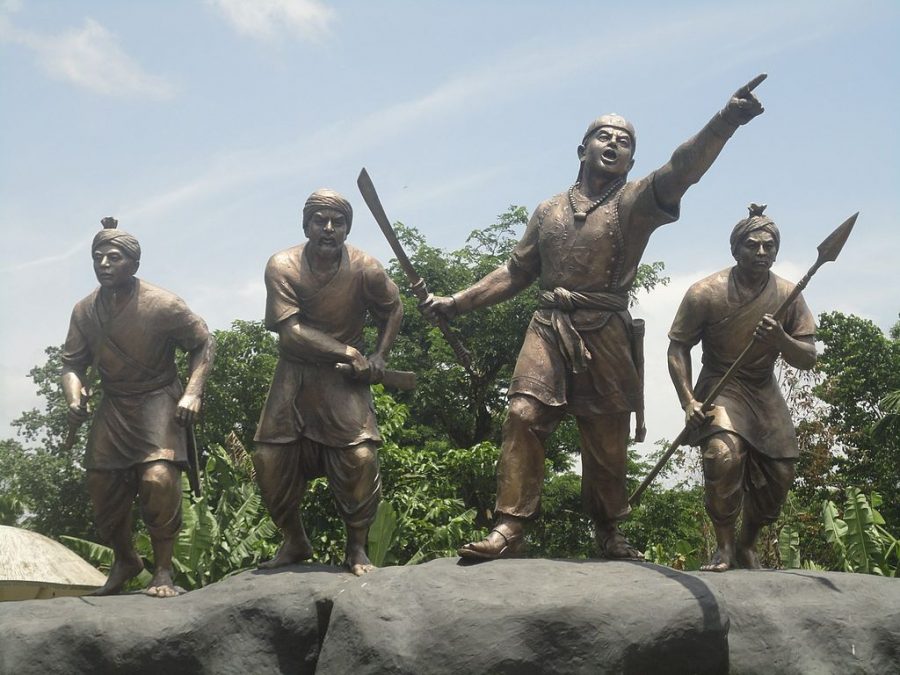
Statue of Lachit Borphukan (in the middle) at Sivasagar with other Ahom Warriors.
Statue of Lachit Borphukan (in the middle) at Sivasagar with other Ahom Warriors. img source

Liberation of Ahom territory

In August 1667, Lachit accompanied by Atan Burhagohain lead the Ahom warriors towards Guwahati. In November 1667, he captured the Itakhuli fort and later drove the Mughal forces beyond Manas after taking the faujdar Firruz Khan as prisoner.

In December 1667, the tyrant Aurangzeb was informed of the defeat of the Mughal forces at the hands of Ahom warriors. He ordered a massive army commanded by Raja Ram Singh to attack and subdue the Ahoms. Aurangzeb added an additional 30,000 infantrymen, 21 Rajput chiefs with their contingents, 18,000 cavalry, 2,000 archers and shielders, and 40 ships to Ram Singh’s forces of 4,000 troopers (from his  char-hazaari mansab), 1,500 ahadis and 500 barqandezes.)

Selection of the Battlefield

Lachit Borphukan anticipated such an move by the Mughals. Therefore, immediately after capturing Guwahati he began strengthening the defenses around the Ahom territory. He used the Brahmaputra as a natural perimeter defense and augmented her banks with stockades and mud embankments. He was fully aware that he did not stand a chance against the Mughal troops on the plains. He cleverly choose the hilly and forested terrain just outside Guwahati as his battleground, were the Ahom warriors had an advantage over the Mughals.

Siege of Guwahati and the Alaboi

The Mughal forces attacked Guwahati in March 1669 and for over a year laid siege to it. During the entire period, the Mughals could not achieve any breakthrough as the Ahoms had erected secure defenses. The unaccustomed terrain and climate also turned against the Mughal forces. The Ahoms had the advantage and were using it fully by conducting guerilla raids against the Mughal troops.

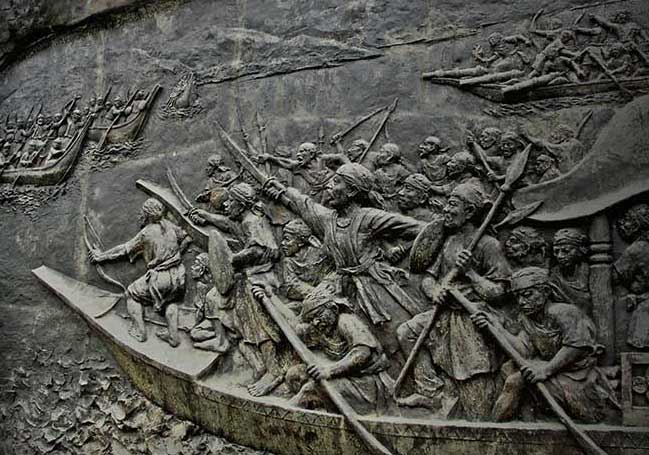
lachit borphukan leading the advance on the Brahmaputra
Lachit Borphukan leading the advance on the Brahmaputra. –img source

The Mughals tried to sow dissension among the Ahoms through trickery. They shot an arrow into the Ahom camp with a letter addressed to Lachit. In that letter, the Mughals offered to pay Lachit one lakh rupees and urged him to evacuate Guwahati. This incident was informed to the Ahom king, which raised doubts in his mind about the loyalty of Lachit. Atan Burhagohain quelled the king’s doubts about Lachit’s loyalty.

Followed by this the Mughals lured the Ahoms for a confrontation on the plains. The Ahom king urged Lachit to take this up as a challenge. A small force of Mughal troops commanded by Mir Nawab was to engage the Ahom warriors at Alaboi. The Ahoms had made elaborate preparations and concealed their reinforcement in trenches. This helped the Ahoms capture Mir Nawab and rout his troops. The Mughals enraged by this defeat let loose their entire forces on the Ahoms that led to a massacre of 10,000 Ahom warriors.

Lachit withdrew his forces up to the Itakhuli fort after this major setback. While the war was raging on, the Ahom king Chakradhwaja Singha died. He was succeeded by Udayaaditya Singha. Observing that none of the Mughal strategies were successful, Ram Singh offered the Ahoms 300,000 rupees to give up their claim on Guwahati and return to an earlier treaty agreed in 1639. However, this was fiercely opposed by Atan Burhagohain, who raised the suspicion that the tyrannical emperor of Delhi may not abide by this proposal.

Meanwhile, Munnawar Khan, the Mughal admiral joined Ram Singh, with a rebuking message from Aurangzeb to make war with the Ahoms and not friendship. Ram Singh was now forced to move in full strength against the Ahoms. He was informed of a breach in the embankment near Andharubali. At this time, Lachit was down with severe illness and could not actively oversee the battle preparations.

Snatching Victory from Defeat

The Ahom army was demoralized after their defeat at the hands of the Mughals in the previous battle at Alaboi. When they saw the huge enemy boats looming nearer, they were devastated and were on the brink of deserting and fleeing the scene. Sensing this, Lachit immediately ordered a flotilla of seven boats to be prepared for him and forced himself from the sickbed and on to the boats. He firmly stated that regardless of what happens, he will never desert his country. Seeing their general back on foot and hearing his words gave the Ahoms a big morale boost. All soldiers rushed to Lachit’s side and their numbers swelled immediately.

The Ahoms launched their small boats and Lachit led them to a head on confrontation with the Mughals in the middle of the river. The smaller Ahom boats had greater maneuverability as opposed to the large Mughal vessels. The Mughal boats were stuck in the water unable to navigate efficiently. In a closely fought battle, the Mughals were decisively defeated. The Mughal admiral Munnawar Khan was killed in battle. Many of the Mughal commanders and numerous troops were also killed.

The Ahoms chased the Mughals upto the Manas, which was the western boundary of the Ahom. Lachit also instructed his troops to be always alert for counterattacks from the Mughals. All these events are presumed to have taken place in the month of March in the year 1671.

Though Lachit emerged victorious in the war against the Mughals and restored the glory and dignity of Ahoms, the strains of war had taken their toll on him. He never recovered from his illness and died an year later in April 1672.

Legacy

He was put to rest at the Lachit Maidan built by the King Udayaditya Singh at   Hoolungapara in 1672. His statue was unveiled at the National Defense Academy at Khadakwasla in 2000 by then Governor of Assam, Lt. Gen. S K Sinha. Every year the best cadet passing out of the Academy is awarded the Lachit Medal . Nov 24th is commemorated as Lachit Divas in remembrance of this heroic son of Maa Bharati.

Source: AssamInfohvk.org; AriseBharat

1,000-Year-Old Hindu Temple Excavated In Bangladesh

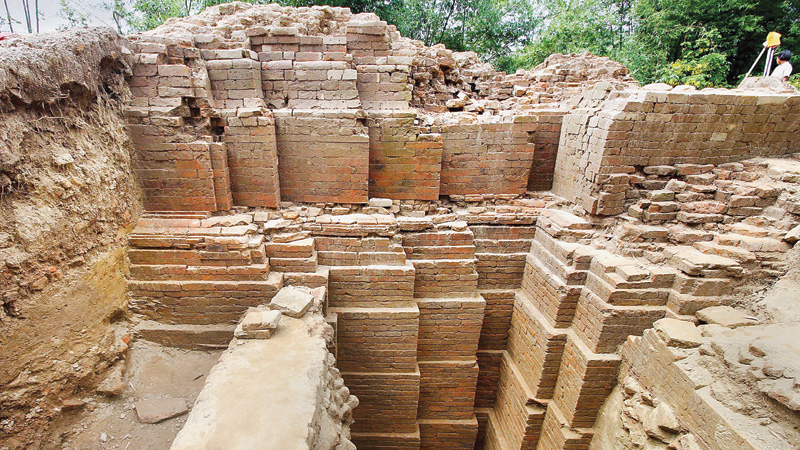
A rare Vishnu temple with a unique ‘nava-ratha’ architecture has been excavated at Madhabgaon village in Kaharol upazila of the northern district of Dinajpur by a team of archaeologists from Jahangirnagar University.

Archaeologists from Jahangirnagar University’s department of archaeology in Savar, Dhaka, including its director Prof. Swadhin Sen, Prof. Syed Mohammed Kamrul Ahsan, Prof. Seema Hoque and Sabekunnaher Sithi started an excavation at the site in April this year. They also received the support of the department of archaeology.

The 52-member excavation team included four teachers, 13 students and 13 experienced workers from Mahasthan.

They found a seven-metre-high brick-built structure and a 144-sq-metre solidly built platform, with a 4.48-metre square cell at the centre. The cell represents the ‘garbhagriha’ (sanctum) where the idol was worshipped.

The external surface of the platform has ‘ratha’ or vertical offset projections at the west, north and south. There are nine ‘rathas’. That is why the temple is known as a ‘nava-ratha’ temple, according to ‘Early Temple Architecture’.

The team found more artefacts, including a decorated stone image, a good number of broken fragments of stone sculptures, along with pottery, decorated bricks and stone pieces during the ongoing archaeological excavations at the site. The sculptural fragments represent various iconographic attributes of Vishnu, the Hindu deity.

“The temple is about 1,000 years old. It was constructed in the 10th to 11th centuries. No temple of the ‘nava-ratha’ type has been discovered in Bangladesh till now,”

said Prof. Swadhin Sen.

He also said radiocarbon dating of the collected samples would shed light on the precise date of the temple.

The superstructure of the sanctum is characterized by a ‘shikhara’ (curvilinear tower). Among the very few existing brick-built standing temples with ‘shikhara’ in undivided Bengal, the Siddheshwar Temple at Bahulara of Bankura in West Bengal has the closest resemblance,” said Prof. Dipak Ranjan Das, a former professor of the University of Calcutta and an expert on early eastern Indian temple architecture.

The same team had discovered a Hindu temple with ‘pancha-ratha’ variety in Nawabganj upazila of Dinajpur in 2007. The four-pillared ‘mandapa’ was possibly capped with a ‘shikhara’ and is known as a ‘pida deul’ (tiered roof) variety.

Prof. Syed Mohammad Kamrul Ahsan said this temple was a very good addition to their research in the northern part of Bangladesh over the past 15 years. He added that their team has already excavated nine sites in this region and documented more than 1,000 archaeological sites in the Dinajpur-Joypurhat region. More than 800 among them could be dated to the early medieval period.

The history of river systems and landscapes was crucial for the development of settlements, which had religious edifices at the core. The excavation accompanied by archaeological studies will continue for the next couple of months.

Source: The Independent